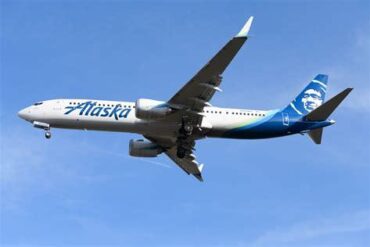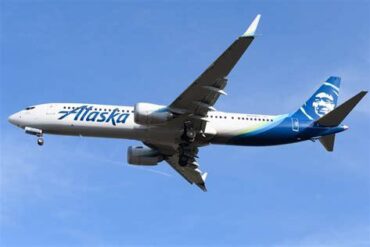
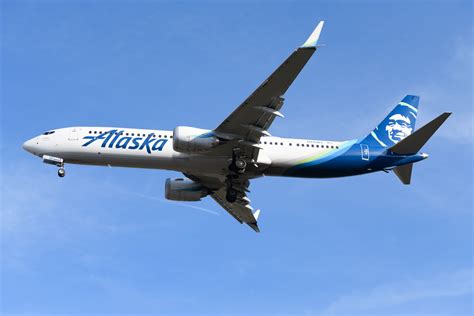
Alaska Airlines has pushed the Boeing 737 farther across the Atlantic than any U.S. carrier has done before, launching a remarkable nonstop service between Seattle-Tacoma International Airport (SEA) and Keflavík International Airport (KEF) in Iceland. Operated by the Boeing 737 MAX 8, the seasonal service covers approximately 3,611 miles (5,811 kilometers) and takes just under eight hours, turning what would traditionally be a widebody international journey into a nonstop narrowbody flight.
The route is operated as AS354 from Seattle to Keflavík and AS355 in the opposite direction, with the westbound sector generally taking longer because of prevailing winds. The KEF-to-SEA flight can take around 7 hours and 55 minutes, making it an extraordinary mission for a single-aisle aircraft. More importantly, the service demonstrates how modern versions of the 737 have expanded the practical boundaries of narrowbody international flying, allowing airlines to connect markets that once depended heavily on larger aircraft and connecting hubs.
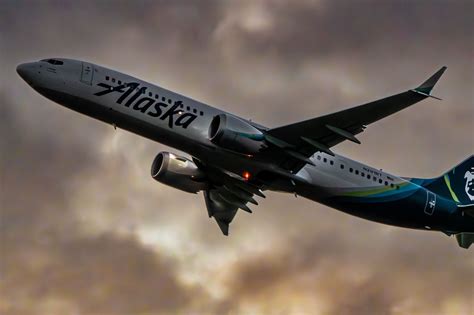
Alaska Airlines SEA to KEF Becomes the Longest U.S. 737 Route
The Seattle-Keflavík operation has earned a place in aviation history because AS355 is the longest nonstop flight operated by a U.S. carrier using any Boeing 737 variant. It is also notable as the first regularly scheduled transatlantic 737 service operated by a U.S. airline to a European destination. The aircraft’s route takes it across northern Canada before continuing over the North Atlantic toward Iceland, creating a journey that would have seemed unusually ambitious for a narrowbody aircraft only a generation ago.
Measured against scheduled 737 services worldwide, Alaska’s Iceland route ranks as the second-longest Boeing 737 route in the world. It trails only GOL’s Brasília-Orlando operation. That ranking gives the Alaska service significance beyond the airline’s own network because it illustrates the growing role of the latest-generation 737 in markets once dominated by widebody aircraft.
The numbers behind the route also show that Alaska’s decision was more than an attempt to create an aviation novelty. According to U.S. Department of Transportation data, the airline carried 8,320 round-trip passengers on the 737-operated route through June 2026. Overall seat occupancy reached approximately 77.2%, providing an encouraging early indication that passengers were willing to spend close to eight hours aboard a narrowbody aircraft when the alternative involved a connection.
Why Alaska Airlines Chose a Boeing 737 MAX 8 for Iceland
The 737 MAX 8 is particularly well suited to a route such as Seattle-Keflavík because its improved efficiency and range allow Alaska Airlines to operate the service without the capacity of a traditional long-haul widebody. For travelers, that means the aircraft itself is smaller, but the journey can actually become more convenient because passengers avoid a connecting airport.
For Seattle-area travelers heading to Iceland, a nonstop flight eliminates the need to route through major U.S. or European hubs. Instead of changing aircraft in Chicago, New York, London, or another gateway, passengers can remain aboard the same aircraft from Washington State to Iceland. That advantage can be particularly valuable on an international trip, where a connection adds additional boarding procedures, potential delays, baggage risks, and several hours to the overall journey.
The MAX 8 also offers a more modern cabin environment than older generations of the 737. Alaska’s aircraft features Sky Interior LED lighting, designed to create changing cabin illumination that can mimic natural sunrise and sunset conditions. The aircraft is also considerably quieter than many older narrowbody jets, helping make a lengthy flight more comfortable. Because the aircraft carries fewer passengers than a large widebody, cabin crews can also serve a smaller number of travelers, potentially producing a more responsive onboard experience.
Iceland Demand Extends Alaska’s Transatlantic Season
The popularity of the route quickly changed Alaska Airlines’ original plans. The service initially had been scheduled for a shorter seasonal period, beginning on May 28 and ending on August 18. Strong demand eventually prompted the airline to extend operations through September 7, demonstrating that the market could support more than a brief peak-summer experiment.
The timing was particularly favorable in 2026 because Iceland became an important destination for travelers seeking to experience the total solar eclipse on August 12. The event generated additional interest among eclipse travelers, particularly from the Pacific Northwest, where Alaska’s nonstop Seattle service offered a highly convenient way to reach Iceland without an intermediate stop.
Iceland’s broader summer appeal also plays an important role. The country’s landscapes, waterfalls, glaciers, wildlife, and extended daylight make it attractive well beyond the traditional Northern Lights season. During summer, the midnight sun transforms the travel experience, allowing visitors to explore for unusually long periods each day. Iceland’s weather remains unpredictable, however, with strong winds, fog, and rapidly changing conditions capable of altering outdoor plans at short notice.
Alaska Airlines and Icelandair Expand Connections Beyond Keflavík
The value of the SEA-KEF route extends beyond passengers whose final destination is Iceland. Alaska Airlines has a bilateral codeshare agreement with Icelandair, allowing travelers to use Keflavík as a gateway toward a much broader European network.
Through the partnership, passengers can connect onward from Iceland to approximately 35 European destinations served from Reykjavík’s main international airport. That makes Alaska’s Boeing 737 MAX 8 more than a simple Seattle-Iceland shuttle. It effectively creates a Pacific Northwest gateway into Iceland and, through connections, continental Europe.
The arrangement also creates an attractive opportunity for travelers who want to combine destinations. A passenger can fly nonstop from Seattle to Iceland, spend several days exploring the country’s distinctive landscapes, and then continue to another European city on a connecting Icelandair flight. For many travelers, that flexibility makes the route considerably more useful than its unusual aircraft choice might initially suggest.
A New Model for Long-Haul Narrowbody Flying
Alaska Airlines’ Seattle-Keflavík service ultimately demonstrates how long-haul narrowbody flying is changing the international market. A Boeing 737 once seemed fundamentally associated with short- and medium-haul operations, but newer aircraft can now cover distances that bring the aircraft into direct competition with traditional long-haul networks.
For passengers, the most important benefit is not the record itself. It is the ability to travel nonstop from Seattle to Iceland in roughly eight hours without sacrificing an entire portion of the journey to a connection. Alaska’s decision to extend the seasonal operation and begin the 2027 service window earlier suggests that the airline sees continued potential in the market.
The route may be unusual, but its appeal is straightforward: a modern, efficient aircraft, a nonstop transatlantic itinerary, convenient onward European connections, and direct access to one of the world’s most distinctive destinations. Alaska Airlines has turned the 737 MAX 8 into an unlikely transatlantic workhorse, and the Seattle-Keflavík route shows just how far a modern narrowbody can go.