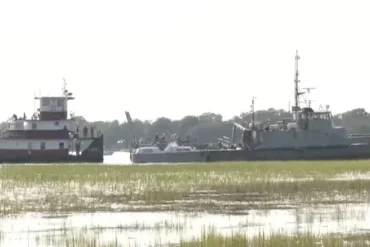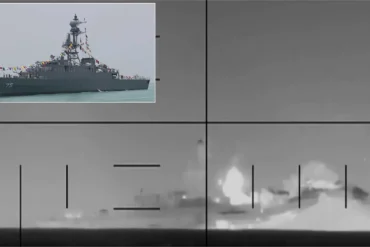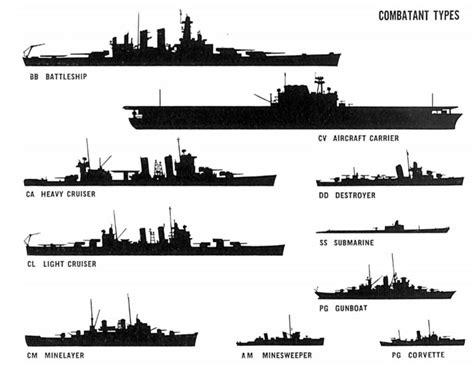
The U.S. Navy has changed dramatically since the Naval Act of 1794 authorized its first six frigates. Over more than two centuries, advances in propulsion, weapons, sensors, aviation, and naval strategy have repeatedly made older types of warships obsolete. Some disappeared permanently, while others were replaced by vessels that could perform several of their missions more efficiently.
The evolution is particularly clear when looking at ship classes that once occupied important positions in the American fleet but are no longer operated as modern warships. Small coastal combatants, heavily armed river vessels, fast torpedo craft, traditional frigates, and enormous battleships all played significant roles at different points in U.S. naval history.
Yet retirement did not necessarily mean failure. In many cases, the Navy abandoned a class because another technology could accomplish the same mission with greater range, flexibility, survivability, or efficiency. In other cases, changes in naval warfare simply eliminated the strategic circumstances that had justified maintaining an entire category of ships.
1. Corvettes Were Too Small for the US Navy’s Global Strategy
The corvette is among the smallest conventional warship categories. Historically, these vessels were intended primarily for coastal patrols, escort duties, reconnaissance, and other missions that did not require the firepower or endurance of a major surface combatant. Their relatively modest size allowed them to operate economically in waters where larger ships were unnecessary.
The U.S. Navy, however, followed a somewhat different path. During the sailing era, American naval planners relied heavily on ships such as sloops-of-war for missions that overlapped with the traditional role of a corvette. The distinction between these categories was not always rigid, particularly during periods when naval classification was changing rapidly.
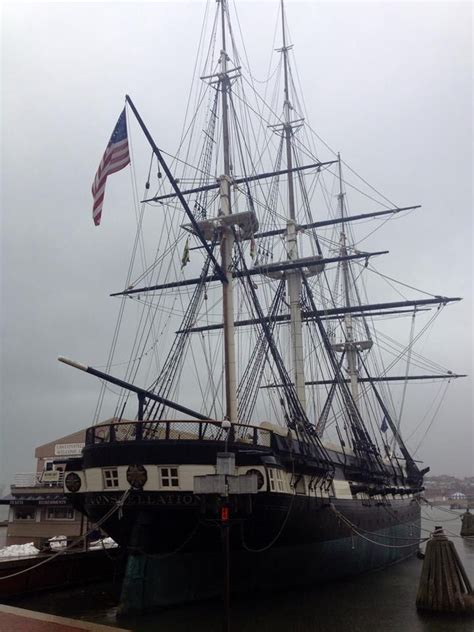
One unusual American example was USS Constellation. Originally launched as a frigate in 1797, the famous vessel was rebuilt in 1854 using material from the earlier ship. The resulting vessel was classified as a corvette and became the last exclusively sail-powered warship commissioned by the Navy.
Constellation had a remarkably complicated career, being decommissioned and recommissioned several times before eventually serving as an Atlantic Fleet relief flagship during World War II. After more than a century associated with the Navy, the vessel ultimately became a museum ship.
The modern Navy has never developed a dedicated corvette fleet comparable with those operated by many other countries. Its global strategy has traditionally emphasized aircraft carriers, nuclear-powered submarines, destroyers, cruisers, and other larger platforms capable of sustained operations far from American shores.
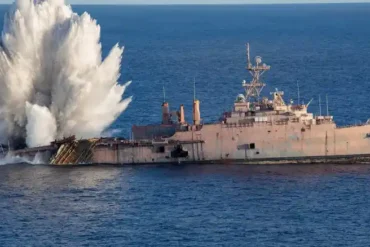
Many missions traditionally associated with small warships can now be handled by more capable platforms. The littoral combat ship, for example, was designed with operations in coastal environments in mind while providing considerably more sophisticated sensors, aviation capabilities, and modular mission systems than a traditional corvette.
2. Torpedo Boats Disappeared as Naval Weapons Became More Capable
The torpedo boat represented a very different approach to naval warfare. Rather than attempting to match a battleship or cruiser in armor and gun power, these small and fast vessels attempted to exploit speed and surprise. Their principal weapon was the torpedo, allowing a comparatively inexpensive craft to threaten ships many times its size.
The concept became particularly important during the first half of the 20th century. Improvements in engines allowed torpedo boats to become faster and more capable, while coordinated attacks by groups of small boats offered the possibility of overwhelming the defenses of much larger vessels.
During World War II, the American PT boat became one of the best-known examples. PT stood for “Patrol, Torpedo,” and these boats were designed for rapid attacks, reconnaissance, coastal operations, and interdiction. They were relatively inexpensive compared with major warships and could be constructed in significant numbers.
One of the most famous examples was PT-109, commanded by future President John F. Kennedy before it was sunk by a Japanese destroyer in 1943. The incident became one of the most recognizable episodes associated with America’s wartime small-boat forces.
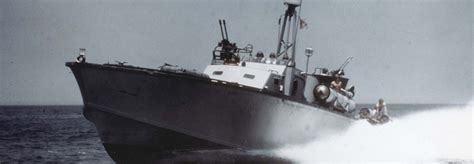
The Navy’s use of torpedo boats ended after World War II, with PT-617 completing its service in 1946. The retirement reflected a much larger transformation in naval warfare. Aircraft could deliver torpedoes over far greater distances, submarines could attack while remaining difficult to detect, and increasingly sophisticated anti-ship missiles provided another way to strike surface vessels without putting a small crewed boat directly into danger.
Uncrewed systems are now adding another layer to this transformation. Modern drones can perform reconnaissance and potentially carry weapons without exposing sailors in the same way as the small attack craft of the past.
The basic idea behind the torpedo boat therefore did not simply disappear. Instead, its mission was distributed across aircraft, submarines, missiles, drones, and larger surface combatants.
3. Monitors Returned During Vietnam but Were Never Revived
Few American warship concepts have a history as unusual as the monitor. The type is closely associated with USS Monitor, the Union ironclad that entered service during the American Civil War. Its revolutionary rotating turret allowed heavy guns to be mounted on a relatively low-profile hull, making the vessel particularly useful in shallow waters.
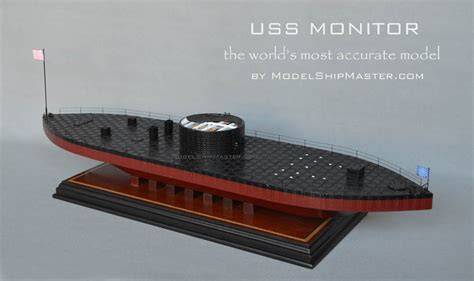
Monitors were not designed primarily for blue-water operations. Their shallow draft made them suitable for rivers, coastal waters, and other environments where conventional deep-draft warships could face serious limitations. During the Civil War, this capability proved valuable in campaigns along the Mississippi River and other waterways.
The concept survived well beyond the Civil War. Monitor-type ships appeared in foreign navies and remained relevant into the early 20th century. Several were still used during World War I, while Britain retained monitor-type vessels for specialized operations during World War II.
The United States eventually phased out its conventional monitors, but the concept returned in a surprising form during the Vietnam War. The Navy needed heavily armed vessels capable of operating in rivers and close to shore as part of its brown-water naval forces.
These Vietnam-era monitors looked very different from the ironclads of the 1860s. They incorporated armor, machine guns, cannons, howitzers, and specialized weapons. Some were equipped with systems capable of projecting burning fuel into vegetation, allowing them to attack concealed positions along riverbanks.
Their purpose was not to fight enemy battleships. Instead, they were mobile fire-support platforms designed around the realities of riverine warfare.
After the Vietnam War, the Navy again abandoned the monitor concept. The specialized conditions that had justified its revival disappeared, and there was no continuing requirement for a dedicated monitor fleet.
4. Frigates Were Reclassified Out of the US Navy
The frigate is one of the oldest names in naval history, dating back centuries. Its meaning changed repeatedly as technology evolved, but the basic concept generally involved a warship smaller than a major capital ship while still capable of long-range operations, escort duties, scouting, and combat.
For the United States, the frigate became especially important in the sailing era. The original six ships authorized under the Naval Act of 1794 were frigates, including vessels such as USS Constitution.
Modern American frigates returned in the 1950s, but their role was very different from that of their sailing predecessors. The Navy operated guided-missile frigates primarily as escort and air-defense ships capable of protecting higher-value formations, including carrier battle groups.
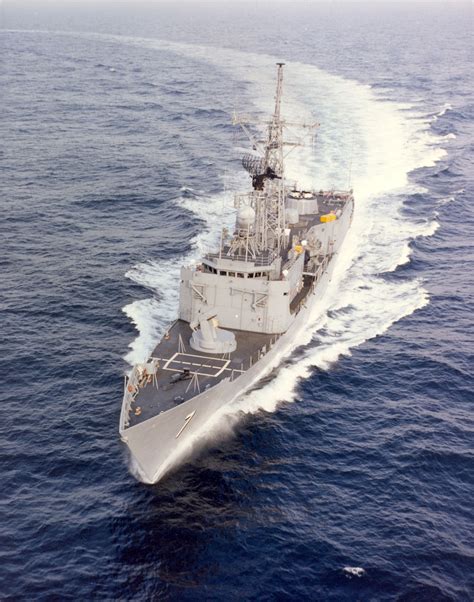
The classification eventually disappeared because of changes in the Navy’s ship-classification system. In 1975, the Navy reclassified its guided-missile frigates as guided-missile cruisers and destroyers. The term therefore vanished from the American fleet even though many of the vessels themselves continued performing escort and combat missions.
The last U.S. Navy frigate under the old classification was USS Simpson (FFG-56), an Oliver Hazard Perry-class guided-missile frigate. Simpson retired in 2015, ending the operational era of the American guided-missile frigate.
There is an important historical exception. USS Constitution, often called “Old Ironsides,” remains in the Navy’s inventory. However, it is not a modern operational combatant. Its continuing role is primarily historical and ceremonial.
The frigate name may nevertheless return in a modern form. The Navy has pursued plans for a new generation of Constellation-class guided-missile frigates, reflecting the continuing usefulness of a medium-sized surface combatant for escort, anti-submarine warfare, and fleet operations.
5. Battleships Became Too Expensive for Modern Naval Warfare
The battleship is perhaps the most recognizable retired U.S. Navy ship class. For much of the 20th century, battleships represented concentrated naval power: enormous guns, thick armor, large crews, and displacement measured in tens of thousands of tons.
Their dominance began to weaken as naval aviation and submarines became increasingly effective. Aircraft could attack ships from distances far beyond the range of traditional naval guns, while submarines could threaten even heavily armored surface combatants from below the waterline.
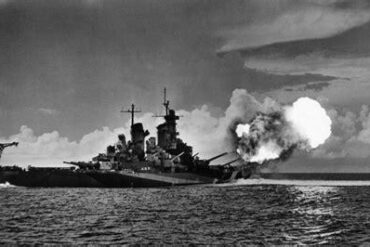
Nevertheless, battleships remained important during World War II. The Iowa-class became the most famous American battleship class of the period. Six ships were planned, although only four were completed.
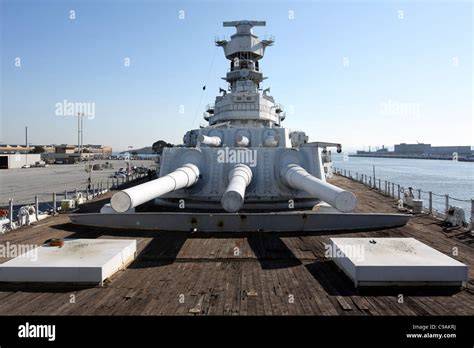
These ships carried nine 16-inch guns and combined enormous firepower with substantial armor and speed. Their careers did not end with World War II. Several were modernized and returned to service during later conflicts, demonstrating that battleships still possessed considerable value as naval gunfire platforms.
The most famous was USS Missouri (BB-63). The battleship was present in Tokyo Bay when Japan formally surrendered in September 1945, making it one of the most historically significant warships of the 20th century.
Missouri later returned to combat during the Korean War and underwent another major modernization decades later. During Operation Desert Storm in 1991, it fired Tomahawk cruise missiles against Iraqi targets, demonstrating how an old battleship could be integrated with modern precision weapons.
Yet Missouri’s final retirement in 1992 effectively closed the operational battleship era for the United States.
Today, all four Iowa-class battleships survive as museum ships. Their massive guns and armored hulls provide a physical reminder of an era when controlling the surface of the ocean depended heavily on the ability to bring overwhelming gunfire against an enemy fleet.
Why These Five US Navy Ship Classes Disappeared
The disappearance of these ship classes illustrates a broader rule of naval warfare: ships rarely become obsolete simply because they are old. They become obsolete when another technology or operational concept can perform their essential missions more effectively.
Corvettes lost relevance in a Navy structured around global power projection and larger multi-role combatants. Torpedo boats disappeared as aircraft, submarines, missiles, and later unmanned systems offered longer-range methods of attack. Monitors were revived when river warfare demanded them, then retired again when that specialized requirement ended.
Frigates demonstrate another kind of evolution. The Navy did not necessarily abandon the underlying mission; instead, it changed the classification and moved those capabilities into cruisers and destroyers. Battleships faced the most profound transformation because their defining combination of heavy guns and armor became increasingly difficult to justify against aircraft, submarines, missiles, and precision-guided weapons.
The result is a modern fleet that looks radically different from the Navy of the Civil War, World War II, or even the Cold War. Yet many of the missions remain familiar: protecting sea lanes, escorting high-value ships, attacking enemy forces, supporting troops ashore, gathering intelligence, and controlling strategically important waters.
That is why retired ship classes remain valuable to study. They show not only what the U.S. Navy once built, but also how quickly naval warfare can change when technology, geography, and strategy move in a new direction.