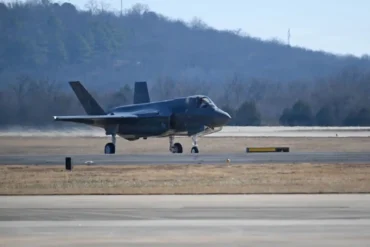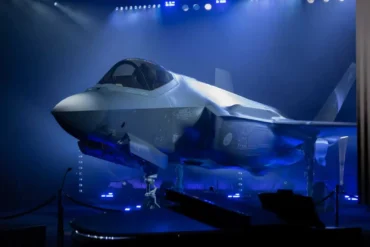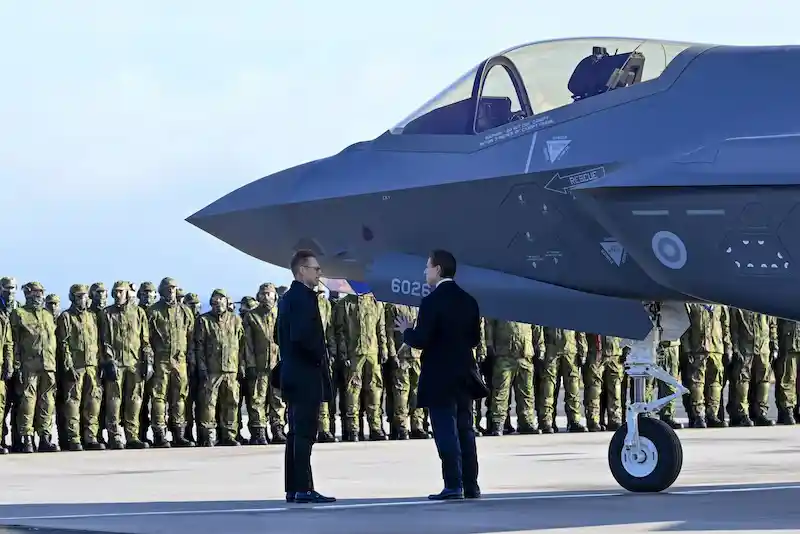
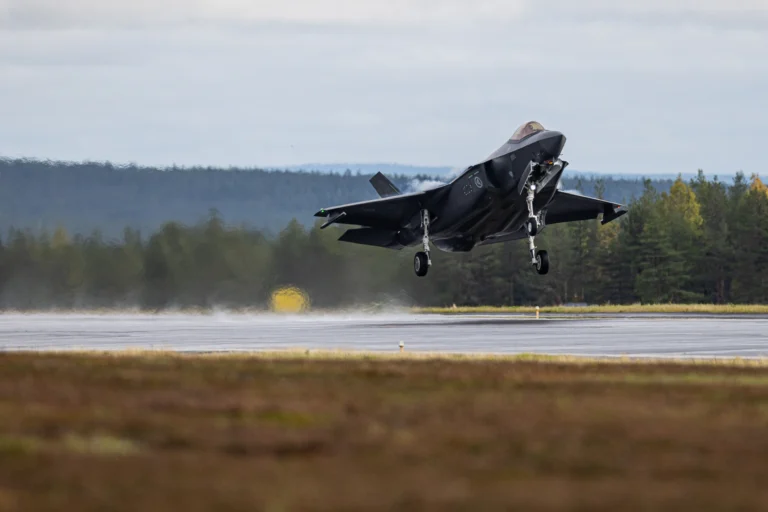
Finland has officially entered a new phase of its air defense modernization with the arrival of its first permanently based F-35A Lightning II fighter jets. The two aircraft, assigned to the Finnish Air Force’s Lapland Air Wing in Rovaniemi, mark the beginning of a major transition from the country’s F/A-18 Hornet fleet toward a fifth-generation fighter force designed to remain in service for decades.
The aircraft, registered JF-510 and JF-512, arrived in Finland on September 18, 2026, landing at Rovaniemi at 5:45 PM. Although their arrival took place days earlier, Finland formally welcomed the aircraft during a ceremony on October 1 attended by around 400 guests, military personnel, officials and members of the media.
The event was significant not simply because two new fighters had joined the fleet, but because it represented the first permanent presence of Finland’s F-35 force on Finnish territory. The country’s eventual fleet will consist of 64 F-35A fighters, with deliveries continuing toward the end of the decade.
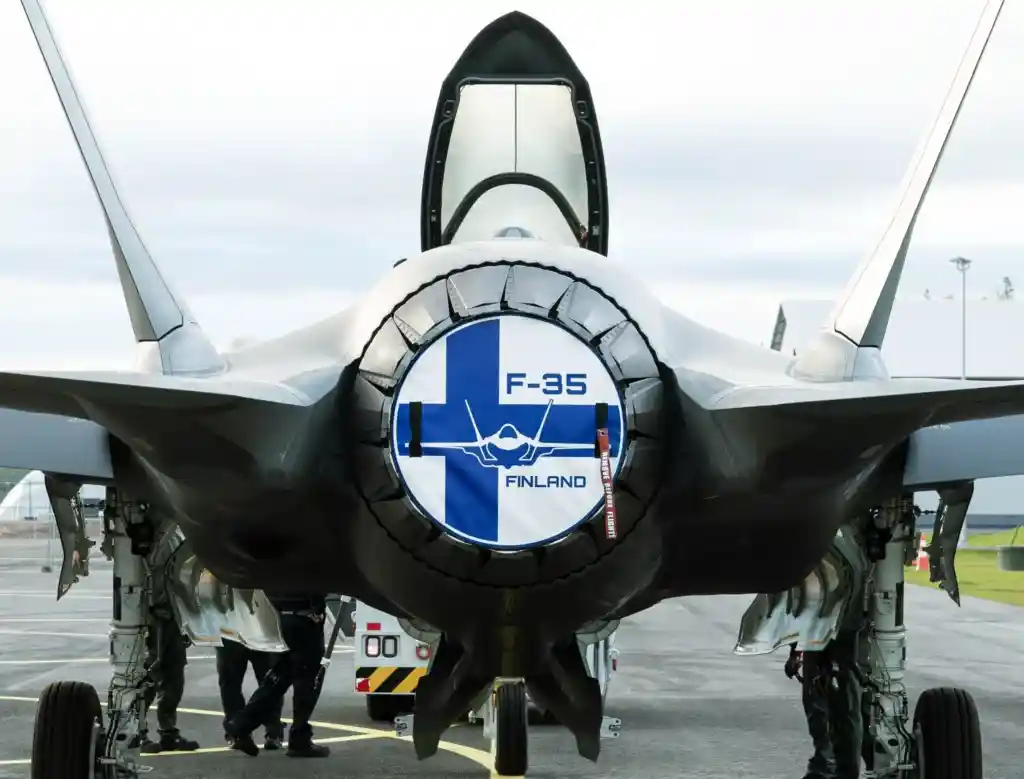
Finland’s First Permanent F-35A Fighters Arrive in Rovaniemi
The two aircraft have been assigned to the Lapland Air Wing, the Finnish Air Force formation responsible for protecting the country’s northern airspace. Based in Rovaniemi, the unit has approximately 420 personnel and occupies an especially important position because of Finland’s extensive northern territory and its proximity to Russia.
The arrival of JF-510 and JF-512 therefore carries significance beyond the replacement of individual aircraft. Finland is beginning to establish the infrastructure, operational procedures and personnel experience required to operate the F-35 from its own territory. The process will eventually transform the country’s fighter force into one centered on a highly connected fifth-generation platform.
The October 1 ceremony brought together a large group of Finnish and American officials. Finnish President Alexander Stubb, Defence Minister Antti Häkkänen, Finnish Air Force Commander Major General Timo Herranen, US Ambassador to Finland Howard Brodie and F-35 Joint Program Office Program Executive Officer Lieutenant General Gregory Masiello were among those present.
The ceremony also included a Finnish F/A-18 Hornet demonstration and a particularly important milestone: the first F-35 flight in Finland conducted by a Finnish pilot. Lieutenant Colonel Jaakko Sointu was selected for the flight, linking Finland’s existing fighter capability directly with the new generation of aircraft.
Finland’s 64 F-35s Represent a €10 Billion Fighter Program
Finland’s F-35 acquisition is considerably larger than the arrival of the first two aircraft might suggest. According to YLE coverage cited in the reference material, the country has committed to 64 F-35A fighters under a procurement valued at approximately €10 billion ($11.2 billion).
That investment covers a long-term transformation of Finnish military aviation rather than simply the purchase of aircraft. The F-35 will gradually become the backbone of Finland’s tactical air power, replacing the F/A-18 Hornets that have served as the country’s primary fighter aircraft for decades.
Finland is also more deeply involved in the F-35 industrial ecosystem than the number of aircraft on order alone suggests. Finnish company Patria has a role in producing F-35 structures, with Lockheed Martin identifying it as the first company outside Lockheed Martin itself to manufacture the aircraft’s forward fuselage.
This industrial participation gives the program an additional domestic dimension. Finland is not merely importing a finished fighter; its aerospace industry is becoming part of the international manufacturing network supporting the F-35 program.
Lockheed Martin Aeronautics President OJ Sanchez described Finland as playing an increasingly important role in Nordic, European and NATO security, while emphasizing the F-35’s connected capabilities and its relevance to an evolving security environment.
Why the F-35 Matters to Finland’s Air Defense
Finland’s decision to acquire the F-35 has to be understood within the broader transformation of European security since Russia’s invasion of Ukraine in February 2022. Finland shares a lengthy land border with Russia, making air defense and national readiness especially important elements of its military planning.
The country subsequently joined NATO in April 2023, becoming the alliance’s 31st member at the time. Its entry also changed the strategic geography of NATO’s northern flank, while Finland’s existing military capabilities became increasingly integrated into the alliance’s wider defense structure.
The F-35 brings capabilities that extend beyond traditional air-to-air combat. Its low-observable design, sensors, data links and ability to collect and share information are central to its role as a networked fifth-generation fighter. For Finland, these characteristics can support a broader air-defense system in which individual aircraft contribute information to other aircraft, ground units and allied forces.
That connectivity is particularly relevant to NATO operations. Finland’s future F-35 fleet will not operate in isolation but as part of an increasingly large European F-35 community.
Finnish F-35 Fleet Will Continue Growing Through 2030
The two permanently based aircraft are only the beginning. Another eight Finnish F-35s are reportedly based in the United States for training and maintenance activities, while additional aircraft are expected to arrive as production and delivery schedules progress.
Finland expects to achieve initial operational capability in early 2028, followed by full operational capability around the end of 2030. That timeline gives the Finnish Air Force several years to build pilot experience, train maintenance personnel, expand infrastructure and develop the operational procedures needed to support a 64-aircraft fifth-generation fleet.
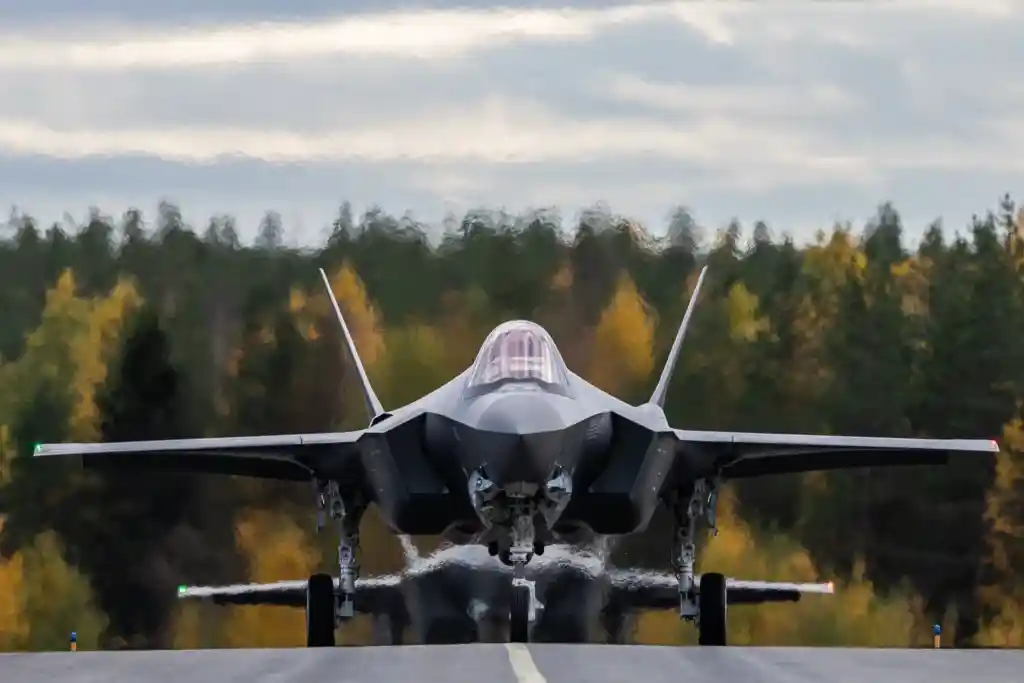
The long-term nature of the program is also striking. Finland expects its F-35 fleet to remain relevant into the 2060s, meaning the aircraft arriving today could form the foundation of Finnish fighter aviation for several decades. The investment therefore extends well beyond an immediate replacement program and represents a generational shift in the country’s military aviation capability.
Finland’s first permanent F-35s also reflect a much larger European trend. The number of F-35 operators and aircraft across the continent has been increasing rapidly, with Defence Minister Antti Häkkänen stating that Europe will soon have more than 700 fifth-generation fighters.
For Finland, however, the significance is especially immediate. JF-510 and JF-512 are the first visible pieces of a 64-aircraft transformation that will reshape the Finnish Air Force, strengthen its integration with NATO’s air forces and establish the F-35A as the country’s principal fighter aircraft for decades to come.