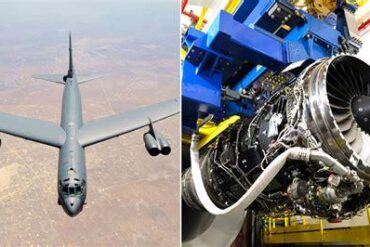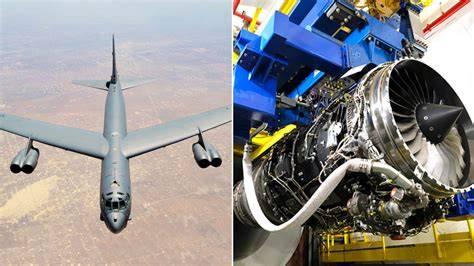
The Boeing B-52 Stratofortress has survived generations of aircraft, weapons, doctrines, and geopolitical rivalries, yet its next major transformation is arriving from something deceptively simple: its engines. The United States Air Force is replacing the bomber’s eight aging Pratt & Whitney TF33 turbofans with modern Rolls-Royce F130 engines, creating the foundation for the B-52J and extending the life of a design that first flew in 1952. Rather than turning the Stratofortress into a fundamentally different aircraft, the re-engining program addresses one of its oldest limitations while giving the bomber a propulsion system designed for decades of future service.
The importance of the change goes far beyond the headline figure for fuel savings. The B-52’s engines affect its range, maintenance requirements, deployment flexibility, logistics footprint, environmental signature, and ability to operate from locations where large support infrastructure may not be available. By replacing the TF33 with a high-bypass turbofan derived from a mature commercial engine family, the Air Force is effectively giving the 70-year-old bomber a new mechanical foundation without throwing away the enormous value contained in its proven airframe.
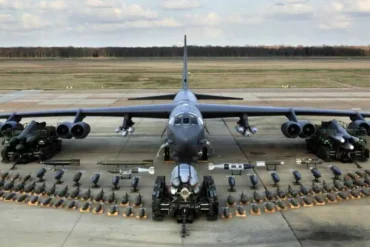
The B-52H fleet dates from the early 1960s, making the aircraft among the oldest active military platforms in the world. Yet age alone does not make the Stratofortress obsolete. Its payload capacity, long endurance, and weapons integration continue to make it valuable. The modernization strategy therefore treats the airframe as an asset worth preserving while replacing components that have become increasingly expensive and difficult to sustain. The result is a remarkable combination: a 1960s bomber structure paired with 21st-century propulsion, sensors, communications, and weapons.
The B-52’s New Rolls-Royce F130 Engines
The most visible part of the transformation is the move from the Pratt & Whitney TF33 to the Rolls-Royce F130. The TF33 is a military derivative of an engine family whose origins stretch back to the 1950s. It has powered the B-52 for decades, but its low-bypass architecture and aging support requirements are poorly suited to an aircraft expected to remain in service for many more years.
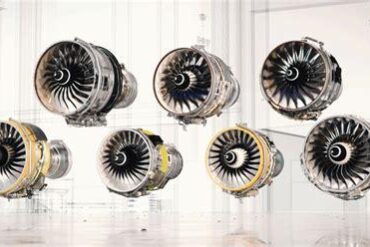
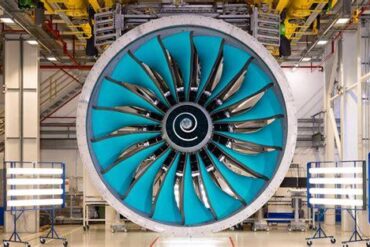
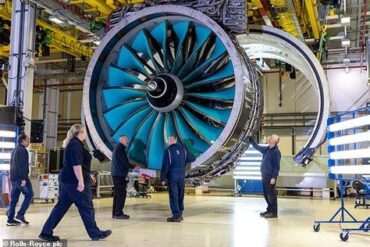
The F130 takes a different approach. Its high-bypass turbofan architecture allows a much larger proportion of the air entering the engine to pass around the core rather than being driven entirely through the combustion system. That arrangement is particularly valuable on an aircraft that spends long missions at steady cruise power. The F130 is also related to Rolls-Royce’s BR700 family of commercial and business-aviation engines, giving the military program access to technologies and industrial experience developed for demanding civilian operations.
According to figures associated with the re-engining program, each F130 provides approximately 17,000 pounds of thrust, broadly matching the thrust of the TF33 it replaces. That is an important detail because the goal is not simply to make the B-52 more powerful. The real objective is to produce the required thrust with substantially less fuel and significantly lower maintenance demands.
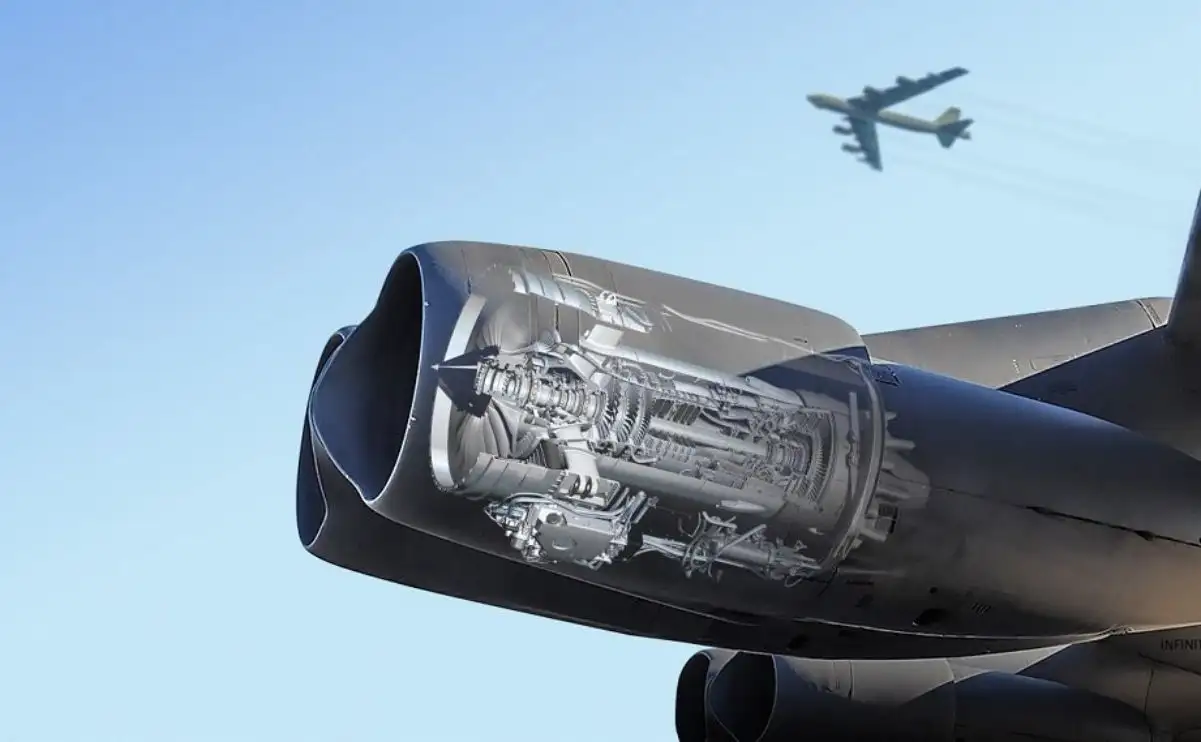
The physical differences are substantial. The F130 has a larger fan, a shorter overall engine package, and a lower weight than the TF33. Its digital control system also represents a generational leap over the older engine’s hydro-mechanical controls. Instead of relying on an increasingly difficult-to-support mechanical architecture, the new engine uses full-authority digital engine control, allowing much more precise management of performance and health.
How the F130 Will Cut B-52 Fuel Consumption
Fuel efficiency is the most obvious benefit of the new engines, but its military consequences are more important than the percentage itself. Estimates for the program have pointed to roughly a 30% reduction in fuel consumption compared with the legacy engines. On an aircraft that routinely flies long-range missions, even a modest improvement compounds into major advantages.
A more efficient engine means the B-52 can travel farther on the same fuel load or carry the same fuel and remain airborne longer. That additional endurance matters because strategic bombers are frequently required to fly thousands of miles before reaching their operating areas. Every extra hour of endurance can reduce pressure on aerial refueling assets, and the Air Force’s tanker fleet is itself a finite resource that would become extremely valuable during a major conflict.
The change therefore has a cascading effect across the wider force. If a B-52 can complete more of a mission before requiring a tanker, tankers can be allocated elsewhere. That could benefit fighters, bombers, surveillance aircraft, or dispersed operations. In a conflict where tanker availability becomes a constraint, engine efficiency becomes a strategic capability, not merely an accounting improvement.
The F130 also eliminates the prominent dark smoke trails historically associated with the TF33. That makes the B-52 cleaner to operate, but it also has a tactical dimension. A bomber that leaves a conspicuous exhaust trail is easier to identify visually or through certain surveillance methods. Removing that signature does not make the B-52 stealthy, but it removes one unnecessary clue that could help reveal its presence or flight path.
B-52J and Agile Combat Employment
Perhaps the most important advantage of the new engines will appear on the ground. The Air Force increasingly emphasizes Agile Combat Employment, a concept built around distributing aircraft among multiple operating locations instead of concentrating them at a small number of major bases. This makes an air force harder to target and potentially allows aircraft to continue operating even when major installations are threatened.
The legacy B-52H presents challenges in that environment. Its TF33 engines require specialized maintenance equipment and historically have depended on substantial ground support infrastructure. Moving a bomber squadron to a remote location can therefore mean moving a large package of personnel, tools, spare parts, and equipment simply to keep the engines running.
The F130 is designed to reduce that burden. Modern starting systems eliminate some of the cumbersome requirements associated with starting the old engines, while improved reliability and digital monitoring can make maintenance more predictable. The result is a bomber that should be easier to operate away from major logistics hubs.
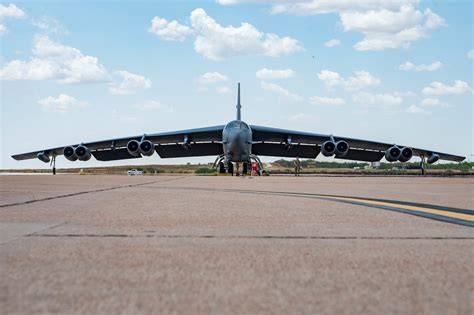
This matters because the B-52 is not being modernized merely to fly from the same bases more cheaply. The wider modernization effort is intended to make the aircraft more adaptable in a contested environment. A bomber that can disperse, relocate, restart engines with less specialized support, and receive maintenance information remotely is much more useful when fixed infrastructure is under surveillance or attack.
Lower Maintenance Costs Could Be As Important As Fuel Savings
Fuel is only one part of the B-52’s lifetime operating cost. The TF33 has become increasingly difficult and expensive to support because of its age and the shrinking ecosystem surrounding older engine technology. Keeping an engine design alive for decades requires specialized expertise, parts, inspections, and depot work that become harder to justify as industrial suppliers disappear.
The F130 addresses that problem through modern design and commercial heritage. Rolls-Royce already supports related engines in the global aviation market, creating a much broader industrial base than would exist for an engine designed solely around a small military fleet. It also gives the Air Force access to established suppliers, repair capabilities, and engineering experience.
The engine’s digital architecture also opens the door to more sophisticated condition-based maintenance. Maintainers can use data to monitor engine health and identify developing problems before they become failures. For a bomber expected to remain operational for decades, that ability could be worth nearly as much as the reduction in fuel consumption.
Engineering a New Engine Onto a 1960s Airframe
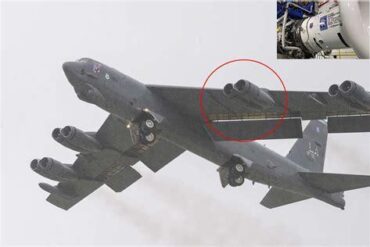
Installing the F130 is not as simple as removing one engine and attaching another. The B-52 was designed around eight relatively small turbojet-derived engines arranged in four twin-engine pods. The larger fan diameter of the F130 changes the aerodynamic and structural conditions around those pods, requiring new nacelles, pylons, and associated systems.
Engineers must also account for the fact that the B-52’s original design documentation predates modern computer-aided engineering. Decades of repairs and modifications mean individual airframes are not necessarily identical. Modern digital scanning and modeling therefore become essential tools for creating accurate representations of aircraft that were originally designed on paper.
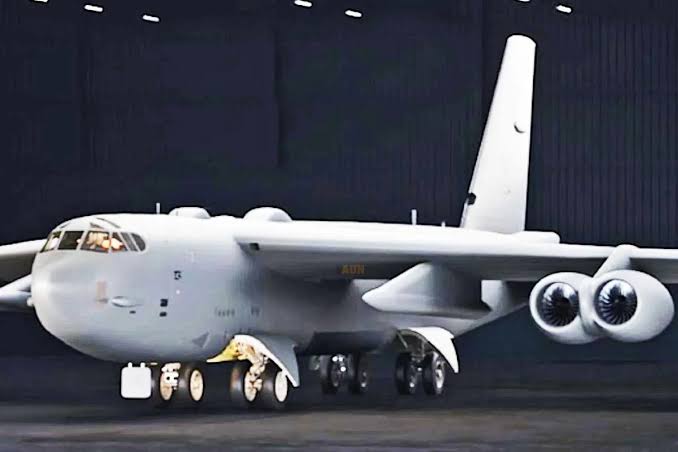
The installation has to preserve aerodynamic stability, structural integrity, ground clearance, and safe engine operation across the bomber’s flight envelope. Engineers also have to integrate the new propulsion system with an aircraft whose electrical, hydraulic, fuel, and control systems were developed in an entirely different technological era. That makes the program an unusual exercise in marrying 1960s airframe engineering with 21st-century digital systems.
The B-52J Is More Than an Engine Upgrade
The F130 installation is only one element of the broader B-52J transformation. The Air Force is also pursuing radar modernization, communications improvements, networking upgrades, and other changes intended to keep the bomber relevant against increasingly capable air defenses. A modern engine would have limited value if the aircraft could not effectively detect threats, exchange information, or employ contemporary weapons.
The radar upgrade is especially significant because the B-52’s original sensors were never designed for modern network-centric warfare. New radar and communications capabilities can turn the bomber into a much more connected node within a broader force, allowing it to receive targeting information, share data, and coordinate with other aircraft and command networks.
That combination explains why the B-52 remains attractive to the Air Force. Building an entirely new bomber with the same payload, range, and volume would be extraordinarily expensive, while the existing Stratofortress airframes still possess substantial structural and operational value. Modernization lets the service replace outdated subsystems without discarding the airframe.
Why the B-52 Could Reach a Century of Service
The extraordinary consequence is the potential lifespan of the aircraft. The final B-52s were built in the early 1960s, yet the modernization program is intended to keep the fleet operational well into the middle of the 21st century. If those aircraft continue flying into the 2050s and beyond, individual Stratofortresses could approach a century between first production and final retirement.
That longevity requires continuous inspections, repairs, upgrades, and replacement of systems. The B-52’s survival is therefore not evidence that military aircraft can simply remain unchanged forever. It demonstrates the opposite: an old airframe can remain relevant when its most important capabilities are repeatedly renewed.
The Rolls-Royce F130 is particularly important because propulsion sits at the center of that equation. More efficient engines reduce fuel demand, lower logistical pressure, simplify operations, and provide a more sustainable industrial base. They do not turn the B-52 into a stealth bomber or erase its vulnerabilities. What they do is make the existing platform more economical, more deployable, and better suited to another generation of combat operations.
The B-52’s transformation is therefore less about making a 70-year-old bomber look new than making it function like a much newer aircraft where it matters most. Its enormous wings, bomb bay, and basic aerodynamic shape remain recognizable, but underneath them will be modern propulsion, sensors, networking, weapons integration, and maintenance technology. That is the central reason the Stratofortress continues to defy retirement: instead of replacing the aircraft every few decades, the United States keeps replacing the technology that would otherwise make the aircraft obsolete.