The Boeing 787 Dreamliner was built around an ambitious promise: long-range efficiency without requiring the enormous passenger volumes traditionally associated with four-engine widebody aircraft. That philosophy makes engine reliability and time-on-wing performance particularly important. Airlines depend on the 787 to connect relatively thin long-haul markets while keeping operating costs under control, meaning every unexpected engine removal can have consequences far beyond the maintenance department.
For Rolls-Royce Trent 1000-powered 787 operators, however, a new European regulatory requirement has introduced a significant constraint into that equation. EASA Airworthiness Directive AD 2026-0117R1 establishes a mandatory inspection regime centered on specific low-pressure turbine discs, with a hard threshold of 7,800 flight cycles for affected stage four components. The directive effectively places a regulatory ceiling on the useful operational planning assumptions airlines can make for certain engines, even when other parts of the powerplant have been upgraded for substantially longer service.
The significance of the rule is not simply the number 7,800. A flight cycle represents one takeoff and landing, so a long-haul 787 can accumulate cycles much more slowly than a short-haul aircraft. Nevertheless, when an engine approaches the regulatory threshold, the required work is not something technicians can perform during an ordinary overnight visit. The affected components sit deep inside the low-pressure turbine, meaning the engine must be removed and substantially disassembled before the discs can be inspected.
That creates an uncomfortable disconnect between engine durability improvements and regulatory maintenance limits. Rolls-Royce has invested heavily in improving the Trent 1000’s durability, particularly around the hot section, with redesigned components intended to dramatically increase time on wing. Yet an airline cannot fully exploit that investment if a separate component at the cold end of the engine reaches a mandatory inspection threshold first.
EASA AD 2026-0117R1 Establishes a 7,800-Cycle Maintenance Boundary
The new directive took effect on August 19 and superseded earlier regulatory instructions covering the affected Trent 1000 configurations. It applies across 11 distinct Trent 1000 variants and covers Boeing 787-8, 787-9, and 787-10 aircraft equipped with the relevant engines.
The regulation is particularly focused on components identified in Rolls-Royce Alert Non-Modification Service Bulletin 72-AK416 Revision 2. The affected stage three low-pressure turbine disc is identified by part number KH36323, while the stage four disc is KH33943. Stage four discs modified under Service Bulletin 72-K771 are subject to the 7,800-cycle life limitation, while affected stage three discs require cleaning, inspection, and repair procedures under specified maintenance circumstances.
The directive does not simply tell airlines to inspect an engine whenever convenient. It establishes several circumstances that can force the work to occur. These include reaching the 7,800-cycle limit, entering a facility for planned engine refurbishment, undergoing the applicable SB 72-K771 modification, or replacing an affected stage three disc.
That distinction matters because airline maintenance programs are built around carefully synchronized events. Operators normally try to combine inspections, component replacements, overhauls, and other major work so that an engine spends as little time away from the aircraft as possible. A mandatory inspection that arrives earlier than the rest of the engine’s maintenance requirements can disrupt that carefully constructed sequence.
Why the Low-Pressure Turbine Discs Matter
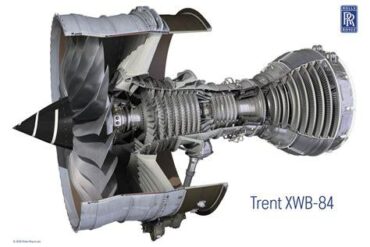
The affected components are part of the Trent 1000’s six-stage low-pressure turbine assembly, rather than the high-pressure turbine system that has received much of Rolls-Royce’s recent durability attention. Their job is fundamental: they extract energy from the engine’s exhaust flow and convert it into rotational power that ultimately drives the low-pressure compressor and fan system.
Although the components are designed for extreme operating environments, turbine discs experience repeated mechanical and thermal stresses throughout every flight. Each takeoff subjects the rotating assembly to increasing loads as the engine accelerates, while cruise operation produces a different thermal and mechanical environment. Descent and shutdown then introduce another cycle of temperature and rotational changes.
The concern behind the directive involves micro-cracking and structural fatigue around areas such as disc rim slots and drive posts. The modified geometry associated with SB 72-K771 was intended to improve the way loads moved through the turbine structure. However, repeated thermal-mechanical cycling can create localized stress concentrations, potentially allowing microscopic cracks to develop before the component reaches its theoretical overall structural life.
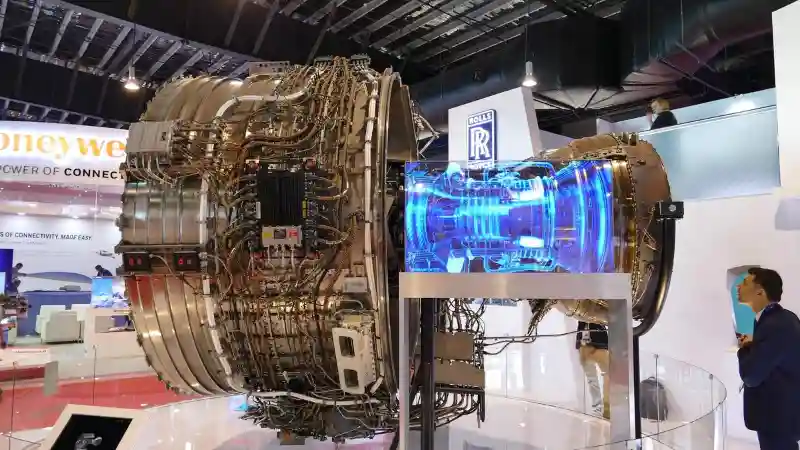
This is precisely the type of problem that cannot be reliably managed simply by watching an engine’s overall performance. An engine may continue producing normal thrust, maintain expected fuel efficiency, and show no obvious signs of distress while a microscopic defect develops inside a rotating component. Non-destructive inspection therefore becomes essential when regulators identify a credible structural-fatigue risk.
Why 7,800 Cycles Can Force an Engine Off the Boeing 787
The practical impact of the directive becomes clearer when the inspection process is considered. Stage three and stage four discs cannot simply be examined while the Trent 1000 remains attached to the aircraft. The engine must first be removed from the 787’s wing pylon and transferred to an appropriate maintenance facility.
Once at the shop, technicians must gain access to the low-pressure turbine module and disassemble the relevant sections sufficiently to expose the affected discs. This is a fundamentally different maintenance event from routine line work. An airline cannot simply schedule the aircraft overnight, inspect the component and return the engine to service the following morning.
The discs are cleaned before undergoing detailed non-destructive examination. Techniques such as fluorescent penetrant inspection and eddy-current testing can reveal surface or near-surface indications that would not be visible during a conventional visual inspection. Areas around disc posts, rim slots, and drive structures receive particular attention because these regions can experience concentrated mechanical stresses.
If an inspection identifies cracking beyond allowable limits, the consequences become even more significant. The component may need to be removed from service and replaced, adding parts requirements, labor, transportation, and additional shop time to an already expensive maintenance event. Even when no defect is found, the inspection itself consumes valuable MRO capacity.
That is why the 7,800-cycle figure is more consequential than it initially appears. The number represents a planning deadline for a major shop event, not simply a routine inspection interval.
Rolls-Royce’s Durability Improvements Face an Unusual Constraint
The regulatory action arrives at an interesting moment for the Trent 1000 program. Rolls-Royce has spent substantial resources addressing the engine’s historical durability challenges, particularly premature deterioration in the hot section.
The company’s durability improvement program introduced successive technical changes designed to extend time on wing. One important development involved the high-pressure turbine blade, with an advanced cooling arrangement intended to increase cooling airflow substantially and improve durability. Later improvements incorporated redesigned nozzle guide vanes, lightweight turbine shrouds, and upgraded combustor coatings.
The objective was clear: allow the Trent 1000 to remain on the wing for significantly longer periods between major maintenance events. Such improvements are extremely valuable for 787 operators because fewer engine removals mean fewer shop visits, less spare-engine demand, lower maintenance costs, and greater aircraft availability.
Yet engine durability is ultimately constrained by its most restrictive critical component. If the high-pressure core can theoretically continue operating for thousands of additional cycles while a low-pressure turbine disc has a mandatory inspection threshold, the airline must plan around the disc.
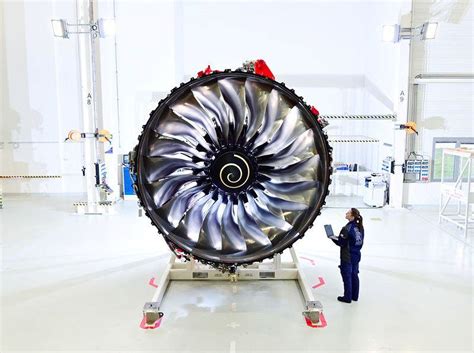
This does not mean the Rolls-Royce durability improvements have failed. Their benefits can still be substantial. The regulatory requirement instead demonstrates a fundamental reality of commercial engine maintenance: extending the life of one subsystem does not automatically extend the approved operational life of the entire engine.
Boeing 787 Operators Must Recalculate Spare Engine Requirements
For airline planners, the most immediate challenge is not necessarily the inspection itself but the number of engines that could require shop attention within the same period. Large 787 fleets operate engines continuously across long-haul networks, and maintenance events are normally staggered to prevent multiple aircraft from becoming unavailable simultaneously.
A new mandatory threshold can compress that flexibility. If several engines approach 7,800 cycles within a relatively narrow period, operators may suddenly require additional shop slots and replacement powerplants. That creates pressure on spare-engine inventories, leasing arrangements, MRO contracts, and aircraft schedules.
The problem can become particularly serious for airlines operating sizeable 787 fleets on daily international services. A single aircraft generally needs two serviceable engines, but the airline must maintain additional coverage to protect against unscheduled removals and planned maintenance. Every engine sent to an MRO facility reduces that buffer.
If multiple powerplants reach their inspection trigger at approximately the same time, the operator may have to lease additional engines or rearrange aircraft assignments. The resulting cost is not limited to the inspection invoice. It can also include engine transportation, replacement hardware, lease fees, additional maintenance labor, aircraft downtime, and the opportunity cost associated with having fewer engines available for the fleet.
MRO Capacity Could Become the Real Bottleneck
The directive also creates a challenge for the broader commercial aviation MRO network. A regulatory requirement is only as practical as the industry’s ability to perform the mandated work within a reasonable period.
Low-pressure turbine inspections require specialized facilities, tooling, trained technicians, and access to approved replacement components. If a large number of Trent 1000 engines arrive for the same type of work, shop capacity can quickly become a limiting factor.
That could create a secondary effect. An airline may comply with the 7,800-cycle requirement perfectly while still facing operational disruption because an engine is waiting for an available maintenance slot. In an industry where widebody aircraft generate revenue across carefully planned international schedules, an engine sitting in an MRO queue can be almost as consequential as an engine that has suffered an unexpected technical failure.
The situation therefore places pressure on Rolls-Royce, independent MRO providers, leasing companies, and airlines simultaneously. Manufacturers need sufficient component and shop capacity, MRO providers need enough skilled labor and bays, and airlines need enough spare-engine flexibility to absorb the maintenance workload.
The Root Cause Makes Long-Term Planning More Difficult
The underlying fatigue concern also illustrates why maintenance planning cannot depend exclusively on accumulated flight hours. Traditional engine planning often considers hours, cycles, performance deterioration, and known component life limits. But localized structural fatigue can require a different approach because the condition of a specific component may not correspond neatly with overall engine performance.
For the affected Trent 1000 discs, repeated mechanical loading and thermal cycling are central to the concern. The components rotate at high speed while experiencing changing temperatures and loads throughout every flight. Small changes in geometry, stress distribution, or material response can therefore have consequences over thousands of repeated cycles.
This is why the regulator has established a hard cycle threshold rather than leaving the decision entirely to airline condition-based maintenance programs. Advanced monitoring can provide enormous amounts of engine-performance data, but microscopic material fatigue still requires physical inspection when a known structural risk reaches a prescribed threshold.
What the 7,800-Cycle Rule Means for the 787 Long Term
The most important consequence of AD 2026-0117R1 may be the way it changes the economics of extended Trent 1000 time on wing. Rolls-Royce’s durability program remains valuable because improved hot-section reliability can reduce maintenance requirements and increase operational resilience. But airlines must now incorporate a separate regulatory constraint into their long-term engine forecasts.
The industry will be watching what happens as more upgraded engines accumulate cycles through 2027 and beyond. If inspections consistently demonstrate that affected discs remain serviceable, operators may gain greater confidence in planning the associated shop visits. If significant numbers of components require replacement, the maintenance burden could become more substantial than current scheduling models anticipate.
For Boeing 787 operators, the lesson is straightforward. A highly durable engine is not necessarily an engine that can remain untouched indefinitely. Regulatory life limits, component-specific fatigue risks, and MRO capacity ultimately determine how long a powerplant can realistically stay on the wing.
The 7,800-cycle requirement therefore represents more than another technical directive buried in an airline’s maintenance documentation. It forces operators to reconsider when engines enter the shop, how many spare engines they need, and how durability improvements translate into actual fleet economics. Rolls-Royce may have made major progress in extending Trent 1000 core durability, but EASA has made clear that the low-pressure turbine discs remain a critical boundary.
For the Boeing 787 fleet, that boundary has now become a central part of maintenance planning.