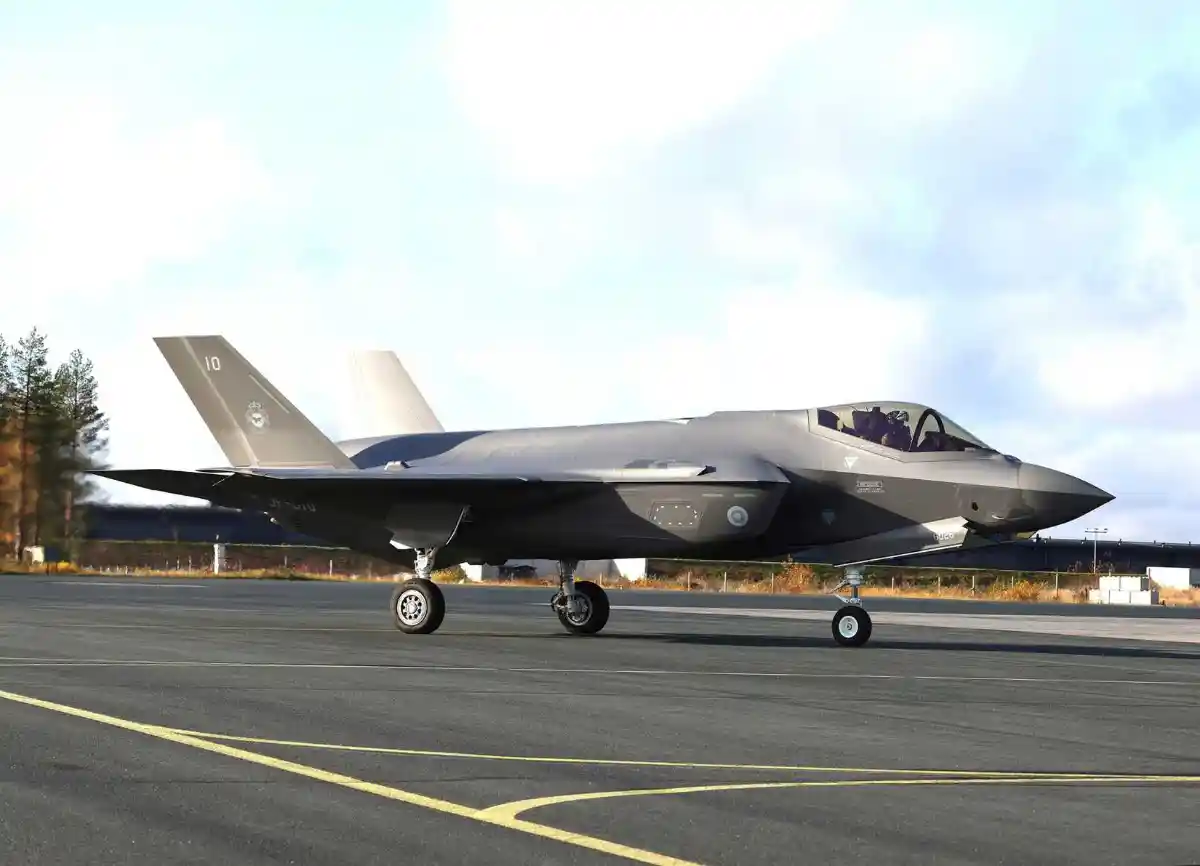
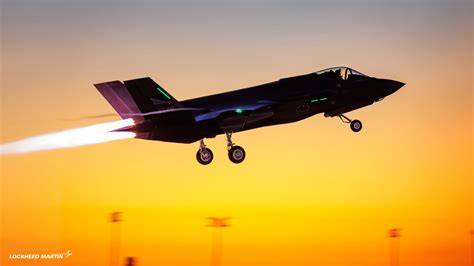
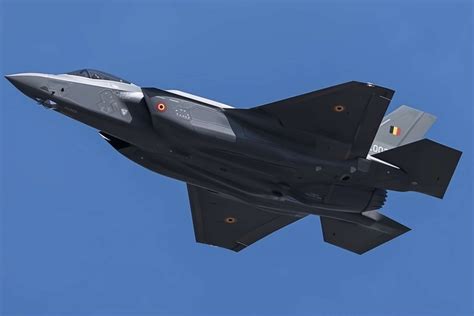
The United States has taken a major step toward potentially giving Saudi Arabia access to the F-35A Lightning II, one of the world’s most sophisticated combat aircraft. On September 17, 2026, the US State Department approved a possible $24.3 billion sale of 48 F-35A fighters to the Kingdom, a proposed transfer that could reshape the balance of airpower in the Middle East. If finalized, the agreement would represent far more than another conventional fighter sale. It would place highly sensitive fifth-generation technology in the hands of a country whose expanding relationship with China has already generated serious questions inside Washington.
For Saudi Arabia, the attraction is obvious. The Royal Saudi Air Force (RSAF) already operates one of the Middle East’s largest and most capable combat fleets, including a substantial force of F-15 Eagles. Adding the F-35 would give Saudi pilots access to low-observable technology, advanced sensors, sophisticated electronic warfare capabilities, and an exceptionally powerful networked battlespace architecture. Rather than simply adding another fighter type, the aircraft could become a sensor and information hub capable of increasing the effectiveness of the Kingdom’s existing fourth-generation fleet.
Yet the proposed deal has immediately attracted controversy because the F-35 is not simply another military aircraft. The Lightning II incorporates decades of American research and development in stealth, sensors, mission systems, electronic warfare, communications, and data processing. Protecting those technologies is considered a strategic priority for Washington. The possibility that China could attempt to obtain information about the aircraft through its extensive commercial and telecommunications presence in Saudi Arabia has therefore become one of the central arguments against the sale.
Saudi Arabia Has Long Been a Major US Weapons Customer
The proposed F-35 agreement builds on a relationship between Washington and Riyadh that has existed for decades. Saudi Arabia has traditionally been one of the largest recipients of American military equipment, relying heavily on US aircraft, weapons, training, maintenance, and logistical support. The relationship has made the Kingdom deeply dependent on American defense technology while simultaneously making Saudi Arabia one of the most important customers for the US defense industry.
A major example came before Donald Trump entered the White House in 2017, when the administration of President Barack Obama finalized a $29.4 billion arms agreement with Saudi Arabia. The package included 84 new F-15SA fighters, upgrades for 70 existing F-15 aircraft, weapons, spare parts, training, maintenance, and logistics. The agreement helped establish an even stronger foundation for Saudi airpower and demonstrated the scale of the Kingdom’s long-term commitment to American military equipment.
That dependence has continued. According to the Stockholm International Peace Research Institute, American weapons represented approximately 77% of Saudi Arabia’s arms imports between 2021 and 2025. The figure illustrates how closely the Kingdom’s military modernization has been tied to US technology. The F-35 proposal would therefore represent an evolution of an established defense relationship rather than an isolated attempt by Riyadh to acquire an American aircraft.
The scale of the new proposal, however, makes it particularly significant. The State Department’s approval covers a possible sale of 48 F-35As valued at approximately $24.3 billion, although approval of a possible foreign military sale does not itself mean that a final contract has been signed or that the aircraft will immediately enter Saudi service. If the agreement proceeds through the remaining stages, deliveries and operational introduction could potentially occur in the early to mid-2030s.
The proposed package would also include 49 Pratt & Whitney F135-PW-100 engines, along with support equipment, spare parts, technical assistance, training, and other services. That means the value of the arrangement extends beyond the airframes themselves. Establishing an operational F-35 fleet requires a substantial ecosystem of maintenance, software, logistics, training, mission planning, and secure information infrastructure.
What the F-35 Would Add to Saudi Airpower
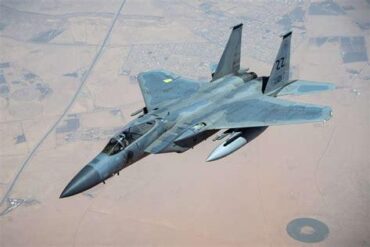
The RSAF already possesses formidable airpower. Its active inventory is estimated at around 916 aircraft, including approximately 384 combat aircraft, with F-15 variants forming the backbone of its fighter force. Those aircraft provide the Kingdom with substantial fourth-generation capabilities for air superiority, strike operations, and other demanding missions.
The F-35 would introduce a fundamentally different approach to combat operations. Its greatest value would not necessarily come from carrying the largest weapons load or flying faster than every other fighter. Instead, its strength lies in its ability to detect, process, fuse, and distribute information while operating with a reduced radar signature.
An F-35 operating alongside Saudi F-15s could therefore become a powerful force multiplier. The Lightning could collect information using its onboard sensors and combine those inputs into a more coherent picture of the surrounding battlespace. Information could then be shared with other aircraft and forces, allowing fourth-generation fighters to exploit targeting information that they might otherwise struggle to obtain independently.
This combination could be particularly valuable during complex operations in which the first challenge is not simply destroying a target but finding it, identifying it, tracking it, and maintaining awareness of everything around it. The F-35’s networked architecture is designed around precisely this kind of information advantage.
For Saudi Arabia, the aircraft could also strengthen intelligence, surveillance, and reconnaissance capabilities. Its sensors could contribute to monitoring military activity, missile deployments, drone operations, and maritime traffic across a strategically important region. The aircraft’s ability to operate as part of a broader network could make it useful well beyond traditional fighter-versus-fighter missions.
Why Iran and the Houthis Matter to Riyadh
Saudi interest in the F-35 cannot be separated from the security environment surrounding the Kingdom. Riyadh has spent years confronting threats associated with Iran, ballistic missiles, drones, and the Houthi movement in Yemen. The Kingdom therefore has a strong incentive to acquire aircraft capable of providing better situational awareness and surviving in increasingly sophisticated air-defense environments.
The Houthi threat is particularly important because attacks have demonstrated how relatively inexpensive missiles and unmanned aircraft can create strategic problems for a technologically advanced military. Nadwa Al-Dawsari, an associate fellow at the Middle East Institute, has stated that the Houthis have launched more than 1,800 missile and drone attacks since 2015, with some missiles capable of reaching roughly 2,000 kilometers and certain drones reaching approximately 2,600 kilometers.
The broader threat extends beyond individual attacks. Weapons, ammunition, drones, and missile components have been moved through maritime trafficking networks connecting the Gulf of Oman, the Arabian Sea, and Yemen. Such routes are difficult to monitor comprehensively because of the enormous volume of maritime traffic operating across the region.
An F-35 could contribute to monitoring these activities by providing a stealthy platform capable of gathering intelligence and identifying potential threats. Its sensors could help create a broader picture of activity around ports, shipping routes, and military facilities. In circumstances where military action became necessary, its precision-strike capabilities could also provide Saudi Arabia with another option for responding to threats.
The China Question Is the Most Controversial Part of the Deal
The most difficult issue surrounding the proposed sale is not whether Saudi Arabia can operate the F-35. The more fundamental question is whether Washington can protect the aircraft’s most sensitive technologies once the jets are deployed in Saudi Arabia.
Congressman Raja Krishnamoorthi, a senior member of the House Permanent Select Committee on Intelligence, has publicly opposed the proposed sale. His concern centers on the possibility that Chinese intelligence could gain access to sensitive information associated with the F-35. He has argued that the United States should not provide its most advanced fighter to a location where American intelligence believes the Chinese Communist Party could potentially obtain access to the technology.
Those concerns are rooted in a much broader history of Chinese espionage activity. Research from the Institute for National Security Studies has documented numerous Chinese espionage incidents targeting US government agencies, military organizations, intelligence services, NASA, and major defense contractors including Lockheed Martin, Boeing, and Raytheon.
The concern becomes more complicated because China’s commercial technology footprint in Saudi Arabia has expanded considerably. Huawei opened a cloud facility in Riyadh in 2023, supporting Saudi government services and artificial intelligence capabilities. China Telecom subsequently launched a project providing 5G connectivity, cloud computing, and AI-related services to Saudi government institutions.
None of this automatically means that Chinese companies would obtain access to F-35 information. Telecommunications infrastructure can be separated, segmented, monitored, and protected using sophisticated cybersecurity measures. Nevertheless, the presence of Chinese technology companies within infrastructure supporting government systems creates an additional layer of security concerns that US officials would have to address before sensitive aircraft could safely operate there.
Why Telecommunications Infrastructure Matters
The F-35’s security challenge is different from simply protecting the physical aircraft inside a hardened hangar. Modern combat aircraft depend heavily on software, networks, data links, mission systems, and secure communications. The aircraft is part of an enormous digital ecosystem rather than an isolated machine.
That makes network security a critical component of protecting the F-35. If hostile intelligence services could obtain sensitive information from connected infrastructure, the consequences might extend beyond the compromise of one aircraft. Information about operational procedures, communications architecture, maintenance systems, mission data, or other aspects of the aircraft’s ecosystem could potentially help an adversary understand weaknesses that are deliberately designed to remain secret.
Concerns about Chinese-made systems having remote connectivity have also been raised elsewhere. In Denmark, authorities investigated security vulnerabilities involving Chinese-made electric buses after questions emerged over whether the manufacturer could remotely access vehicle control systems for software updates and diagnostics. That case does not establish that Chinese telecommunications equipment would compromise an F-35, but it illustrates why government officials increasingly scrutinize foreign-made technology embedded in critical infrastructure.
Another concern comes from Chinese intelligence legislation. The Center for Strategic and International Studies has highlighted Article 14 of China’s Intelligence Law, which states that national intelligence institutions can request necessary support, assistance, and cooperation from relevant organizations and citizens. Critics of Chinese technology partnerships argue that this legal framework creates an inherent security concern when Chinese companies operate systems connected to strategically important infrastructure abroad.
The F-35 Could Also Change Regional Military Relationships
Beyond Saudi Arabia’s own military requirements, the aircraft could have wider geopolitical consequences. Operating the F-35 could potentially increase interoperability between Saudi Arabia, the United States, and other regional partners that operate or interact with American fifth-generation technology.
The Middle East already contains a complex network of US military partnerships, and Israel operates the F-35I Adir. Greater commonality in aircraft technology, doctrine, mission planning, and information-sharing systems could theoretically make coordinated operations easier. It could also improve the ability of allied forces to exchange threat information during a regional crisis.
At the same time, Israel’s qualitative military edge has historically been a major consideration in US decisions involving advanced weapons sales to Middle Eastern countries. Providing Saudi Arabia with the F-35 would therefore require Washington to balance several competing objectives: strengthening a major partner, deterring regional threats, maintaining interoperability, protecting American technology, and preserving Israel’s strategic advantages.
That makes the proposed $24.3 billion F-35 sale to Saudi Arabia much more complicated than a straightforward aircraft purchase.
A Strategic Opportunity With a Serious Security Price
For Saudi Arabia, the case for the F-35 is compelling. The aircraft could provide a major improvement in situational awareness, strengthen the Kingdom’s ISR capabilities, increase the effectiveness of its F-15 fleet, improve precision-strike options, and give Saudi forces access to one of the most advanced combat aviation systems ever developed.
For Washington, however, the decision involves a different calculation. The F-35 contains technologies that the United States has spent decades developing and protecting. Giving Saudi Arabia the aircraft could strengthen an important regional partner, but it also creates a requirement to ensure that the aircraft’s operational environment is sufficiently secure against espionage and unauthorized access.
The result is a difficult strategic trade-off. Saudi Arabia wants the F-35 because it offers capabilities that few other aircraft can match, while US officials must determine whether those capabilities can be transferred without exposing technologies that could ultimately benefit a geopolitical competitor.
If the agreement moves forward, the most important part of the story may not be the 48 aircraft themselves. It will be the security architecture surrounding them: where they are based, how their networks are protected, who maintains their systems, how data is handled, and what safeguards Washington requires before allowing the Lightning II to become part of the Royal Saudi Air Force.
The proposed sale therefore represents both an extraordinary opportunity and an extraordinary test. It could make Saudi Arabia one of the world’s most capable F-35 operators and deepen the Kingdom’s military relationship with the United States. But it will also force Washington to confront a question at the heart of modern defense technology: how do you share the world’s most advanced weapons without sharing the secrets that make them so valuable?