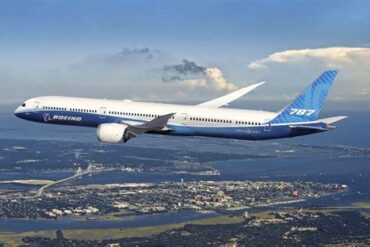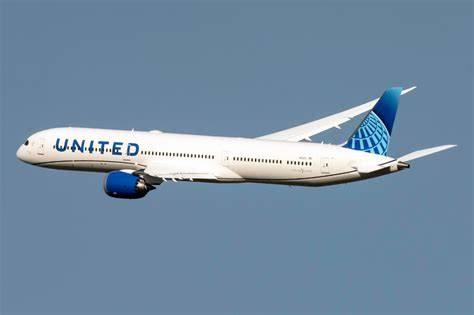
United Airlines has quietly gained a new tool for reshaping its long-haul fleet strategy. The Boeing 787-10 was already the largest member of the Dreamliner family, offering substantially more cabin capacity than the 787-9, but its shorter range had kept its role relatively specialized. A newly certified increase in Maximum Takeoff Weight changes that equation by giving the aircraft more weight to work with, potentially allowing United to carry more payload, more fuel, or a useful combination of both.
The upgrade is significant because it does not require United to acquire a completely different aircraft. Boeing’s 787-10 increased Maximum Takeoff Weight (iMTOW) option adds approximately 14,000 lb (6,350 kg) to the aircraft’s allowable takeoff weight, raising its MTOW to 574,000 lb (260.3 tonnes). Depending on the mission, Boeing estimates that the extra weight can translate into approximately five tonnes of additional payload or around 430 nautical miles of additional range.
For United, that seemingly modest improvement could have an outsized effect on fleet planning. The airline operates both the 787-9 and 787-10, and the distinction between them has traditionally been straightforward: the 787-10 carries more passengers but the 787-9 travels farther. The iMTOW upgrade does not erase that difference, but it narrows it enough to make the 787-10 a more flexible long-haul aircraft, potentially bringing some missions that once favored the 787-9 or Airbus A350 within reach of the larger Dreamliner.
Why The Boeing 787-10 Needed More Range
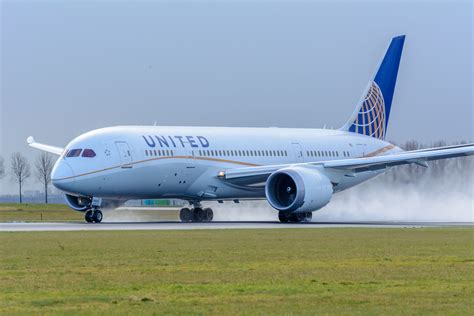
The basic limitation of the 787-10 has always been connected to its design. Boeing created the aircraft by stretching the 787-9’s fuselage by roughly 18 feet, or 5.5 meters. The longer fuselage creates room for significantly more passengers, with Boeing listing typical two-class capacity at approximately 300 to 375 seats, compared with around 250 to 325 seats for the 787-9.
The problem is that the two aircraft retain broadly similar fuel capacity of approximately 223,646 lb (101,444 kg). The 787-10 therefore has more cabin to fill without receiving a proportionally larger fuel tank. That is an intentional design compromise rather than a flaw. Airlines wanting high capacity on medium- and long-haul routes can benefit enormously from the larger aircraft, while airlines needing maximum range can turn to the 787-9.
That distinction becomes increasingly important as an aircraft approaches the limits of a particular mission. A long-haul flight is not determined simply by the distance between two airports. Passenger weight, baggage, cargo, fuel reserves, weather, winds and alternate-airport requirements all influence how much useful payload an aircraft can carry. A route that appears comfortably within the aircraft’s theoretical range can therefore become operationally difficult when demand is high or conditions are unfavorable.
Boeing’s published figures illustrate the gap. The higher-weight 787-9 can offer up to approximately 8,300 nautical miles of range, while the 787-10 is rated at up to about 7,500 nautical miles. That difference is large enough to influence route planning, particularly for United’s longest transpacific and ultra-long-haul services.
Boeing’s 14,000-Pound 787-10 Upgrade
Boeing’s answer was not to redesign the Dreamliner or develop another stretched variant. Instead, the manufacturer created the Increased Maximum Takeoff Weight program, previously known as the Increased Gross Weight program. The FAA approved the higher weights in March 2026, allowing the 787-10’s MTOW to increase by 14,000 lb and the 787-9’s by 10,000 lb.
The change brings the 787-10 to a new maximum takeoff weight of 574,000 lb, while the 787-9 rises to approximately 571,500 lb. The difference may appear relatively small when viewed against the aircraft’s total weight, but aviation economics often turn on surprisingly small margins. A few tonnes of additional payload can determine whether an airline can carry all booked passengers, accept additional cargo, or avoid imposing operational restrictions on a route.
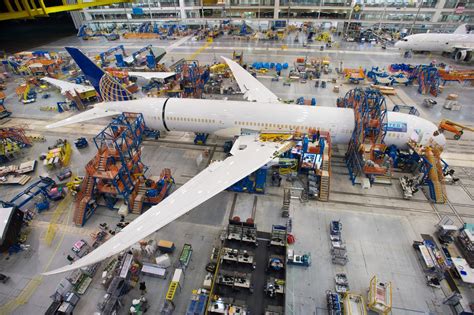
Boeing achieved the upgrade through a combination of structural and software changes rather than a fundamental redesign. The aircraft incorporates reinforcements to areas including the main landing gear, composite wing structures and midbody, while Flight Management System software optimizations help accommodate the broader performance envelope. Boeing has also stated that 787-9 and 787-10 aircraft entering final assembly from December 2025 include the structural provisions necessary for the higher weights.
That approach makes the upgrade particularly interesting for United. The airline does not need to build its network around an entirely new aircraft type. Instead, it can potentially extract more capability from a Dreamliner variant it already operates in meaningful numbers.
Five Tonnes Of Payload Could Matter More Than 430 Nautical Miles
The most important feature of the upgrade may not actually be the extra range. The approximately 430 nautical miles of potential range makes an attractive headline, but United can decide how to use the additional weight. The airline might devote it to fuel on a particularly demanding route, or it might use the margin to carry more passengers, baggage and belly cargo on an existing service.
That distinction matters because airline profitability depends heavily on what an aircraft can carry rather than how far it can theoretically fly. If a 787-10 is already capable of operating a route but occasionally faces payload restrictions because of headwinds or fuel requirements, an additional five tonnes can be extremely valuable. United could potentially protect cargo capacity or reduce the frequency with which operational conditions force payload limitations.
Chicago O’Hare to Tokyo Haneda illustrates the point. At roughly 6,300 miles, the route is already among United’s longest regularly scheduled 787-10 missions. Rather than using every additional pound of MTOW to extend the aircraft’s geographic reach, United could use the new margin to make the existing operation more robust.
On a day with stronger-than-expected winds, additional fuel may be required. Without additional MTOW, that extra fuel can compete directly with payload. With the upgraded aircraft, United has more room to accommodate both. The result could be better payload reliability, improved cargo economics and greater scheduling flexibility without changing the route at all.
This is why iMTOW should not be viewed simply as a range upgrade. It is better understood as an expansion of the aircraft’s operating envelope. United gains more choices over how to distribute the aircraft’s weight according to the specific demands of each flight.
Could The 787-10 Replace Some 787-9 Missions?
The upgraded 787-10 is unlikely to eliminate the need for the 787-9. Instead, it could change the point at which United chooses one aircraft over the other. The 787-9 remains the more capable aircraft when maximum range is the primary requirement, while the 787-10 has an important advantage when passenger volume and seat economics matter more.
United already operates the 787-10 on demanding international routes, including Chicago O’Hare–Tokyo Haneda, Los Angeles–Haneda and Newark–Tel Aviv. These services demonstrate that the airline is comfortable using the larger Dreamliner toward the longer end of its existing capabilities. Adding approximately 430 nautical miles of potential range gives network planners more room to consider additional missions.
Asia is particularly interesting. Selected services to markets such as Seoul could potentially become more attractive for the 787-10 if passenger demand is strong enough to justify the aircraft’s additional capacity. The same logic could apply to certain Pacific routes from United’s major hubs, as well as longer South American services where the 787-10’s larger cabin could generate stronger economics than a smaller aircraft.
However, the upgrade does not suddenly turn the 787-10 into an ultra-long-range aircraft. Routes such as San Francisco–Singapore and Houston–Sydney remain challenging missions where the 787-9’s superior range provides an important advantage. United’s premium-heavy 787-9 fleet is particularly well suited to these very long sectors.
The practical result is a larger middle ground. Routes that previously sat just outside the 787-10’s comfortable operating envelope could become realistic candidates, while the longest missions will continue to favor the 787-9.
United’s Dreamliner Fleet Makes The Upgrade More Important
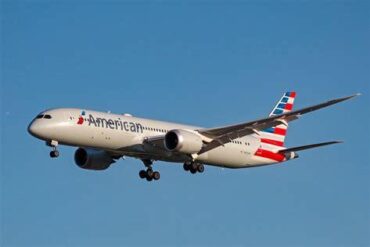
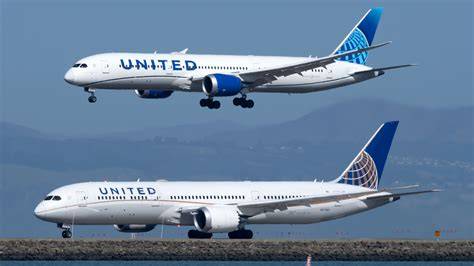
The scale of United’s Dreamliner fleet explains why even a relatively incremental technical improvement can have major strategic consequences. The airline has approximately 21 Boeing 787-10s, compared with 59 787-9s and 12 787-8s. United also has additional 787-9 aircraft on order, reinforcing the smaller variant’s central role in its long-haul strategy.
The 787-10 therefore represents a substantial but smaller part of the overall Dreamliner fleet. Giving those 21 aircraft access to more missions could allow United to improve utilization without necessarily increasing the size of the fleet. An aircraft that can operate a wider selection of routes is inherently easier for a network planner to position efficiently throughout the year.
That flexibility becomes especially valuable as international demand changes seasonally. A route requiring maximum range during one period might be operated by a 787-9, while another market with stronger premium and economy demand could favor the higher-capacity 787-10. If the 787-10 can now cover more of the network, United has greater freedom to move aircraft between markets as demand changes.
The upgrade also has implications for fleet complexity. Airlines generally benefit when aircraft can cover multiple missions because it reduces the number of specialized aircraft required for particular routes. United will still need the 787-9 for the longest sectors, but a more capable 787-10 could take over selected missions that previously required the longer-range aircraft.
Why The Airbus A350 Comparison Is Suddenly More Interesting
This is where the 787-10 upgrade becomes more strategically interesting. The Airbus A350 occupies a portion of the long-haul market where airlines need substantial passenger capacity combined with long range. A standard 787-10 cannot simply replicate the A350’s capabilities, but its economics become more competitive when Boeing gives the aircraft additional payload and range flexibility.
United has historically evaluated its fleet around a mixture of aircraft sizes and capabilities rather than assigning every long-haul mission to the largest available aircraft. A more capable 787-10 fits that philosophy. Instead of needing an A350-sized aircraft for every high-demand long-haul market, United can potentially use the stretched Dreamliner where the mission sits inside its expanded envelope.
The distinction is important. The upgraded 787-10 does not make the Airbus A350 obsolete, nor does it transform the Dreamliner into an A350 substitute on the longest routes. What it does is reduce the number of situations in which the 787-10 must be rejected because of range or payload limitations.
That could make the aircraft particularly attractive from a fleet-economics perspective. If United can use a 787-10 on a route that previously demanded a larger or longer-range aircraft, it can obtain much of the required capacity without automatically moving to a more capable and potentially more expensive platform.
Boeing Still Has To Deliver The Aircraft
The technical upgrade arrives at an important moment for Boeing because aircraft capability is only useful if enough aircraft reach customers. Boeing has been working to stabilize 787 production at approximately eight aircraft per month, after engine supply issues disrupted production earlier in 2026. The manufacturer ultimately wants to reach 10 aircraft per month, although engine availability remains an important constraint.
Production rates also do not automatically equal delivery rates. Boeing has warned that 787 deliveries can remain uneven because increasingly sophisticated premium cabins require extensive documentation and certification. A completed aircraft can therefore remain undelivered even after it has physically emerged from the production system.
For United, this matters because fleet planning depends on predictable aircraft availability. The airline can take advantage of the upgraded 787-10 only when enough aircraft are delivered, certified and ready for commercial service. Existing 787-10s with the appropriate provisions may benefit from the new capability, but future deliveries will determine how broadly United can build its network around the upgraded performance.
The Quiet Upgrade Could Reshape United’s Long-Haul Fleet
The 787-10 iMTOW upgrade is not the kind of development that immediately creates a spectacular new route map. There is no dramatic new engine, radically redesigned wing or completely new aircraft. Instead, Boeing has changed something far less visible but potentially more useful: the amount of weight the aircraft can legally and structurally carry into the sky.
For United Airlines, that extra 14,000 lb could become a powerful fleet-planning tool. The 787-10 can carry more payload when conditions demand it, carry additional fuel when a route pushes toward its range limits, or use the extra margin to make existing long-haul operations more resilient. Its fundamental limitations remain, but the boundary between the 787-10 and 787-9 has become less rigid.
That is ultimately why the upgrade matters. United already has a sizeable fleet of 787-10s, and every additional mission those aircraft can perform increases the value of the airline’s existing investment. The Boeing 787-10 will not suddenly outperform the Airbus A350 or replace the 787-9 on ultra-long-haul routes, but it no longer needs to. By moving the aircraft’s practical operating boundary outward, Boeing has given United another degree of freedom in a fleet where flexibility is becoming increasingly valuable.
The most consequential change may therefore appear gradually. As upgraded 787-10s accumulate flight hours, United’s network planners can test routes that previously sat on the wrong side of the aircraft’s range and payload equation. If more of those missions prove commercially viable, the quiet 14,000-pound increase could end up influencing United’s long-haul fleet strategy far more than its modest numbers initially suggest.