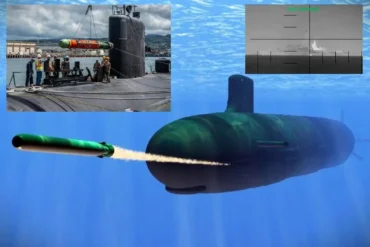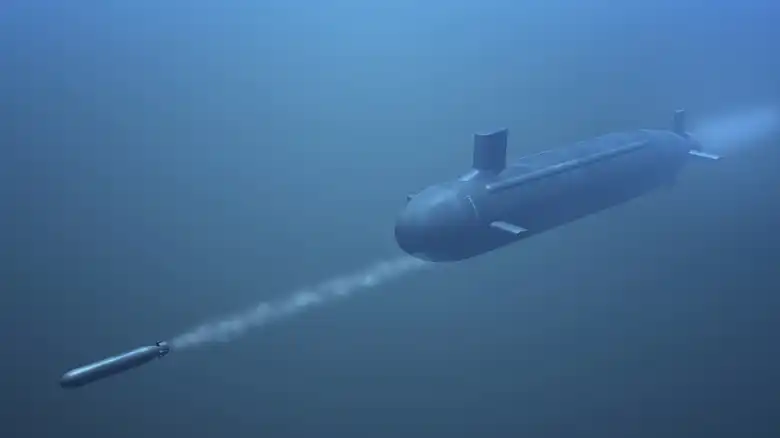
The United Kingdom has reached a significant milestone in autonomous naval warfare after successfully launching an American-made Mk. 48 heavyweight torpedo from an uncrewed underwater vehicle. Conducted on September 13, 2026, at the British Underwater Test & Evaluation Center in Scotland, the test demonstrated that a large autonomous submarine can carry and deploy a heavyweight weapon normally associated with crewed attack submarines.
The weapon involved was a standard Mk. 48 MOD 7, rather than a specially modified experimental version. Its successful launch therefore focused less on changing the torpedo itself and more on proving that an allied autonomous platform could mechanically, electrically, and digitally integrate the weapon.
The launch formed part of the broader AUKUS Pillar 2 effort involving the United Kingdom, United States, and Australia. The agreement focuses on advanced technologies for uncrewed systems, with the three nations seeking to develop new payloads and enabling technologies for Uncrewed Undersea Vehicles (UUVs).
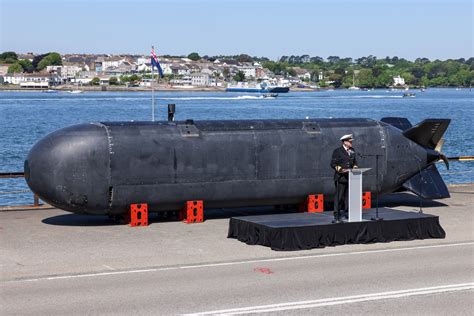
XV Excalibur Gives the UK a New Underwater Weapons Platform
The vehicle used for the test was the Royal Navy’s XV Excalibur, an Extra Large Uncrewed Underwater Vehicle (XLUUV) measuring more than 39 feet long. At approximately 20.9 tons, it is the largest autonomous underwater vehicle ever tested by the Royal Navy.
Unlike conventional attack submarines, the XV Excalibur is an experimental autonomous platform intended to explore how large uncrewed vessels could perform missions that traditionally require crews. Its size provides enough internal volume for substantially larger payloads than those carried by typical UUVs.
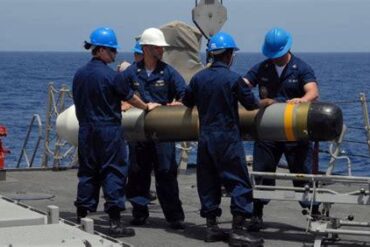
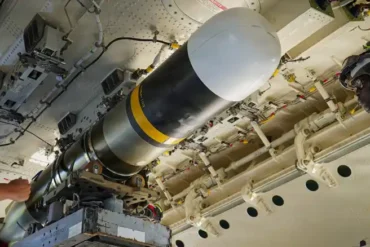
That became particularly important with the Mk. 48. The heavyweight torpedo weighs about 3,744 pounds, has a diameter of 21 inches and measures roughly 19 feet long. A weapon of that size requires a substantially larger platform and carefully engineered interfaces.
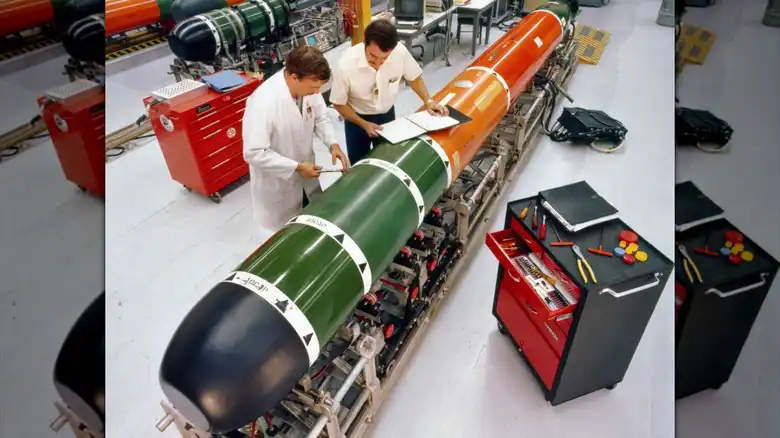
Mk. 48 Torpedo Integration Was the Real Breakthrough
The most important aspect of the demonstration was not simply firing a torpedo underwater. It was proving that a U.S.-developed weapon could operate from a British autonomous submarine without extensive modifications to either system.
The XV Excalibur does not use conventional torpedo tubes. Instead, it features a large central payload bay, allowing different mission equipment to be installed for testing. For this demonstration, the Mk. 48 was apparently mounted within a cradle arrangement associated with the vehicle’s central payload area before being launched.
The successful firing validated the mechanical, electrical and software interfaces required to connect the weapon with the autonomous platform. That creates a potentially important model for future AUKUS systems, where weapons and autonomous vehicles developed by different countries can be combined without requiring every component to be redesigned from scratch.
What the Test Means for Future AUKUS UUVs
The demonstration does not mean the Royal Navy is immediately preparing to deploy fleets of armed XV Excalibur submarines. The vehicle remains an experimental platform, and additional testing would be necessary before an operational system could be procured and deployed.
Its importance lies instead in what the test proves about interoperability. If autonomous underwater vehicles can accept weapons developed by another allied nation with limited modification, future systems could potentially be designed around modular payloads rather than a single permanently integrated weapon.
That approach could give AUKUS partners greater flexibility as autonomous underwater warfare develops. The September test therefore represents more than a successful torpedo launch: it demonstrates how robotic submarines and heavyweight weapons could eventually become part of a more interoperable allied undersea force.