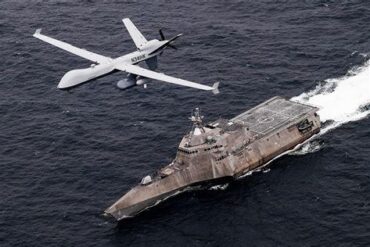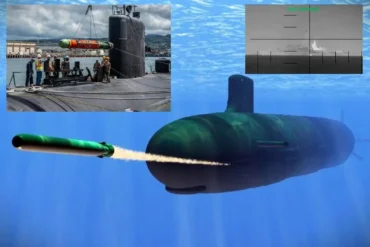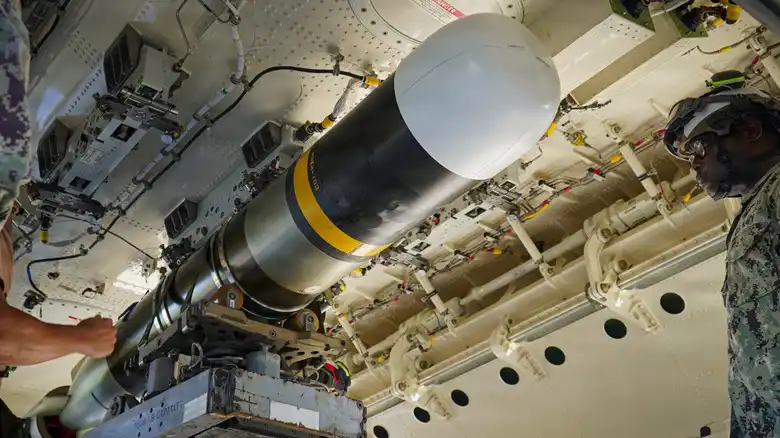
The U.S. Navy is pursuing a new anti-submarine weapon that could dramatically expand how far above the battlefield a torpedo can be released. Known as the Silent Anvil Air-Launched Torpedo (SAA-LT), the proposed system is designed around an unusual requirement: the ability to be deployed from aircraft at altitudes as high as 60,000 feet. If successful, that would make it unlike any U.S.-made torpedo currently in service and give naval aircraft a powerful new standoff capability.
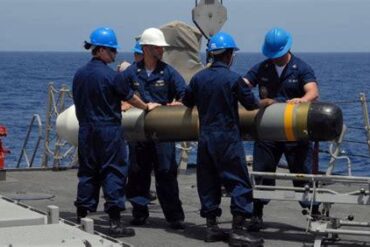
Torpedoes have evolved considerably since the Whitehead torpedo appeared in the 1860s, but their basic employment has remained closely tied to the water. Modern lightweight torpedoes can be launched from ships, submarines, and aircraft, with each method imposing different limitations. The SAA-LT is intended to push those boundaries by allowing an aircraft to release a weapon from exceptionally high altitude before the torpedo ultimately enters the ocean and begins its search for an underwater target.
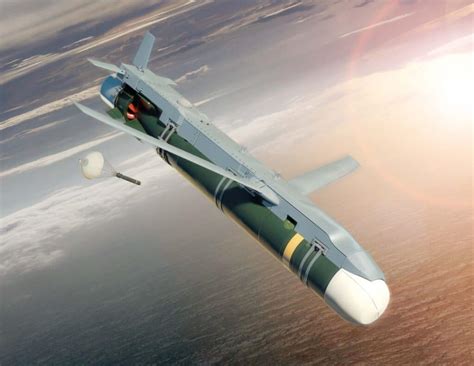
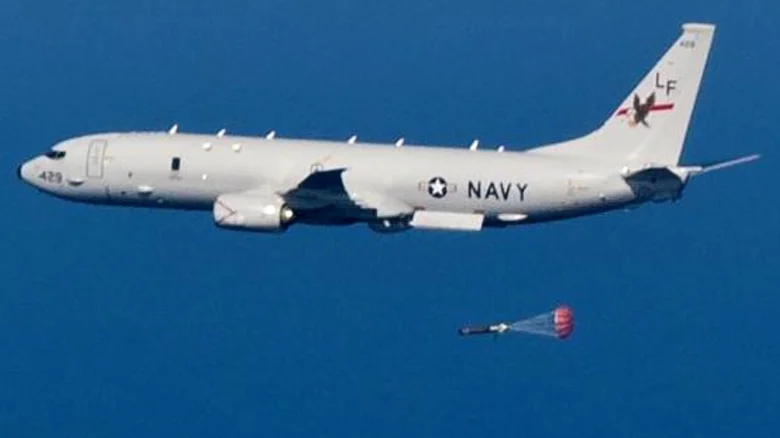
The altitude requirement is particularly significant. The Navy’s existing High-Altitude Anti-Submarine Warfare Weapon Capability (HAAWC), which combines a Mk. 54 lightweight hybrid torpedo with a glide package, has a maximum stated drop altitude of about 30,000 feet. The SAA-LT requirement effectively doubles that figure. A weapon released from 60,000 feet could remain separated from the target area for considerably longer, potentially allowing an aircraft to launch its attack while operating farther away from threats or maintaining a more advantageous position.
A Lightweight Torpedo Built for Flexible Aircraft Deployment
The SAA-LT is also being shaped by strict physical constraints. The weapon must weigh no more than 268 pounds and have a maximum diameter of 7.5 inches. Those dimensions are important because the Navy wants the system to be compatible with aircraft capable of carrying the GBU-39 Small Diameter Bomb. Instead of creating a weapon requiring a specialized launch platform, this approach could open the door to deployment from a broader range of crewed and uncrewed aircraft.
The Navy is reportedly considering more than one technical approach. One possibility is a completely new torpedo designed to glide toward the ocean before entering the water. Another involves adapting an existing torpedo with a new glide system, similar in principle to HAAWC. Either route would have to solve the difficult problem of transitioning from high-speed atmospheric flight to underwater operation without compromising the torpedo’s ability to acquire and attack a submarine.
Extreme Release Conditions Create a New Challenge
The proposed SAA-LT would need to handle demanding launch conditions. A glide-equipped weapon would be expected to enter the water at an angle between 45 and 90 degrees, traveling between 40 and 120 feet per second. It must also be compatible with aircraft launching at speeds corresponding to Mach 0.25, 0.5, and 0.85. Those requirements place substantial demands on the weapon’s aerodynamics, guidance, structural strength, and underwater transition.
The Navy’s objective is not simply a higher-altitude torpedo. It is a compact next-generation anti-submarine warfare weapon capable of extending the reach and flexibility of airborne submarine hunting. The service hopes to receive 60 SAA-LTs annually during the first 36 months after awarding a production contract. If the program reaches that stage, the Silent Anvil could give the Navy an entirely new way to deliver torpedoes from the sky.