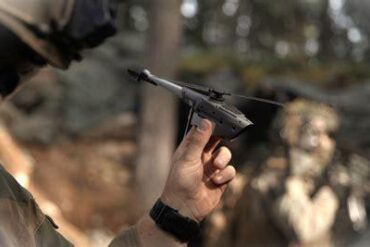
The modern battlefield increasingly demands stealth, versatility, and real-time situational awareness—especially in undersea operations where traditional ISR (Intelligence, Surveillance, Reconnaissance) tools like periscopes are no longer sufficient. The Ninox 103, developed by SpearUAV, represents a revolutionary leap in tactical UAV design, delivering a submarine-launched solution that dramatically extends the eyes and ears of underwater platforms.
Submerged Launch Technology: An Innovation in Underwater UAV Deployment
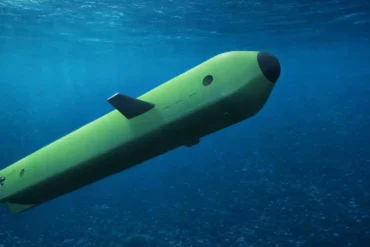
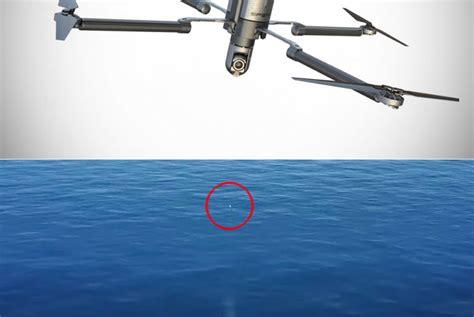
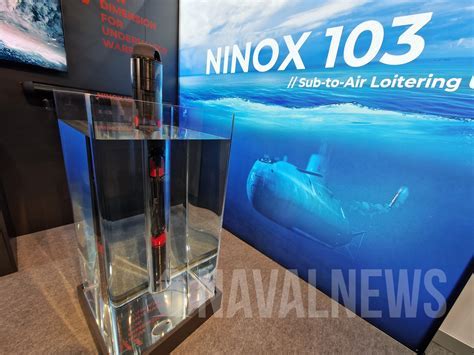
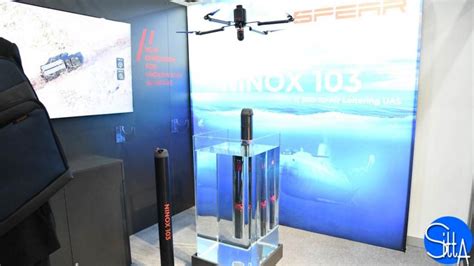
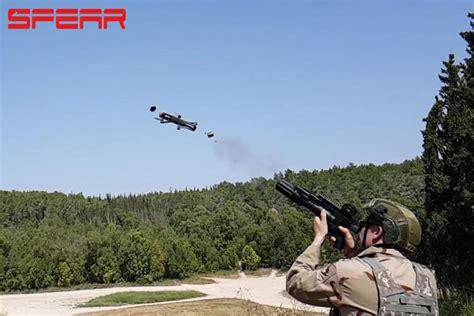
What sets the Ninox 103 apart from conventional UAVs is its sub-launched capability. It is engineered to be launched from beneath the surface—up to 30 meters currently, with plans to extend this to 50 meters. Using standard submarine signal ejectors or buoy launchers, the system is encapsulated in a sealed waterproof cannister that floats to the surface. Once above water, the cannister opens, and the quadrotor unfolds its rotors, initiating vertical takeoff within seconds.
This foldable architecture is central to the UAV’s deployment strategy. Underwater, the drone maintains a compact, low-profile shape ideal for storage in constrained submarine environments. Upon surfacing, the UAV rapidly transitions into full flight configuration, significantly shortening the reaction window from detection to surveillance.
Technical Specifications: Compact Power in a Lightweight Frame
Despite its relatively small size, the Ninox 103 carries formidable technical capabilities:
- Endurance: Up to 50 minutes airborne, enabling extended overwatch or patrol tasks.
- Range: Operates effectively up to 10 kilometers from the launch point.
- Speed: Cruises at 37 km/h, balancing persistence with mobility.
- Payload: Capable of carrying 1 kilogram of modular equipment, including EO/IR sensors, data relays, or even a micro warhead for loitering munition tasks.
The platform was designed with a focus on stealth, minimizing acoustic, thermal, and visual signatures to avoid detection—critical in maritime theaters where adversaries are constantly scanning for aerial and surface anomalies.
Tactical Functions: From Periscope Replacement to Battlefield Relay Node
The Ninox 103 is not merely a sensor platform—it is a tactical force multiplier. By replacing traditional periscope functions, it provides real-time imaging and reconnaissance without requiring the submarine to risk exposure. Its extended visibility range supports beyond-line-of-sight observation, enabling commanders to scout enemy positions, surface threats, or littoral environments without compromising their location.
Equally transformative is its ability to serve as a communications relay node. The Ninox 103 supports encrypted data transfer, linking submerged vessels with surface fleets, aerial units, or land-based control centers. In a scenario where traditional comms are jammed or degraded, this UAV can become the linchpin of multi-domain operations, seamlessly bridging communication across domains.
Armed Reconnaissance and Autonomous Strike Capability
Although ISR and comms relay are primary roles, the Ninox 103’s architecture permits the inclusion of a light combat payload, transforming it into a loitering munition. This option allows it to autonomously engage targets with precision when needed, offering a new tier of lethality in maritime ISR operations.
Its AI-powered autonomy allows for pre-programmed waypoint navigation, auto-target recognition, and adaptive mission execution, reducing the need for constant operator input. This level of automation is especially valuable when considering the communication limitations of submerged platforms.
Expendable Design Philosophy: Operational Efficiency without Compromise
Perhaps one of the most innovative aspects of the Ninox 103 is its disposable nature. Recovering UAVs after flight could compromise the location of a stealth submarine, defeating the purpose of clandestine deployment. SpearUAV addresses this by designing the system as a low-cost, single-use unit that submariners can deploy without concerns about retrieval.
This approach also reduces maintenance burdens and simplifies logistics, allowing rapid deployment of multiple UAVs in sequence or simultaneously to cover larger operational zones. Given its low cost and plug-and-play interface, operators can deploy the Ninox 103 with minimal training or onboard integration overhead.
Field Testing and Operational Evaluation
The development of the Ninox 103 has advanced well beyond the conceptual stage. In 2021, SpearUAV conducted live underwater launch trials in Virginia, USA, proving the viability of the design under real-world submerged conditions. The tests validated the launch mechanism, waterproof casing integrity, rotor deployment timing, and airborne stabilization.
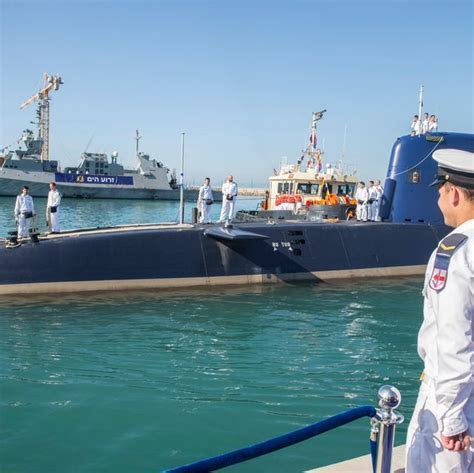
Since then, the Israeli Navy has undertaken advanced evaluations, simulating operational scenarios in both coastal and blue water environments. These trials focused on integrating the Ninox 103 within existing combat information systems, confirming its ability to relay sensor data directly into submarine combat displays and command modules.
Strategic Partnerships and Global Expansion
SpearUAV’s innovation has captured international attention. The company is currently in procurement discussions with at least two foreign defense clients, though the names remain undisclosed. Additionally, a variant of the system—Ninox 40—is under development specifically for the United States Navy, promising greater endurance and more advanced autonomy features.
This strategic outreach signals growing demand for multi-domain UAVs that can support stealth operations across naval, aerial, and terrestrial battlefields. With nations placing increased emphasis on dispersed and resilient warfare architectures, the Ninox 103 arrives at a pivotal moment.
Operational Use Cases: Expanding the Role of Submarine-Launched Drones
The potential use cases for the Ninox 103 extend well beyond traditional reconnaissance. In modern naval warfare, where electronic warfare, sensor disruption, and AI-aided threat detection shape engagements, a stealthy, air-capable asset launched from beneath the waves introduces novel tactical flexibility. Some likely scenarios include:
- Silent surveillance of enemy coastal installations prior to amphibious or special forces operations
- Mid-ocean rendezvous and coordination between dispersed units in comms-denied environments
- Last-mile data relays for long-range missiles or unmanned surface vessels
- Emergency overwatch during evacuation or SAR operations when other assets are unavailable
In all these applications, the Ninox 103 reduces risk to manned systems and enhances the decision-making loop.
Conclusion: A Tactical Revolution in Undersea Warfare
The Ninox 103 is more than a submarine accessory; it is a transformative capability that reshapes the underwater battlespace. By marrying stealth launch, intelligent flight, and multi-role payload options within a single, compact airframe, it answers the pressing needs of modern navies striving for information dominance and tactical survivability.
Its blend of expendability, intelligence, and modularity ensures its adaptability across conflict theaters, while its low-cost architecture invites broad deployment. As SpearUAV continues to iterate on this platform and its successors, we expect the Ninox series to become a benchmark in next-generation underwater combat support systems.