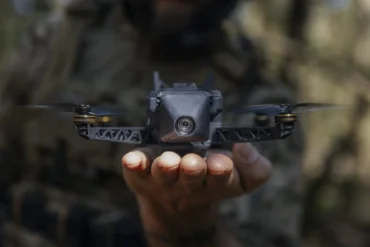
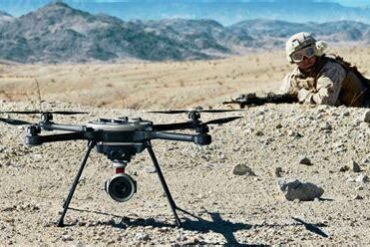
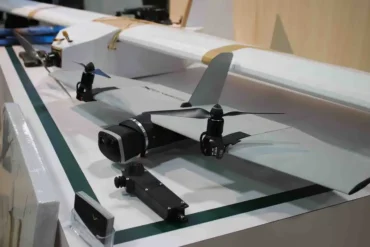
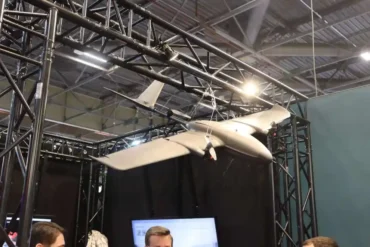
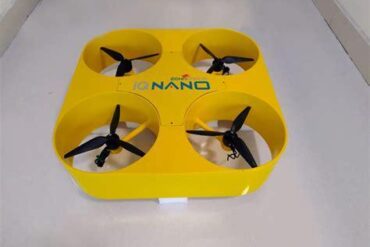
The Teledyne FLIR Black Hornet Nano is not just another unmanned aerial vehicle (UAV); it is a marvel of miniaturized military engineering. Born from Norwegian innovation and honed by years of tactical feedback, this palm-sized drone has redefined battlefield reconnaissance. Its microform factor, intelligent sensors, and silent operation offer a powerful edge in modern combat environments where stealth, speed, and precision are paramount.
Initially developed by Prox Dynamics AS of Norway, the Black Hornet Nano has since evolved under the technological umbrella of Teledyne FLIR, following their $134 million acquisition of the company in 2016. With its ability to fit in the palm of a soldier’s hand, the Black Hornet delivers local situational awareness to warfighters across the globe, including in the United States, the United Kingdom, Germany, Australia, and Ukraine.
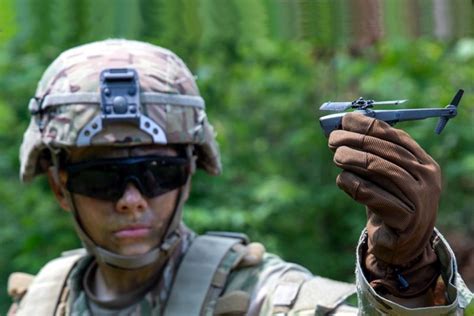
Ultra-Lightweight Engineering with Elite Capabilities
Measuring just 16 cm in length and weighing a mere 18 grams (0.7 ounces), the Black Hornet Nano is designed for portability without sacrificing functionality. Despite its tiny size, this drone boasts a comprehensive imaging suite:
- Three integrated cameras: Forward-facing, downward-looking, and a 45-degree oblique angle.
- Real-time video and image transmission: Sends data directly to a handheld control terminal.
- Silent electric motors: Allow discreet operation for up to 25 minutes, perfectly matched to its rapid 90% recharge time.
This balance enables a seamless two-unit operation: as one drone flies, the other recharges, ensuring near-continuous surveillance capability.
Designed for Warzones: Field-Proven Performance
The Black Hornet Nano was first deployed by the British Army’s Brigade Reconnaissance Force during Operation Herrick in Afghanistan. Soldiers used it to scout over walls, peek around corners, and assess enemy presence without exposing themselves. The drone’s exterior, colored to match the dusty greys of Afghan compounds, provided additional camouflage, making it nearly invisible in urban combat environments.
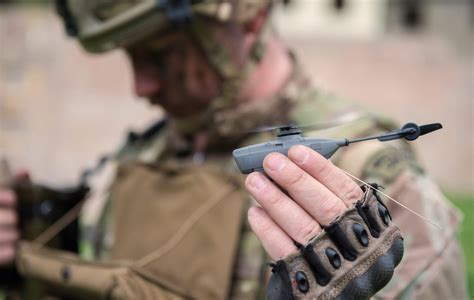
Its value in active zones stems from key advantages:
- Autonomous navigation or manual steering via GPS and waypoints.
- No onboard data storage to prevent intelligence compromise if captured.
- Launch box small enough to fit on a utility belt, reducing operator burden.
Evolution into the Black Recon: Expanded Capability for Armored Units
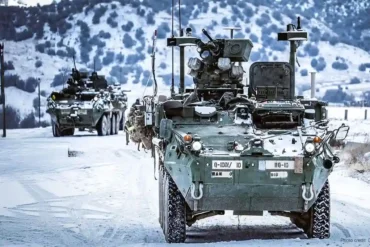
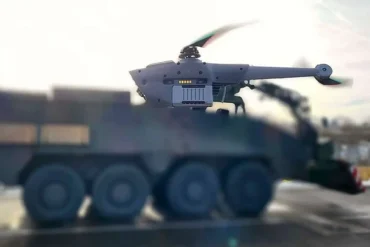
In 2023, Teledyne FLIR unveiled the Black Recon Vehicle Reconnaissance System (VRS) — an evolution based on Black Hornet technology. Designed to operate from armored vehicles, the Black Recon offers significantly enhanced range and endurance:
- Each drone weighs 350 grams (12 ounces).
- Flight radius of 6 km (3.7 miles).
- 45 minutes of operation per unit.
This VRS package, weighing 80 kg (180 lbs), can be bolted directly onto the chassis of a ground vehicle and includes three drones per system. These UAVs can be launched, piloted, and recovered autonomously from within the vehicle, maintaining crew protection in hostile environments.
Advanced Optics and Thermal Surveillance
Teledyne FLIR, renowned for its infrared and thermal imaging technologies, has enhanced the Black Hornet’s capabilities with cutting-edge optics:
- Daytime video capture with ultra-clear stabilization.
- Night vision upgrades featuring long-wave infrared sensors.
- High-resolution still imagery that supports advanced battlefield documentation and decision-making.
These additions have expanded the drone’s utility in low-light conditions and urban warfare scenarios, offering a round-the-clock operational profile.
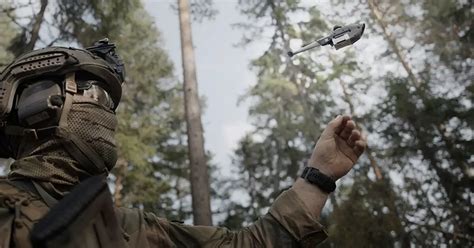
Operational Footprint and Global Adoption
The Black Hornet Nano has seen widespread adoption across more than 20 nations, particularly among NATO allies and special forces units. Some of the most notable users include:
- United States Army, Marine Corps, and Special Operations Command.
- British Army, with renewed interest through DE&S programs post-2019.
- Australian Army, evaluating it for integration into broader drone capabilities.
- Ukrainian Armed Forces, benefitting from U.S. support packages.
- French and German Armed Forces, especially for urban surveillance.
Even non-state military actors, such as law enforcement and counter-terrorism squads, are deploying the Black Hornet for hostage rescue, building clearance, and domestic surveillance missions.
Training Simplicity and Tactical Adaptability
Unlike complex UAV platforms that require specialized training, the Black Hornet is user-friendly:
- Operators can become proficient in just 20 minutes.
- Compact, handheld controller with a live video feed interface.
- Allows both first-person piloting and waypoint-based autonomous flight.
The ease of use reduces cognitive load in high-pressure environments, making it ideal for squad-level deployment and instant decision-making support.
Cost Considerations and Strategic Investment
While a single Black Hornet unit can cost up to $195,000, its strategic value in saving lives and increasing battlefield intelligence justifies the price in specific contexts — especially for special operations, reconnaissance patrols, and urban assault scenarios. Large-scale deployment is limited due to this cost, which is why the platform is predominantly found in elite units and tactical teams.
Still, the U.S. Army has steadily increased procurement:
- 60 Hornet 3 units acquired in 2018.
- 300 additional units in 2022.
- Further purchases in 2023, some earmarked for Ukraine.
Security by Design: Data Protection and Real-Time Encryption
One of the drone’s standout features is its lack of onboard storage. This design choice ensures that if the unit is lost or captured, no actionable data can be retrieved. Instead, all visual intelligence is:
- Transmitted in real-time to the controller.
- Stored in encrypted memory on the ground.
- Maintained within a secure closed-loop communication system.
These measures align with NATO standards for secure field reconnaissance and prevent reverse-engineering of sensitive data.
Future Prospects: Next-Gen Miniature ISR Platforms
As battlefield environments evolve toward urban, asymmetric, and hybrid warfare, the demand for silent, small, autonomous ISR platforms like the Black Hornet Nano is expected to grow. Teledyne FLIR is actively researching enhancements, including:
- Improved AI-based object recognition.
- Swarming behavior capabilities for synchronized operations.
- Extended flight time and energy-efficient propulsion systems.
The upcoming Black Recon VRS demonstrates a shift toward vehicle-integrated drone systems, indicating a future where every armored unit could carry an organic UAV suite, providing real-time data without deploying dismounted scouts.
Conclusion: The Tactical Eyes of Tomorrow’s Soldier
The Teledyne FLIR Black Hornet Nano exemplifies the fusion of micro-engineering and tactical necessity. Its ability to deliver real-time, high-value intelligence in environments where human access is dangerous or impossible makes it an indispensable tool for modern militaries. As global conflicts increasingly require precision engagement and situational awareness, the Black Hornet stands out not merely as a gadget but as a transformative force multiplier.
Whether peering around a corner in an Afghan alleyway, providing overwatch from a NATO armored vehicle, or silently mapping the terrain of a war-torn urban block, the Black Hornet Nano delivers one clear message: the smallest warriors often see the most.