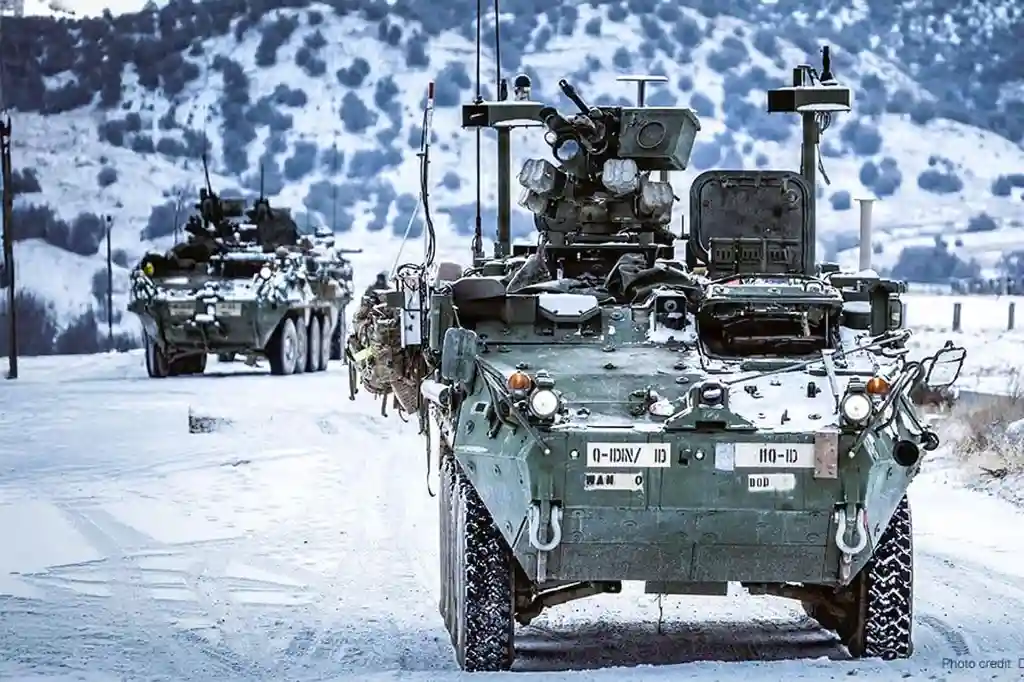
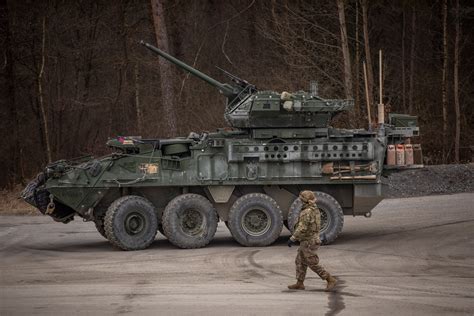
The U.S. Army has awarded a significant $32 million contract to Teledyne FLIR Defense to deliver cutting-edge Recon Surveillance Kits for Stryker Infantry Carrier Vehicles (ICVs) that will be supplied to Bulgaria under the Foreign Military Sales program. This partnership is a key step in modernizing Bulgaria’s military, facilitating its transition from Soviet-era equipment to a more advanced, NATO-interoperable armored fleet. With deliveries expected to begin in February 2026, this contract will help Bulgaria significantly enhance its battlefield awareness and strengthen its alignment with NATO defense standards.
Enhancing Battlefield Awareness with Advanced Recon Surveillance Kits
Teledyne FLIR’s Recon Surveillance Kit for Bulgarian Strykers is a comprehensive upgrade that integrates advanced sensor technologies to provide superior situational awareness on the battlefield. The system is designed to convert Stryker vehicles into highly effective mobile sensor platforms capable of detecting, tracking, and identifying threats at greater distances and with improved accuracy.
At the heart of the Recon Kit are three advanced components: the TacFLIR 280 HDEP electro-optical and infrared (EO/IR) imaging system, the Ranger R20SS long-range radar, and Cameleon command-and-control software. These elements work in tandem to deliver 360-degree situational awareness, enabling crews to identify and track potential threats in day, night, and adverse weather conditions. This cutting-edge technology is essential for Bulgaria’s evolving defense needs, providing rapid, real-time intelligence to improve operational efficiency and effectiveness in combat situations.
The integration of these advanced systems into the Strykers will empower Bulgarian forces to operate more effectively alongside NATO allies, reinforcing Bulgaria’s role in the alliance’s eastern defense perimeter.
Key Components of the Recon Surveillance Kit
- Ranger R20SS Radar: The Ranger R20SS is a sophisticated X-band FMCW radar that operates over long distances, with the ability to detect and track personnel, vehicles, and even watercraft at ranges of up to 60 km. This radar is crucial for extending the reconnaissance capabilities of the Stryker beyond line-of-sight and human observation. The radar’s digital beamforming design supports continuous scanning and track-while-scan functionality, automatically cueing the TacFLIR 280 HDEP EO/IR system. This feature allows operators to detect targets without the need to search manually, enhancing both efficiency and the likelihood of detecting fleeting targets in complex environments.
- TacFLIR 280 HDEP Electro-Optical and Infrared System: This EO/IR system plays a pivotal role in identifying and classifying targets. It offers medium-range detection, identification, and tracking capabilities, even in challenging weather conditions and across various terrains. Equipped with stabilization for use on moving vehicles, the TacFLIR 280 HDEP enables precise target recognition. Additionally, the system can incorporate laser tools for ranging and target coordinate generation, providing vital information for further actions such as fires or maneuvering.
- Cameleon Command-and-Control Software: The Cameleon software is the operational backbone of the Recon Kit, integrating all sensors into a single operator-friendly interface. It allows for slew-to-cue functionality, enabling seamless transitions between radar detection and camera tracking. The software also supports map-based positional awareness, providing an intuitive interface for operators to monitor, track, and classify targets quickly and efficiently. This unified control system reduces cognitive load, minimizes errors, and ensures that operators can run reconnaissance missions with precision, even under pressure.
Together, these technologies provide a robust, unified solution for enhancing the operational capabilities of the Stryker vehicles, transforming them from basic armored platforms into powerful networked systems capable of real-time reconnaissance, threat detection, and target classification.
Strategic Importance for Bulgaria and NATO
This contract comes at a critical time for Bulgaria, as the country is undergoing a major defense modernization process. The acquisition of Stryker vehicles represents a significant shift away from outdated Soviet-era platforms and towards a NATO-compliant armored force. With the first vehicles scheduled to arrive in February 2026, the timing of this contract ensures that Bulgaria will be equipped with the necessary tools to make a smooth transition into a more technologically advanced military structure.
The Stryker vehicles, now enhanced with the Recon Surveillance Kit, will significantly improve Bulgaria’s situational awareness capabilities. This upgrade will allow the Bulgarian armed forces to operate more effectively in NATO joint operations, particularly in the eastern European theater where rapid deployment and threat detection are crucial. The integration of these systems will not only enhance Bulgaria’s national defense but also contribute to NATO’s collective security by ensuring that member states operate on the same technological wavelength.
Bulgaria’s Stryker program is also designed to reinforce NATO’s eastern defense perimeter, making it a critical component in the alliance’s strategy to deter potential threats from regional adversaries. With improved reconnaissance and surveillance capabilities, Bulgaria will be better positioned to defend its borders and collaborate with NATO forces in the event of a conflict.
U.S. Army’s Role in Supporting NATO Allies
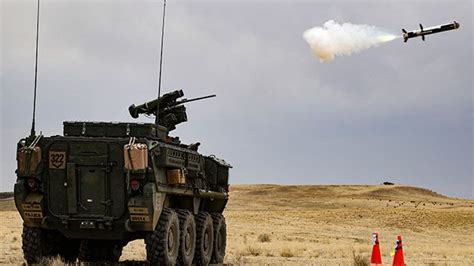
The U.S. Army’s involvement in Bulgaria’s military modernization is a clear demonstration of its commitment to supporting NATO allies in enhancing their defense capabilities. Through the Foreign Military Sales (FMS) program, the U.S. has been instrumental in providing Bulgaria with modern military technology, including the Stryker vehicles and the accompanying Recon Surveillance Kits.
This partnership is not only about equipping Bulgaria with the latest military technology but also about fostering deeper interoperability between U.S. and Bulgarian forces. The shared use of advanced surveillance and reconnaissance technologies will allow both countries to operate seamlessly in joint operations, ensuring that information flows rapidly and accurately across different platforms.
The U.S. Army Contracting Command at Aberdeen Proving Ground, which placed the contract with Teledyne FLIR, is directly involved in overseeing the integration of these systems. By managing the contract, the U.S. ensures that the delivery and installation of the Recon Kits align with Bulgaria’s defense modernization timeline. This also enables a smoother process for testing and validating the new systems in-country, ensuring they meet the operational requirements before full deployment.
The Future of Bulgaria’s Stryker Fleet: A Step Toward Full Modernization
The $32 million contract marks only the first phase of Bulgaria’s broader military modernization effort. Teledyne FLIR has indicated that this Recon Surveillance Kit is just the beginning, with future phases expected to include additional advanced capabilities such as unmanned aerial systems (UAS) and nuclear, biological, and chemical (NBC) detection sensors.
These future upgrades will significantly enhance Bulgaria’s reconnaissance and threat detection capabilities, providing a layered defense architecture that can detect threats from both onboard and offboard sensors. The addition of UAS will provide Bulgaria with the ability to extend its reconnaissance reach even further, while the integration of NBC sensors will help safeguard troops against potential chemical, biological, or nuclear threats—an increasingly important consideration for NATO forces operating near contested borders.
By incorporating these advanced systems into its Stryker fleet, Bulgaria will be able to identify potential threats early, assess them accurately, and respond swiftly. This layered defense approach aligns with NATO’s emphasis on rapid decision-making and joint operations, ensuring that Bulgarian forces are ready to act decisively in a crisis.
Conclusion: Enhancing NATO’s Eastern Flank
The contract between the U.S. Army and Teledyne FLIR to upgrade Bulgarian Strykers with the Recon Surveillance Kit represents a pivotal moment in the country’s defense modernization efforts. By integrating advanced radar, EO/IR, and command-and-control systems, Bulgaria will significantly enhance its reconnaissance capabilities, improving situational awareness and operational readiness.
This modernization effort is vital for strengthening Bulgaria’s defense posture, ensuring that the country remains a capable and reliable NATO ally. As Bulgaria moves toward full integration of these advanced systems, the collaboration between the U.S. and Bulgaria serves as a model for future defense partnerships in the region.
With the Stryker vehicles scheduled to arrive in 2026, the countdown has begun for Bulgaria’s enhanced role in NATO operations. The arrival of these upgraded vehicles will not only improve Bulgaria’s defensive capabilities but will also contribute to the overall security and stability of the NATO alliance, particularly in the strategically important eastern European region.