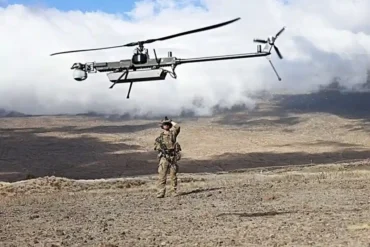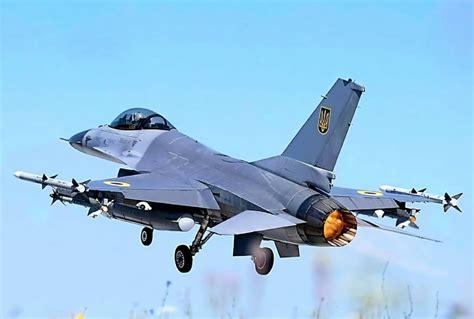
In what is being heralded as a watershed moment in modern air warfare, Ukraine has reportedly used a newly supplied F-16 fighter jet to down an advanced Russian Su-35 aircraft, marking a historic first. The successful operation was reportedly executed with support from a Swedish Saab 340 AEW&C reconnaissance plane, illustrating a new level of sophistication in Ukraine’s aerial defense network.
The engagement occurred in the skies over northeastern Ukraine and western Russia, specifically the Sumy region and Kursk Oblast, and culminated in the destruction of the Su-35 deep inside Russian territory, near the city of Korenevo. Though details remain unverified by independent sources, multiple military analysts and open-source intelligence trackers have confirmed the incident’s significance.
A New Chapter in the War: F-16 Enters Combat
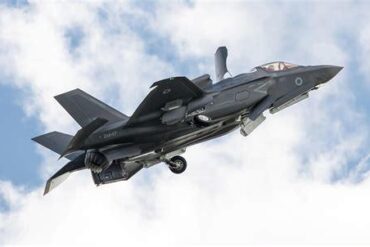
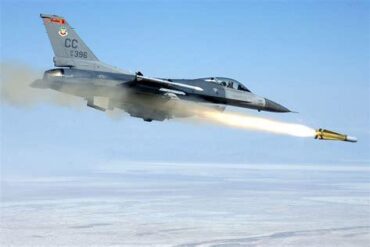
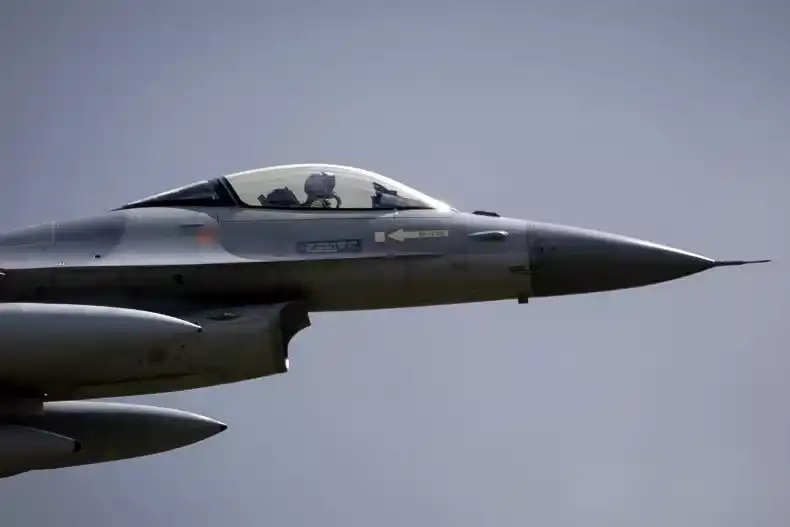
Ukraine’s acquisition of F-16s was long in the making. Following months of debate among NATO countries and eventual U.S. approval, the transfer of fourth-generation multirole F-16s to Kyiv signaled a major shift in Ukraine’s defensive and offensive capabilities. The aircraft are equipped with cutting-edge radar, avionics, and the ability to launch AIM-120 AMRAAM missiles, giving Ukraine the capacity to challenge Russian air superiority in contested zones.
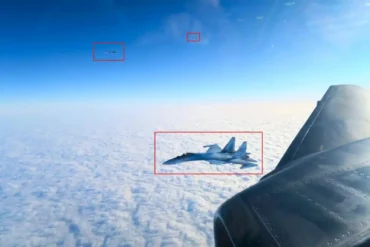
The downing of the Su-35 represents the first confirmed kill by an F-16 operated by Ukraine. Not only is this event technically historic, but it also has wide-reaching implications for the dynamics of the war. The Su-35, a 4.5-generation aircraft often considered Russia’s most advanced operational fighter, was designed for air superiority missions and features thrust-vectoring engines, advanced radar, and electronic warfare systems. The loss of such a high-value asset is a significant blow to Moscow’s air campaign.
Inside the Operation: From Surveillance to Strike
According to German newspaper Bild and Ukrainian defense sources, the incident unfolded when Russian forces launched a Su-35 Flanker-E to intercept Ukrainian aircraft operating near the border. Ukraine, however, had discreetly deployed a Swedish Saab 340 AEW&C aircraft, a flying radar system capable of tracking targets hundreds of miles away. This airborne early warning and control system provided the F-16 pilot with precise targeting data.
Using this real-time intelligence, the Ukrainian pilot launched an AIM-120 Advanced Medium-Range Air-to-Air Missile, effectively setting a trap for the Russian jet. The missile struck the Su-35 approximately 10 miles inside Russian territory, forcing the pilot to eject. Visual evidence from the Oryx intelligence group confirms the aircraft’s destruction, making it the eighth confirmed loss of a Su-35 since the invasion began.
Why the Su-35 Kill Matters
This is not just a tactical win—it’s a strategic breakthrough. The Su-35 is regarded as the backbone of Russia’s modern air fleet, boasting capabilities that often outmatch legacy Soviet-era aircraft. Its loss to an F-16—an aircraft designed in the 1970s but continuously modernized—demonstrates how technology, coordination, and allied support can outperform brute force.
The implications are vast:
- Demonstrated Interoperability: The operation highlighted seamless data-sharing between a NATO-manufactured reconnaissance platform and a U.S.-made fighter jet operated by Ukrainian pilots.
- Shift in Air Superiority: Russia’s assumption of dominance in the skies is now more tenuous, as Ukraine proves it can successfully target advanced aircraft in or near Russian airspace.
- Psychological Edge: Morale among Ukrainian forces and citizens surged as word of the victory spread. Social media channels and analysts hailed the event as a “game-changer.”
Expert Reactions and Global Response
The downing of the Su-35 triggered a wave of commentary from military analysts, former officials, and pro-Ukrainian voices online.
Jake Broe, a well-known defense analyst, remarked on X (formerly Twitter): “Russia lost another Su-35. Theory is that Ukraine now has operational their Swedish SAAB AEW&C planes with their F-16 fleet. This capability took years to fight for and obtain for Ukraine. Bravo everyone!”
Anton Gerashchenko, former Ukrainian Internal Affairs adviser, added: “It is reported that for the first time in history, an F-16 has shot down a Russian Su-35 Flanker. Thankful to Ukrainian Allies for providing us with the tools!”
Meanwhile, Ukrainian Telegram channels, including the influential Kyiv Insider and Ukraine Fights, called for heightened protection of the Saab AEW&C aircraft, now a key node in Ukraine’s air surveillance network.
Sweden’s Role: The Silent Enabler
Sweden’s contribution to the engagement cannot be overstated. The Saab 340 AEW&C—a compact, twin-engine aircraft equipped with a large radar dome—acted as the “eye in the sky,” tracking the Su-35 and transmitting data in real time. Though Sweden is not a direct combatant in the war, its support has been pivotal in enabling network-centric warfare that Ukraine was previously incapable of executing.
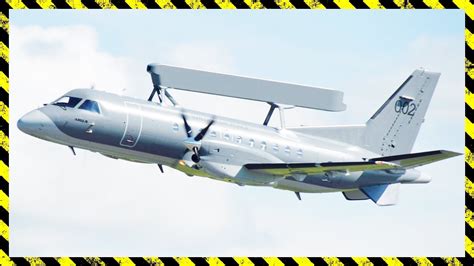
This operation illustrates the potential of non-lethal military aid to produce lethal effects. By supplying early warning systems, Sweden enabled a Ukrainian pilot to make a decisive strike without exposing the Saab to direct risk.
Russian Air Power on the Defensive
For the Kremlin, the loss of the Su-35 will not go unnoticed. Already facing mounting aircraft losses and increasing pilot fatigue, Russia’s air force has struggled to maintain consistent superiority over Ukraine. According to Oryx, the destruction of this latest Su-35 is the first since February 2, indicating how rare and costly such losses are.
More troubling for Moscow is the nature of the kill—a Western jet taking down one of Russia’s most prized fighters inside its own airspace. This undercuts years of Russian claims about the invincibility of its air defenses and advanced platforms. The Su-35, costing upwards of $85 million, cannot be easily replaced, especially under current sanctions and logistical constraints.
Strategic Consequences and What Comes Next
The F-16’s combat debut signals a new phase of the war. Analysts predict that Ukraine may increasingly deploy such ambush tactics, combining real-time reconnaissance, long-range missiles, and superior pilot training. These methods, once fully integrated, could allow Ukraine to contest Russia’s control over larger swaths of airspace.
Furthermore, the engagement serves as a proof of concept for Ukraine’s future ambitions. With more F-16s scheduled to arrive and additional AEW&C assets possibly being deployed, Ukraine’s skies could become significantly more hostile for Russian aircraft.
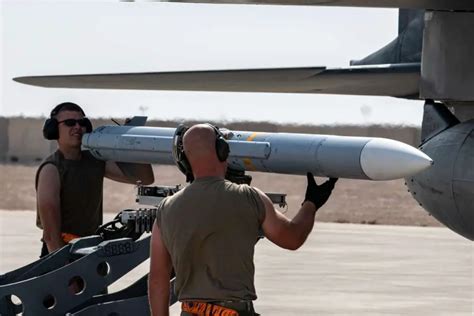
Yet challenges remain. Protecting high-value assets like the Saab 340 is now critical. Experts caution that Russia will likely attempt to target these platforms in future operations, potentially using long-range missile systems or coordinated air raids.
Conclusion: A Tipping Point in Ukraine’s Air War
The shootdown of a Russian Su-35 by a Ukrainian F-16—with tactical guidance from a Swedish reconnaissance aircraft—is more than just a military milestone. It marks a turning point in the war, where Western training, hardware, and intelligence integration begin to pay dividends on the battlefield.
It also underscores a truth long held by modern militaries: information dominance is as critical as firepower. Ukraine’s success in this engagement wasn’t simply a matter of pulling the trigger—it was the culmination of precision tracking, transnational collaboration, and strategic patience.
As the conflict enters its next phase, Ukraine’s emerging ability to project power deep into Russian-held territory through coordinated air operations could reshape the dynamics of a war that has, until now, seen few such breakthroughs.