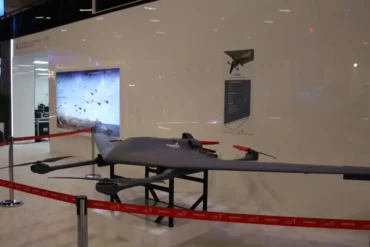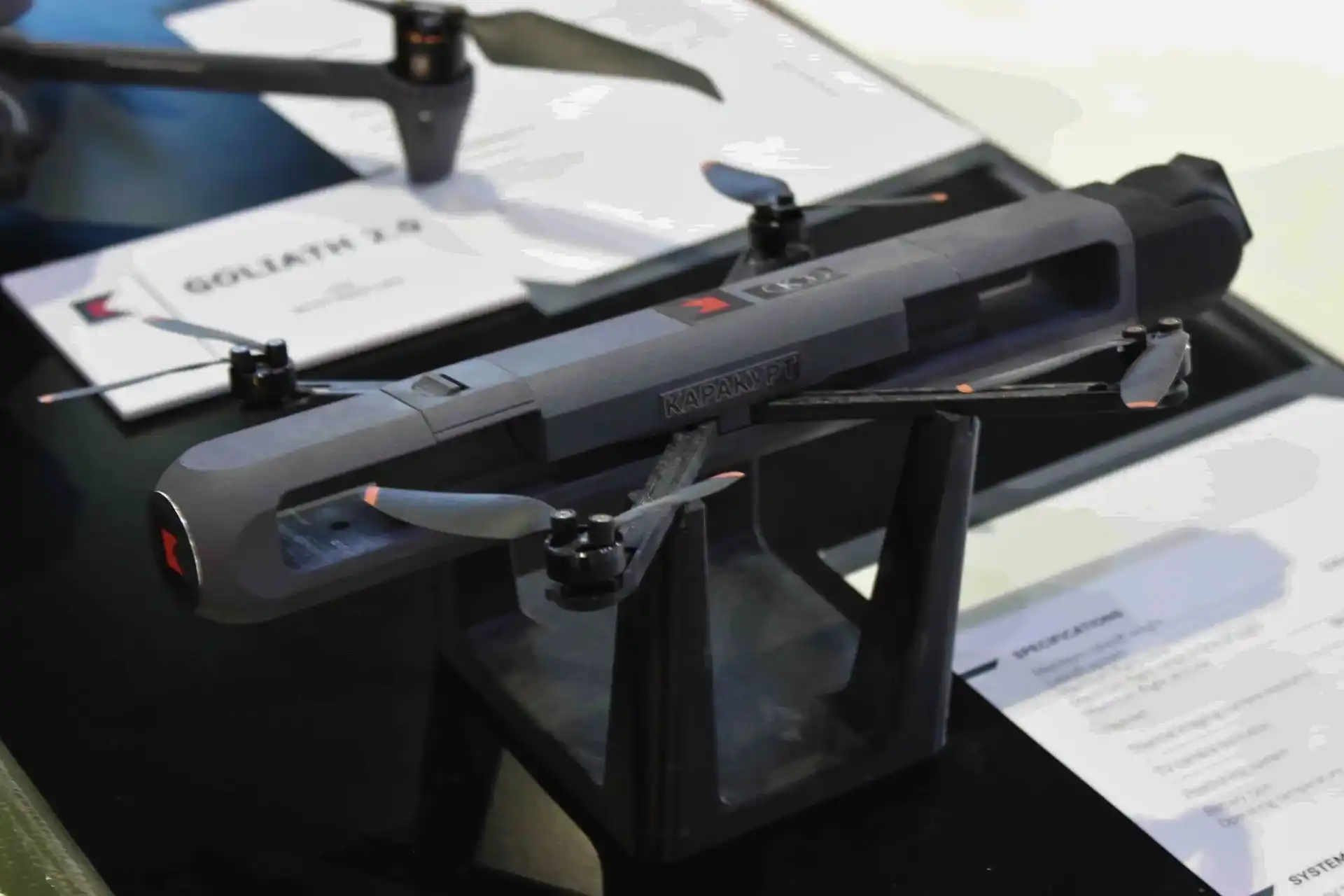
Kalashnikov Concern has introduced the Karakurt 2.0 unmanned aerial vehicle, a compact tactical reconnaissance drone designed to operate where electronic warfare, jamming, and signal disruption have become routine features of the modern battlefield. Revealed at UMEX 2026 in Abu Dhabi, the system reflects Russia’s push to refine lightweight, unit-level UAVs that can deliver actionable intelligence under increasingly contested electromagnetic conditions.
The unveiling places Karakurt 2.0 squarely within the global trend toward short-range tactical drones that emphasize rapid deployment, survivability, and real-time intelligence rather than long endurance or strategic reach. As ground units demand faster situational awareness, systems like Karakurt 2.0 are being shaped to support immediate decision-making at the squad and platoon level.
Developed as an evolution of the original Karakurt platform, the 2.0 variant builds on a design philosophy centered on mobility, discretion, and resilience. Kalashnikov positions the UAV as a reconnaissance tool capable of search, detection, identification, and tracking of both stationary and moving targets, offering frontline forces a persistent eye in the sky during short but critical mission windows.
At its core, Karakurt 2.0 is engineered to remain operational in environments saturated with electronic countermeasures. The UAV incorporates encrypted, jam-resistant radio links combined with frequency-hopping spread spectrum technology, reducing susceptibility to interference and hostile takeover attempts. This focus on electronic warfare survivability underscores lessons learned from recent conflicts, where UAV losses have often been driven more by jamming than by kinetic threats.
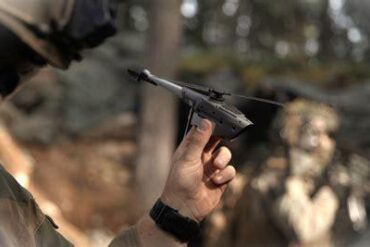
From a technical standpoint, Karakurt 2.0 occupies the lightweight end of the tactical UAV spectrum. The system weighs approximately 300 grams in equipped configuration, enabling true man-portable use. With a maximum flight speed of 25 kilometers per hour and an endurance of up to 20 minutes, the drone is optimized for rapid reconnaissance rather than prolonged loitering. Its operational ceiling of 150 meters and maximum range of 2,000 meters align with close-range surveillance requirements, allowing operators to scan terrain, structures, and movement corridors just beyond visual line of sight.
The launch method further reinforces the drone’s tactical role. Karakurt 2.0 is deployed from a tube-type transport and launch container, allowing quick activation from covered positions, vehicles, or while on the move. This reduces exposure during launch and enables reconnaissance teams to relocate quickly after deployment, a critical advantage in high-threat environments.
Sensor integration remains central to the platform’s utility. The UAV carries an electro-optical payload combining daylight and thermal imaging sensors mounted on a two-axis gyro-stabilized gimbal. This configuration enhances image clarity during maneuvering and in adverse wind conditions, while thermal capability ensures effectiveness during night operations or in obscured environments. The stabilized gimbal allows operators to maintain continuous target observation even as the UAV adjusts its flight path.
Operational flexibility is enhanced by a design that supports rapid battery replacement, enabling multiple sorties within a single mission cycle. This feature, while seemingly minor, significantly improves endurance at the unit level, allowing reconnaissance teams to maintain aerial coverage without waiting for extended recharge periods.
Data exploitation is handled through an integrated joint-domain information exchange system. Intelligence collected by Karakurt 2.0 is transmitted with minimal latency to command posts, where it can be displayed, analyzed, and disseminated quickly. This near-real-time flow of information supports faster targeting decisions and improves coordination between reconnaissance elements and maneuver units.
Kalashnikov has structured the Karakurt 2.0 as a modular system, offering delivery sets that can be tailored to customer requirements. A typical configuration includes multiple UAVs housed in launch containers, a remote control terminal, and a dedicated transport case. Some drones may be equipped exclusively with daytime cameras, while others feature night-capable sensors, allowing mixed payload deployments within a single unit.
The development of Karakurt 2.0 under an internally funded program highlights Kalashnikov’s intent to remain competitive in the rapidly expanding UAV market. Its presentation at UMEX 2026 also signals targeted interest in Middle Eastern defense customers, where demand is growing for compact reconnaissance drones capable of supporting highly mobile forces under electronic warfare pressure.
Beyond its immediate specifications, Karakurt 2.0 illustrates a broader shift in modern warfare. Lightweight tactical UAVs are becoming indispensable tools for localized intelligence dominance, narrowing the gap between detection and action. As these systems proliferate, they are reshaping how small units operate, enabling faster reactions, improved survivability, and more precise engagement decisions at the lowest tactical levels.