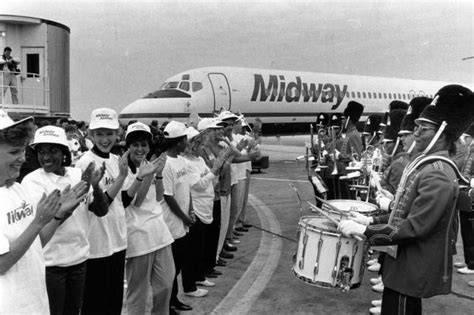
For most airlines, a name is a marketing asset. For Midway Airlines, however, the name originally represented an entire business strategy. The carrier was created specifically to revive Chicago Midway International Airport (MDW) after the airport had been pushed into decline by the rise of Chicago O’Hare International Airport. Yet the airline eventually did something remarkably unusual: it abandoned the airport that gave it its name and continued operating hundreds of miles away while keeping “Midway” painted on its aircraft.
The story began in an era when Chicago’s aviation landscape was being reshaped by the rapid expansion of O’Hare. Midway had once been the world’s busiest airport, sitting only about 11 miles (18 km) from downtown Chicago and handling the majority of the city’s commercial traffic. By the middle of the 1970s, however, its role had almost disappeared. Major airlines had moved their operations to the newer and much larger O’Hare, leaving Midway with lightly used facilities and only a small number of flights.
That empty airport became the opportunity that a group of airline executives believed others had overlooked. Midway Airlines was incorporated on October 13, 1976, with a mission that was unusually direct: bring commercial aviation back to Chicago Midway. Its founders included Irving T. Tague, a former Hughes Airwest executive, along with Kenneth T. Carlson and William B. Owens. They believed a close-in airport could offer travelers something O’Hare increasingly struggled to provide—convenient access to central Chicago combined with competitive airfares.
Why Midway Airlines Was Created Around Chicago Midway Airport
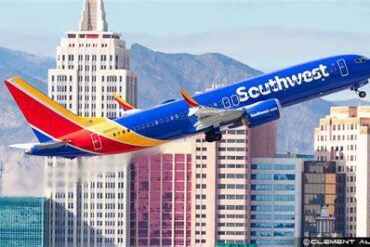
The concept had a useful precedent. Southwest Airlines had demonstrated the potential of building an airline around an underused airport at Dallas Love Field. Rather than competing exclusively through the traditional major-airline model, an operator could use a convenient secondary airport, keep costs under control, and attract passengers who valued accessibility and price.
Midway Airlines adopted a similar philosophy in Chicago. The airport was not simply where the carrier intended to operate. It was the reason the company existed. The founders named the airline after Midway because reviving the airport was effectively the airline’s business plan.
Getting the project off the ground was difficult. Chicago investors were not eager to put money into an airline based at an airport that the industry’s biggest carriers had already abandoned. On August 2, 1979, Midway announced that it had secured $5.7 million from 16 private investors, providing enough capital to begin scheduled service.
The airline started flying on November 1, 1979, with approximately 200 employees and only three McDonnell Douglas DC-9 aircraft. Its first routes connected Chicago with Cleveland, Detroit, and Kansas City. The fleet was tiny by modern airline standards, but the strategy was significant. Midway was attempting to prove that an airport everyone else had written off could once again become commercially important.
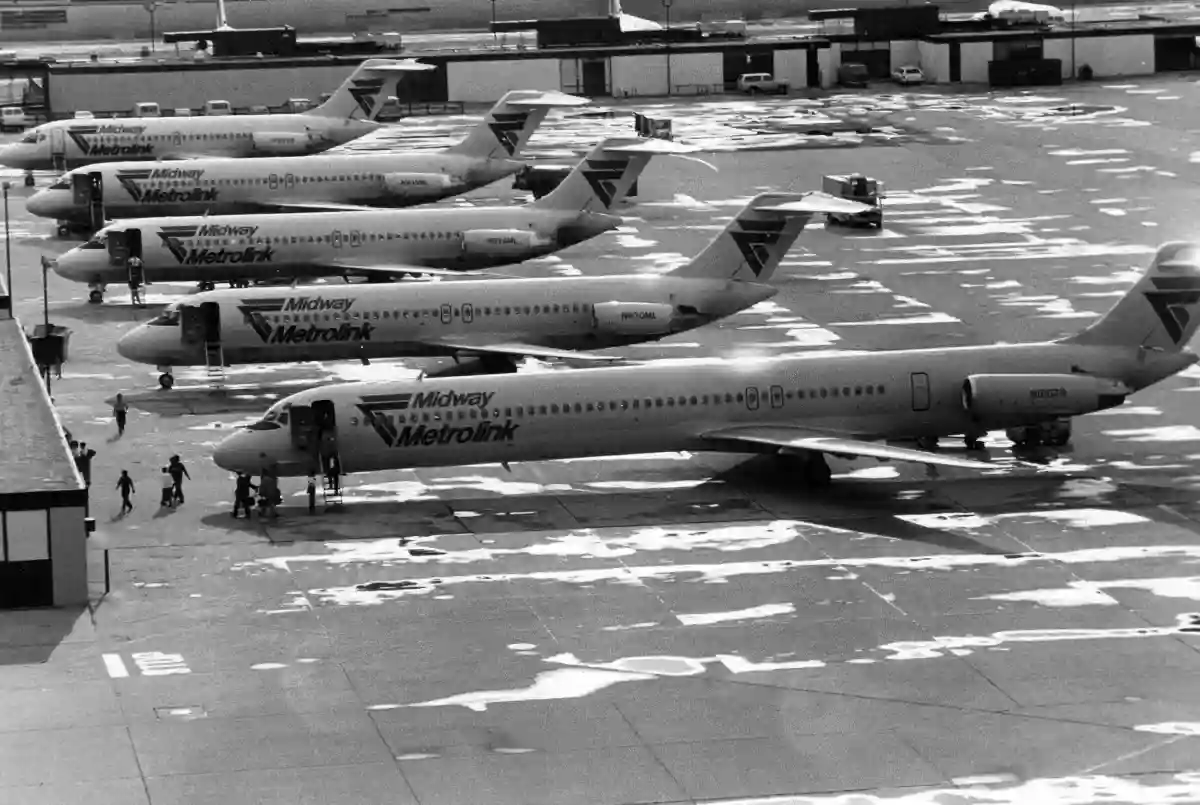
It worked. Within several years, Midway Airlines had transformed Chicago Midway from a largely dormant facility into a functioning airline hub. Passenger numbers increased, the airport became relevant again, and other carriers began returning. The airline had accomplished something few startups could claim: it had not merely built a network but helped revive an airport that had been displaced by its larger rival.
Midway Airlines Changed Its Business Model Three Times
The original low-fare strategy did not remain unchanged. During its roughly twelve-year first life, Midway Airlines went through three distinct business models, reflecting the difficulties of trying to establish a sustainable position against larger competitors.
Initially, Midway operated as a discount airline. It competed against established carriers at O’Hare by offering lower fares on similar city pairs while using the less congested Midway airport. The location itself was part of the product. Travelers could reach downtown Chicago more easily, while the airline could avoid some of the operational challenges associated with O’Hare.
In the mid-1980s, management took a dramatic turn. Midway experimented with an all-business-class configuration, removing traditional coach seating and attempting to build a premium short-haul airline for corporate travelers. The idea was ambitious, but the economics did not produce the yields required to sustain the model.
The airline then shifted again, returning to a more conventional hub-and-spoke operation with mixed classes of service. David R. Hinson became chief executive and pursued expansion, including the acquisition of new aircraft. In 1986, Midway ordered a dozen new jets as traffic continued to grow.
The bigger gamble arrived in 1989, when Hinson placed a $900 million aircraft order and sought to establish a second hub at Philadelphia International Airport. The goal was to create an East Coast operation that could complement the Chicago base and reduce dependence on a single market.
Instead, Philadelphia became a major financial burden.
The Philadelphia Hub Helped Push Midway Airlines Into Bankruptcy
The timing of Midway’s expansion was particularly difficult. A recession weakened demand, fuel costs increased, and Eastern Air Lines provided direct competition in the Philadelphia market. The new hub never generated the profitability management had expected.
That mattered because Midway had spent heavily to expand. The Chicago operation had established a viable business, but the Philadelphia experiment consumed financial resources that the company could no longer easily replace.
Midway eventually sold the Philadelphia hub to USAir for $65 million. It also entered leaseback arrangements involving newly acquired slots at New York and Washington. Those transactions generated cash, but they were insufficient to resolve the airline’s broader financial problems.
Midway filed for Chapter 11 bankruptcy protection in 1991 while continuing to fly. A potential rescue appeared when Northwest Airlines negotiated a deal to acquire the carrier, which could have preserved the operation and many jobs. Northwest ultimately withdrew from the agreement.
On November 13, 1991, Midway Airlines stopped flying permanently. Its fleet had expanded from three aircraft at launch to 44, and the airline had operated for twelve years without suffering a fatal crash. Approximately 4,300 employees were left without their airline. Northwest later hired most of those former employees after outbidding Southwest for Midway’s remaining assets.
The original Midway Airlines was gone. But its name was about to take an unexpected second journey.
The Midway Airlines Name Was Sold for Only $20,000
When the company was liquidated, its aircraft and equipment were not the only assets available. The Midway Airlines brand, trademarks, and goodwill also had value, although not much in the eyes of the market.
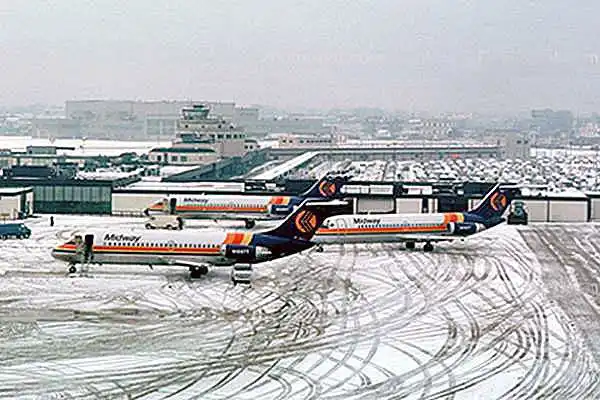
A group of investors purchased the name for only $20,000. One of the buyers was Kenneth T. Carlson, one of the original founders of Midway Airlines.
The transaction was unusual because the name had an obvious geographic meaning. Midway Airlines was associated with Chicago Midway Airport because that relationship had been fundamental to its creation. Buying the brand therefore meant acquiring an identity closely tied to an airport the original airline no longer controlled.
The investors nevertheless intended to revive the name.
Jet Express Inc., a commuter carrier incorporated in 1983, acquired the Midway name in 1993. Jet Express had previously operated feeder and codeshare services for carriers including Trans World Airlines and USAir. It possessed operational experience and an operating certificate, but its own name had little recognition among travelers.
The Midway brand solved that problem instantly.
The relaunched airline began flying in November 1993, using two Fokker 100 aircraft on the route between Chicago Midway and New York LaGuardia. The choice was symbolic as well as commercial. The revived company was once again flying from the airport whose name appeared on its fuselage.
But this time, the airport already had another dominant airline.
Southwest Airlines Eventually Forced Midway Out of Its Namesake Airport
Southwest had entered Chicago Midway in 1985, four years before the original Midway Airlines collapsed. Following the bankruptcy, Southwest expanded into the traffic and infrastructure left behind by the failed carrier.
By the time the new Midway Airlines arrived in 1993, Southwest had become the dominant force at MDW. It had a much larger network, lower operating costs, and a rapidly expanding schedule.
The revived Midway had only two Fokker 100s and one principal route. Southwest was operating dozens of departures across a broad domestic network. The competitive imbalance became increasingly difficult to overcome, particularly as gates and other airport resources became tighter.
After only about 18 months, the new Midway abandoned Chicago.
This created the extraordinary situation at the center of the airline’s history: Midway Airlines was no longer based at Midway Airport.
Yet it kept the name.
Midway Airlines Moved 640 Miles Away to Raleigh-Durham
In 1995, the carrier relocated its operations and corporate headquarters to the Raleigh-Durham area of North Carolina. The move was made possible in part by the collapse of another airline’s hub strategy.
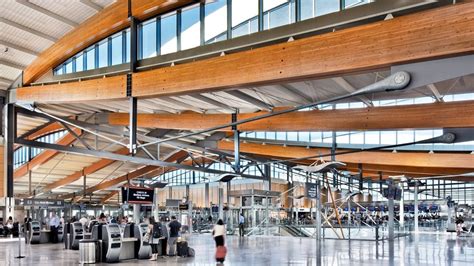
American Airlines had shut down its Raleigh-Durham hub after years of losses, leaving gates and space in Terminal C available. American subleased those gates to Midway as part of an arrangement connected with the financing of the terminal.
For Midway, the opportunity was significant. The airline could acquire a ready-made operating base without building an entirely new airport presence from scratch.
For the brand, however, the move was almost surreal.
The airline called Midway Airlines, named after an airport in Chicago, was now headquartered in Morrisville, North Carolina, and operating from Raleigh-Durham International Airport. The new base was roughly 640 miles (1,030 km) from Chicago Midway.
The geographic contradiction did not stop the airline from using the Midway name. In fact, the brand became an increasingly strange historical artifact: a name that had once described exactly where the airline operated now described almost nothing about its physical network.
The Raleigh-Durham Midway Airlines Era Was Surprisingly Successful
Ironically, the airline’s most successful period came after it abandoned its namesake airport.
From Raleigh-Durham, Midway built a network connecting the Northeast with Florida. Its northern destinations included Boston, Hartford, Newark, New York, Philadelphia, and Washington, while its southern network included Fort Lauderdale, Jacksonville, Orlando, Tampa, and West Palm Beach.
The carrier became a meaningful employer in the Research Triangle, eventually employing around 2,250 full-time workers in the region. It also developed a relationship with American Airlines that gave Midway passengers access to the American AAdvantage frequent-flyer program.
American’s revenue-management operation also handled Midway’s pricing, allowing the smaller airline to benefit from expertise that would have been expensive to build independently. Under CEO Robert Ferguson, the airline produced 13 consecutive profitable quarters.
In 1997, Midway went public through an initial public offering that raised approximately $38 million. For a company that had purchased its famous name for $20,000 only a few years earlier, the revival had produced a remarkable second act.
But the competitive environment eventually caught up with it again.
Southwest Followed Midway to Raleigh-Durham
The irony became almost complete in 1999, when Southwest Airlines entered the Raleigh-Durham market.
Southwest had first helped push the original Midway Airlines into financial difficulty through competition at Chicago Midway. After Midway escaped to North Carolina, Southwest eventually arrived at its new home too.
The effect was severe. Southwest’s low fares put pressure on the Northeast-to-Florida routes that formed the backbone of Midway’s connecting network. Yields fell, and the airline’s financial position deteriorated.
Midway responded with another series of strategic changes. It ended its relationship with American in 2000, created its own frequent-flyer program, brought revenue management in-house, and began replacing larger aircraft with smaller Canadair regional jets in an effort to reduce costs.
None of those measures could fully reverse the decline.
Then the events of September 11, 2001, delivered another devastating blow to the airline industry. Midway suspended all flights and laid off its workforce. The airline eventually returned in 2002 with a reduced schedule, but it abruptly stopped service again on July 17, 2002.
The company disposed of its Boeing 737 fleet and laid off its employees for a second time. In February 2003, it returned once more, this time operating as US Airways Express with six CRJ-100 aircraft serving East Coast destinations from Raleigh-Durham and Washington Reagan National Airport.
That final chapter lasted only months.
The Midway Airlines Name Finally Disappeared in 2003
On October 30, 2003, Midway Airlines entered Chapter 7 bankruptcy and ceased operations permanently.
The airline that had been created to save Chicago Midway Airport had therefore experienced one of the strangest geographic journeys in American airline history. Its original mission had been tied completely to one Chicago airport. It had revived that airport, expanded into a major hub, attempted a second hub in Philadelphia, collapsed into bankruptcy, and disappeared.
Then its name was purchased for $20,000 and brought back to life.
The revived airline returned briefly to Chicago Midway, lost its battle with Southwest, and moved to Raleigh-Durham. There, the same name remained attached to an airline operating roughly 640 miles from the airport it was named after. For several years, that apparently mismatched identity was attached to a surprisingly successful regional network.
The final irony is that the name survived the original airline by nearly twelve years, but the second Midway Airlines ultimately could not survive either. By 2003, both the original business and its resurrected successor belonged to aviation history.
Midway Airlines remains unusual not simply because it failed twice, but because its brand outlived its geographic meaning. Few airlines have been created specifically to revive an airport, successfully accomplished that mission, lost the airport, moved to another state, and continued using the same name anyway.
Chicago Midway is still an important commercial airport today, but the airline that once carried its identity across the country is gone. The name “Midway Airlines” therefore tells two stories at once: the story of an airport rescued from near-obscurity and the story of an airline that eventually discovered it could survive, at least temporarily, without the place that gave it its name.