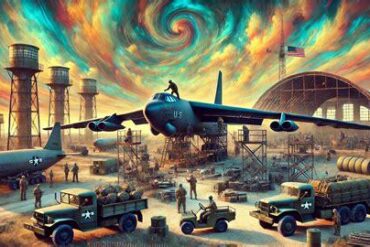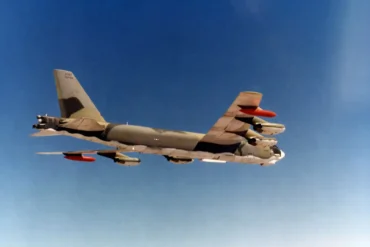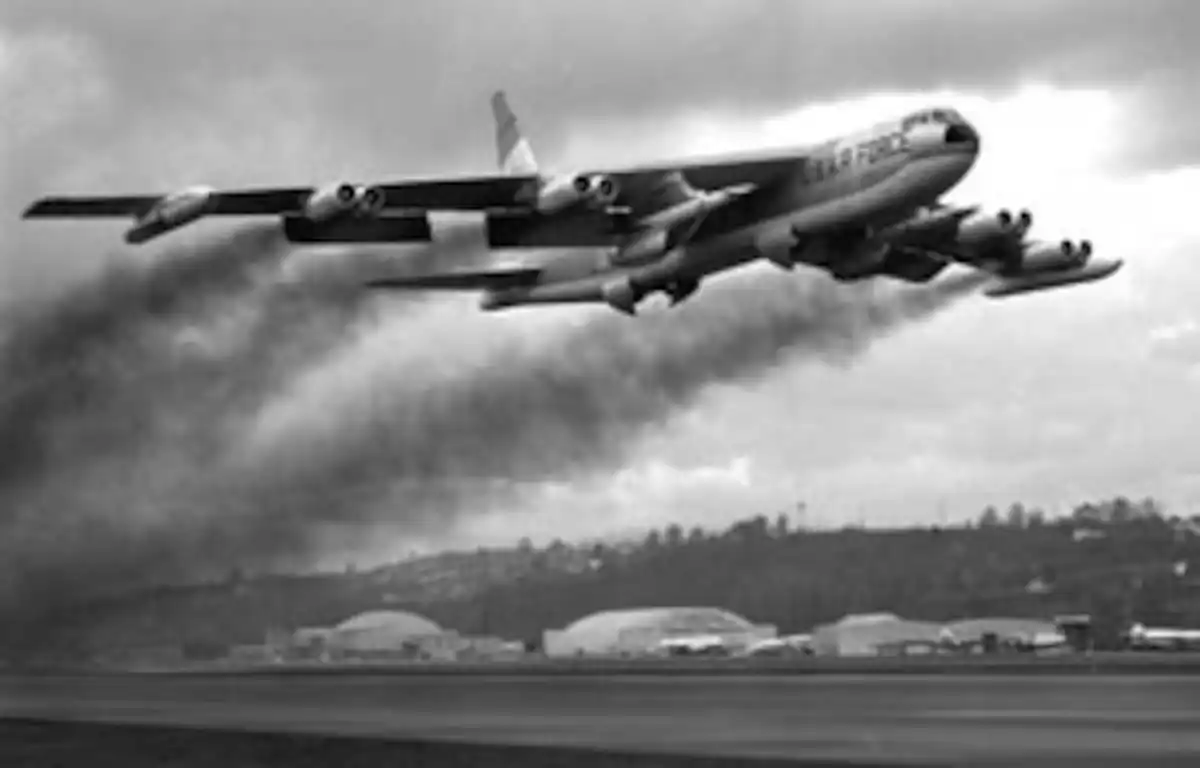
In the most dangerous years of the Cold War, when the possibility of nuclear war seemed less like a distant nightmare and more like an imminent reality, the United States launched one of the most extraordinary military operations in history. Known as Operation Chrome Dome, the mission ensured that nuclear-armed Boeing B-52 Stratofortress bombers were continuously airborne, flying routes that brought them within minutes of Soviet territory. At any given moment, American bombers carrying thermonuclear weapons were already in the sky, prepared to execute retaliatory strikes if the Soviet Union launched a surprise attack.
The operation represented the ultimate expression of Cold War deterrence. It was expensive, risky, and controversial, yet military planners considered it essential. During a period when intercontinental ballistic missiles were still developing and submarine-based nuclear forces had not yet matured into a fully reliable deterrent, airborne bombers became America’s most credible guarantee of retaliation.
The story of Operation Chrome Dome reveals not only the terrifying logic that governed the nuclear age but also how close the world came to catastrophe during the decades-long confrontation between the United States and the Soviet Union.
The Nuclear Revolution That Changed Global Strategy
The atomic bombings of Hiroshima and Nagasaki in August 1945 fundamentally transformed international politics. For the first time in human history, a single weapon possessed the power to devastate an entire city within seconds. Beyond their immediate military impact, the attacks sent a clear signal to every major power that warfare had entered a new era.
Among those paying close attention was the Soviet Union. Soviet leader Joseph Stalin immediately recognized the strategic implications of America’s temporary monopoly on nuclear weapons. Although the Soviet nuclear program had already begun before the end of World War II, the destruction of Hiroshima and Nagasaki dramatically accelerated its development.
The result was the successful detonation of the Soviet Union’s first atomic weapon, the RDS-1, on August 29, 1949, at the Semipalatinsk Test Site in Kazakhstan. From that moment forward, the nuclear arms race became the defining feature of the Cold War.
Over the following two decades, both superpowers accumulated nuclear arsenals on an unprecedented scale. What began as a handful of atomic bombs expanded into tens of thousands of nuclear warheads capable of destroying civilization many times over. The rapid growth of these arsenals created a strategic dilemma unlike anything military planners had ever faced.
Victory in a nuclear war became almost meaningless. The challenge was no longer winning a conflict but preventing one from occurring at all.
The answer became a doctrine known as Mutually Assured Destruction (MAD). Under this concept, neither side would launch a nuclear first strike if it knew the other could still retaliate with devastating force. The credibility of retaliation became the foundation of global stability.
For the United States, ensuring that credibility became the mission of Strategic Air Command.
Strategic Air Command and the Rise of America’s Nuclear Bomber Force
During the early Cold War, no military organization carried greater responsibility than Strategic Air Command (SAC). Under the leadership of the hard-driving and uncompromising General Curtis LeMay, SAC evolved into one of the most powerful military commands ever assembled.
LeMay believed that deterrence depended on readiness. Nuclear weapons were only useful if they could survive an enemy attack and be delivered quickly against strategic targets.
As a result, SAC embarked on a massive expansion program beginning in the late 1940s.
By the mid-1950s, SAC operated more than 2,000 Boeing B-47 Stratojet bombers alongside nearly 750 newly introduced B-52 Stratofortress aircraft. The B-52 quickly emerged as the backbone of America’s strategic bomber fleet due to its exceptional range, payload capacity, and reliability.
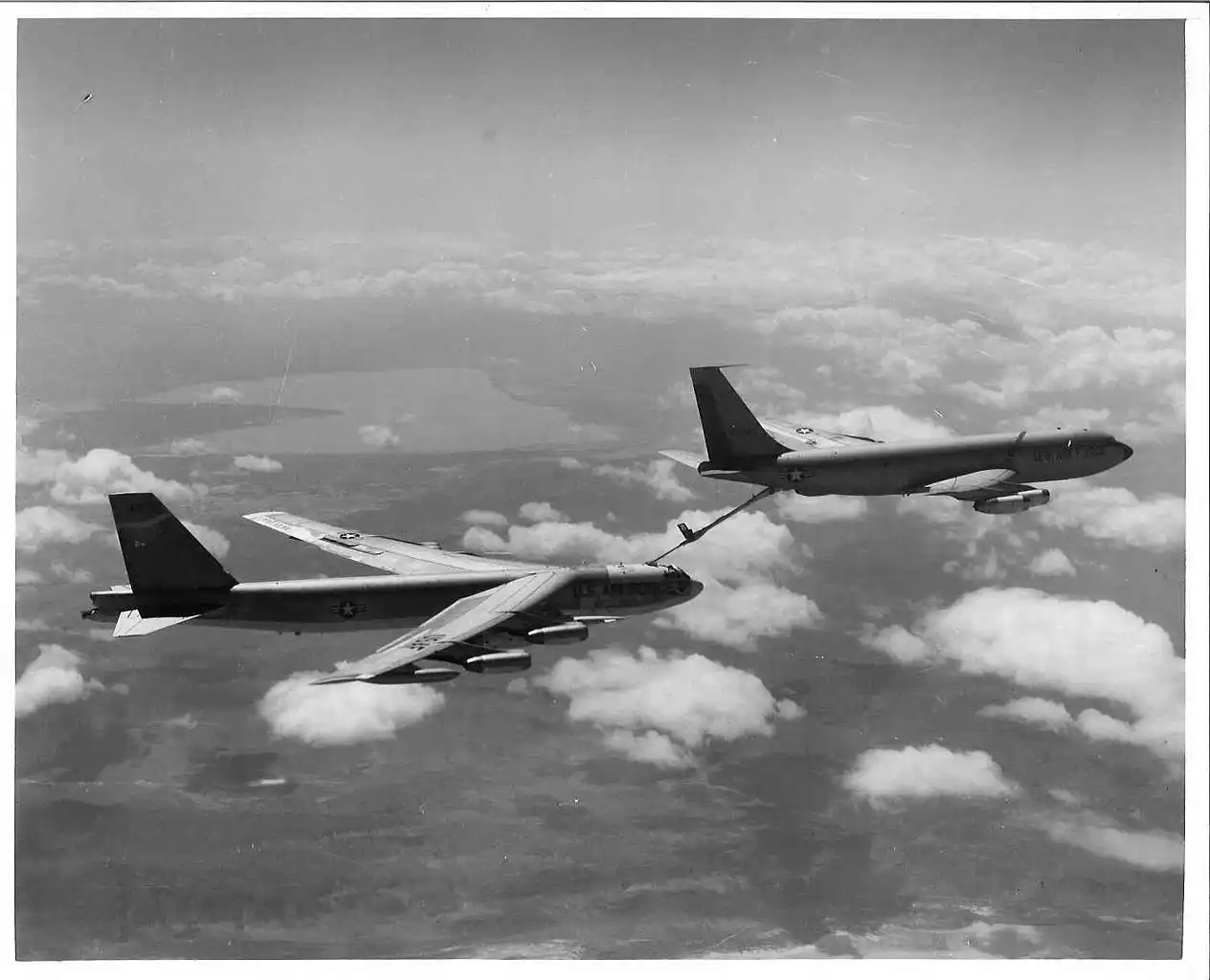
The aircraft represented a revolutionary leap in strategic aviation. Capable of carrying multiple thermonuclear weapons across intercontinental distances, the B-52 allowed the United States to threaten virtually any target within the Soviet Union.
However, by the late 1950s, American planners faced a growing concern. Soviet advances in long-range bombers and ballistic missiles raised fears that SAC’s aircraft could be destroyed before they ever left the ground.
A surprise Soviet attack targeting bomber bases could potentially cripple America’s ability to retaliate.
This possibility was unacceptable.
President Dwight D. Eisenhower responded by ordering the dispersal of bombers across multiple airfields throughout the continental United States. Simultaneously, SAC implemented intensive readiness programs designed to ensure that bomber crews could launch within minutes of receiving warning.
The famous “Ground Alert Program” became a central feature of this effort. Aircrews remained on constant standby, ready to sprint toward waiting aircraft at the sound of a klaxon alarm. Every second mattered because the survival of America’s deterrent capability could depend on rapid reaction.
Yet even these measures did not fully eliminate concerns about a surprise attack.
Military planners wanted a guarantee that some nuclear forces would survive regardless of what happened on the ground.
Their solution was both simple and astonishing.
Keep the bombers airborne.
Why Operation Chrome Dome Was Created
By the early 1960s, Cold War tensions had reached extraordinary levels. The Berlin Crisis, escalating ideological competition, and rapid nuclear expansion created an atmosphere of constant anxiety.
Particularly troubling for American strategists was the Arctic route connecting North America and the Soviet Union. Soviet bombers and missiles traveling across the polar region could potentially strike American targets with little warning.
At the same time, submarine-launched ballistic missile technology had not yet matured into the highly survivable deterrent force that would later form a critical leg of the nuclear triad.
This left Strategic Air Command carrying much of the burden for maintaining nuclear deterrence.
General Thomas S. Power, LeMay’s successor at SAC, concluded that the best way to guarantee retaliation was to ensure that part of the bomber force was already airborne at all times.
Thus, Operation Chrome Dome was born.
Beginning in 1961, nuclear-armed B-52 bombers started flying continuous patrol routes around the clock. Instead of waiting on runways for orders, these aircraft remained in the sky, often operating near Soviet airspace.
Their mission was straightforward.
If the Soviet Union launched a nuclear attack, the bombers would immediately proceed to preplanned targets and execute retaliatory strikes.
The existence of these airborne bombers meant that no Soviet first strike could completely eliminate America’s nuclear response capability.
That fact alone was intended to deter war.
The Constant Presence of Nuclear-Armed B-52s
Operation Chrome Dome represented a logistical achievement of remarkable scale.
At any given time, approximately twelve nuclear-armed B-52 bombers remained airborne on rotating patrols. These aircraft followed carefully planned routes designed to maximize survivability and reduce response times.
Some patrols crossed the Arctic and approached the northern boundaries of Soviet airspace. Others flew over the Atlantic or Pacific Oceans, maintaining positions that allowed rapid access to strategic targets.
The operation demanded extraordinary coordination between aircrews, maintenance personnel, tanker aircraft, intelligence agencies, and command centers.
Each mission involved multiple aerial refuelings to extend endurance. Tanker aircraft rendezvoused with bombers in remote regions, transferring fuel while both aircraft traveled at high speed thousands of feet above the Earth.
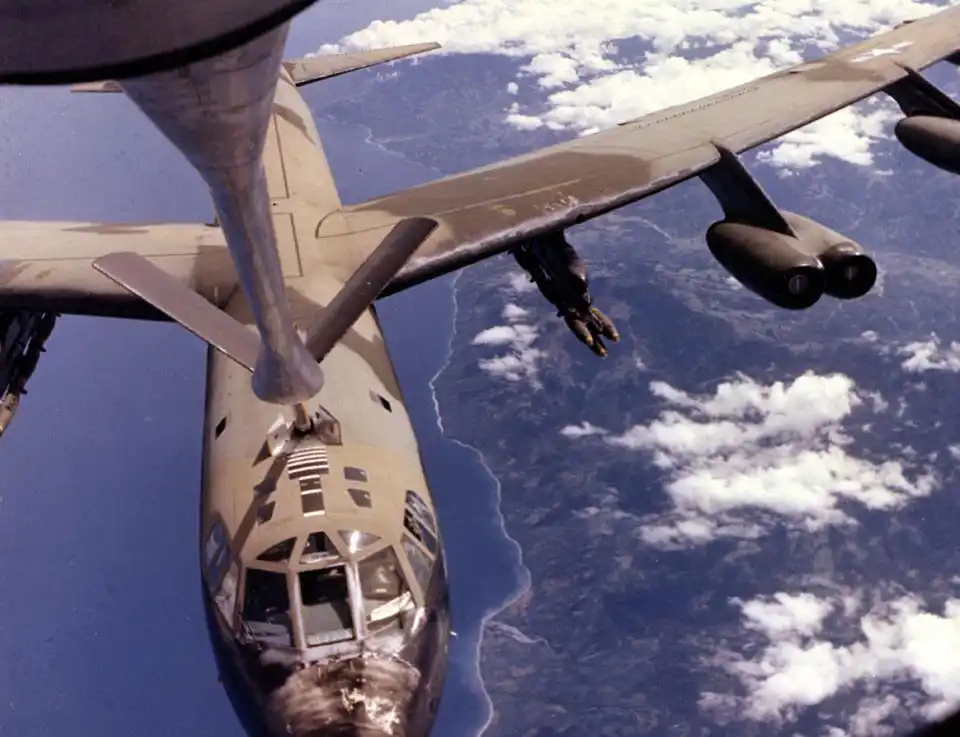
Crews often endured exhausting flights lasting many hours under constant awareness that they were carrying weapons capable of destroying entire metropolitan regions.
Unlike conventional military missions, these patrols occurred every day.
Week after week.
Month after month.
Year after year.
The operation transformed airborne nuclear alert into a permanent feature of Cold War life.
Although much of the public remained unaware of the details, Soviet leaders certainly understood the message.
The Cuban Missile Crisis and Chrome Dome’s Ultimate Test
No event demonstrated the importance of Operation Chrome Dome more dramatically than the Cuban Missile Crisis of October 1962.
When American intelligence discovered Soviet nuclear missile deployments in Cuba, the world entered what many historians regard as the most dangerous moment of the Cold War.
For thirteen days, the United States and Soviet Union stood on the brink of nuclear conflict.
Strategic Air Command responded by dramatically increasing its operational tempo. Airborne alert missions surged as SAC sought to maximize the visibility and credibility of America’s retaliatory capability.
At the height of the crisis, as many as seventy-five nuclear flights occurred daily.
Soviet Premier Nikita Khrushchev later acknowledged the impact these operations had on Soviet decision-making. The knowledge that American nuclear bombers were continuously airborne complicated any calculation involving a first strike.
The bombers could not be destroyed on the ground because they were already flying.
That reality reinforced deterrence during one of history’s most dangerous confrontations.
Operation Chrome Dome achieved exactly what its architects intended: convincing Soviet leaders that nuclear aggression would inevitably result in devastating retaliation.
The Terrifying Weapons Carried by Chrome Dome Aircraft
The B-52 bombers participating in Chrome Dome carried some of the most destructive weapons ever created.
Among them were the B28 thermonuclear bomb, the massive B41 nuclear weapon, and the AGM-28 Hound Dog nuclear cruise missile.
The B41 stood apart due to its extraordinary destructive power. With a yield reaching approximately 25 megatons, it ranked among the most powerful nuclear weapons ever deployed by the United States.
To appreciate its scale, the weapon possessed roughly 1,600 times the explosive energy of the Hiroshima bomb.
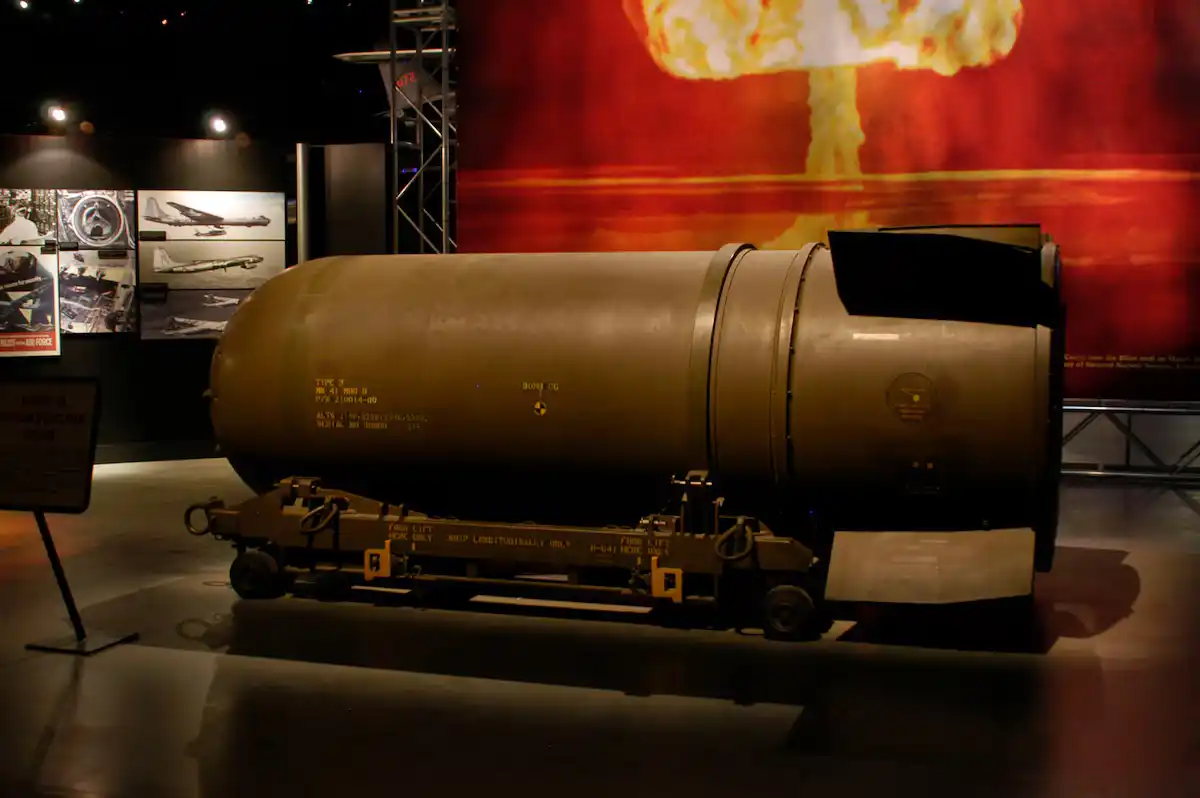
Military planners intended such weapons for hardened strategic targets, missile complexes, bomber bases, military-industrial centers, and vast urban regions.
At a time when navigation systems lacked the precision available today, sheer explosive yield compensated for targeting uncertainty.
The destructive potential carried aboard Chrome Dome bombers was almost unimaginable.
Every patrol represented a flying concentration of nuclear firepower capable of reshaping entire regions within moments.
The Risks Behind the Deterrent
Despite its strategic value, Operation Chrome Dome carried enormous dangers.
Keeping nuclear weapons airborne continuously meant accepting the possibility of accidents.
Mechanical failures, weather hazards, human error, and midair emergencies all posed risks. Every mission increased the chances of an incident involving nuclear weapons.
Remarkably, given the scale of operations, relatively few serious accidents occurred.
Across roughly seven years and tens of thousands of sorties, only a handful of major incidents took place.
Yet one accident would ultimately end the program.
The Thule Crash That Ended Operation Chrome Dome
On January 21, 1968, a B-52G designated Hobo 28 departed from Plattsburgh Air Force Base carrying four thermonuclear weapons.
Its mission followed a familiar route over Greenland near Thule Air Force Base, now known as Pituffik Space Base. The location was strategically important because it housed critical components of America’s ballistic missile early-warning network.
During the flight, an electrical fire erupted inside the aircraft.
Smoke rapidly filled the cockpit, overwhelming the crew and making the aircraft impossible to control.
The crew abandoned the bomber by parachute.
Moments later, the B-52 crashed onto Greenland’s ice-covered surface approximately 7.5 miles from Thule Air Force Base.
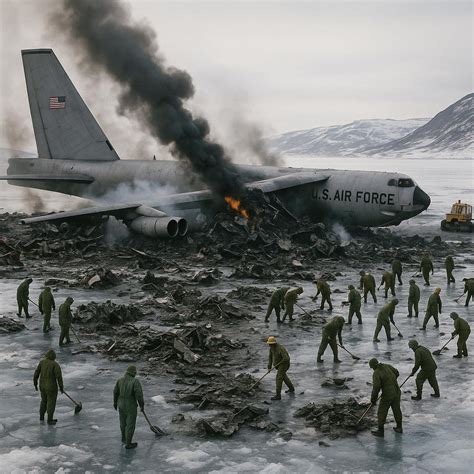
The impact destroyed the aircraft and dispersed radioactive contamination across the crash area.
Although no nuclear detonation occurred, plutonium and other hazardous materials spread into the surrounding environment.
The cleanup effort, designated Operation Crested Ice, became one of the most complex environmental recovery missions of the Cold War.
Hundreds of personnel from dozens of agencies participated in removing contaminated snow, ice, water, and wreckage. Ultimately, more than 237,000 cubic feet of radioactive material were collected and transported for disposal.
The incident dramatically highlighted the dangers inherent in maintaining airborne nuclear patrols.
The following day, Operation Chrome Dome was terminated.
Its era had come to an abrupt end.
Chrome Dome’s Lasting Legacy in Nuclear Deterrence
Although Operation Chrome Dome ended in 1968, its influence on strategic thinking remains significant.
The operation emerged during a transitional period when the United States was still building the fully integrated nuclear triad that would later include highly survivable submarine-launched ballistic missiles.
In many respects, Chrome Dome served as a bridge between vulnerable early Cold War deterrence systems and the more stable strategic posture that emerged later.
By maintaining nuclear bombers in the air continuously, American leaders eliminated doubts about their ability to retaliate after a surprise attack. This strengthened deterrence during some of the Cold War’s most volatile years.
Critics have long argued that the operation exposed the world to unnecessary risks. Supporters counter that those risks helped prevent a far greater catastrophe by making nuclear war less likely.
Both perspectives contain truth.
Operation Chrome Dome embodied the paradox at the heart of Cold War strategy: preserving peace by maintaining the constant readiness for unimaginable destruction.
For seven years, nuclear-armed B-52 bombers circled the globe, flying missions that brought them within minutes of Soviet airspace. Their presence served as a warning, a safeguard, and a symbol of an era defined by fear, power, and deterrence.
The bombers never received the order they were prepared to execute.
In that sense, the mission achieved its ultimate objective. The aircraft remained ready, the deterrent remained credible, and the Cold War’s most dangerous confrontations passed without escalating into nuclear Armageddon. Few military operations better illustrate the razor-thin line between peace and catastrophe that defined the nuclear age.