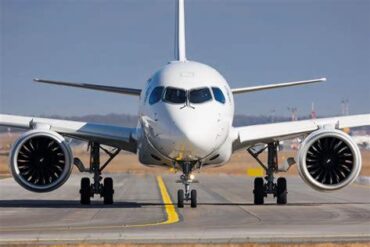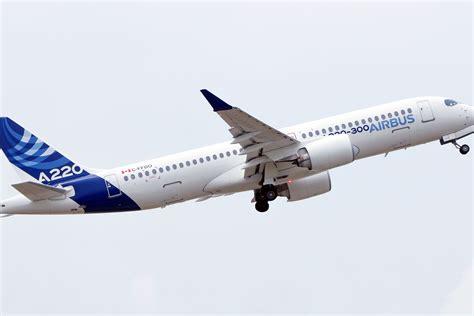
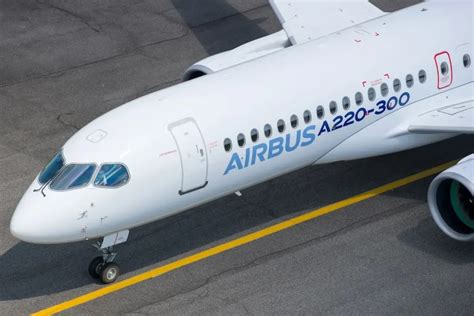
Commercial aviation is often dominated by discussions surrounding the largest aircraft orders, the busiest airline routes, and the most recognizable jetliners. Aircraft such as the Boeing 737 and Airbus A320 families receive enormous attention because they transport millions of passengers every year and form the backbone of global airline fleets. Yet beneath the spotlight, another aircraft has quietly emerged as one of the most impressive achievements in modern aerospace engineering. The Airbus A220 has become a remarkably efficient, passenger-friendly, and economically transformative aircraft that continues to outperform expectations while remaining surprisingly underappreciated.
What makes the A220 particularly fascinating is that it was never originally designed to be a mainstream industry giant. Instead, it was conceived to solve a specific market problem that many manufacturers had ignored for decades. Airlines needed an aircraft capable of carrying between 100 and 150 passengers without the inefficiencies associated with larger narrowbody jets. The result was an aircraft designed from a clean sheet rather than adapted from an older platform.
Today, the Airbus A220 is proving that sometimes the most important innovations in aviation are not the biggest aircraft or the fastest-selling models. Instead, they are the aircraft that fundamentally change how airlines think about route planning, operating costs, passenger comfort, and long-term fleet strategy.
The A220 has become exactly that kind of aircraft.
A Remarkable Journey From Bombardier CSeries To Airbus Success Story
The story of the Airbus A220 is unlike that of almost any other modern commercial aircraft.
Originally developed by Canadian aerospace manufacturer Bombardier as the CSeries, the aircraft was intended to challenge established manufacturers by introducing a purpose-built jet optimized specifically for the 100-to-150-seat market segment. While many aircraft programs evolve from previous designs, the CSeries was engineered from scratch with modern materials, advanced aerodynamics, and next-generation engines.
The aircraft entered a highly competitive market and immediately attracted attention for its technical capabilities. However, Bombardier faced significant financial and political challenges, including trade disputes that threatened the program’s future. These complications eventually created an opportunity for Airbus to acquire a majority stake in the program.
Following Airbus’ involvement, the aircraft was rebranded as the Airbus A220, gaining access to Airbus’ global sales network, manufacturing expertise, and customer support infrastructure.
What could have become a failed aerospace experiment instead transformed into one of the industry’s most promising commercial aircraft programs. Airbus recognized the aircraft’s unique strengths and positioned it as a critical component of future airline fleets.
The result has been extraordinary growth and increasing acceptance among airlines around the world.
The Perfect Aircraft For A Market Everyone Else Ignored
One of the biggest reasons the Airbus A220 remains underrated is that many people underestimate the value of its market segment.
For decades, airlines often relied on smaller versions of larger aircraft families to serve routes requiring around 100 to 150 seats. While this approach seemed practical, it frequently introduced compromises. Aircraft originally designed for higher passenger capacities often carried unnecessary structural weight and consumed more fuel than needed when configured for smaller markets.
The Airbus A220 was built specifically to eliminate these compromises.
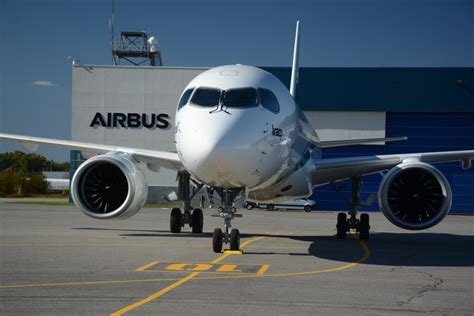
Instead of shrinking a larger aircraft, engineers designed the A220 around the exact requirements of airlines operating medium-density routes. This optimization created an aircraft with exceptional efficiency and flexibility.
The aircraft enables airlines to serve destinations that may not generate enough demand for larger narrowbody jets while still offering significantly lower operating costs than traditional alternatives. This capability has become increasingly valuable as airlines seek to expand point-to-point service rather than funnel passengers exclusively through major hubs.
The A220 essentially fills a gap that had existed in commercial aviation for years.
Perhaps most importantly, Airbus currently enjoys a substantial advantage in this category. Boeing lacks a direct competitor specifically optimized for the same market segment, allowing the A220 to establish itself as the preferred choice for many airlines seeking right-sized capacity.
Why Airlines Are Ordering The A220 In Large Numbers
The commercial performance of the A220 tells a compelling story.
More than 500 aircraft have already been delivered, while the order backlog exceeds 1,000 firm orders. Such figures demonstrate that airlines are increasingly recognizing the aircraft’s value proposition.
These orders are not driven by marketing hype. They are driven by economics.
Airlines operate in an environment where fuel costs, maintenance expenses, crew utilization, and route profitability determine success or failure. Every percentage point of efficiency matters.
The A220 delivers advantages across multiple categories simultaneously.
Its advanced design reduces fuel consumption. Its modern systems lower maintenance requirements. Its range capabilities allow airlines to operate longer routes without deploying larger aircraft. Its passenger appeal helps attract customers.
When airline executives evaluate these benefits collectively, the business case becomes difficult to ignore.
The growing order book reflects a broader industry realization that the future of aviation will require aircraft capable of serving a wider variety of markets efficiently rather than relying solely on larger narrowbody platforms.
A Cabin That Feels Far Bigger Than A Narrowbody
Passenger comfort represents one of the A220’s most significant strengths.
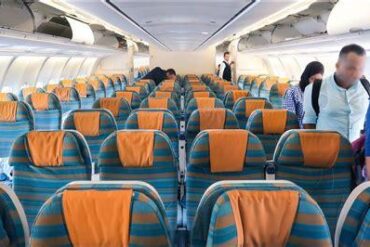
Many travelers board narrowbody aircraft expecting cramped seating, limited storage, and restricted personal space. The Airbus A220 challenges those expectations from the moment passengers enter the cabin.
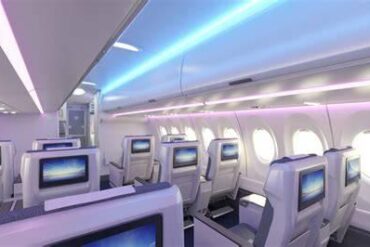
Unlike many older aircraft designs, the A220’s interior was engineered with modern passenger expectations in mind. The cabin feels noticeably more spacious than many competing aircraft in the same category.
One of the most appreciated features is the aircraft’s 2-3 seating configuration. This arrangement significantly reduces the number of middle seats compared to traditional six-abreast narrowbody cabins. For travelers, this seemingly simple design decision dramatically improves comfort.
The aircraft also offers:
- Wider seats
- Larger windows
- Broader aisles
- Taller lavatories
- Larger overhead bins
- Enhanced cabin lighting
These improvements combine to create a travel experience that feels closer to a widebody aircraft than a traditional regional jet.
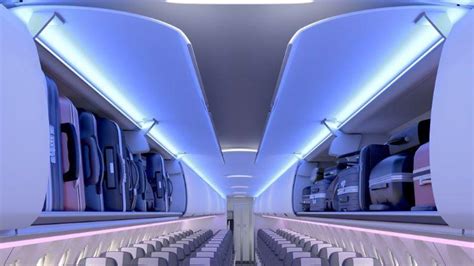
Perhaps the most striking feature is the aircraft’s enormous windows. Measuring approximately 11 by 16 inches, they are among the largest found on any commercial narrowbody aircraft. The increased natural light makes the cabin feel brighter, more open, and less confined.
Passengers may not always recognize the aircraft model they are flying on, but many notice that the experience feels better.
That subtle difference matters.
The Revolutionary Geared Turbofan Advantage
At the heart of the Airbus A220’s performance lies one of the most important engine innovations of the modern era.
The aircraft is powered by Pratt & Whitney PW1500G Geared Turbofan engines, commonly known as GTF engines.
Unlike traditional turbofan engines, the GTF architecture incorporates a gearbox between the fan and low-pressure turbine. This allows each component to operate at its optimal speed rather than compromising performance.
The engineering concept may sound straightforward, but its impact is profound.
The technology contributes to substantial reductions in:
- Fuel consumption
- Noise emissions
- Carbon emissions
- Operating costs
Compared with many older-generation aircraft, airlines can achieve fuel-burn improvements approaching 25% per seat.
For an industry where fuel represents one of the largest operating expenses, such savings can translate into millions of dollars annually.
The Geared Turbofan is one of the primary reasons the A220 delivers economics that were previously difficult to achieve in its seating category.
How The A220 Is Transforming Airline Route Networks
Perhaps the most underrated aspect of the Airbus A220 is its impact on airline network planning.
Historically, airlines faced a difficult choice when evaluating routes with moderate demand. Smaller aircraft often lacked sufficient range or passenger appeal, while larger aircraft carried excessive costs.
The A220 changes that equation.
Its combination of range, efficiency, and capacity enables airlines to connect city pairs that would otherwise struggle to support profitable service.
Instead of routing passengers through crowded hub airports, airlines can increasingly offer direct flights between mid-sized cities.
This approach benefits both airlines and passengers.
Airlines gain access to new revenue opportunities, while travelers enjoy shorter journeys and fewer connections.
The aircraft’s range capabilities have exceeded many initial expectations. Routes spanning thousands of miles are now routinely operated by the A220, including numerous transcontinental services throughout North America.
What began as a specialized aircraft has evolved into a highly versatile platform capable of serving an astonishing variety of missions.
Breeze Airways Demonstrates The Aircraft’s Potential
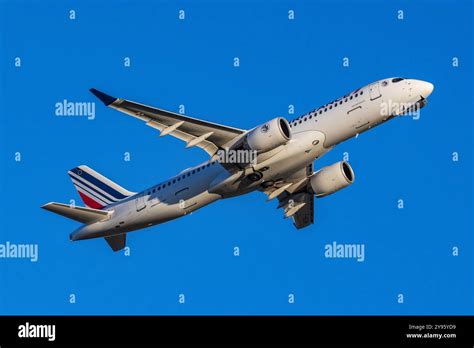
No airline illustrates the A220’s capabilities better than Breeze Airways.
The American carrier has built much of its business strategy around the aircraft, using it to connect underserved city pairs across the United States.
Rather than competing directly on crowded trunk routes, Breeze leverages the A220’s economics to operate flights that larger aircraft would struggle to serve profitably.
This strategy has produced encouraging results.
In 2025, Breeze reported its first profitable quarter, a milestone that highlighted the practical advantages of deploying the A220 on carefully selected routes.
The airline’s network includes numerous long-distance services linking secondary cities that previously lacked convenient nonstop options.
The success of these operations demonstrates how the A220 is not merely replacing older aircraft. It is creating entirely new market opportunities.
This ability to unlock previously uneconomical routes may ultimately become one of the aircraft’s most enduring contributions to commercial aviation.
The Engine Challenges That Slowed Momentum
Despite its many strengths, the Airbus A220 has not been immune to challenges.
The aircraft’s most significant obstacle has involved issues affecting certain Pratt & Whitney engine components. During 2024 and 2025, airlines around the world were forced to temporarily ground numerous aircraft while inspections and repairs were conducted.
These disruptions created operational headaches for carriers that depended heavily on the A220.
Aircraft sitting on the ground generate no revenue, and replacement capacity can be difficult to secure. Several airlines experienced schedule adjustments and financial impacts as a result.
However, the industry’s response has been encouraging.
Manufacturers, maintenance providers, and airlines collaborated to accelerate inspections, implement revised maintenance procedures, and introduce updated components.
The situation has steadily improved.
JetBlue, one of the largest A220 operators, reported significant reductions in grounded aircraft numbers as maintenance initiatives progressed. Similar improvements have been observed across other operators.
While the engine issues temporarily affected perceptions of the aircraft, they have not fundamentally altered confidence in the platform’s long-term future.
Why The Future Looks Even Brighter For The A220
The Airbus A220 may still be in the early stages of its full potential.
Industry attention is increasingly focused on the possibility of an A220-500, a stretched version expected to carry up to 180 passengers. Such a model would move directly into territory currently dominated by the Airbus A320neo and Boeing 737 MAX 8.
If launched, the A220-500 could dramatically expand the aircraft family’s market reach.
Recent large-scale orders, including AirAsia’s commitment for 150 aircraft, have strengthened expectations that Airbus sees significant future opportunities for the platform.
Major airlines such as Delta Air Lines, Air Canada, and other existing operators would likely become natural candidates for the larger variant.
The prospect of combining the A220’s passenger-friendly cabin with higher seating capacity is particularly attractive. Airlines could offer superior comfort while maintaining many of the efficiency advantages that have made the aircraft successful.
For Airbus, the A220 family has evolved from a niche acquisition into a strategic asset capable of influencing the next generation of narrowbody aviation.
Why The Airbus A220 Deserves Far More Recognition
The aviation industry often celebrates aircraft that dominate headlines, secure record-breaking orders, or operate the world’s busiest routes. Yet true innovation is frequently found in aircraft that quietly solve complex problems better than anyone expected.
The Airbus A220 embodies that principle.
It offers exceptional fuel efficiency, outstanding passenger comfort, impressive range, and unmatched flexibility within its market segment. It allows airlines to serve routes that would otherwise remain unprofitable while providing travelers with a noticeably better onboard experience.
Few modern aircraft have combined so many strengths into a single platform.
As production rates continue increasing and airlines expand their fleets, the A220 is steadily shedding its reputation as an overlooked newcomer. Instead, it is becoming one of the most influential aircraft shaping the future of commercial aviation.
For passengers, airlines, and the broader aerospace industry, the Airbus A220 represents something increasingly rare: an aircraft that genuinely changes the rules of the game. Its growing success suggests that the most underrated commercial aircraft flying today may soon become one of the most important aircraft in the world.
FAQs
Is the Airbus A220 a regional jet?
No. Although it originated in a market segment traditionally associated with regional aircraft, the Airbus A220 is classified as a mainline narrowbody airliner. Its range and passenger capacity allow it to operate domestic, transcontinental, and international routes.
Why is the Airbus A220 considered fuel efficient?
The aircraft combines a lightweight clean-sheet design, advanced aerodynamics, and Pratt & Whitney Geared Turbofan engines, resulting in significantly lower fuel consumption compared with many older-generation aircraft.
Which airlines operate the Airbus A220?
Major operators include Delta Air Lines, Air Canada, JetBlue Airways, Breeze Airways, SWISS International Air Lines, Air Baltic, Air France, and several others worldwide.
What is the seating capacity of the Airbus A220?
The A220 family currently includes the A220-100 and A220-300, typically seating between approximately 100 and 150 passengers, depending on airline configuration.
Is Airbus developing a larger A220 variant?
Industry analysts widely expect Airbus to eventually introduce an A220-500 stretched model. While official details remain limited, the aircraft is expected to offer greater capacity while preserving the A220 family’s efficiency and passenger comfort advantages.