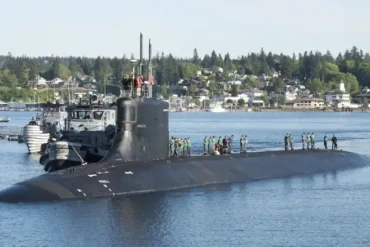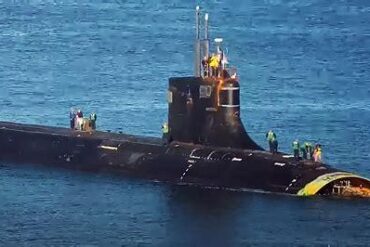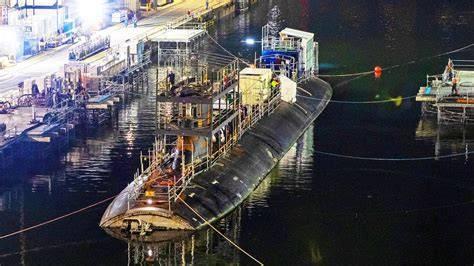
The U.S. Navy’s hopes of returning the USS Connecticut (SSN-22) to active service in 2026 have effectively disappeared, with repairs to the damaged Seawolf-class attack submarine now expected to continue into summer 2027. The submarine has been unavailable since a serious collision with an uncharted seamount in the South China Sea in October 2021, creating a long-running maintenance challenge for a fleet that has only three Seawolf-class boats.
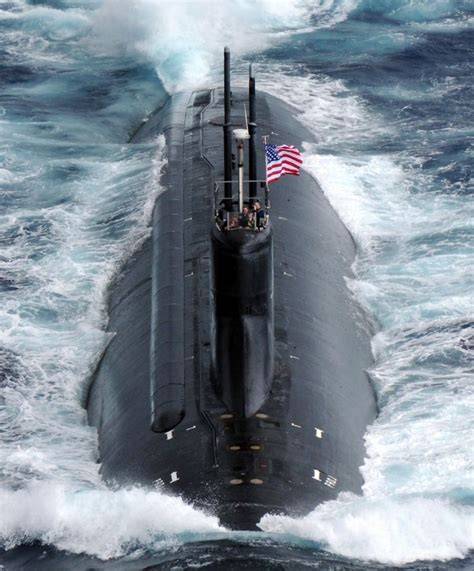
Commissioned in 1998 after launching in 1997, Connecticut was designed for some of the most demanding missions in the U.S. submarine fleet. Its nuclear propulsion provides high speed and endurance, while its exceptionally quiet design allows it to conduct anti-submarine warfare, intelligence, surveillance, reconnaissance, and surface warfare missions. Unlike newer attack submarines equipped with vertical launch systems, the Seawolf class relies on eight torpedo tubes capable of carrying up to 50 weapons, including Mark 48 torpedoes and Tomahawk cruise missiles.
The South China Sea accident caused substantial structural and systems damage, forcing the submarine into a complex Extended Docking Selected Restricted Availability (EDSRA) at Puget Sound Naval Shipyard & Intermediate Maintenance Facility in Washington. Repairs began in February 2023, with the original completion target set for September 2025. That deadline moved first into early 2026 and later toward the end of 2026. The latest schedule now pushes completion into summer 2027.
Why USS Connecticut Repairs Are Taking So Long
The extended repair period is not simply a matter of repairing the damage caused by the collision. The Navy is also using the availability to overhaul and modernize additional systems, making the project considerably more complicated. Because only three Seawolf-class submarines were ever completed, maintaining them presents unusual logistical problems.
The class was designed during the Cold War and was extraordinarily expensive to build, costing roughly $3.1 billion at the time. With production ending after only three boats, the Navy cannot rely on a large supply chain of standardized replacement components. Some parts must instead be fabricated specifically for individual maintenance projects, adding time and complexity to an already difficult restoration.
The financial burden is also significant. Congress approved $50 million for Connecticut repairs in 2021, while estimates reported in 2026 suggested that the eventual restoration bill could exceed $80 million. The Navy has not publicly disclosed a final total, and a prolonged schedule could further increase the cost.
A Shrinking Seawolf-Class Submarine Force
The delay becomes more consequential because of the tiny size of the Seawolf fleet. If Connecticut remains unavailable when USS Seawolf enters scheduled maintenance in May 2027, only USS Jimmy Carter would remain operational.
That creates an especially important capability gap because Jimmy Carter is heavily specialized and is not configured in the same way for conventional attack missions. Connecticut therefore represents more than another submarine awaiting maintenance; its absence removes a unique fast-attack capability from the fleet.
The Navy still appears committed to restoring the submarine despite plans to inactivate Connecticut in 2031. Meanwhile, the future SSN(X) program intended to eventually succeed the Virginia and Seawolf classes has also been delayed, with production now expected much later than originally envisioned.
For the U.S. Navy, the Connecticut repair saga therefore highlights a broader problem: maintaining a small number of highly specialized nuclear submarines can become increasingly difficult when aging infrastructure, limited spare parts, complex modernization work, and delayed replacement programs converge.