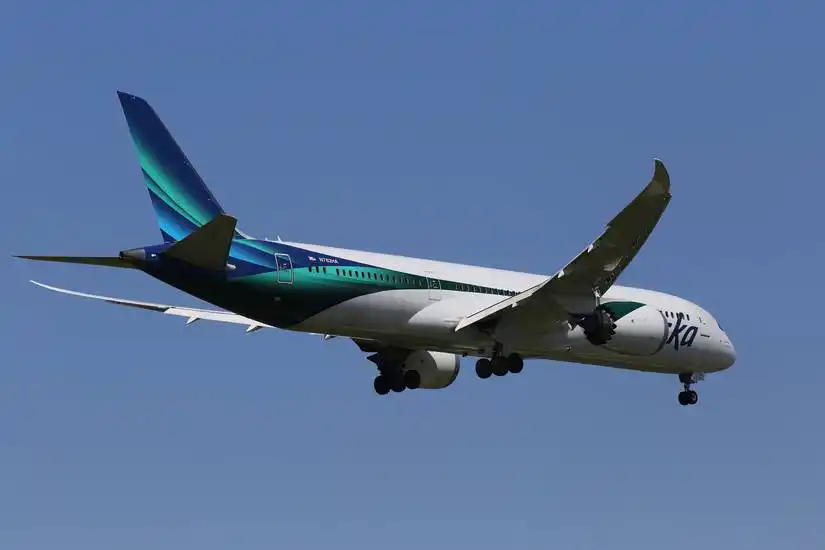
Alaska Airlines is reportedly closing in on its next major international expansion, with Seattle-Tacoma International Airport (SEA) to Hong Kong International Airport (HKG) emerging as one of the strongest possibilities. A nonstop flight between the two cities would represent a major step in the carrier’s transformation from a predominantly North American airline into a genuinely global operator, while also creating a route of roughly 14 hours in the westbound or eastbound schedule depending on seasonal winds and operating conditions.
The potential Hong Kong service comes as Alaska continues to build an increasingly ambitious long-haul network from Seattle. The carrier has already established nonstop services to Tokyo and Seoul, followed by new European routes including London and Rome, while Reykjavik operates seasonally. Athens and Paris are also scheduled to join the network next year. Together, these routes demonstrate how dramatically Alaska’s international strategy has changed since its acquisition of Hawaiian Airlines.
The Hawaiian transaction was particularly important because it gave Alaska access to a fleet and infrastructure suited to long-distance flying, including the Boeing 787-9 Dreamliner. Rather than treating those aircraft simply as an extension of Hawaiian’s existing network, Alaska has begun using them as the foundation for a new global strategy centered on Seattle. The airline now has the aircraft, alliance connections, premium-cabin ambitions, and domestic feed necessary to support a much broader international operation.
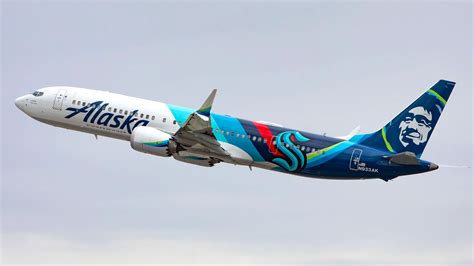
Alaska Airlines Seattle–Hong Kong Route Could Transform Its Asia Network
Hong Kong makes considerable strategic sense if Alaska chooses to launch the route. The city is one of Asia’s most important aviation and financial centers, while Seattle has a large technology, business, and Asian-American population. A nonstop connection would also give Alaska another major gateway into Asia beyond Tokyo and Seoul, strengthening the role of Seattle as the airline’s principal international hub.
The competitive landscape is also notable. Cathay Pacific is currently the established nonstop operator between Seattle and Hong Kong, using the Airbus A350-900 on the route several times per week. Alaska would therefore be entering a market with an experienced incumbent rather than creating an entirely uncontested route. However, its oneworld membership could provide a particularly useful strategic advantage, allowing Alaska to connect its extensive US network with Cathay Pacific and other alliance partners across Asia.
A nonstop SEA-HKG flight would also become one of Alaska’s longest services. At approximately 14 hours, the route would require a highly capable widebody aircraft with sufficient range, payload capability, and premium-cabin economics. The Boeing 787-9 is particularly well suited to that mission because of its combination of range, fuel efficiency, and cabin flexibility.
Seattle Is Becoming Alaska Airlines’ Global Long-Haul Hub
The possible Hong Kong route fits into a much larger plan. Alaska Airlines has indicated that it wants to reach approximately 15 long-haul destinations by the end of the decade, a remarkable expansion from the carrier’s traditional network profile.
The airline has firm orders for another 17 Boeing 787 aircraft, which are expected to include the larger 787-10. Alaska is also planning a premium-heavy configuration, with around 46% of the cabin dedicated to premium seating across its long-haul strategy. That configuration reveals an important part of the business model: these aircraft are not simply intended to carry large numbers of passengers between distant cities. They are designed to attract travelers willing to pay substantially more for business-class and premium experiences.
That strategy could make Hong Kong particularly attractive. The city has historically generated significant business traffic, international connections, financial activity, and premium demand. For an airline trying to establish Seattle as a major global connecting point, those characteristics are difficult to ignore.
Alaska Airlines Is Expected to Focus Its Next Long-Haul Expansion on Asia
While Europe is becoming an increasingly important part of Alaska’s international network, company comments indicate that Asia is likely to account for a large share of its next long-haul growth. That makes Hong Kong one of the most closely watched potential additions.
Seattle already has an unusually broad selection of Asia-Pacific services operated by carriers including Delta Air Lines, Japan Airlines, Korean Air, Singapore Airlines, EVA Air, China Airlines, Philippine Airlines, and others. Alaska therefore needs to select destinations where its own network can generate sufficient traffic rather than simply duplicating existing capacity.
Hong Kong offers a strong combination of local demand and connecting opportunities. Passengers from cities throughout the western United States could potentially connect through Seattle, while travelers from Hong Kong could gain access to Alaska’s extensive domestic network.
Shanghai, Beijing, Bangkok and Ho Chi Minh City Could Follow
Hong Kong is not the only Asian destination that could eventually appear on Alaska’s route map. Shanghai and Beijing would give the airline access to two of China’s most important aviation markets, although regulatory and market conditions would make those routes more complicated than simply adding another destination.
Other possibilities include Bangkok and Ho Chi Minh City, both of which could provide Alaska with new sources of leisure, business, and connecting traffic. These markets would also fit the airline’s broader objective of expanding its presence across Asia rather than concentrating its international network around only a few established cities.
Australia has also generated speculation. Alaska’s onboard safety video featuring the Sydney Harbour Bridge sparked interest in a possible Seattle–Sydney service, although there is no confirmation that Australia will be the airline’s next long-haul destination. With the carrier itself indicating that most upcoming international growth is expected to center on Asia, Hong Kong currently appears to fit the strategy more closely.
Alaska Airlines’ Next 787 Could Redraw the Seattle Route Map
The significance of a potential Seattle–Hong Kong nonstop extends beyond a single route. Alaska is effectively attempting to build a global hub at Seattle while using its enormous domestic network to feed long-haul flights. The Hawaiian Airlines acquisition accelerated that strategy by giving the company additional widebody expertise and aircraft resources, while the Boeing 787 program provides the range needed to connect Seattle with distant international markets.
If Hong Kong becomes Alaska’s next major long-haul destination, the route would send an unmistakable message about the carrier’s ambitions. A roughly 14-hour nonstop flight is far removed from Alaska’s traditional identity as a West Coast-focused airline. It would instead position the carrier alongside established global operators serving one of Asia’s most important aviation markets.
For now, Alaska has not officially announced Seattle–Hong Kong service. However, with executives indicating that the airline is approaching a decision on its next long-haul destination, the possibility is becoming increasingly significant. If the route materializes, it could become one of the clearest signs yet that Alaska Airlines intends to make Seattle a true global gateway by 2030.