During World War II, altitude could be as valuable as speed, firepower, or armor. A pilot who climbed above an opponent gained more than a better view of the battlefield. Height provided potential energy, allowed an aircraft to dive into an attack with greater speed, and could place the sun behind the attacker while forcing an enemy pilot to fight from a weaker position. For reconnaissance aircraft and bombers, climbing higher also offered a way to reduce exposure to ground-based defenses and enemy fighters.
The challenge was that reaching extreme altitude required an aircraft to overcome increasingly difficult aerodynamic and mechanical conditions. Air became thinner, engines produced less power, propellers became less effective, and pilots faced freezing temperatures and limited oxygen. WWII aircraft therefore had to make careful compromises between speed, engine power, wing design, weight, armament, and high-altitude performance.
Bombers faced an additional problem because most lacked pressurized cabins. Crews needed heavy clothing, oxygen equipment, and other systems simply to survive at extreme heights. Nevertheless, several combat aircraft pushed far beyond the altitudes normally associated with WWII fighters. Some were specialized interceptors or reconnaissance aircraft, while others were versatile fighters that combined altitude with speed and heavy armament.
The five aircraft examined here demonstrate just how far wartime engineers pushed piston-engine aviation. Their service ceilings ranged from roughly 41,900 feet to nearly 49,000 feet, placing them among the highest-flying combat aircraft of the conflict.
North American P-51 Mustang: 41,900 Feet
The North American P-51 Mustang became one of the defining fighters of World War II, but its reputation was built on considerably more than its appearance or combat record. The Mustang combined long range, high speed, strong performance at altitude, and increasingly effective armament into an aircraft that transformed the Allied air campaign over Europe.
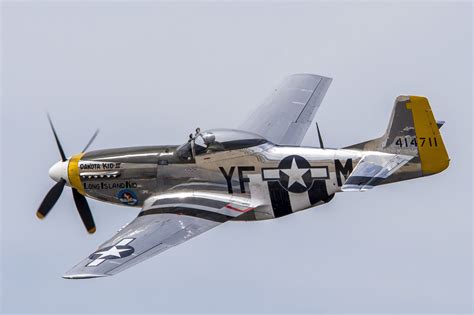
The P-51 entered operational service in 1942, and approximately 15,686 examples were ultimately produced. Different versions received different equipment and engines, but the aircraft’s high-altitude capabilities became especially important once it was paired with the Packard V-1650-series Merlin engine. The V-1650-7, a license-built version of the Rolls-Royce Merlin 61, produced around 1,490 horsepower and helped the Mustang reach a top speed of approximately 437 mph.
Its 41,900-foot service ceiling was particularly valuable because the Mustang could accompany heavy bombers deep into German-controlled territory. At those altitudes, its combination of speed and maneuverability allowed pilots to engage German fighters rather than simply remain close to the bomber formations.
The Mustang’s importance became even clearer as the strategic bombing campaign intensified. Long-range escort fighters could protect bombers far deeper into enemy territory, reducing the freedom German interceptors had previously enjoyed. The aircraft was also flown by the Tuskegee Airmen, adding another important chapter to its already substantial historical legacy.
The Mustang’s high-altitude performance therefore represented something larger than a specification-sheet achievement. It gave Allied fighter pilots the ability to operate where they could intercept opponents, protect bombers, and then convert altitude into speed during attacks.
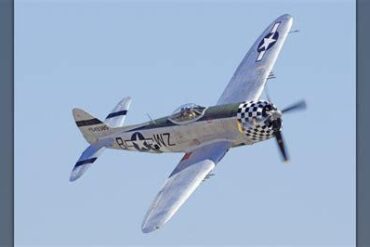
Republic P-47 Thunderbolt: 42,000 Feet
The Republic P-47 Thunderbolt was a very different-looking machine from the sleek P-51. Huge, heavy, and built around an enormous radial engine and turbo-supercharger installation, the Thunderbolt appeared almost oversized compared with many contemporary fighters. That apparent bulk, however, concealed impressive high-altitude performance.
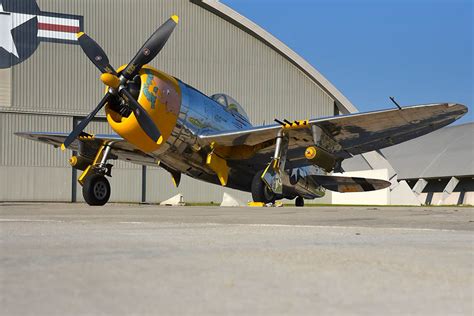
Republic Aviation began producing the P-47 in 1941, and more than 15,600 aircraft were eventually built. Although the fighter did not enter combat until 1943, it quickly established itself as one of the most important American fighter-bombers of the war.
The P-47’s Pratt & Whitney R-2800-59 engine generated approximately 2,430 horsepower. Combined with its turbo-supercharger, that power allowed the aircraft to reach roughly 433 mph and a service ceiling of about 42,000 feet.
The Thunderbolt’s altitude performance was particularly notable because the aircraft was also exceptionally well armed. Depending on the variant, it could carry six or eight .50-caliber machine guns, while external stores could include rockets or up to approximately 2,500 pounds of bombs. This combination made the P-47 useful both against enemy aircraft and ground targets.
Its enormous radial engine and rugged structure also gave it a reputation for absorbing punishment. A damaged Thunderbolt could sometimes return to base after suffering damage that might have brought a lighter aircraft down. As Allied air operations shifted increasingly toward ground attack, this durability became just as important as its ability to climb.
The aircraft also demonstrated its effectiveness in air combat. Francis “Gabby” Gabreski, the leading American ace in the European theater, achieved 28 aerial victories while flying the P-47. The Thunderbolt therefore combined an unusually high ceiling with the endurance and durability needed for demanding combat operations.
Supermarine Spitfire Mk. VII: 45,100 Feet
Few aircraft are more closely associated with WWII fighter combat than the Supermarine Spitfire. It entered RAF service before the war in 1938 and subsequently evolved through numerous variants designed for different missions. Among them, the Mk. VII stands out for its specialized high-altitude capabilities.
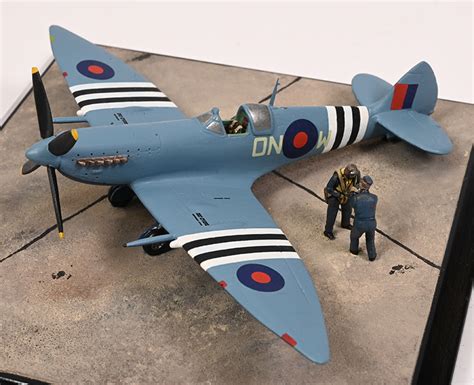
Approximately 20,351 Spitfires were constructed during the aircraft’s production life, covering roughly two dozen major variants. The Mk. VII was produced in comparatively small numbers, with only around 140 built, but its design addressed an increasingly important problem: fighting aircraft operating at extreme altitude.
The Spitfire Mk. VII had a reported service ceiling of approximately 45,100 feet, substantially higher than that of many conventional fighters. Its performance was supported by the Rolls-Royce Merlin 71, a two-stage, two-speed supercharged engine producing approximately 1,710 horsepower.
Two-stage supercharging was critical because conventional engines progressively lost performance as air density fell. A supercharger compressed incoming air before it entered the engine, allowing the powerplant to maintain useful output much higher in the atmosphere.
This capability gave the Mk. VII an important role as a high-altitude interceptor. Rather than simply being another version of the famous low- and medium-altitude fighter, it was designed for an environment where thin air and reduced engine performance could determine whether an interception succeeded.
The Spitfire family fought across numerous theaters, and its combination of maneuverability, speed, and range made it one of the most adaptable fighters of the conflict. The Mk. VII’s extreme ceiling demonstrated how the basic Spitfire design could be adapted when the tactical requirement shifted upward.
Junkers Ju 86P/R: Nearly 49,000 Feet
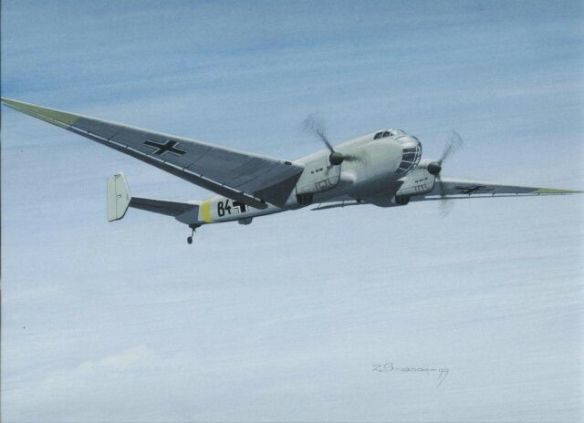
The Junkers Ju 86P/R occupies a particularly interesting place in the history of high-altitude military aviation because it was not primarily a fighter. Developed from the earlier Ju 86, the high-altitude variants were used for reconnaissance and bombing missions, where their ability to operate above conventional interception altitudes could provide a major advantage.
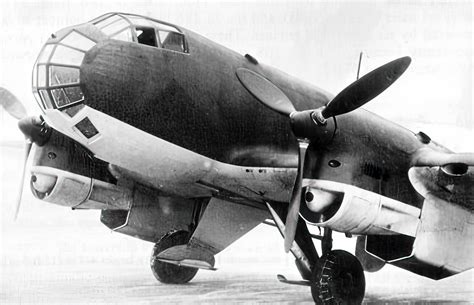
The aircraft was powered by two Junkers Jumo 207 diesel engines. These powerplants used advanced supercharging arrangements and were equipped with systems including nitrous oxide injection to help maintain performance at extreme altitude.
The Ju 86P and R also benefited from a pressurized cabin, an important distinction from many WWII aircraft. At nearly 47,000 feet, the atmospheric pressure was dramatically lower than at sea level, making an unpressurized cockpit or cabin extremely difficult for crews to occupy safely for extended periods.
Most commonly cited figures place the aircraft’s service ceiling around 47,000 feet, while some accounts have reported an absolute ceiling approaching 49,000 feet. The exact maximum is difficult to establish with complete certainty, but either figure places the Ju 86 among the most remarkable high-altitude aircraft of the war.
Its altitude was particularly valuable for reconnaissance. An aircraft flying tens of thousands of feet above the battlefield could potentially photograph enemy positions while remaining beyond the effective reach of many interceptors.
The Ju 86 eventually disappeared from military service, but its story did not end with Germany’s defeat. Some surviving aircraft were adapted for civilian use in Sweden, where converted examples operated as passenger aircraft. One restored aircraft remains preserved at the Swedish Air Force Museum in Linköping, providing a physical reminder of an unusual chapter in aviation history.
Focke-Wulf Ta 152: 48,556 Feet
At approximately 48,556 feet, the Focke-Wulf Ta 152 reached a service ceiling that exceeded virtually every conventional WWII fighter. It was specifically designed as a high-altitude interceptor, making its performance directly relevant to the increasingly important battle above Europe.
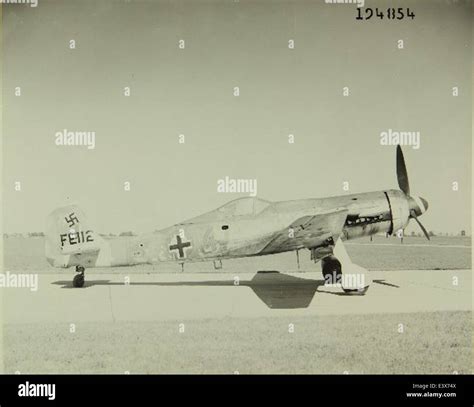
The Ta 152 arrived far too late to influence the course of the war. It entered service in early 1945, when the Luftwaffe was already facing overwhelming Allied numerical superiority, fuel shortages, pilot shortages, and severe logistical problems.
Only around 67 Ta 152 aircraft were produced. Mechanical reliability also complicated their deployment, with engine problems and shortages of replacement components limiting operational availability. An aircraft can possess extraordinary theoretical performance, but that performance means little if there are insufficient engines, fuel, spare parts, or trained pilots to put it into the sky.
The Ta 152 nevertheless represented the logical evolution of Germany’s pursuit of high-altitude fighter performance. Its long wings, powerful engine, and specialized systems were intended to give it an advantage against Allied aircraft operating at high altitude.
Had the aircraft appeared in meaningful numbers earlier, its performance could have made it a formidable opponent. But aircraft design does not exist independently from industrial capacity and strategic circumstances. By 1945, Germany could no longer turn an advanced design into the mass-produced operational force required to alter the air war.
The Ta 152 therefore became an example of technological potential arriving too late. Its nearly 49,000-foot ceiling was extraordinary, but the strategic situation prevented that achievement from becoming a major battlefield advantage.
Why Altitude Mattered So Much in WWII Air Combat
These five aircraft reveal why altitude was such an important dimension of WWII aviation. A high service ceiling could provide a fighter with additional options before combat even began. A pilot above an opponent could dive to build speed, attack from an advantageous angle, or disengage by converting altitude into kinetic energy.
For reconnaissance aircraft, the advantage was even more straightforward. Greater altitude could make interception more difficult while expanding the area visible to cameras and observers. For bombers, climbing higher could complicate enemy interception, although the limitations of unpressurized cabins and heavy defensive equipment often prevented them from reaching the same altitudes as specialized reconnaissance aircraft.
Engine technology was at the heart of this contest. Superchargers, turbochargers, multi-stage compression, pressurization, improved fuels, and increasingly sophisticated aerodynamics allowed WWII aircraft to continue operating where earlier designs rapidly lost performance.
The progression from the P-51’s 41,900 feet to the Ta 152’s 48,556 feet illustrates how quickly aviation engineers were pushing piston-powered aircraft toward the edge of practical atmospheric flight. Yet these numbers also show that maximum altitude alone never determined combat effectiveness.
The P-47’s ruggedness, the P-51’s range, the Spitfire’s agility, the Ju 86’s pressurized reconnaissance capability, and the Ta 152’s specialized interception performance each reflected different answers to the same fundamental problem: how to remain effective when the air becomes thinner and the battlefield moves higher.
By the end of World War II, piston-engine aircraft had reached extraordinary heights. Within only a few years, however, jet propulsion would redefine the ceiling, speed, and possibilities of military aviation. The lessons learned by aircraft such as these would continue into the jet age, where altitude remained one of the most valuable forms of tactical energy.