Modern military aviation is a stunning marriage of speed, stealth, and destructive power. Bomber aircraft, once slow-moving giants vulnerable to enemy fighters, have evolved into some of the fastest aircraft ever designed. These machines are engineered not just to deliver devastating payloads but to do so while outrunning or outmaneuvering enemy defenses. Here’s a detailed look at five of the fastest bomber planes in history, ranked by their maximum top speed, highlighting their groundbreaking technology, combat roles, and lasting legacy.
North American XB-70 Valkyrie — Mach 3.1 (2,056 mph)
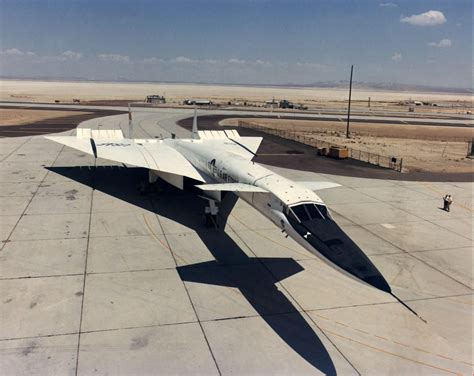
The North American XB-70 Valkyrie stands as a towering achievement in aeronautical engineering, both literally and figuratively. Conceived during the Cold War in the 1950s as a supersonic nuclear bomber, this six-engine behemoth was built to fly higher and faster than any interceptor could reach.
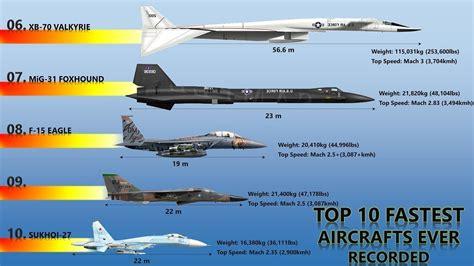
At Mach 3.1 (2,056 mph), the XB-70 wasn’t just the fastest bomber ever built—it remains one of the fastest aircraft in human history. Measuring nearly 200 feet long, the Valkyrie was equipped with folding delta wings, which lowered during supersonic flight to increase lift and stability by riding its own shockwave. Its unique, drooped nose lifted during flight for improved aerodynamics and pilot visibility.
Despite its unprecedented performance, the XB-70 never entered mass production. Advances in intercontinental ballistic missile (ICBM) technology and radar-guided SAM systems rendered the high-altitude bombing strategy obsolete by the time the aircraft was flight-tested. Ultimately, only two prototypes were built, and the program was repurposed for NASA and USAF research.
General Dynamics F-111 Aardvark — Mach 2.2 (1,688 mph)
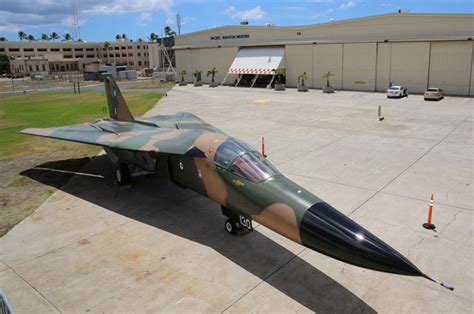
Introduced in the late 1960s, the F-111 Aardvark redefined the look and role of the strategic bomber. Unlike its predecessors, it resembled a fighter jet, with a sleek fuselage and variable-sweep wings—a first in production aircraft. These wings adjusted mid-flight for optimal performance at different speeds and altitudes.
The F-111 could fly at Mach 2.2 (1,688 mph), making it not only fast but also one of the most versatile bombers of its era. With terrain-following radar, it could fly nap-of-the-earth missions, hugging the ground at low altitude to evade radar detection—a capability that revolutionized low-level penetration bombing.
The aircraft played a significant role in multiple conflicts, from Operation El Dorado Canyon over Libya in 1986 to the Gulf War. It was also adopted by the Royal Australian Air Force, where it remained in service until 2010.
Tupolev Tu-160 ‘White Swan’ — Mach 2.05 (1,573 mph)
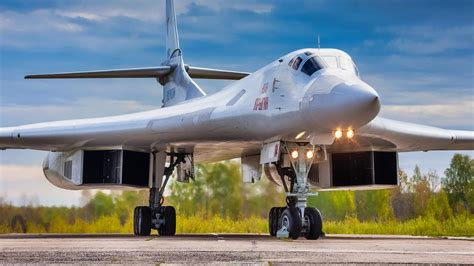
Nicknamed “White Swan” in Russia and “Blackjack” by NATO, the Tupolev Tu-160 is the crown jewel of Russia’s strategic bomber fleet. Developed in the 1980s, it is the largest and heaviest supersonic military aircraft ever built, capable of speeds up to Mach 2.05 (1,573 mph).
Unlike many of its contemporaries, the Tu-160 was not just fast—it was also built for endurance and power. It boasts a combat range of over 7,600 miles without aerial refueling and can carry up to 40,000 kg of ordnance, including cruise missiles and nuclear weapons. Its variable-geometry wings, similar in concept to the F-111, allow for optimized aerodynamics across a broad flight envelope.
Despite entering service in the twilight years of the Soviet Union, the Tu-160 continues to be upgraded and operated by the Russian Air Force, with plans to modernize the fleet well into the 2030s.
Dassault Mirage IV — Mach 2.0 (1,450 mph)
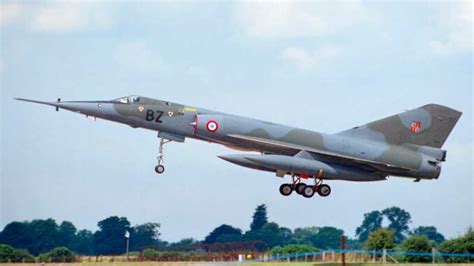
France’s entry into the elite club of nuclear-capable bombers came with the Dassault Mirage IV, first flown in 1959 and delivered to the French Air Force in 1964. Developed in response to the Suez Crisis and the evolving nuclear threat landscape, the Mirage IV was designed to be fast, agile, and capable of delivering strategic nuclear payloads deep into enemy territory.
Powered by two turbojet engines, it could maintain Mach 2 flight for extended periods, a feat unmatched by many contemporaries. Its delta wing design was a hallmark of Dassault engineering, optimized for both supersonic performance and operational efficiency.
Although officially retired in 2005, the Mirage IV was a symbol of France’s independent nuclear deterrent, capable of penetrating Soviet airspace and surviving to return. During its service, it was also adapted for reconnaissance missions, further extending its utility.
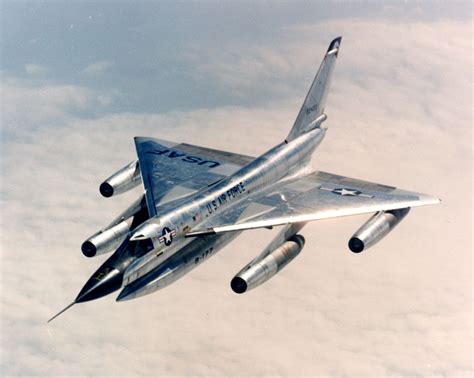
Convair B-58 Hustler — Mach 2.0 (1,325 mph)
No list of high-speed bombers is complete without the Convair B-58 Hustler, the first operational supersonic bomber in the U.S. Air Force. With a razor-sharp delta wing, a wasp-waisted fuselage, and four GE J79 turbojet engines, the B-58 was a visual and technical marvel.
It could achieve a top speed of 1,325 mph (Mach 2.0) and cruise at altitudes up to 64,800 feet—well above most enemy air defenses at the time. Its centerline weapons pod carried a nuclear payload, fuel, and reconnaissance gear, maximizing range and mission flexibility.
Though limited in range (around 4,400 miles without refueling), the Hustler’s incredible speed made it nearly untouchable during its era. In fact, it set 19 world speed and altitude records before being retired in 1970 due to high maintenance costs and advancements in ICBM technology.
Supersonic Speed in Strategic Doctrine
The evolution of high-speed bombers wasn’t just a race for raw numbers—it was driven by a shifting paradigm in global defense strategies. During the Cold War, the nuclear triad—land-based missiles, submarine-launched weapons, and strategic bombers—required the latter to be not just fast, but survivable.
High speed enabled bombers to evade interceptors and anti-air defenses, especially during missions deep into hostile territory. Aircraft like the XB-70 and B-58 represented a belief in speed as a shield, flying faster than the enemy could track or shoot them down. Meanwhile, planes like the Tu-160 and F-111 added versatility, combining supersonic speed with low-altitude penetration and long-range endurance.
But as technology advanced, the concept of speed had to make room for stealth, electronic warfare, and precision. The rise of low-observable aircraft like the B-2 Spirit and upcoming B-21 Raider signals a new era in bomber development—one focused on invisibility rather than outrunning threats.
Final Thoughts: Speed That Changed the Sky
While none of these aircraft are the newest kids on the block, they were the trailblazers of their time, defining what was possible in bomber speed and performance. From the breathtaking XB-70 that grazed the edge of space to the enduring legacy of the Tu-160 that still soars today, these machines proved that bombers could be as fast and formidable as any fighter in the skies.
Each of these aircraft was more than just a fast-moving war machine—they were symbols of national ambition, aerospace innovation, and the high-stakes calculus of Cold War deterrence. Their stories offer a glimpse into a world where speed could make the difference between mission success and failure, between survival and oblivion.