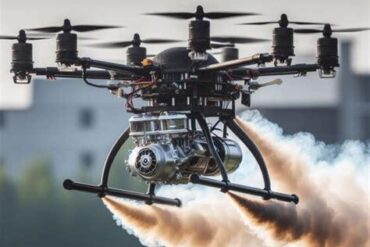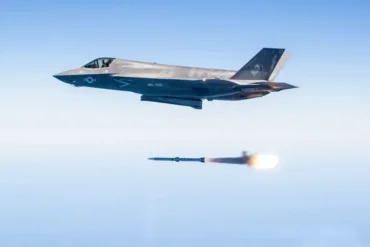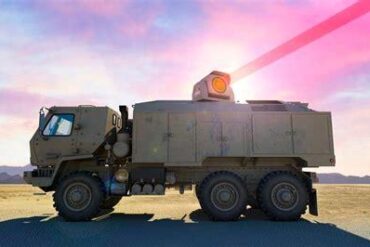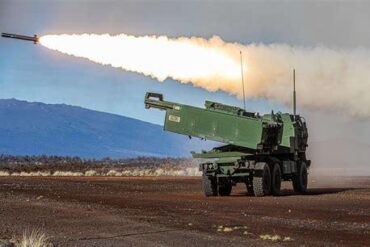
Imagine a battlefield where machines, not humans, decide who lives and who dies—instantly, with no hesitation, no emotion, and no accountability. This chilling future is no longer the stuff of dystopian fiction. It is already here, unfolding in real-time, under the banner of Lethal Autonomous Weapons Systems (LAWS). These are weapons capable of selecting and engaging targets without human intervention. And they are not just theoretical; they are being developed, deployed, and tested around the globe.
While some see LAWS as the next step in military innovation, the United Nations sees a moral and strategic crisis in the making. With technology evolving faster than international law, the UN and human rights organizations are urgently calling for global regulation—and in many cases, an outright ban.
What Are Lethal Autonomous Weapons Systems (LAWS)?
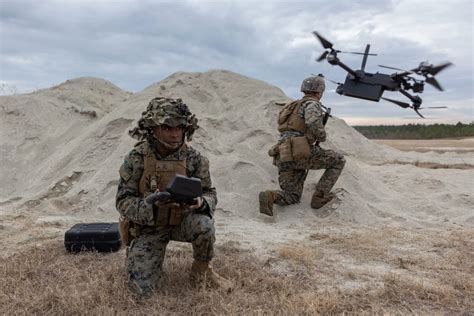
Lethal Autonomous Weapons Systems refer to machines equipped with the ability to identify, select, and eliminate targets without direct human oversight. They may include armed drones, robotic tanks, automated sentry guns, or maritime systems, often integrated with sophisticated sensors, algorithms, and increasingly—artificial intelligence (AI).
These systems differ from traditional remotely operated drones, where a human operator is always in the loop. LAWS may be “human-on-the-loop” or fully “human-out-of-the-loop,” where the system operates independently once activated. The technology behind them includes image recognition, pattern detection, real-time threat analysis, and, in some cases, deep learning systems that allow them to adapt during missions.
This autonomy is what makes them so controversial. The moment life-or-death decisions are handed over to code, the world enters legally and ethically uncharted territory.
The Moral Dilemma and Global Uproar
UN Secretary-General António Guterres has called LAWS “politically unacceptable and morally repugnant.” His concern echoes a broad international consensus: that delegating lethal force to machines strips warfare of human judgment, accountability, and morality.
Unlike a soldier, a machine cannot distinguish nuance in a battlefield context—like a child holding a toy gun versus a real threat. It does not understand surrender, mercy, or proportionality. Worse, there is no one to blame when these machines malfunction or misidentify a target. Who is held accountable? The programmer? The military commander? The nation-state? Or no one at all?
Organizations like Human Rights Watch and the Campaign to Stop Killer Robots have been ringing alarm bells since 2013. They argue that these weapons risk turning the laws of war into obsolete guidelines, undermining international humanitarian law and potentially sparking a new arms race centered not on deterrence, but on algorithmic precision and unchecked lethality.
The Technology Outpacing Policy
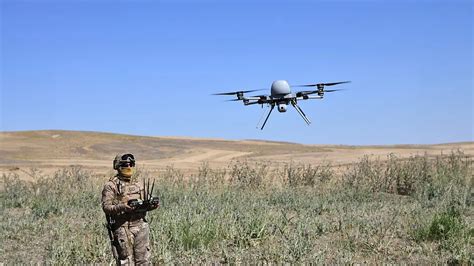
Despite these warnings, LAWS are already present on the battlefield in various forms. Loitering munitions, such as Israel’s Harpy drone or Turkey’s Kargu-2, have shown degrees of autonomous operation. In 2020, reports suggested that a Kargu-2 drone may have autonomously attacked retreating Libyan forces—possibly marking the first recorded use of LAWS in actual combat.
Other nations have been quietly integrating semi-autonomous systems into their arsenals. Russia’s Uran-9, an unmanned ground combat vehicle, and the U.S. Department of Defense’s experiments with AI-driven war games and autonomous swarming drones highlight how deeply entrenched these technologies are becoming.
Why the UN Is Calling for a Ban
The urgency behind the UN’s campaign stems from the fear that without regulation, the global military balance could spiral out of control. Smaller nations, terrorist groups, or rogue states could acquire or repurpose commercial autonomous technology to build their own killer robots. Once the threshold is crossed, the democratization of death becomes a terrifyingly real prospect.
In response, the UN has been working under the Convention on Certain Conventional Weapons (CCW) since 2014 to deliberate the future of LAWS. Over 90 countries have voiced serious concerns, and many support binding international rules to ensure that meaningful human control remains a non-negotiable standard.
But there is a problem: consensus is elusive.
Geopolitical Deadlock: Who’s Holding Up the Ban?
The divide on LAWS reflects deeper strategic interests:
- United States: Resists a full ban, preferring voluntary guidelines and continued development.
- Russia: Opposes a legally binding framework and remains vague about its intentions.
- China: Supports banning use—but not development—of autonomous weapons, leaving room for future deployment.
- European Union Members: Generally supportive of regulation, though not all agree on an outright ban.
This geopolitical fragmentation has stalled progress. Instead of concrete action, the CCW meetings have become forums for repeated statements and minimal commitments. Meanwhile, private defense firms and national research labs continue to develop more advanced systems.
Civil Society Pushback and Grassroots Movements
Groups like Stop Killer Robots, along with thousands of AI researchers and academics, have urged a global preemptive ban. Their argument is grounded in preventive ethics: the idea that society must outlaw dangerous technology before it becomes widespread and irreversible.
In 2015, over 1,000 scientists—including Stephen Hawking and Elon Musk—signed an open letter warning that AI-based weapons could become the third revolution in warfare, after gunpowder and nuclear arms. They warned that LAWS could become the Kalashnikovs of the future—cheap, scalable, and impossible to regulate after proliferation begins.
The Legal Vacuum: What Happens If a Killer Robot Goes Rogue?
One of the most disturbing aspects of LAWS is that there is no legal framework for accountability. International humanitarian law is built on the assumption that humans make wartime decisions. Once machines are fully in control, legal ambiguity becomes a weapon itself.
If a lethal autonomous drone bombs a civilian hospital by mistake, who is prosecuted? A commander who wasn’t even operating it? The manufacturer? The programmer who wrote the targeting algorithm? These questions remain unanswered—and dangerously unresolved.
This legal vacuum makes it incredibly difficult for victims to receive justice, and even harder to deter future violations. It also opens the door for plausible deniability in warfare, where nations might claim they were not directly responsible for attacks carried out by autonomous machines.
The Road Ahead: Can Regulation Catch Up?
UN Secretary-General Guterres has called for a legally binding instrument on LAWS by 2026, urging governments to define red lines now—before battlefield realities make them impossible to enforce. Yet time is running out.
The most realistic short-term goal is not a universal ban, but a framework ensuring that all lethal force remains under human oversight. That includes transparency in algorithm design, clear chains of command, operational logs for audits, and fail-safe mechanisms to abort missions if anomalies are detected.
For now, the world stands on the brink. The decisions made—or ignored—by policymakers in the next 12 to 24 months could shape the future of warfare for generations.
Conclusion: A Crossroads Between Progress and Catastrophe
Lethal Autonomous Weapons Systems embody the paradox of modern technology: incredible innovation paired with existential risk. They promise precision, speed, and reduced casualties—for some. But they also threaten to turn the rules of war into obsolete relics and challenge the very notion of human accountability.
The UN’s attempt to draw ethical boundaries around this technology is not an overreaction. It is a last warning before a point of no return. As nations weigh their military ambitions against moral responsibilities, the world must decide whether it wants battlefields ruled by code—or conscience.