The Boeing B-52 Stratofortress, an aircraft that first took to the skies in the 1950s, has undergone a metamorphosis that positions it as one of the most formidable strategic assets in the United States Air Force arsenal in 2026. Originally designed for high-altitude nuclear strikes, the B-52 has continuously adapted to evolving threats, technological advancements, and modern warfare doctrines. Today, nearly eight decades later, this aircraft is no longer just a bomber—it has evolved into a highly connected, precision-strike platform capable of serving as a force multiplier in any theater of operations. Its lethal combination of payload capacity, extended range, modernized avionics, and integration into the joint kill chain has transformed the venerable “BUFF” into a modern arsenal in the sky.
The B-52’s continued relevance is anchored in a comprehensive $48.6 billion modernization program that ensures the active fleet transitions seamlessly from the B-52H variant to the advanced B-52J. This program encompasses a wide array of upgrades, including digital glass cockpits, enhanced radar systems, new engines, and weapons integration designed to amplify both survivability and lethality. Unlike previous iterations, which relied heavily on manual targeting inputs and analog instrumentation, the B-52J boasts a high-speed digital backbone capable of interconnecting with fifth- and sixth-generation platforms, artificial-intelligence-assisted drones, and ground-based command networks. This integration enables real-time targeting updates, mission re-tasking mid-flight, and coordinated strikes from safe standoff distances, redefining how the Stratofortress is employed in modern warfare.
Integrating Into the Joint Kill Chain: A Networked Arsenal
The centerpiece of the B-52J’s transformation is its integration into the modern joint kill chain. Leveraging AESA radar technology and a robust tactical data link, the Stratofortress can receive real-time intelligence from forward-deployed platforms such as the B-21 Raider, F-22 Raptor, and F-35 Lightning II. This allows the B-52J to launch long-range standoff missiles like the JASSM-ER while remaining well outside the reach of sophisticated enemy air defenses. In contrast to earlier models, where pilots manually input target coordinates relayed via radio, the B-52J operates within a fully networked ecosystem, capable of automatically ingesting targeting data from multiple sources and dynamically adjusting strike plans.
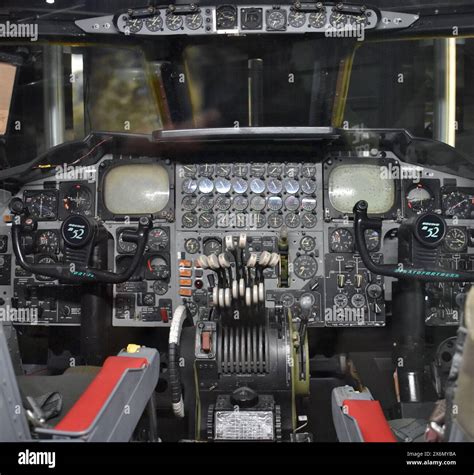
This digital transformation replaces the isolated, analog systems of the B-52H with a unified, high-speed internal network. Now, the bomber can scan for threats, jam hostile radar emissions, and share critical targeting information across the entire battlespace. The strategic advantage is clear: crews are empowered to operate from dispersed or minimally equipped airfields while maintaining situational awareness and strike effectiveness. Coupled with its extended loiter capability, made possible by new engines and fuel-efficient systems, the B-52J is no longer just a delivery platform—it has become a tactical node, a flying arsenal that can remain in high-threat zones for extended periods while maintaining precision strike readiness.
Advanced Payload Capacity: Slinging Hypersonic Firepower
One of the most striking upgrades of the B-52J is its dramatically enhanced payload capability. Reinforced wing pylons have increased the carrying capacity from 5,000 pounds to 20,000 pounds per pylon, allowing the Stratofortress to deploy next-generation hypersonic weapons, including the Hypersonic Attack Cruise Missile (HACM) and Lockheed Martin’s Mako missile. These air-breathing, scramjet-powered weapons achieve speeds exceeding Mach five, making interception by contemporary air defenses nearly impossible. The B-52J’s ability to re-task these munitions mid-flight, coupled with precise digital targeting, ensures that it can respond flexibly to rapidly changing battlefield conditions, offering unparalleled operational versatility.
Additionally, the B-52J’s internal weapons bay can now accommodate the Joint Air-to-Surface Standoff Missile (JASSM), further enhancing its long-range strike capabilities. This stealthy conventional ordnance enables precision attacks against high-value targets while remaining difficult for adversaries to detect. The aircraft’s combination of internal and external payload flexibility allows for the simultaneous deployment of diverse weapons, creating a layered threat environment that overwhelms enemy defense networks and solidifies the B-52J’s reputation as an unstoppable airborne arsenal.

Modern Engines and Extended Operational Range
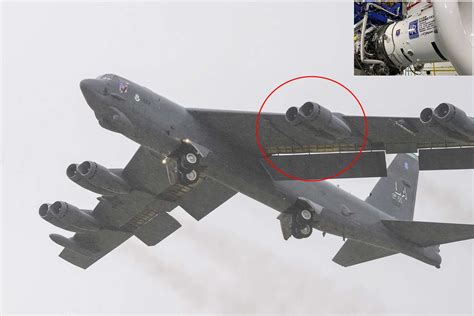
The B-52J’s lethality is not limited to its weapon systems. A critical component of its modernization is the Commercial Engine Replacement Program, which introduces eight Rolls-Royce F130 turbofan engines in place of the aging TF33 units. These engines provide a 30% to 40% increase in fuel efficiency, translating into extended range and greater endurance in operational theaters. With an unrefueled range of 8,800 miles, the B-52J can rapidly reposition across vast theaters of operation, supporting Agile Combat Employment (ACE) strategies that rely on unpredictable deployment to austere or lightly defended airfields.
This engine upgrade also enhances rapid response capability. The Stratofortress can launch in under ten minutes thanks to a cartridge-start system that allows all eight engines to ignite simultaneously. Exercises have demonstrated that B-52Js can land on unconventional airfields, undergo rapid repair and resupply, and return to combat within hours—a key requirement for modern dispersed operations. This combination of endurance, rapid deployment, and fuel efficiency ensures that the B-52J remains a persistent, credible threat regardless of geographic or logistical constraints.
Digital Cockpit and Advanced Radar Systems
The B-52J’s cockpit modernization replaces analog instruments with a glass cockpit featuring digital displays, integrated sensor feeds, and real-time intelligence overlays. Paired with the Raytheon APG-79 active electronically scanned array radar, the aircraft benefits from vastly improved situational awareness and survivability. This radar is resistant to jamming, capable of detecting air-to-air threats, and provides precise ground mapping for targeting operations. Its reliability and ease of maintenance also enhance operational readiness, ensuring that the Stratofortress can operate effectively in austere or forward-deployed airfields under hostile conditions.
This radar and cockpit modernization enhances the B-52J’s role in the ACE doctrine by allowing rapid adaptation to evolving mission requirements. Real-time overlays of threats, targets, and friendly forces allow the crew to make informed tactical decisions, minimizing risk while maximizing strike effectiveness. Essentially, the B-52J becomes a flying command hub, capable of coordinating complex operations with stealth aircraft, ground forces, and other aerial platforms in a seamless digital network.
Hypersonic and Nuclear Strike Capabilities
Beyond conventional munitions, the B-52J is integrating new-generation nuclear-capable cruise missiles. The AGM-181 Long Range Standoff (LRSO) missile replaces the aging AGM-86, providing stealthy, nuclear-armed strike options capable of penetrating the most advanced integrated air defense systems. The combination of standoff weapons and hypersonic capabilities transforms the B-52J into a platform capable of strategic deterrence, precision engagement, and rapid response—qualities that were inconceivable when the aircraft first entered service.
The ability to launch hypersonic and nuclear weapons from standoff distances enables the B-52J to operate in heavily contested environments while minimizing exposure to enemy air defenses. Its advanced electronic warfare suite further enhances survivability, allowing the aircraft to jam or deceive radar systems while maintaining situational awareness and mission effectiveness. In practice, the B-52J now operates as both an offensive and defensive node, seamlessly integrating lethality with survivability.
Agile Combat Employment: Transforming Operational Doctrine
The B-52J’s modernized capabilities align perfectly with the Air Force’s Agile Combat Employment doctrine, which emphasizes dispersion, unpredictability, and rapid redeployment. By operating from austere, minimally equipped airfields, the Stratofortress can maintain combat presence in contested regions without relying on traditional airbase infrastructure. Its rugged airframe, combined with advanced avionics, makes it a cornerstone of ACE strategy, capable of executing sustained operations even under adverse conditions.
The strategic concept envisions the B-21 Raider as the “hammer,” penetrating deep into enemy territory, while the B-52J serves as the “anvil,” delivering massive firepower from the periphery. In this capacity, the B-52J functions as a digital node, linking stealth assets, satellite intelligence, ground forces, and allied units into a cohesive operational network. This transformation underscores the bomber’s enduring relevance: it is no longer a solitary strike platform but a multi-dimensional asset essential to modern joint warfare.

Historical Context and Legacy
The B-52’s longevity is a testament to both its original design and the adaptability of the platform. A total of 746 Stratofortresses were built, with variants including the B-52D, famous for Vietnam War campaigns like Operation Linebacker II, and the B-52G, which served as the nuclear deterrent backbone during the Cold War. Today, the active fleet consists entirely of B-52H models, the only iteration still operational worldwide, supported by a small reserve in the “Boneyard” at Davis-Monthan Air Force Base.
The B-52’s ability to evolve with technological advancements has allowed it to remain cost-effective while maintaining strategic relevance. Unlike modern aircraft that face obsolescence within decades, the B-52 has continually integrated new engines, avionics, and weapons systems, ensuring that the United States retains a versatile, high-capacity strategic bomber capable of dominating both conventional and nuclear conflict scenarios. Its blend of affordability, flexibility, and lethality ensures it will remain a central component of U.S. airpower for decades to come.
Conclusion: The Ultimate Arsenal in the Sky
In 2026, the B-52 Stratofortress exemplifies the fusion of legacy design and cutting-edge technology. Its transformation from an analog-era bomber into a digitally networked, hypersonic-capable, precision-strike platform demonstrates how modernization can extend the relevance of military assets far beyond their original lifespan. With AESA radar, hypersonic and standoff munitions, advanced communication systems, and integration into the joint kill chain, the B-52J operates as a force multiplier capable of overwhelming adversaries while maintaining survivability in contested environments. Coupled with Agile Combat Employment strategies, rapid deployment capabilities, and unmatched payload versatility, the Stratofortress remains a linchpin of U.S. airpower, embodying the perfect balance between heritage and innovation—a true arsenal in the sky.

From its first deployment to today, the B-52 has transcended the conventional role of a bomber, evolving into an indispensable asset in both conventional and strategic theaters. Its continuing upgrades highlight a doctrine that values flexibility, integration, and technological superiority, ensuring that the Stratofortress will dominate air operations for years to come. In an era where information, connectivity, and precision define modern warfare, the B-52J’s ability to deliver decisive, high-speed firepower across continents cements its status as one of the most lethal aircraft ever built—a testament to the enduring ingenuity of American aerospace engineering.