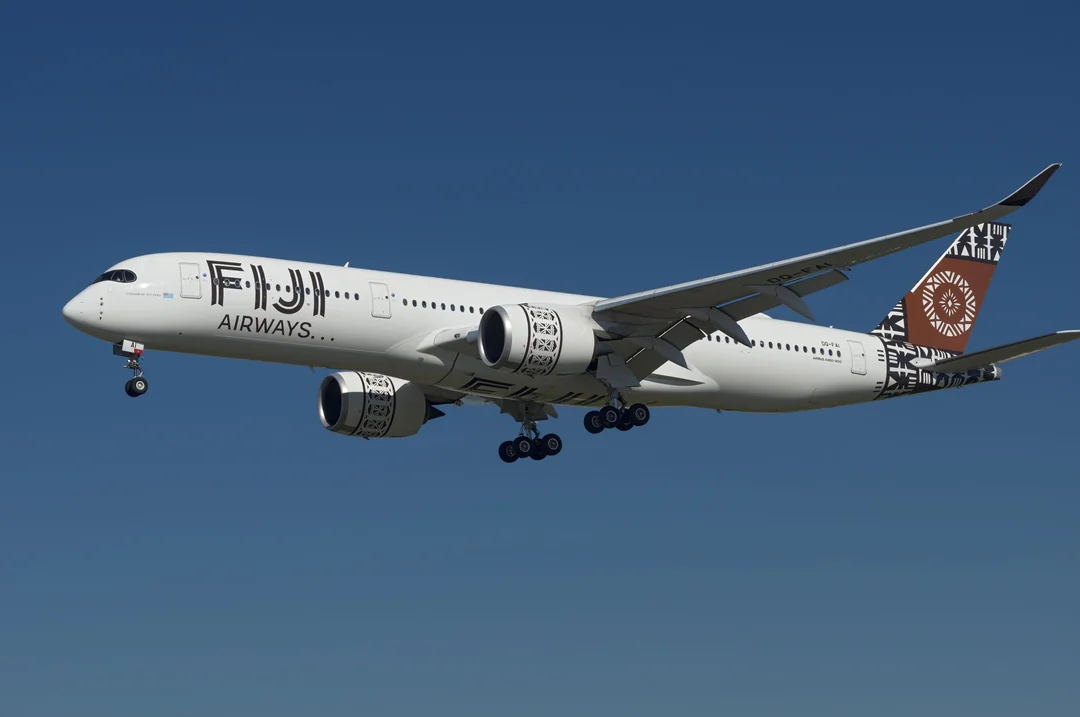
The Fiji Airways livery is not loud, aggressive, or desperate for attention. It does something far harder. It earns admiration through restraint, cultural confidence, and an almost architectural sense of balance. In an era where many airlines chase minimalism to the point of anonymity, Fiji Airways made a braver choice. It leaned into identity, history, and place, and the result is a livery that aviation enthusiasts repeatedly rank among the world’s best without it ever feeling like it is trying too hard.
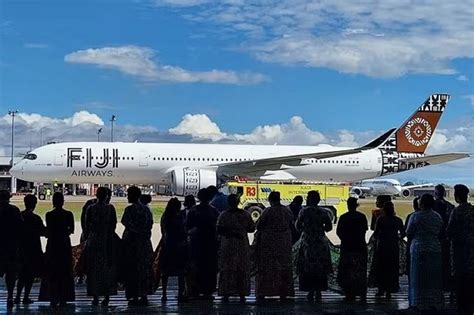
What makes the design so striking is its immediate recognizability. Even parked among widebodies in a major hub like Singapore Changi, the aircraft does not disappear into a sea of whites and silvers. It stands calmly apart, radiating warmth and intention. The earthy browns, crisp whites, and deep cultural patterns communicate something rare in modern airline branding: authenticity.
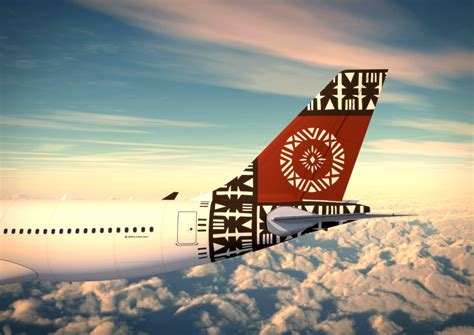
The heart of the livery is its use of traditional Fijian masi motifs. These patterns are not decorative filler. They are visual storytelling, referencing craftsmanship, community, and lineage. Instead of splashing graphics across the fuselage indiscriminately, the design concentrates its strongest expression on the tail and engines. This creates visual tension and elegance, allowing negative space to do real work rather than serving as an afterthought.
Many observers praise the tail specifically, and with good reason. The vertical stabilizer feels like a gallery wall rather than an advertising panel. The symmetry, scale, and contrast are meticulously judged. The patterns feel hand-composed, not algorithmically generated, which is increasingly rare in airline liveries driven by brand consultants rather than artists.
The engine nacelles deserve special attention. Wrapping cultural patterns around engine cowls is risky. Done poorly, it looks gimmicky. Here, it looks confident and deliberate. The decision to keep the artwork primarily on the fan cowls avoids visual clutter while rewarding close inspection. Taxiing past, the engines become moving sculptures, reinforcing the airline’s identity from angles most liveries completely ignore.
Criticism does exist, and it is notably thoughtful rather than dismissive. Some wish the pattern extended further along the fuselage or climbed higher toward the trailing edges. That reaction itself is telling. Viewers are not rejecting the design. They want more of it. In branding terms, that is a quiet victory.
The livery also scales impressively across aircraft types. From widebody jets to smaller turboprops, the visual language remains intact. That consistency strengthens brand memory, especially for an airline that operates across vastly different route profiles. Few liveries look equally strong on a long-haul widebody and a regional aircraft. Fiji Airways manages it with composure.
Comparisons inevitably arise. Air New Zealand’s all-black scheme often takes top honors for bold national branding, yet it operates through stark minimalism. Fiji Airways takes the opposite route. It embraces ornamentation without excess, heritage without nostalgia, and color without chaos. That balance is extraordinarily difficult to achieve.
It also avoids the trap of corporate sterility. Many modern liveries feel interchangeable, stripped of local character in favor of global neutrality. Fiji Airways rejects that philosophy outright. No other airline could wear this design honestly. That exclusivity is its greatest strength.
Even passengers who critique onboard experience often concede the visual achievement. That separation matters. A livery’s job is not to compensate for product weaknesses. It is to communicate identity at 40,000 feet and from a terminal window. On that front, Fiji Airways succeeds emphatically.
The Fiji Airways livery is not just beautiful. It is culturally literate, visually disciplined, and quietly authoritative. It proves that aviation branding can still respect tradition while feeling modern. In a sky increasingly filled with safe, forgettable designs, this one lingers in memory long after the aircraft has departed.