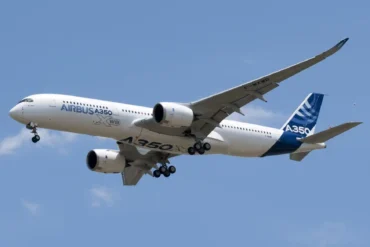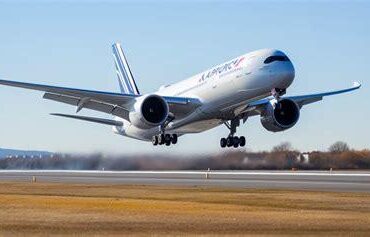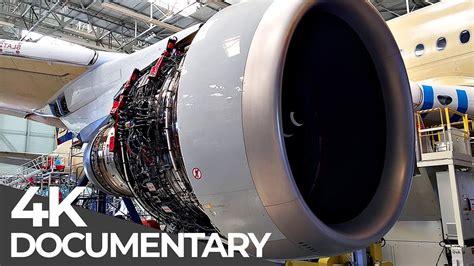
The Airbus A350 stands as one of the most advanced and capable wide-body aircraft in the world, developed to meet the growing demand for efficient, long-range air travel in the 21st century. Its blend of innovative materials, aerodynamic refinements, and next-generation systems places it in direct competition with Boeing’s 777X and 787 Dreamliner, establishing Airbus’s dominance in the long-haul segment. With over 1,391 orders and 654 aircraft currently in service across 38 global operators, the A350 has proven its value not just in technical achievement, but in commercial success.
The aircraft first took to the skies on 14 June 2013, marking a pivotal moment in civil aviation. After a comprehensive testing campaign, it entered commercial service on 15 January 2015 with Qatar Airways. Since then, the A350 family has grown to include multiple variants, each tailored to meet distinct route demands and market niches.
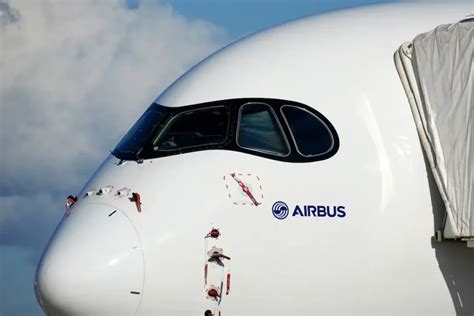
From Derivative to Revolution: The Birth of the A350 XWB
The A350’s inception traces back to 2004, when Airbus initially proposed a revamped A330 variant with new engines and composite wings, meant to counter Boeing’s then-groundbreaking 787. This early version, dubbed the A350-800 and -900, was criticized by major lessors and airlines—including Singapore Airlines and Emirates—for being too conservative. They demanded a genuine leap forward rather than an iterative upgrade.
Responding decisively, Airbus unveiled a clean-sheet design at the 2006 Farnborough Airshow: the A350 XWB (eXtra Wide Body). Featuring a wider fuselage, significantly higher composite content, and Rolls-Royce Trent XWB engines, this version embodied a bold technological shift. Singapore Airlines immediately placed the first order, signaling strong market confidence.
This redesign extended the development timeline by two years and more than doubled the cost to between US$10–15 billion, but it laid the foundation for what would become a category-defining aircraft.
Materials, Structure, and Aerodynamics: Built for the Future
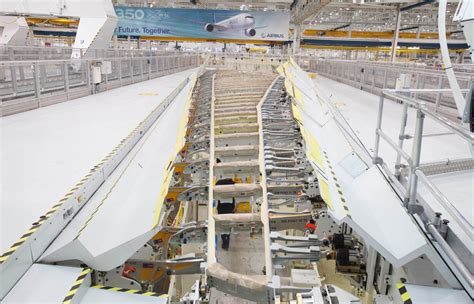
Central to the A350’s efficiency is its advanced structural composition. Approximately 53% of the aircraft is made from carbon-fibre-reinforced polymer (CFRP), including the fuselage, wings, and empennage. This material not only reduces weight but also enhances corrosion resistance and fatigue performance. The remaining structure uses 19% aluminum alloys, 14% titanium, and smaller proportions of steel and composites.
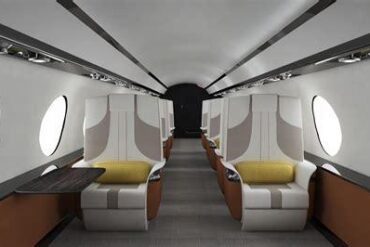
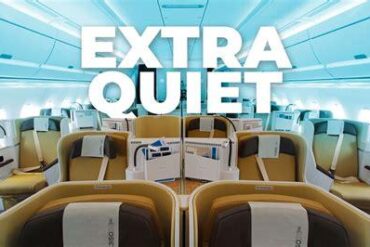
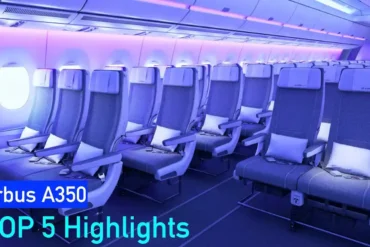
The fuselage features a near-ovoid cross-section, 5.97 meters in diameter, optimizing cabin space while maintaining aerodynamic performance. The A350 maintains a 9-abreast economy class configuration, with seat widths of 45 cm, superior to most competitors. Premium cabins offer 8-abreast arrangements with greater comfort.
The wingspan of 64.75 meters, within ICAO Code E limits, includes 31.9° of sweep, allowing the aircraft to cruise efficiently at Mach 0.85. Advanced high-lift devices and winglets, developed through exhaustive computational fluid dynamics (CFD) modeling and wind tunnel trials, enhance lift and reduce drag.
Undercarriage and Systems: Strength Meets Sophistication
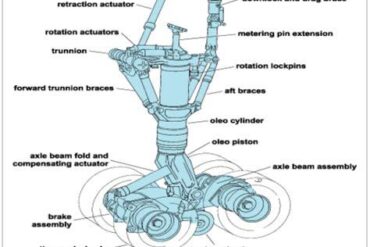
The A350-900 features four-wheel bogies, while the stretched A350-1000 uses six-wheel bogies, necessary for supporting its higher MTOW of 322 tonnes. Notably, the main gear attaches directly to the composite wing spar, a first in commercial aviation, showcasing Airbus’s structural innovation.
Onboard systems are equally advanced. A Honeywell APU, Hamilton Sundstrand ram-air turbine (RAT), and a full-bleed air system ensure resilience. Although early plans included lithium-ion batteries, Airbus reverted to nickel-cadmium units for baseline aircraft, with Li-ion optional under revised specifications.
The avionics suite by Thales features a six-screen glass cockpit, with optional head-up displays (HUDs). The passenger experience benefits from the BMW Group Designworks-inspired cabin, outfitted with Panasonic’s in-flight entertainment and connectivity (IFEC) systems.
Production and Global Footprint
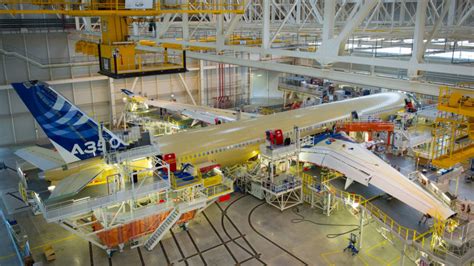
To manufacture the A350, Airbus established ten major production sites across Europe, the U.S., and China. The Broughton, Wales plant is particularly notable for producing the massive carbon-fiber wings. Assembly began in 2009, with fuselage barrels fabricated in 2010. By December 2012, the first prototype was completed.
Initial delivery rates in 2015 started at 3 aircraft per month, ramping to 10/month by 2018. The COVID-19 pandemic disrupted this momentum, reducing output to 6/month, but Airbus now targets a recovery to 9/month by end-2025, with pre-pandemic levels expected again by 2026.
Flight Testing and Certification: Pushing Limits Safely
Airbus dedicated five test aircraft and over 2,500 flight hours to ensure the A350 met stringent safety and performance benchmarks. Extreme climate testing occurred at Eglin Air Force Base’s McKinley Climatic Laboratory, validating the design under Arctic and desert conditions.
The aircraft was certified by EASA on 30 September 2014, followed by ETOPS-370 approval in October and FAA certification in November. The A350 shares a common type rating with the A330, significantly reducing training costs for airlines operating both models.
Commercial Service and Operator Adoption
Qatar Airways became the launch operator, receiving the first A350-900 on 22 December 2014. The inaugural flight took place on 15 January 2015, connecting Doha and Frankfurt. The A350-1000, with a longer fuselage and more powerful engines, flew for the first time on 24 November 2016, entering service on 24 February 2018.
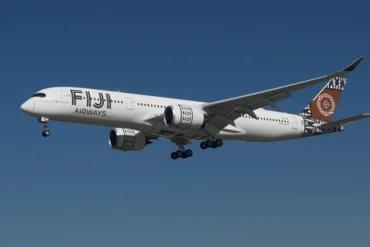
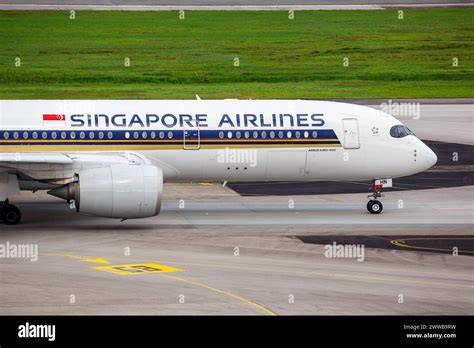
Today, the largest operator is Singapore Airlines, with 65 A350s, while Turkish Airlines holds the highest number of outstanding orders at 110 units.
Variants and Evolving Performance
The A350 family includes:
- A350-900: Seats 300–350 passengers, range of 15,000 km, MTOW 283 t.
- A350-1000: Seats 350–410 passengers, range of 16,500 km, MTOW 322 t.
- A350-800: Cancelled due to poor demand; its few orders were either converted or canceled by 2017.
Continuous improvements have been introduced to maintain the aircraft’s competitive edge. The Performance Improvement Package (2017) added longer sharklets, increased MTOW, and reduced fuel burn by up to 1.6%. The 2019 improvement package integrated lighter systems and modernized lighting. By 2022, Airbus unveiled a new production standard reducing weight by 1.2 t, increasing seating by 30, and refining flight control software.
Future Developments and Market Ambitions
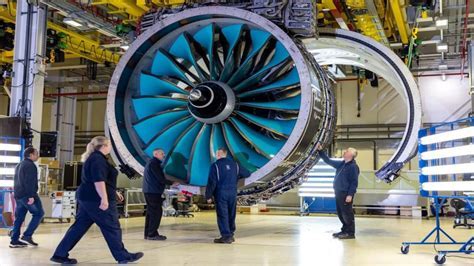
Looking ahead, Airbus is exploring a re-engined A350neo, potentially using ultra-high bypass ratio engines such as Rolls-Royce UltraFan or GTF derivatives. This version would target EIS in the mid-2020s and a production rate of 20/month, addressing both environmental pressures and growing airline demand for sustainable aircraft.
Global Impact and Safety Record
The A350 is positioned as the successor to the A340, competing directly with the Boeing 777 and 787. Its global fleet has logged over 1.58 million flights across 1,240+ routes, transporting 400 million passengers. Impressively, the aircraft has maintained a near-flawless safety record, with only one hull-loss incident as of April 2025.
Airlines worldwide have embraced the A350 not only for its economic advantages, but for its ability to redefine passenger comfort on long-haul journeys. As the aviation industry pivots toward lower emissions and greater efficiency, the Airbus A350 remains not just relevant, but indispensable.