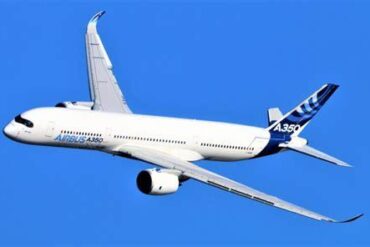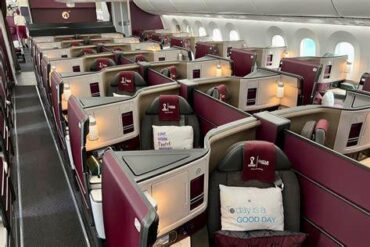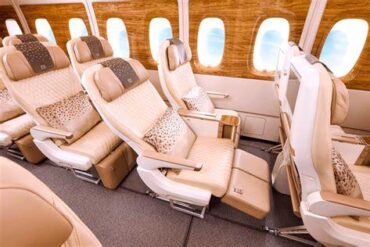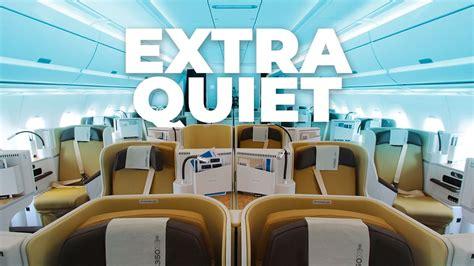
Long-haul flying has changed dramatically over the last two decades. Travelers who once associated intercontinental flights with constant engine roar, rattling cabin panels, and exhausting background noise are now stepping onto aircraft that feel closer to luxury lounges than traditional airliners. Among all modern widebody jets, the Airbus A350 has earned a particularly strong reputation for cabin quietness, with many passengers describing the experience as calmer, less fatiguing, and surprisingly peaceful even during long overnight flights.
That reputation is not the result of a single innovation. The A350 was engineered from the beginning as a next-generation aircraft built around passenger comfort, aerodynamic efficiency, and advanced acoustic control. Every major component of the aircraft — from its composite fuselage to its Rolls-Royce engines and cabin insulation systems — was designed with noise reduction in mind.
The result is an aircraft that fundamentally changes how people experience long-haul travel. Instead of battling constant mechanical noise for twelve or fourteen hours, passengers often find themselves speaking more quietly, sleeping more easily, and arriving less exhausted after crossing oceans.
The A350’s quiet cabin is also a reminder of how far commercial aviation has evolved. The deafening scream associated with older jetliners has largely disappeared, replaced by deeper and softer engine tones, smoother airflow management, and sophisticated sound-dampening technologies that would have been impossible only a few decades ago.
By combining cutting-edge materials, intelligent aerodynamics, and advanced engine engineering, Airbus created an aircraft that is widely regarded as one of the most refined passenger jets in the sky.
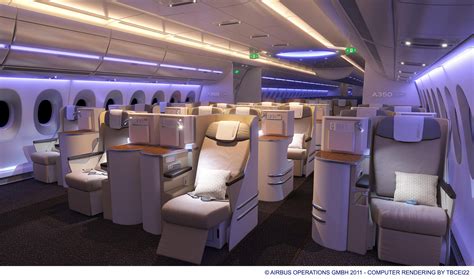
The Airbus A350 Was Designed as a Clean-Sheet Aircraft
One of the biggest reasons the Airbus A350 feels quieter than many older aircraft is because it was not constrained by decades-old design architecture. Unlike heavily updated aircraft programs that evolved from previous generations, the A350 was developed as a completely new aircraft platform.
In aviation, this is known as a clean-sheet design, meaning engineers are free to rethink the aircraft from the ground up instead of adapting older structures. This approach gives manufacturers enormous flexibility to incorporate modern materials, advanced aerodynamics, and optimized internal layouts without inheriting the compromises of legacy airframes.
Many older aircraft families were originally designed in eras when fuel efficiency and cabin acoustics were not prioritized to the same degree they are today. Even when those aircraft receive upgraded engines or redesigned wings, the original fuselage structures and systems often remain rooted in older engineering limitations.
The Airbus A350 avoided those compromises entirely.
Airbus engineers designed the aircraft around modern passenger expectations, where comfort matters almost as much as speed or range. Cabin acoustics became a core part of the project rather than an afterthought. That philosophy allowed Airbus to integrate sound reduction technologies directly into the aircraft’s structure instead of simply adding insulation later.
The A350 also entered service during a period when airlines were becoming increasingly focused on passenger wellness. Long-haul travelers were paying more attention to sleep quality, jet lag, fatigue, and overall comfort during ultra-long-distance flights. Airbus responded by creating an aircraft that reduces both physical and sensory stress.
This is why the A350 often feels fundamentally different from older widebody aircraft. The quietness is not isolated to one area of the cabin. Instead, it is woven into the aircraft’s entire design philosophy.
Composite Materials Play a Massive Role in Noise Reduction
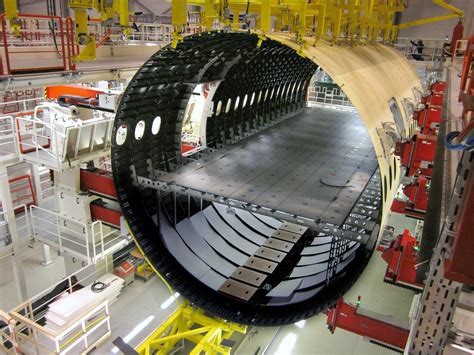
Perhaps the most important technological advancement behind the A350’s quiet cabin is its extensive use of carbon-fibre reinforced plastic, commonly known as CFRP composites.
Around 53% of the aircraft’s structure is made from composite materials, while roughly 70% of the airframe incorporates advanced lightweight materials overall. These composites are dramatically different from the aluminum structures used on older aircraft generations.
Traditional aluminum fuselages transmit vibration very efficiently. When engines generate noise and vibration, those vibrations travel through the aircraft structure and eventually become audible cabin sound. Aluminum essentially acts as a conductor for mechanical energy.
Composite materials behave differently.
Carbon-fibre reinforced plastic naturally dampens vibration more effectively, reducing how much engine and aerodynamic vibration travels into the passenger cabin. Airbus engineers were able to exploit this characteristic to create a noticeably calmer interior environment.
The layered construction of composite panels also helps absorb sound energy before it reaches passengers. Combined with advanced insulation systems, the A350’s fuselage acts as a barrier that minimizes external acoustic intrusion.
This material advantage extends beyond noise reduction. Composite aircraft structures are lighter, stronger, and more resistant to corrosion than traditional aluminum. That allows airlines to operate more fuel-efficient aircraft while also improving passenger comfort.
The benefits become particularly noticeable during long overnight flights. Cabin vibrations are lower, background resonance is reduced, and the entire aircraft feels smoother during cruise conditions.
Passengers may not consciously identify the engineering behind that experience, but they notice the effect immediately. The cabin simply feels calmer.
Rolls-Royce Trent XWB Engines Were Built for Quiet Operation
The engines powering the Airbus A350 are another critical reason the aircraft sounds so refined in flight.
Every A350 is powered exclusively by the Rolls-Royce Trent XWB, one of the most advanced commercial turbofan engines ever developed. Modern turbofan technology has transformed aviation acoustics compared to earlier jet generations, and the Trent XWB represents the peak of that evolution.
Older jetliners produced sharp, high-pitched engine noise because they accelerated relatively small volumes of air at extremely high speeds. That created intense acoustic energy and the signature scream associated with early jet travel.
Modern high-bypass turbofan engines work differently.
The Trent XWB moves enormous quantities of air more slowly, producing a deeper and less intrusive sound profile. Instead of piercing engine shrieks, passengers hear a lower-frequency roar that is significantly less fatiguing to the human ear.
Rolls-Royce also refined nearly every internal component of the engine to reduce acoustic output. Engineers optimized fan blade shapes, airflow management, combustion systems, and turbine stage timing specifically to minimize noise generation.
The engine nacelles themselves contribute heavily to cabin quietness. Acoustic liners installed inside the nacelles absorb sound waves before they escape into the surrounding airflow. These liners use porous and honeycomb-style structures designed to trap and dissipate noise energy.
Some modern engine designs also feature chevron-shaped exhaust edges that help smooth the mixing between hot exhaust gases and outside air. This reduces turbulent mixing noise, which is another major source of jet engine sound.
The result is an aircraft that sounds remarkably subdued during climb and cruise phases compared to older long-haul jets.
Passengers seated near the wings especially notice the difference. Conversations are easier, entertainment systems can be used at lower volumes, and sleep becomes much less difficult during overnight operations.
Cabin Insulation Systems Were Engineered for Passenger Comfort
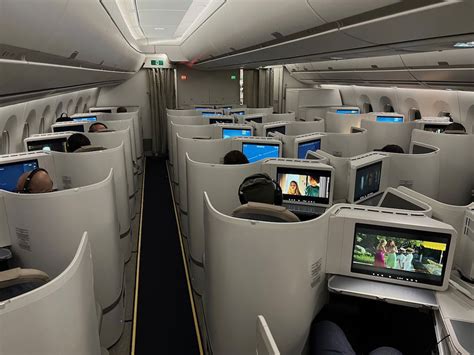
The Airbus A350’s quiet atmosphere is not achieved solely through external engineering. Inside the aircraft, Airbus invested heavily in acoustic insulation and cabin architecture.
The sidewalls, ceiling panels, floors, and overhead bins all contain advanced sound-absorbing materials designed to minimize cabin reverberation. Instead of allowing noise to bounce throughout the interior, these materials absorb and disperse sound energy.
That matters because passenger perception of noise is heavily influenced by echo and resonance. Even relatively moderate sound levels can feel intrusive if a cabin amplifies vibrations or reflects acoustic waves inefficiently.
The A350 minimizes this effect exceptionally well.
Airbus also improved sealing around doors, galley sections, and service areas to reduce sound leakage. These are areas where cabin noise traditionally increases due to airflow turbulence and operational activity.
Even the aircraft’s airflow systems were optimized for quieter operation. Air-conditioning systems, ventilation ducts, and circulation systems were redesigned to minimize background hiss and airflow noise inside the cabin.
Combined together, these features create an environment that feels more controlled and less chaotic than previous aircraft generations.
Passengers often describe the A350 cabin as feeling “soft” acoustically. That sensation comes from the absence of harsh frequencies and sudden tonal spikes that are common on older aircraft.
Aerodynamics Also Influence Cabin Noise
One of the least visible contributors to cabin quietness is aerodynamic efficiency.
At cruising altitude, aircraft generate substantial noise not only from engines but also from airflow moving across the fuselage, wings, landing gear doors, and control surfaces. Turbulent airflow creates pressure fluctuations that translate into audible cabin sound.
The Airbus A350 was extensively refined through wind tunnel testing to reduce aerodynamic turbulence and airflow-related noise.
Its wings feature highly advanced aerodynamic shaping designed to smooth airflow and minimize drag. The aircraft’s fuselage contours also help reduce turbulence around the body of the aircraft.
These aerodynamic improvements provide dual benefits. They reduce fuel consumption while simultaneously lowering noise generation.
This becomes particularly noticeable during cruise phases, where passengers often report that the A350 feels unusually stable and calm. Reduced airflow turbulence means fewer vibrations and less background rumble inside the cabin.
Even during rough weather, many pilots and passengers report that the aircraft maintains relatively low cockpit and cabin noise levels compared to older aircraft types.
That quieter environment reduces mental fatigue significantly on ultra-long-haul flights.
Passenger Comfort Changes How Noise Is Perceived
Human perception of noise is surprisingly psychological. Two cabins producing similar measured decibel levels can feel dramatically different depending on passenger comfort.
The Airbus A350 benefits enormously from this phenomenon.
Because the aircraft maintains lower cabin altitude pressure, higher humidity, better lighting, and smoother airflow circulation, passengers generally feel less physically stressed during flight. Reduced fatigue makes people less sensitive to background noise.
Traditional aircraft cabins are pressurized to an equivalent altitude of around 8,000 feet. The A350 reduces that cabin altitude closer to 6,000 feet, helping passengers feel less dehydrated and exhausted.
Higher humidity levels also improve comfort during long flights, especially overnight sectors where dry cabin air often causes irritation and fatigue.
When travelers are more comfortable physically, they interpret the surrounding environment as quieter and calmer, even if actual decibel reductions are modest.
This psychological effect is extremely important in aviation design. Airbus understood that quietness is not merely about raw sound measurements. It is about creating an atmosphere that feels relaxing and controlled.
The A350 achieves exactly that.
The Airbus A350 Is Quiet Outside the Aircraft Too
The A350’s acoustic advantages extend beyond the passenger cabin. Airports and surrounding communities also benefit from the aircraft’s quieter operation.
Compared to older widebody aircraft like the Boeing 747-400, the A350 produces a dramatically smaller external noise footprint. Airbus estimates the aircraft’s noise footprint is more than 50% smaller than many previous-generation long-haul jets.
That matters increasingly as airports worldwide impose stricter environmental and noise regulations.
Major airports across Europe and Asia are introducing tighter nighttime restrictions on louder aircraft types. Quieter aircraft like the A350 are becoming highly attractive to airlines because they help preserve operational flexibility while reducing community noise complaints.
For pilots, the quieter environment also improves cockpit communication. Many flight crews report that conversations during cruise require less vocal strain compared to older aircraft.
That reduced cockpit fatigue can become especially valuable during ultra-long-haul operations lasting well over twelve hours.

Is the Airbus A350 the Quietest Aircraft in the World?
The Airbus A350 is unquestionably among the quietest long-haul aircraft flying today, but the answer becomes more complicated when comparing it directly against aircraft like the Airbus A380 and Boeing 787 Dreamliner.
Some acoustic studies have found the double-decker Airbus A380 slightly quieter overall in measured cabin sound levels, while other comparisons place the Boeing 787 very close to the A350.
In practice, the differences are relatively small.
What matters more is the overall cabin experience. The A350 combines low noise levels with smooth cabin pressure, advanced humidity control, modern lighting systems, and refined interior architecture to create one of the most comfortable passenger environments in commercial aviation.
That holistic design approach explains why so many travelers specifically seek out the aircraft when booking long-haul flights.
The A350 does not merely transport passengers efficiently across continents. It transforms the sensory experience of flying itself.