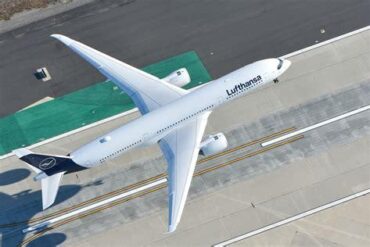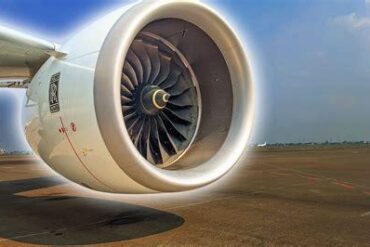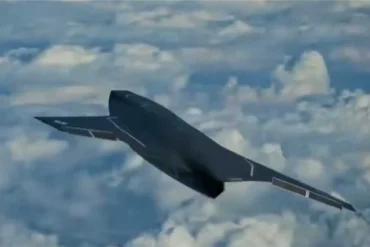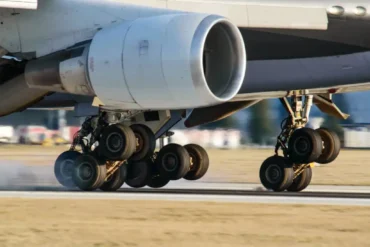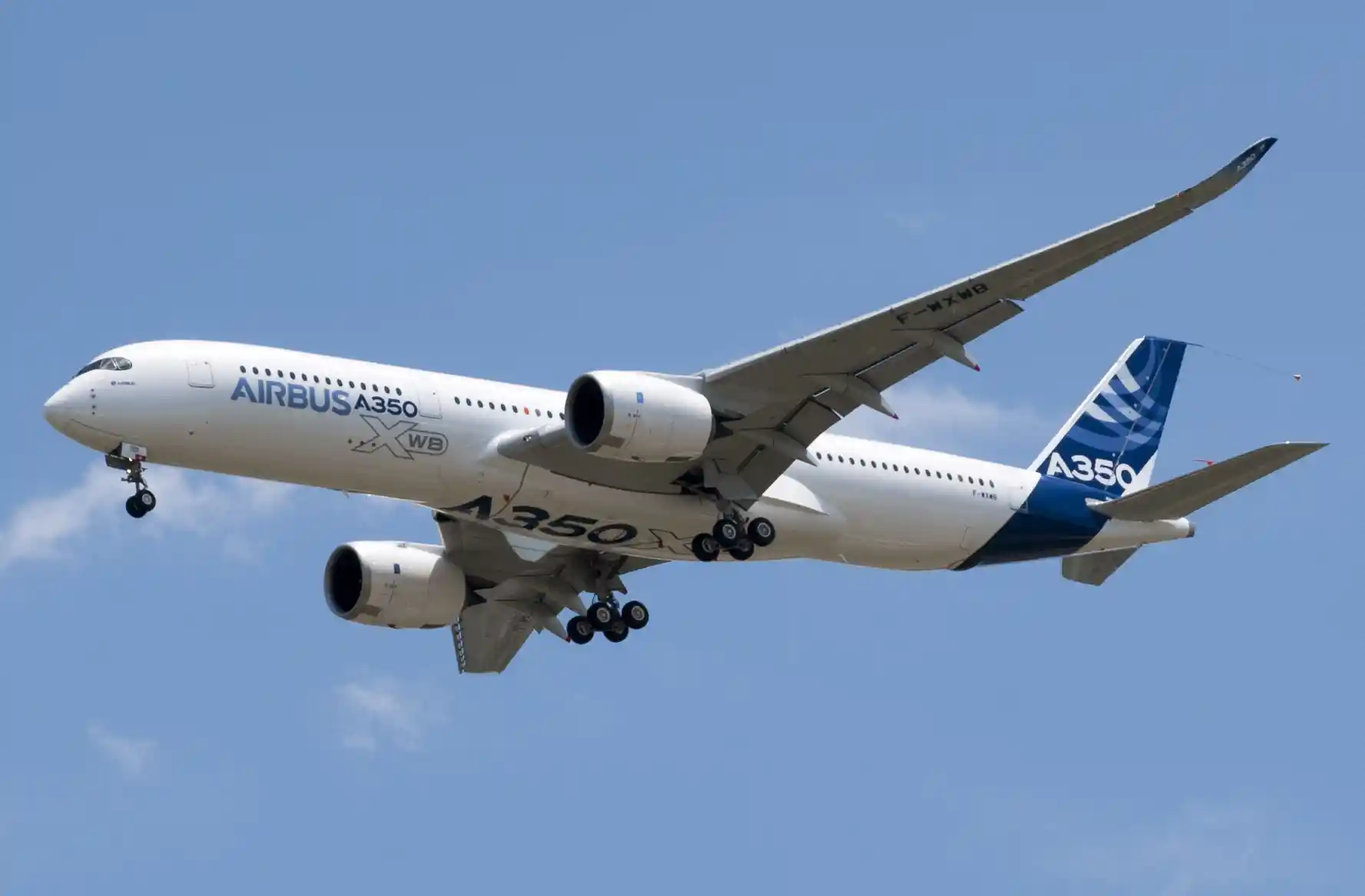
The Airbus A350 represents one of the most sophisticated achievements in modern aerospace engineering. Built during an era when efficiency, resilience, and operational intelligence became as important as speed and range, the aircraft was designed around a revolutionary idea: failures should not simply be managed—they should be anticipated, isolated, and overcome before they threaten the flight itself.
Unlike previous generations of commercial airliners that relied heavily on redundancy as a reactive safety strategy, the A350 embraces a proactive philosophy. Every aspect of the aircraft, from its carbon-fiber structure to its digital nervous system, reflects decades of lessons learned from earlier Airbus programs. The result is not merely an efficient long-haul jet. It is an aircraft engineered to outthink failure.
Airbus did not create the A350 in isolation. The widebody inherited technologies, manufacturing techniques, and operational insights from two vastly different aircraft programs: the colossal Airbus A380 and the rugged military Airbus A400M. One mastered the challenge of integrating advanced materials into an aircraft carrying hundreds of passengers across continents. The other subjected those materials and systems to some of the harshest operating environments imaginable.
Together, they provided the blueprint for an aircraft capable of redefining what resilience means in commercial aviation.
By the time the A350 entered service, Airbus had accumulated decades of knowledge regarding composite structures, digital avionics, predictive maintenance systems, and fault-tolerant flight controls. Rather than simply refining older concepts, Airbus combined them into a cohesive ecosystem designed to maintain functionality even when multiple independent systems encounter problems simultaneously.
The Carbon Fiber Revolution Behind the Airbus A350
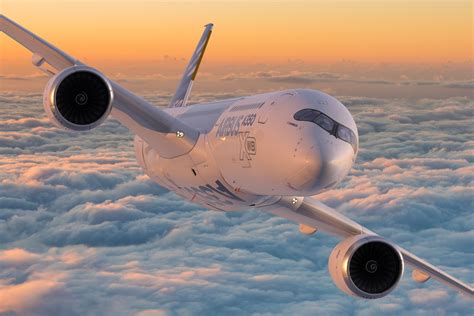
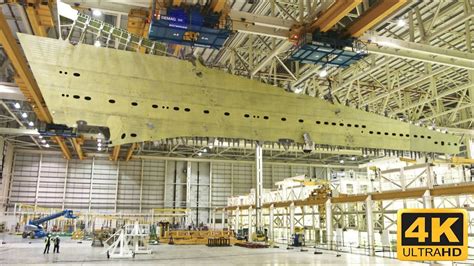
One of the defining characteristics of the Airbus A350 is its extensive use of carbon fiber reinforced plastic (CFRP). More than half of the aircraft’s structural weight consists of composite materials, making it one of the most composite-intensive commercial aircraft ever built.
This shift toward carbon fiber was motivated by more than the pursuit of fuel efficiency. Composite structures offer exceptional resistance to corrosion and fatigue while delivering substantial weight savings. However, harnessing these benefits required Airbus to overcome entirely new engineering challenges.
The journey began long before the A350 program itself.
Although the Airbus A380 remained predominantly metallic, it introduced the aviation industry to the use of composites in critical structural areas. The aircraft’s center wing box demonstrated that carbon fiber components could sustain enormous loads over years of service without compromising structural integrity.
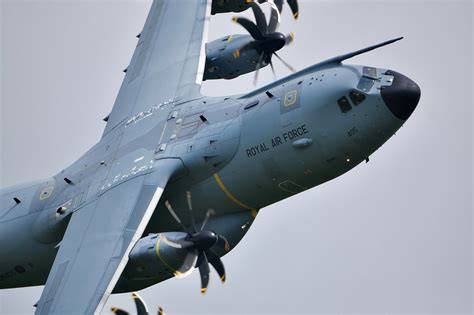
Meanwhile, the Airbus A400M served as a practical laboratory for understanding how these materials behave under severe conditions. Military transport operations involve rough runways, aggressive maneuvers, and highly variable environmental stresses. Such conditions exposed composite structures to extreme testing scenarios that commercial airliners rarely encounter.
The knowledge gained from these programs fundamentally shaped the A350’s architecture.
Rather than adopting a single-piece barrel fuselage approach, Airbus developed a four-panel composite fuselage configuration. This method enabled engineers to customize structural thickness according to localized stress demands.
The upper and lower fuselage sections were reinforced to withstand significant bending forces encountered during flight. Side panels, subjected to different loading characteristics, could be optimized for reduced weight.
This tailoring strategy allowed Airbus to improve efficiency without sacrificing strength.
Learning From Military Aviation to Improve Passenger Safety
The Airbus A400M contributed something even more valuable than manufacturing experience: insight into how advanced materials fail.
Repeated exposure to demanding operational conditions revealed vulnerabilities that traditional laboratory testing might overlook. Engineers observed microscopic separation between carbon-fiber layers, known as delamination, alongside the formation of tiny resin cracks.
Understanding these phenomena proved essential.
Armed with years of military flight data, Airbus introduced tougher epoxy formulations featuring enhanced interlayer protection for the A350 program. These modifications improved damage tolerance and increased resistance to crack propagation.
The result was an airframe designed not merely to endure normal airline operations, but to maintain integrity under circumstances significantly beyond routine expectations.
This philosophy permeates every aspect of the aircraft.
The A350 was never intended to be merely lightweight. It was intended to be intelligently durable.
Advanced Manufacturing That Eliminates Human Limitations
Building the Airbus A350 required manufacturing processes as advanced as the aircraft itself.
Traditional aerospace assembly relied heavily on manual craftsmanship. While highly skilled technicians remain indispensable, Airbus increasingly turned to automation to achieve unprecedented precision and consistency.
Automated Tape Laying became a cornerstone of A350 production.
Robotic systems position thousands of resin-impregnated carbon-fiber strips with extraordinary accuracy, creating structures capable of meeting exacting engineering specifications. Human variability, while never entirely eliminated, was substantially reduced.
For complex internal components, Airbus employed Liquid Resin Transfer Molding techniques. Dry carbon fabrics were arranged inside specialized molds before liquid resin was injected under carefully controlled pressure conditions.
These manufacturing innovations enabled the production of lighter structures with fewer imperfections.
More importantly, they enhanced repeatability.
In aviation, consistency directly contributes to safety. Every aircraft leaving the production line must perform according to identical standards. Automation helped Airbus achieve precisely that objective.
The A380’s Hidden Legacy Within the A350
The Airbus A380 may be remembered primarily for its immense size, but its true legacy extends far beyond passenger capacity.
Many of the technologies that define the A350 first appeared aboard the superjumbo.
Among the most significant was the composite center wing box. Serving as the structural junction connecting the wings to the fuselage, this component experiences enormous operational loads.
Constructing such a critical element from carbon fiber represented a historic milestone.
Airbus also transformed the design of the rear pressure bulkhead. Traditionally assembled from numerous metallic pieces fastened together with thousands of rivets, the A380 adopted a single-piece composite dome configuration.
This innovation eliminated countless potential leakage pathways and fatigue-prone connections.
The A350 inherited this philosophy directly.
Fewer parts translated into fewer opportunities for failure.
Similarly, Airbus experimented extensively with hybrid materials such as Glass Laminate Aluminium Reinforced Epoxy, or GLARE. Long-term operational data generated by the A380 provided valuable insights into how layered structures respond to repeated pressurization cycles.
Those lessons informed the composite fuselage strategies employed on the A350.
Integrated Modular Avionics: The Aircraft’s Digital Brain
Structural innovation alone does not define the Airbus A350.
Its true intelligence resides within an advanced avionics ecosystem known as Integrated Modular Avionics, or IMA.
Earlier generations of aircraft depended upon numerous standalone computers dedicated to specific functions. This architecture increased complexity, weight, and maintenance requirements.
The A350 embraces an entirely different approach.
Functions once distributed among separate units now reside within standardized processing modules connected through sophisticated data networks. Information flows rapidly between systems, enabling unprecedented coordination.
Airbus refers to this evolution as the IMA2G, or second-generation Integrated Modular Avionics architecture.
The implications are profound.
If one processing module encounters a fault, software applications can migrate automatically to alternative processors. Flight crews remain unaware of the transition because operations continue uninterrupted.
Instead of isolated systems reacting independently, the aircraft evaluates information holistically.
A warning generated by one subsystem can be validated against data originating elsewhere, enhancing situational awareness while reducing the likelihood of misleading indications.
In effect, the aircraft continuously verifies itself.
Designing Redundancy Beyond Traditional Limits
Redundancy has long been fundamental to aviation safety.
The Airbus A350 elevates this concept considerably.
Conventional airliners relied heavily upon hydraulic systems supported by mechanical backup mechanisms. While effective, such arrangements introduced complexity and physical limitations.
The A350 employs Airbus’ sophisticated 2H2E architecture, representing two hydraulic systems combined with two independent electrical pathways.
Should hydraulic capability degrade, electrically powered actuators assume responsibility for controlling critical flight surfaces.
Electro-Hydrostatic Actuators and Electrical Backup Hydraulic Actuators contain localized hydraulic reservoirs driven by electric motors.
This decentralized approach enhances survivability.
Even in scenarios involving multiple simultaneous failures, the aircraft retains controllability.
Military experience gained through A400M development validated these concepts under aggressive operating conditions involving intense vibration and demanding maneuver profiles.
When integrated into the commercial environment of the A350, the resulting architecture offered remarkable fault tolerance.
Mechanical cables and pulleys largely disappeared.
Digital intelligence assumed command.
Predictive Maintenance: Fixing Problems Before They Exist
Perhaps the most transformative feature of the Airbus A350 lies not within the cockpit, but within its ability to communicate with technicians on the ground.
Historically, maintenance crews diagnosed problems after aircraft landed.
The A350 challenges that paradigm.
Its systems continuously collect operational data regarding component performance, environmental conditions, and system health. Information can be transmitted during flight through established communication channels.
Ground teams gain visibility into emerging issues long before passengers disembark.
Preparation begins before arrival.
Replacement components can be positioned proactively. Maintenance schedules can be optimized. Minor irregularities can be addressed before escalating into operational disruptions.
The origins of this capability trace back to the Airbus A380’s Airman software architecture.
The A400M expanded these concepts by introducing health-monitoring strategies capable of forecasting component degradation based upon actual usage patterns.
Rather than waiting for failure indicators, algorithms analyzed stress exposure and estimated remaining service life.
The A350 transformed these innovations into a sophisticated predictive maintenance ecosystem.
In many respects, the aircraft behaves less like a machine awaiting repair and more like a connected platform actively participating in its own upkeep.
Human-Centered Engineering Inside a Highly Automated Aircraft
Despite its technological sophistication, the Airbus A350 remains fundamentally designed around the needs of human operators.
Automation serves pilots and technicians rather than replacing them.
The aircraft’s avionics bay exemplifies this philosophy.
Positioned beneath the cockpit floor, the compartment resembles an organized data center. Technicians can access critical equipment rapidly without dismantling extensive structural panels.
Efficient maintenance directly influences reliability.
Reduced troubleshooting time means fewer delays, lower operational costs, and increased aircraft availability.
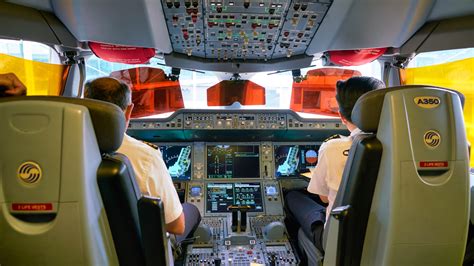
Within the cockpit, pilots benefit from advanced decision-support systems that synthesize enormous quantities of information without overwhelming crews.
Automation filters complexity.
Instead of burdening pilots with unnecessary detail, the aircraft prioritizes clarity during both routine operations and abnormal situations.
The goal is not to eliminate human judgment.
The goal is to empower it.
Why the Airbus A350 Represents the Future of Aviation Safety
The Airbus A350 embodies a profound shift in aerospace philosophy.
Previous generations of aircraft were engineered primarily to withstand failure. The A350 seeks to anticipate it, adapt around it, and recover from it seamlessly.
Its composite structures emerged from years of experimentation involving both civilian and military programs. Its avionics reflect an evolution toward interconnected intelligence rather than isolated capability. Its maintenance systems blur the distinction between operation and diagnosis.
Every innovation contributes toward a singular objective.
Maintaining safety through resilience.
Passengers boarding an Airbus A350 rarely consider the countless layers of engineering safeguarding their journey. They do not see the carbon-fiber panels optimized for specific stress distributions. They remain unaware of processors monitoring one another in real time or algorithms estimating future component fatigue.
Yet these invisible systems collectively define the aircraft’s character.
The Airbus A350 is not merely modern because it incorporates advanced technology.
It is modern because its designers fundamentally reconsidered how aircraft should respond to uncertainty.
Instead of asking how an airplane survives failure, Airbus asked a more ambitious question:
How can an airplane outthink it?
The answer emerged in the form of a widebody aircraft that integrates decades of aerospace innovation into a coherent, adaptive system. Through intelligent structures, predictive diagnostics, digital redundancy, and human-centered design, the Airbus A350 has established itself as one of the most sophisticated commercial aircraft ever built.
In an industry where safety remains paramount and reliability determines success, the A350 stands as compelling evidence that the future of aviation belongs not simply to stronger machines, but to smarter ones.