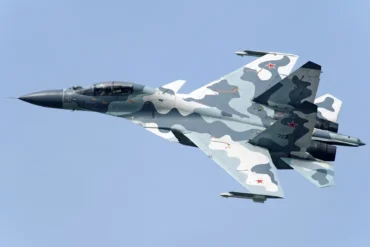
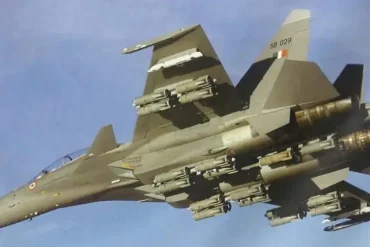
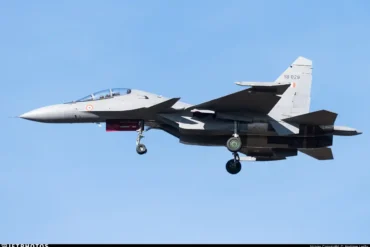
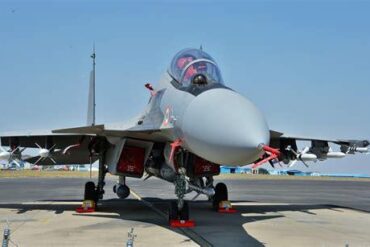
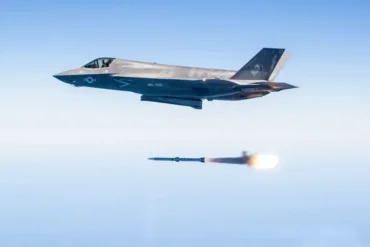
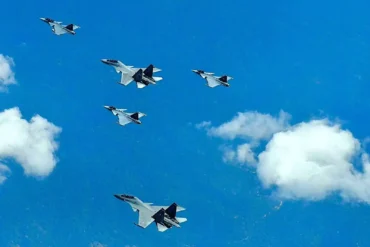
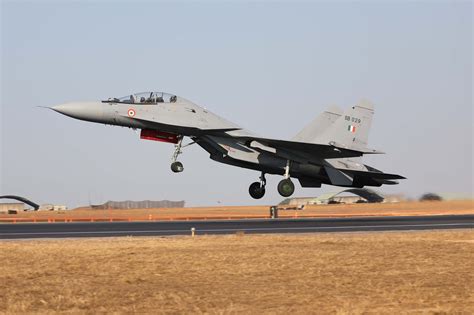
The Sukhoi Su-30MKI is a formidable multi-role air superiority fighter jointly developed by Russia’s Sukhoi Aviation Corporation and Hindustan Aeronautics Limited (HAL) for the Indian Air Force (IAF). As the backbone of India’s air power, this twin-engine, two-seat, all-weather aircraft stands out for its supermaneuverability, powerful avionics, and robust weapon-carrying capabilities. Over the years, it has become one of the most advanced and versatile platforms in the world, capable of both air-to-air dominance and deep strike missions. Crucially, India has equipped this aircraft with a range of indigenous weapons, significantly enhancing its combat lethality and making it a critical component in the nation’s air defense strategy.
Advanced Design and Key Features of the Su-30MKI
The Su-30MKI (Modernized Commercial Indian) variant is uniquely tailored for the Indian Air Force, integrating advanced technologies from Russia, India, France, and Israel. This version is the first in the Su-30 family to feature thrust vectoring control (TVC) and canards, giving it unmatched maneuverability in aerial dogfights. Key specifications include:
- Top Speed: Mach 2.0 (2,469 km/h or 1,535 mph)
- Range: 3,000 km (1,864 miles) without refueling
- Payload Capacity: Up to 8,130 kg (17,920 lb)
- Service Ceiling: 17,300 m (56,800 ft)
- Avionics: French head-up display, Israeli electronic warfare systems, advanced radar, and targeting pods
These features, combined with its extensive weaponry, make the Su-30MKI a highly versatile and lethal platform capable of engaging a wide range of aerial and ground threats.
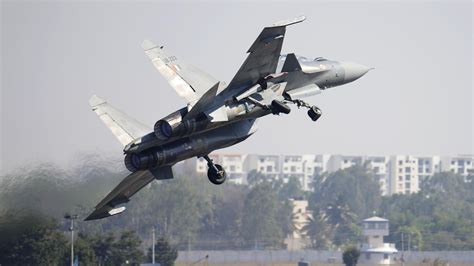
Key Indigenous Indian Weapons Integrated into the Su-30MKI
The Indian Air Force has heavily invested in indigenously developed weapons to reduce reliance on foreign suppliers and strengthen its strategic autonomy. This approach has resulted in several advanced munitions being integrated into the Su-30MKI, transforming it into a highly lethal platform. The most notable among these are the BrahMos-A cruise missile, Rudram-1 anti-radiation missile, and the Astra air-to-air missile series.
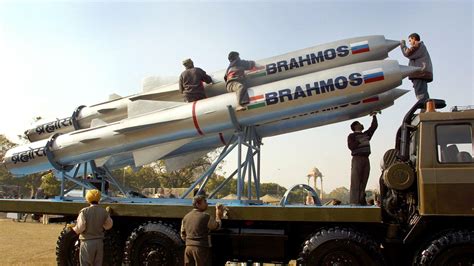
BrahMos-A Supersonic Cruise Missile
One of the most potent weapons in the IAF‘s arsenal is the BrahMos-A, a variant of the joint Indo-Russian BrahMos missile specifically adapted for air-launch. This missile stands out for its sheer speed and destructive power:
- Speed: Mach 2.8 to Mach 3.0, making it one of the fastest cruise missiles in the world
- Range: Up to 500 km (310 miles) in its latest version
- Warhead: 300 kg (660 lb) semi-armor-piercing explosive, capable of devastating large surface targets
- Guidance System: INS, GPS, GLONASS, and a highly accurate active radar seeker for terminal homing
Integrating the BrahMos-A onto the Su-30MKI required significant modifications to the airframe, including strengthening the fuselage, adding reinforced hardpoints, and updating the avionics to handle the missile’s weight and aerodynamic profile. Despite these challenges, the IAF successfully operationalized this combination, allowing the Su-30MKI to strike high-value, heavily defended targets deep within enemy territory with unprecedented precision.
Rudram-1 Anti-Radiation Missile
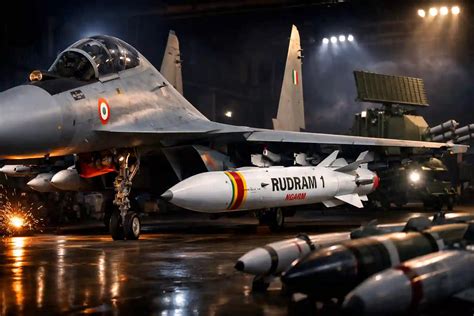
The Rudram-1 is India’s first indigenously developed anti-radiation missile, specifically designed for Suppression of Enemy Air Defenses (SEAD) missions. This missile is intended to neutralize enemy radar installations, communication nodes, and air defense systems, providing critical protection for friendly strike aircraft.
- Range: 150 km (93 miles) with extended variants in development
- Speed: Mach 2.0
- Guidance System: Inertial Navigation System (INS) with GPS midcourse correction and terminal active radar or infrared homing
- Operational Status: Inducted in 2012, with ongoing testing for extended-range versions like Rudram-2 (350 km) and Rudram-3 (550 km)
This missile’s ability to home in on enemy radar signals even if the target shuts down its transmitter makes it a formidable weapon for deep penetration missions.
Astra Beyond Visual Range Air-to-Air Missile
The Astra missile series represents India’s push for complete self-reliance in air-to-air combat capabilities. These missiles are designed to engage enemy aircraft at both short and long ranges, providing the IAF with critical beyond-visual-range (BVR) engagement capabilities.
- Speed: Mach 4.5
- Range: 110 km (68 miles) for the standard Astra, with a 160 km (100 miles) variant under development
- Warhead: 15 kg (33 lb) high-explosive, pre-fragmented warhead
- Guidance: Inertial navigation with terminal active radar homing using a Ku-band monopulse radio frequency seeker
- Countermeasures: Advanced electronic counter-countermeasures (ECCM) to resist jamming
The Astra missile is designed for both autonomous and buddy launch modes, allowing flexibility in tactical operations and significantly enhancing the IAF’s air combat capabilities.
Conclusion: A Formidable Force Multiplier
The integration of indigenous weapons like the BrahMos-A, Rudram-1, and Astra has transformed the Su-30MKI into a highly lethal platform, capable of executing precision strikes against a wide range of targets, from enemy aircraft to fortified ground installations. These advancements underscore India’s growing self-reliance in defense technologies and its commitment to maintaining a formidable aerial combat capability. With ongoing upgrades and future weapon systems in the pipeline, the Su-30MKI will remain a cornerstone of India’s air power for decades to come.