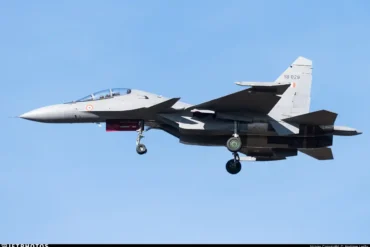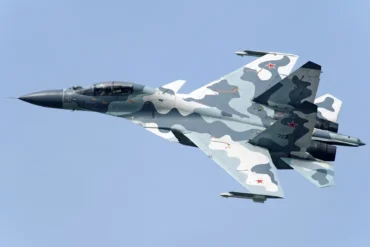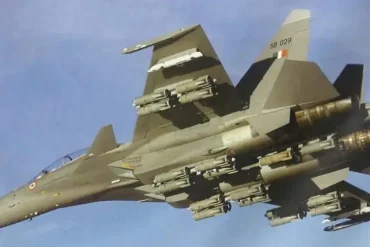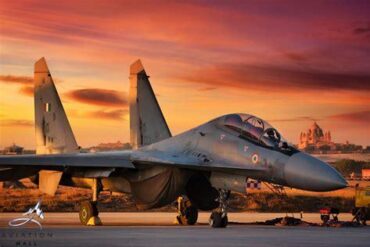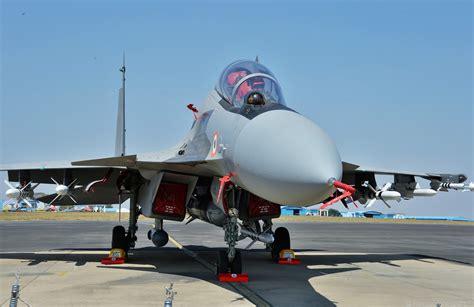
India’s Su-30MKI fleet has long stood as the backbone of the Indian Air Force (IAF)—a powerful multirole fighter capable of air superiority, deep strike missions, and long-range deterrence. Yet the aircraft has recently come under scrutiny after three crashes in three years, prompting renewed debate about operational safety, fleet management, and the urgency of modernization.
The latest accident in March 2026, which tragically killed two Indian Air Force pilots in Assam, has reignited conversations around the long-term future of India’s Sukhoi fleet. Despite the setbacks, the aircraft maintains a relatively low attrition rate of around 5%, a figure that actually compares favorably with many large fighter fleets around the world.
But India is not standing still. With a massive modernization plan worth nearly $7.5 billion, the country aims to transform its Su-30MKI fleet into a new generation of combat aircraft—sometimes described as the “Super Sukhoi” upgrade program.
Understanding what happened, why it matters, and how India intends to evolve the aircraft reveals a fascinating story of technology, strategy, and geopolitical necessity.
The March 2026 Su-30MKI Crash in Assam
On March 5, 2026, a Su-30MKI took off from Jorhat Air Force Station in Assam for what was described as a routine training sortie. Within minutes, the aircraft disappeared from radar, triggering an immediate search-and-rescue operation across the region’s rugged terrain.
The Indian Air Force soon confirmed the worst. The fighter jet had crashed in a remote mountainous area, killing both pilots on board—Squadron Leader Anuj Vashisht and Flight Lieutenant Purvesh Duragkar.
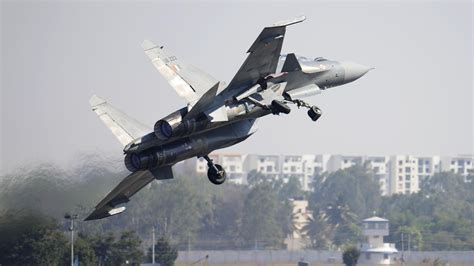
Initial reports revealed that the aircraft lost contact with ground control around 7:42 PM, shortly after departure. The IAF quickly initiated an investigation, with a Court of Inquiry launched to determine the cause.
At the time of writing, the precise reason behind the crash remains unknown. Aviation accidents—especially involving high-performance fighters—can arise from multiple factors, including:
- Mechanical failure
- Human error
- Environmental conditions
- Avionics or sensor malfunction
Investigators typically examine flight data recorders, wreckage patterns, and maintenance history before reaching any conclusions. Until the inquiry concludes, speculation remains premature.
The crash also carried a poignant detail. Flight Lieutenant Purvesh Duragkar, one of the two pilots killed, had reportedly participated in Operation Sindoor, India’s 2025 cross-border military operation targeting terrorist infrastructure.
Three Su-30MKI Crashes in Three Years
The Assam incident marks the third crash involving the Su-30MKI since 2023, though the circumstances of each accident differ significantly.
In June 2024, another Su-30MKI crashed near Nashik, shortly after taking off from the Hindustan Aeronautics Limited (HAL) facility. That aircraft was performing a test sortie, and pilots managed to eject safely after a reported technical malfunction.
Earlier, in January 2023, a more complex accident occurred during a combat training exercise. A Su-30MKI collided midair with a Mirage 2000H fighter during a close-combat maneuvering drill conducted by the Tactics and Air Combat Development Establishment (TACDE).
The 2023 collision involved three pilots across the two aircraft. One of them tragically lost his life, while the others survived after ejecting.
Although three accidents across three years may sound alarming at first glance, context matters. India operates one of the largest Sukhoi fleets in the world, with more than 250 aircraft in service. Statistically, the resulting attrition rate of around 5% remains relatively low for a fleet that has accumulated hundreds of thousands of flight hours over two decades.
Military aviation is inherently risky. Fighter jets operate at extreme speeds, high G-forces, and in complex training environments that push both machines and pilots to their limits.
The Su-30MKI: Backbone of the Indian Air Force
The Su-30MKI is a uniquely customized fighter jet, developed through a joint collaboration between Russia’s Sukhoi Design Bureau and India’s Hindustan Aeronautics Limited.
Unlike standard variants of the Su-30, the MKI version integrates Indian, Russian, Israeli, and French technologies, making it one of the most internationally hybrid combat aircraft ever built.
The aircraft features twin AL-31FP engines with thrust vectoring, allowing extraordinary maneuverability in aerial combat. Combined with its large airframe and long operational range, the fighter is capable of performing multiple mission types:
- Air superiority operations
- Deep strike missions
- Maritime strike
- Electronic warfare support
- Long-range patrol
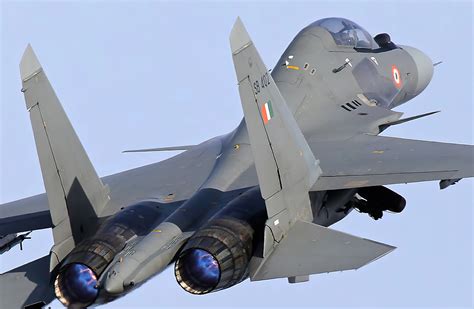
With a combat radius exceeding 1,500 kilometers without refueling, the aircraft gives the Indian Air Force the ability to patrol vast areas of the Indian Ocean region and Himalayan frontier.
India ultimately ordered 272 Su-30MKI fighters, many of which were assembled domestically by HAL in Nashik. Even after several accidents, the fleet remains one of the largest and most capable heavy fighter forces in Asia.
Su-30MKI in Operation Sindoor
The Su-30MKI’s operational relevance was highlighted during Operation Sindoor in May 2025, when India launched coordinated airstrikes targeting terrorist infrastructure across the border in Pakistan and Pakistan-occupied Kashmir.
The operation focused on facilities linked to Lashkar-e-Taiba (LeT) and Jaish-e-Mohammed (JeM).
While other aircraft carried out precision strikes, the Su-30MKI played a critical supporting role by maintaining combat air patrols along the western border.
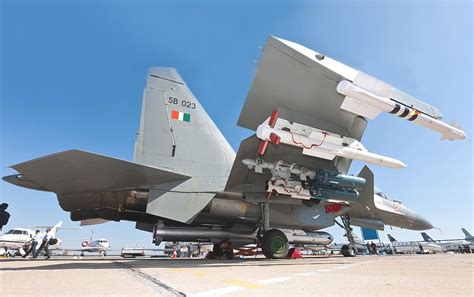
These patrols ensured that Pakistani Air Force interceptors, including F-16 fighters, could not interfere with strike packages targeting militant camps.
The aircraft’s versatility also allowed it to serve as a platform for one of India’s most formidable weapons—the BrahMos-A supersonic cruise missile.
During the final phase of the operation on May 10, Su-30MKIs reportedly launched BrahMos strikes against multiple Pakistani airbases, demonstrating the aircraft’s long-range strike capability.
Another milestone occurred during the operation: the combat debut of the Astra Mk1 beyond-visual-range air-to-air missile. Su-30MKIs equipped with Astra missiles conducted combat patrols, marking a significant step toward indigenous weapon integration.
India Orders More Sukhoi Fighters
Despite accidents and discussions about fifth-generation fighters, India continues to invest heavily in the Su-30MKI platform.
In December 2024, the Indian government approved a contract worth ₹13,500 crore (approximately $1.6 billion) for 12 additional Su-30MKI aircraft.
These jets will be produced domestically by Hindustan Aeronautics Limited with more than 60% indigenous components, reflecting India’s push toward defense self-reliance under the “Atmanirbhar Bharat” initiative.
The new aircraft primarily aim to replace fighters lost to accidents over the past two decades while restoring the fleet to its intended strength.
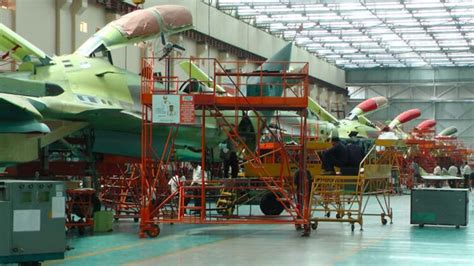
Production will take place at HAL’s Nasik manufacturing complex, which has been assembling Su-30MKIs under license since the early 2000s.
For India, maintaining the Sukhoi fleet is not simply about replacing aircraft. It is about sustaining a strategic capability that bridges the gap between current fighters and future fifth-generation programs.
The $7.5 Billion “Super Sukhoi” Upgrade
The most ambitious development surrounding the Su-30MKI is the planned massive modernization program approved in principle by India’s Defence Acquisition Council.
Valued at roughly ₹63,000 crore (about $7.5 billion), the upgrade will significantly enhance the fighter’s combat capabilities.
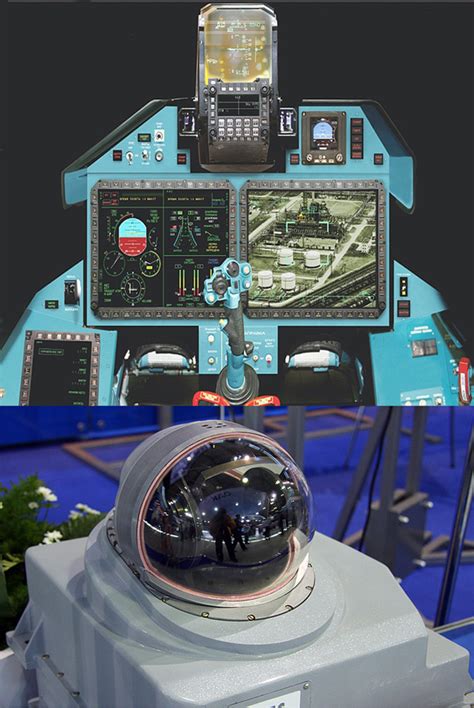
At the center of the upgrade lies the integration of the Virupaksha AESA radar, an advanced Active Electronically Scanned Array radar developed in India.
AESA radars represent a major leap forward in sensor technology. Instead of using a single mechanical antenna, they employ hundreds or thousands of small transmit-receive modules that electronically steer radar beams.
The Virupaksha radar, based on Gallium Nitride (GaN) semiconductor technology, is expected to increase detection range by 1.5 to 1.7 times compared to existing systems.
This improvement would dramatically enhance the Su-30MKI’s ability to:
- Detect stealthier targets
- Track multiple aircraft simultaneously
- Guide long-range missiles more effectively
But the radar is only one part of the modernization.
The upgrade program will also introduce:
- New indigenous Infrared Search and Track (IRST) systems
- Advanced electronic warfare suites
- Improved avionics and cockpit interfaces
- Multi-sensor data fusion capabilities
Together, these upgrades aim to transform the aircraft into something approaching fifth-generation performance levels—minus stealth characteristics.
Possible Engine Upgrade: AL-41 Powerplant
Another major consideration involves replacing the aircraft’s current AL-31FP engines with the more powerful AL-41 turbofan engines, the same family used in Russia’s advanced fighters.
The AL-41 could deliver greater thrust, improved fuel efficiency, and longer engine life.
More powerful engines would also allow the aircraft to carry heavier payloads while maintaining superior maneuverability—an important advantage in both air combat and strike missions.
Russia’s state export agency Rosoboronexport has expressed willingness to support a comprehensive modernization effort involving both Russian and Indian defense industries.
However, a final decision regarding engine replacement has not yet been announced.
Upgrading Nearly the Entire Fleet
The modernization plan will initially focus on 84 aircraft, but the ultimate goal is far more ambitious.
Indian defense planners hope to upgrade around 200 Su-30MKI fighters, representing roughly 75% of the entire fleet.
Such a transformation would ensure the aircraft remains operationally relevant for another two decades, potentially serving well into the 2040s.
For the Indian Air Force, the strategy makes strategic sense. Developing entirely new fighter programs can take decades and cost billions. Upgrading an existing fleet allows India to rapidly enhance combat power while controlling costs.
The result may be one of the most capable fourth-generation fighter fleets in the world—an aircraft that blends Russian airframe design with cutting-edge Indian sensors, weapons, and electronic warfare systems.
The Su-30MKI has already proven its value in real-world operations, large-scale exercises, and deterrence missions across South Asia. With modernization underway, the aircraft is poised to remain a central pillar of India’s air power for years to come.