On October 18, 2025, what was meant to be a grand patriotic celebration of the U.S. Marine Corps’ 250th anniversary erupted into a statewide controversy when live munitions were unexpectedly fired over Interstate 5, one of California’s most vital and congested transportation arteries.
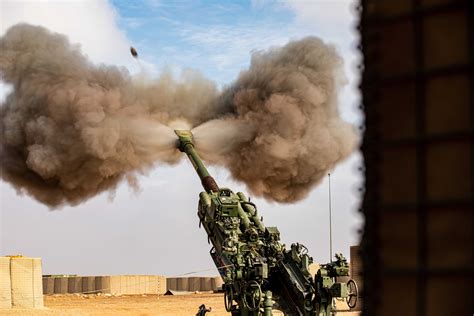
The exercise, centered at Camp Pendleton, involved the use of M777 Howitzers launching 155 mm explosive rounds as part of a simulated amphibious beach assault. Though the military hailed the display as a show of strength and readiness, the public reaction was anything but supportive.
Federal Intentions and State Confusion: The Breakdown of Communication
The event’s origins trace back to a collaboration between the White House and the Marine Corps, designed to showcase modern military capabilities. According to federal sources, extensive coordination had been conducted, and it was made clear to California state officials that the live rounds would remain confined within the designated training boundaries of Camp Pendleton.
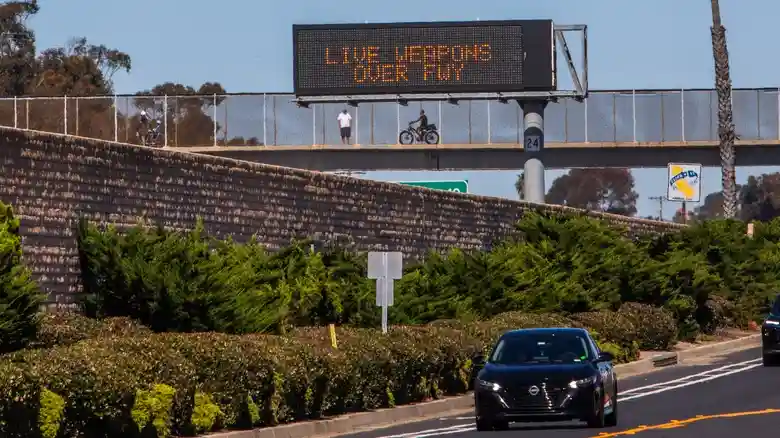
However, a crucial lapse occurred Friday evening, just hours before the demonstration, when California officials observed artillery shells being fired over the I-5 freeway during a test run. This deviation from the original plan triggered immediate concern at the state level.
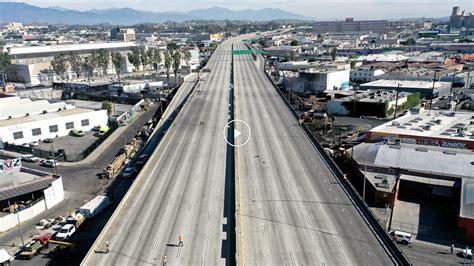
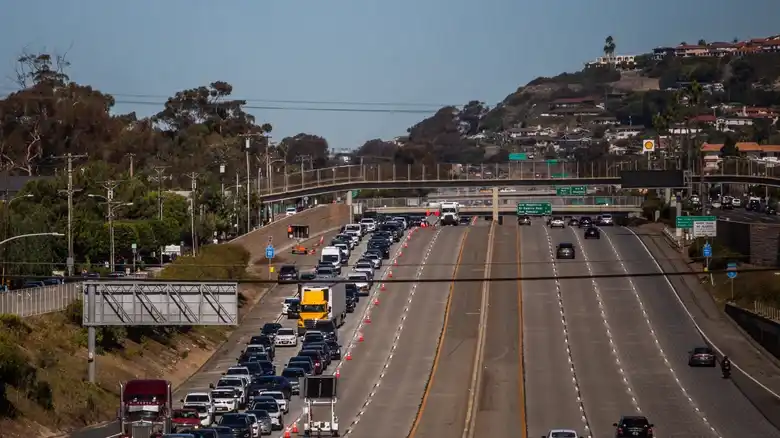
In response, Governor Gavin Newsom ordered a rapid shutdown of a 17-mile stretch of Interstate 5, spanning from San Clemente to Oceanside. The closure, announced mere hours before the event, sparked massive outrage and left thousands of drivers stranded with no warning.
The Incident Unfolds: Chaos and a Close Call
While the Marines planned to fire 60 high-explosive shells over five minutes, the exercise was cut short after a premature midair detonation. One shell burst in the sky and shrapnel struck a California Highway Patrol (CHP) vehicle, which was parked on a freeway onramp.
Miraculously, no one was injured, but the proximity of the incident to civilian infrastructure raised significant alarms. The potential for casualties or vehicular accidents was high. Even under temporary closure, the I-5 remains a crucial lifeline, and any military action occurring overhead represents a dangerous breach of public safety expectations.
Traffic Turmoil: The Public Pays the Price
Commuters were thrown into disarray. Many were already en route when the closure was enforced, resulting in gridlock, confusion, and panic. Drivers reportedly sat motionless on the freeway for more than 30 minutes, with several attempting illegal U-turns to escape the snarl.
The congestion quickly spilled over to alternative inland routes like the 91 and 15 freeways, both of which became choked with diverted traffic by mid-afternoon. For those caught in the tangle, the experience was less about patriotic pride and more about frustration, fear, and fury.
State transportation officials defended their late warning, claiming they were given short notice by the federal government. But this explanation did little to calm those impacted. Social media erupted with images and video of the traffic jam, as well as clips capturing the thunderous sounds of artillery fire echoing across Southern California’s morning sky.
Military Defense: Safety First or Safety Fumbled?
A spokesperson for the Marine Corps acknowledged the incident and confirmed that an investigation is now underway. According to military officials, all appropriate safety protocols were in place, and the premature detonation is being treated as an anomaly.
The M777 Howitzer, while a highly accurate and battle-tested system, is not infallible. Designed to deliver devastating firepower with pinpoint precision, its use in a ceremonial capacity over a populated area raises pressing questions about risk management and operational discretion.
Camp Pendleton: A History of Tactical Grandeur and Civilian Tensions
As one of the largest military installations in the United States, Camp Pendleton has long played host to exercises, drills, and public showcases. Yet this incident marks one of the rare times where such activities have resulted in direct civilian backlash.
While it’s not uncommon for the base to conduct live-fire exercises, those typically occur in more isolated zones. Crossing that line into public airspace, especially over critical infrastructure like the I-5, represents a new and dangerous precedent. The optics of explosive shells being hurled over a major freeway, no matter how controlled the scenario, conjure anxiety in a state already grappling with natural disasters and public safety challenges.
Governor Newsom’s Swift Reaction: Caught Between State and Federal Tensions
Governor Newsom’s decision to shut down the freeway — criticized by some, praised by others — was made under what his office described as an “extreme life safety risk.” The suddenness of the order stemmed not from a lack of preparation by the state, but from the late federal disclosure about the scope of the live-fire demonstration.
The situation also unearthed lingering political tensions between the Newsom administration and the Trump-aligned federal organizers. While both parties have publicly downplayed any animosity, the lack of synchronization between state and federal command centers reveals a gap that could, under slightly different circumstances, have proved tragic.
Aftermath and Accountability: What’s Next for Public-Military Relations?
In the wake of the incident, calls for a full investigation and review of coordination protocols between the Department of Defense and state agencies have intensified. Civilian oversight committees, state legislators, and public advocacy groups have begun requesting more transparency for future demonstrations of this scale.
As of now, the Marine Corps has not announced any disciplinary action, nor have they provided a clear timeline for the completion of the investigation. However, sources suggest that internal reviews are focusing on why the test run Friday night violated original artillery boundaries and whether proper risk assessments were conducted.
Public Sentiment: Disbelief, Distrust, and Demands for Change
Public reaction to the incident has been fierce. Local residents near Oceanside and San Clemente — some of whom reported hearing “incoming shell sounds” before the freeway closure was even announced — have expressed deep unease about the military’s decision-making.
Social media commentary has ranged from outrage to satire, but the prevailing sentiment remains consistent: civilians should not be caught in the crosshairs of military pageantry. A commemorative event designed to inspire national pride has instead become a case study in how not to manage civil-military interactions.
Motorist advocacy groups, including the Southern California Auto Club, are now lobbying for legislation that would prohibit live-fire military activities near public highways without a minimum 72-hour public notice. The bill, currently in early drafting stages, is expected to draw bipartisan support.
The Bigger Picture: Patriotism vs. Public Protection
The incident reflects a larger tension in American civic life: how to balance honoring military service with safeguarding the rights and safety of ordinary citizens. While military demonstrations can be powerful tools of diplomacy and morale, their execution — particularly near civilian zones — must be held to the highest standards of safety, transparency, and accountability.
In the case of Camp Pendleton’s artillery showcase, that balance was lost. A single faulty shell nearly shattered the illusion of total control. And though no lives were lost, the event serves as a stern reminder of what’s at stake when communication fails at the highest levels.
As investigations proceed and public debate intensifies, California and the nation at large are left to consider how best to commemorate the might of the U.S. Armed Forces — without putting citizens in harm’s way.