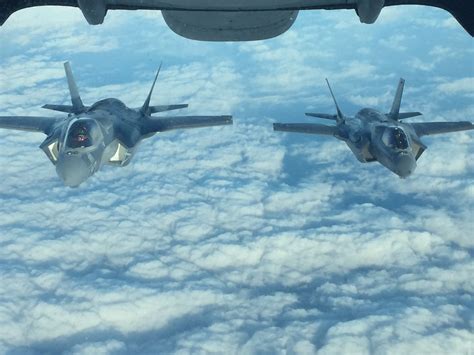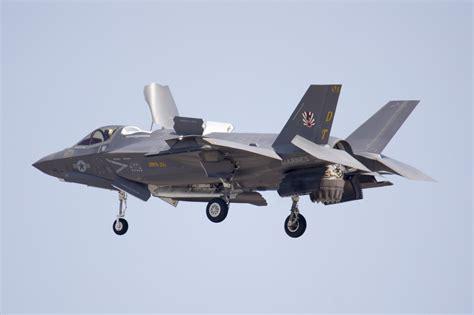
In a remarkable demonstration of aerial excellence and operational reliability, the Marine Fighter Attack Squadron 542 (VMFA-542), flying the F-35B Lightning II, has etched its name into the annals of aviation history. Returning to their home base in North Carolina after a grueling five-month deployment in the U.S. Central Command (CENTCOM) area, the squadron logged over 4,736 mishap-free hours — a monumental milestone that not only showcases the potential of the F-35 program, but also cements the combat-readiness of this next-generation platform.
An Operational Triumph in Hostile Skies
The CENTCOM area of operations is vast and volatile, stretching across the Middle East, Central Asia, and South Asia. Within this expansive and strategically crucial region, VMFA-542 executed a staggering 1,099 combat sorties, each a high-risk mission contributing to close air support, defensive counter-air, and armed overwatch for U.S. and allied forces. This operational tempo demanded not only aircrew precision but also relentless maintenance performance, especially given the F-35B’s sophisticated technological architecture.
Lieutenant Colonel Carlo F. Bonci, the squadron’s executive officer, described the deployment as proof that a forward-deployed F-35B squadron can deliver unmatched combat power. He emphasized the significance of maintaining such an elite level of performance in hostile environments, a feat made even more extraordinary considering the F-35 program’s broader reliability challenges.
F-35B: Engineering Complexity Meets Tactical Agility
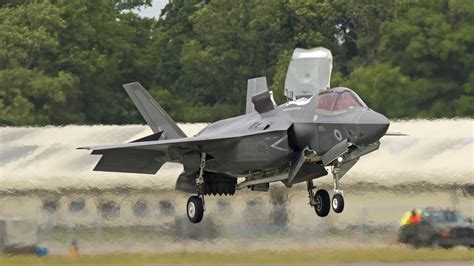
Central to this achievement is the F-35B Lightning II, a fighter jet like no other. As the short takeoff and vertical landing (STOVL) variant in the F-35 triad, the B model is purpose-built for the U.S. Marine Corps, enabling takeoff from amphibious assault ships and austere airstrips as short as 600 feet. This adaptability provides unparalleled flexibility to project airpower in locations where conventional runways are non-existent or compromised.
The aircraft’s LiftFan system, integrated into the fuselage, along with a vectored-thrust nozzle, enables vertical landing capabilities that redefine tactical air mobility. While this engineering marvel enhances mission versatility, it also introduces considerable maintenance complexity, making VMFA-542’s flawless operational record even more extraordinary.
Maintenance and Readiness: A High Bar Achieved
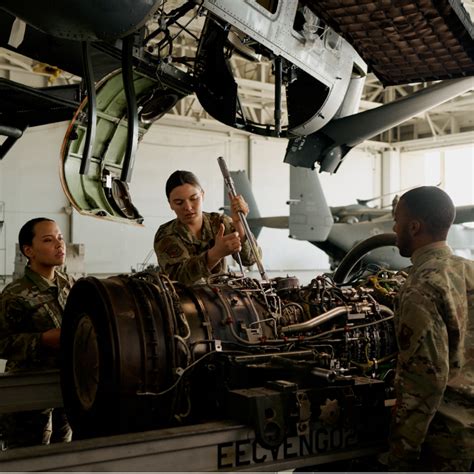
Behind every successful sortie lies an army of maintainers, engineers, and logisticians. What VMFA-542 achieved is not only a triumph of pilot skill but a symphony of logistics and technical support. Despite the F-35’s checkered history with maintenance, the squadron managed to maintain one of the highest aircraft readiness rates in the entire fleet during its deployment.
This success offers a counter-narrative to the U.S. Government Accountability Office’s 2024 report, which stated that the F-35 fleet had failed to meet its mission-capable goals for six consecutive years. In 2023 alone, the entire F-35 fleet was only mission-ready just over 50% of the time. VMFA-542’s data point suggests that, with the right conditions and sustained investment, mission-capable rates can not only be met but exceeded.
Lockheed Martin’s Perspective: The Cost vs Capability Debate
The broader F-35 program, despite its unprecedented scale and ambition, has often been marred by soaring costs, protracted upgrade timelines, and supply chain bottlenecks. With a projected lifetime cost now surpassing $2 trillion, critics have long questioned whether the return on investment aligns with expectations.
Executives at Lockheed Martin, the F-35’s prime contractor, argue that the aircraft itself isn’t the root problem — instead, they point to systemic underfunding in critical areas like spare parts and depot repair infrastructure. According to Lockheed’s Edward Smith, only performance-based sustainment contracts — long-term funding commitments tied to mission-readiness outcomes — can ensure fleet-wide success.
VMFA-542’s exemplary record becomes a proof-of-concept for this argument, showcasing what the F-35B is capable of when adequately resourced. It represents a strong case for shifting away from short-term, reactive contracting models to holistic sustainment partnerships that prioritize readiness above all.
Combat Effectiveness: Real-World Proof Over Paper Promises
What differentiates this milestone from a mere statistical anomaly is the real-world combat environment in which it was achieved. The CENTCOM theater is not a simulation or a testing ground — it is a dynamic, unpredictable, and unforgiving battlefield. The fact that the F-35B was able to deliver combat air support, provide real-time surveillance, and engage in defensive counter-air missions continuously, without a single mishap, is a significant vote of confidence for its operational credibility.
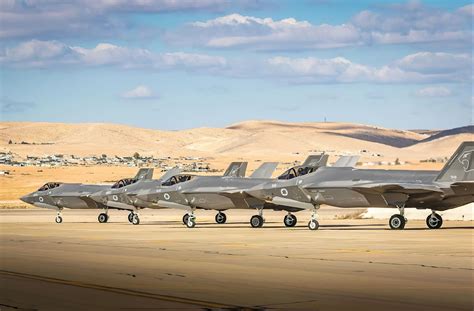
These operations occurred in extreme heat, often in high-dust environments that are notorious for degrading aircraft performance. The ability to maintain mechanical reliability and tactical effectiveness in such conditions indicates not just good luck, but extraordinary systemic discipline — from daily inspections to preemptive component replacements.
Training, Culture, and Discipline: The Human Factor
Beyond machinery and money lies the human element — the culture of safety, accountability, and discipline that defines elite aviation units. VMFA-542’s achievement reflects the Marine Corps’ enduring commitment to “mission first, safety always”. Pilots trained to handle the full envelope of the F-35B’s capabilities, combined with maintainers drilled in meticulous execution, created a cycle of performance that sustained excellence throughout the deployment.
The squadron’s accomplishment is a powerful endorsement of the Marine Corps’ operational doctrine, which emphasizes decentralized command, expeditionary flexibility, and rapid response. In many ways, the F-35B was tailor-made for this doctrine — and VMFA-542 has shown the world what that looks like when it’s executed to perfection.
A Strategic Turning Point for the F-35 Program?
The implications of this historic deployment are far-reaching. While one squadron’s success cannot erase a decade’s worth of structural inefficiencies, it can reshape the narrative. The F-35, long criticized as a budgetary black hole, now has empirical evidence of elite performance — provided the conditions are right.
This success also strengthens arguments for distributed maritime operations (DMO) and Expeditionary Advanced Base Operations (EABO), both of which depend heavily on aircraft like the F-35B that can operate in austere and rapidly changing environments. If the Department of Defense can replicate VMFA-542’s formula across a broader segment of the fleet, the combat edge promised by the Joint Strike Fighter may finally materialize at scale.
Looking Ahead: Lessons and Legacy
The 5,000-hour mishap-free milestone is more than a feather in the cap of one Marine squadron — it is a potential inflection point for U.S. airpower doctrine. It reaffirms that when logistics, training, funding, and leadership converge, even the most complex weapons systems can deliver results far beyond expectations.
For the F-35 program, this deployment is an opportunity. An opportunity to build trust, to silence critics with data instead of rhetoric, and to refine sustainment strategies that align with frontline realities. For the Pentagon, it’s a chance to reevaluate how performance-based maintenance contracts can drive operational excellence across all domains.
And for adversaries watching from afar, it sends a clear signal: the F-35B Lightning II is not just a technological marvel — it’s a proven warfighter.