Armed conflicts, whether officially declared or not, are present in many regions worldwide. The conditions in these conflict zones can change quickly, with both escalations and reductions happening suddenly. While any ongoing conflict poses risks to aircraft operating in the area, those flying nearby or over the conflict zone also face heightened dangers.
According to the International Civil Aviation Organisation (ICAO) Chicago Convention, countries are accountable for their airspace. They must limit traffic or close parts of their airspace if the risk becomes too high. Military intelligence evaluates threats based on two main factors: capability and intent. Capability refers to the weapon systems that could threaten civilian aircraft, such as surface-to-air missile (SAM) systems, man-portable air defense systems (MANPADS), and anti-aircraft artillery (AAA). Intent assesses how likely it is that a weapon would be used against specific targets. However, capability can be underestimated, intent misread, and errors can happen in the chaos of war, leading to non-combatants being mistakenly targeted.
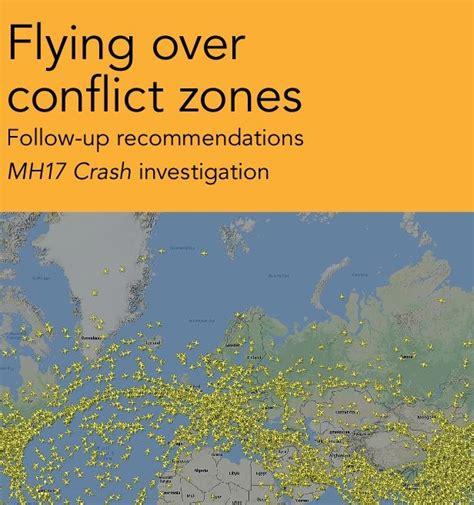
In the summer of 2014, Ukraine’s airspace was partially closed due to ongoing conflict. Initial assessments indicated that rebel forces had MANPADS capable of reaching up to 4,500 meters, prompting authorities to restrict airspace below FL260 to all but state aircraft. This limitation later expanded to include all airspace below FL320 to create a safer buffer between state and civilian aircraft. Authorities did not perceive a threat to civil aircraft above FL260 and felt there was no need for a complete airspace closure in the conflict zone. Most operators considered the open airspace to be safe, allowing numerous international carriers to operate above the restricted zone. On July 17, 2014, Malaysian Airlines flight MH17 was tragically shot down while cruising at FL330, a level deemed safe. The weapon used was not part of the initial threat assessment. Following this incident, full airspace closure was implemented.
Four days after the crash, the United Nations Security Council unanimously passed Resolution 2166, condemning the attack and supporting an independent international investigation. The Dutch Safety Board led the investigation, adhering to international regulations for accident inquiries (ICAO Annex 13). Countries involved included the Netherlands, Ukraine, Malaysia, the United States, the United Kingdom, Australia, and Russia. The complete report from the Dutch Safety Board is available for further reading.