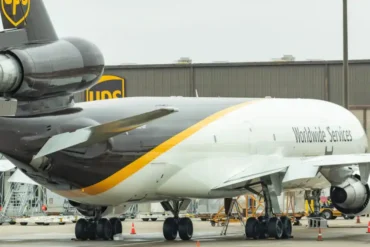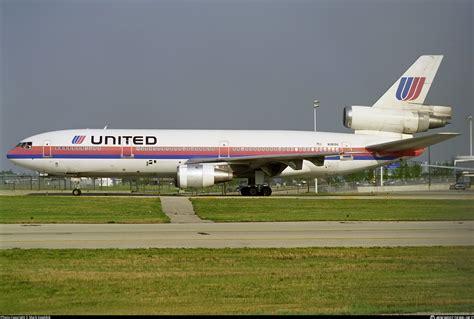
During the late 1960s and throughout the 1970s, European airlines faced a strategic dilemma that would shape the future of international aviation. Demand for long-haul travel was growing rapidly, yet many routes lacked the passenger volumes necessary to justify operating giant jumbo jets. While the Boeing 747 captured public imagination with its unprecedented size and capacity, many European carriers required something entirely different: an aircraft capable of flying vast intercontinental distances while remaining profitable on routes with moderate passenger demand. The answer arrived in the form of the McDonnell Douglas DC-10, a three-engine widebody that quietly became one of the most influential aircraft in the development of modern European long-haul networks.
The DC-10 never enjoyed the cultural fame of the Boeing 747, nor did it become a symbol of national prestige in the same way as Concorde. Yet behind the scenes, it performed a far more important role for numerous European carriers. It provided the operational flexibility needed to connect secondary cities and emerging international markets at a time when airline economics were becoming increasingly complex. Its combination of range, capacity, and efficiency allowed airlines to expand globally without relying on enormous passenger volumes.
As fuel prices fluctuated, economic uncertainty spread across international markets, and competition intensified, the DC-10 emerged as a practical solution for airlines seeking sustainable growth. It was not merely another widebody aircraft. It became the bridge between the early jet age and the highly efficient global networks that would define commercial aviation in the decades ahead.
The European Airlines That Needed Something Different
For many European flag carriers, the arrival of widebody aircraft created both opportunities and challenges. Long-haul travel demand was increasing, particularly across the North Atlantic, Africa, the Middle East, and Asia. However, most European airlines operated from countries with relatively small populations compared to the United States.
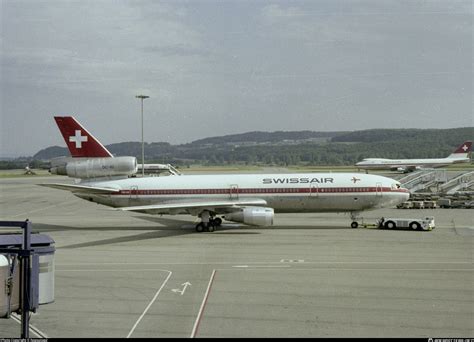
Routes originating from cities such as Amsterdam, Zurich, Copenhagen, and other European hubs often lacked the traffic necessary to fill a Boeing 747 on a daily basis. Airlines needed frequency and flexibility rather than sheer capacity. Operating half-empty jumbo jets was financially unsustainable, particularly during periods of economic instability and rising fuel costs.
The DC-10 offered an ideal middle ground. It provided true intercontinental capability while carrying significantly fewer passengers than a 747. This allowed airlines to maintain profitable service on routes where demand was strong enough for long-haul operations but insufficient for a jumbo jet.
The aircraft’s economics transformed network planning. Airlines could establish services to destinations that previously seemed too risky or too small for widebody operations. Instead of concentrating traffic into a handful of major routes, carriers could diversify their networks and connect more cities directly to international markets.
The KSSU Consortium and a New Approach to Fleet Management
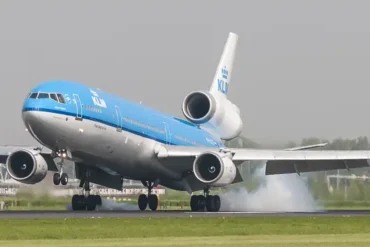
One of the most remarkable chapters in the DC-10’s European success story was the formation of the KSSU consortium. This partnership united four major airlines: KLM, Swissair, SAS, and UTA. The alliance represented an innovative response to the enormous costs associated with acquiring and maintaining modern widebody aircraft.
Rather than operating independently, the participating airlines standardized their DC-10 fleets to an extraordinary degree. Aircraft delivered to one member airline featured virtually identical configurations to those delivered to another. Cockpit layouts, cabin equipment, maintenance procedures, and technical specifications were harmonized across the consortium.
This level of standardization generated substantial operational efficiencies. Maintenance expertise could be shared across national borders, reducing duplication and lowering costs. KLM assumed responsibility for General Electric CF6 engine overhauls, Swissair specialized in heavy airframe maintenance, and SAS concentrated on component support and technical services.
The arrangement effectively created one of the aviation industry’s earliest examples of multinational fleet optimization. Long before global airline alliances became commonplace, these carriers were already demonstrating how cooperation could improve competitiveness in an increasingly demanding market.
Engineering the Long-Range Trijet
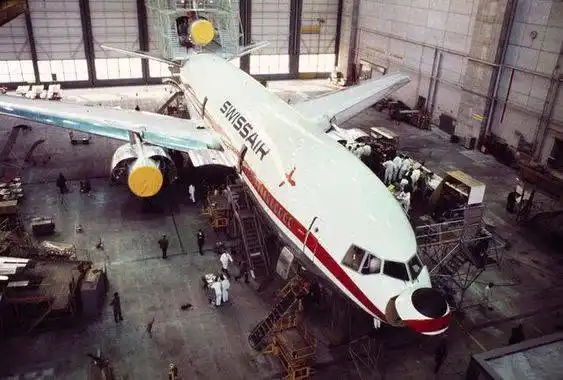
The version of the DC-10 selected by many European carriers was specifically designed for long-range operations. To meet the demands of intercontinental flying, engineers significantly increased the aircraft’s fuel-carrying capability.
Additional fuel capacity allowed the aircraft to operate routes exceeding 5,400 nautical miles. However, carrying larger fuel loads dramatically increased the aircraft’s weight. The maximum takeoff weight climbed to approximately 580,000 pounds, creating new engineering challenges.
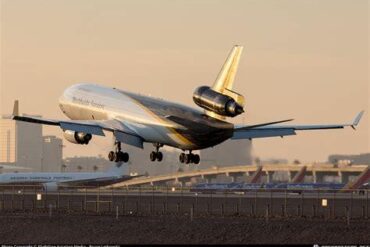
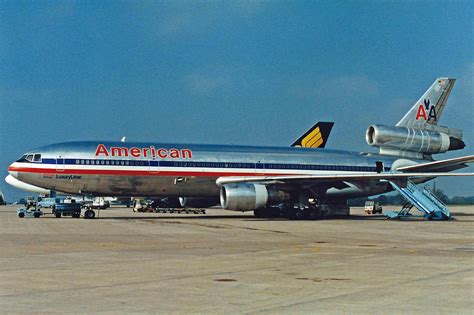
To distribute this additional weight effectively, McDonnell Douglas introduced a distinctive centerline landing gear assembly beneath the fuselage. This additional two-wheel gear leg helped spread loads more evenly during takeoff and landing, reducing stress on airport infrastructure and improving operational flexibility.
The modification became one of the most recognizable features of the long-range DC-10 variants. More importantly, it enabled airlines to exploit the aircraft’s extended range without compromising safety or airport compatibility.
These structural improvements transformed the DC-10 into a genuine long-haul workhorse capable of linking Europe with destinations across multiple continents.
Early Safety Challenges and the Road to Recovery
Despite its operational strengths, the DC-10’s early years were overshadowed by serious safety concerns. The most significant issue involved the cargo door locking mechanism, which contained a potentially catastrophic design flaw.
The original system could allow the external cargo door to appear secured even when internal locking pins were not fully engaged. Under certain conditions, cabin pressurization forces could cause the door to fail during flight, leading to explosive decompression.
The consequences became tragically evident in the loss of Turkish Airlines Flight 981, one of the most devastating accidents in aviation history. The disaster intensified scrutiny of the aircraft and raised questions about its long-term viability.
European operators responded aggressively. Airlines implemented enhanced inspection procedures, strengthened maintenance oversight, and demanded permanent design improvements. McDonnell Douglas redesigned critical components, introduced visual verification systems, and reinforced structural elements surrounding the cargo door mechanism.
At the same time, airlines expanded pilot training programs to address complex emergency scenarios. Crews received additional instruction focused on aircraft control following hydraulic system failures and other critical events.
These combined efforts gradually restored confidence in the aircraft. Over time, the DC-10 evolved from a controversial airliner into a respected and dependable member of numerous long-haul fleets.
The Aircraft That Bypassed Long-Haul Restrictions
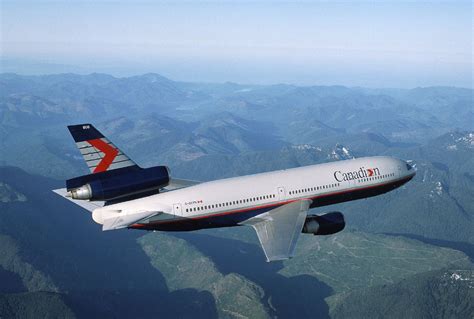
The DC-10 arrived during an era when aviation regulations heavily influenced route planning. Before the introduction of modern ETOPS standards, twin-engine aircraft faced strict limitations when operating over oceans and remote regions.
Under the widely applied 60-minute rule, twin-engine airliners could not fly routes that placed them more than one hour from a suitable diversion airport. This restriction severely limited their ability to operate many transoceanic services.
Four-engine aircraft such as the Boeing 747 faced no such limitations, but their operating economics often made them impractical for thinner routes. The DC-10’s three-engine configuration provided an elegant solution.
Its trijet design allowed unrestricted access to many long-haul routes while consuming significantly less fuel than large four-engine alternatives. This capability gave European airlines an important competitive advantage.
KLM used the aircraft extensively to expand services from Amsterdam into the Caribbean and beyond. Swissair employed the DC-10 to strengthen links between Zurich and growing markets in Africa and South America. Other operators similarly leveraged its capabilities to reach destinations that would have been difficult or uneconomical with alternative aircraft.
The aircraft effectively enabled a generation of European airlines to become global carriers despite the limitations imposed by geography, market size, and regulation.
Life Inside the Cockpit
Flying a DC-10 was fundamentally different from operating modern airliners. The cockpit required a three-person crew consisting of a captain, first officer, and flight engineer.
The flight engineer occupied a dedicated workstation packed with mechanical instruments, gauges, switches, and system controls. While the pilots focused on navigation and aircraft handling, the engineer monitored fuel management, electrical systems, hydraulic performance, and environmental controls.
This division of labor reflected the technological complexity of widebody aircraft during the era. Managing a long-haul flight involved constant monitoring and coordination among all three crew members.
Pilots frequently described the DC-10 as a demanding but rewarding aircraft. The center engine, mounted high within the vertical stabilizer, influenced handling characteristics in unique ways. Power adjustments could create noticeable pitch changes, particularly during landing.
Nevertheless, the aircraft earned a reputation for stability, predictability, and strong performance in turbulent conditions. Large control surfaces delivered responsive handling, while expansive cockpit windows provided excellent visibility during visual approaches into challenging airports around the world.
Many pilots who flew the type developed a lasting admiration for its capabilities and engineering sophistication.
Building Networks Across Continents
The true significance of the DC-10 becomes apparent when examining how it transformed airline route structures.
Before its arrival, many intercontinental services depended on either large-capacity aircraft or multi-stop routings. The economics of long-haul flying often forced airlines to concentrate traffic through a limited number of gateways.
The DC-10 changed this equation. Its balance of range and capacity allowed airlines to operate direct services to destinations that previously lacked sufficient demand for widebody aircraft.
Routes connecting Europe with West Africa, South America, the Caribbean, and parts of Asia became increasingly viable. Airlines could experiment with new markets while limiting financial risk. Successful routes could later be upgraded as demand increased, while less successful services could be adjusted without the massive losses associated with operating oversized aircraft.
In many respects, the aircraft laid the foundation for modern hub-and-spoke systems. It enabled airlines to feed traffic through strategic hubs while maintaining extensive international networks.
The long-haul connectivity enjoyed by many European cities today owes much to the operational flexibility introduced by the DC-10 era.
Reinvention Through Cargo and Military Service
As aviation technology advanced during the 1990s and 2000s, more efficient twin-engine aircraft gradually replaced the DC-10 in passenger service. Yet the aircraft’s story did not end with retirement from airline fleets.
Its strong structure, spacious fuselage, and excellent load-carrying capability made it exceptionally well suited for cargo conversion. Freight operators quickly recognized the value of transforming retired passenger aircraft into dedicated freighters.
The MD-10 modernization program extended the aircraft’s life even further. By integrating the digital cockpit systems developed for the MD-11, operators eliminated the need for a flight engineer. This significantly reduced operating costs and aligned the aircraft with contemporary airline practices.
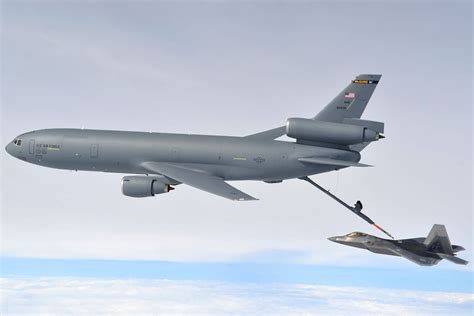
Beyond commercial freight operations, the airframe proved remarkably adaptable. The United States Air Force converted the design into the KC-10 Extender aerial refueling tanker, creating one of the world’s most capable military support aircraft.
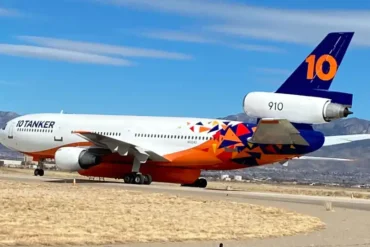
Specialized firefighting operators also adopted the platform. Massive retardant tanks transformed former airliners into aerial firefighting giants capable of delivering thousands of gallons of suppressant during a single mission.
These second careers demonstrated the extraordinary durability and versatility of the original design.
The Final Passenger Flight and an Enduring Legacy
By the early 2010s, the age of the passenger trijet was drawing to a close. Modern twin-engine aircraft offered lower fuel consumption, advanced avionics, and reduced operating costs. Most airlines had already retired their DC-10 fleets.
The final chapter unfolded in February 2014 when Biman Bangladesh Airlines operated the last scheduled passenger services using a DC-10-30. Aviation enthusiasts from around the world traveled to experience the aircraft one final time before its departure from commercial passenger operations.
Those farewell flights represented more than the retirement of an aging airliner. They marked the conclusion of a pivotal chapter in aviation history.
The DC-10 never achieved the iconic public image of some of its contemporaries, yet its impact was profound. It enabled European airlines to expand internationally during a period of regulatory constraints, economic uncertainty, and evolving passenger demand. It connected continents, opened new markets, and demonstrated that long-haul flying could be both reliable and financially sustainable without relying on enormous aircraft.
Today, the architecture of many European long-haul networks reflects principles first proven by the DC-10. The concept of serving secondary intercontinental routes with efficient widebody aircraft remains central to airline strategy. Modern twin-engine jets may dominate global skies, but the foundation they build upon was established decades earlier by a trijet that quietly changed the economics of international aviation.
The McDonnell Douglas DC-10 was never merely a stopgap between generations of aircraft. It was the machine that allowed a collection of ambitious European airlines to think globally, compete internationally, and construct the long-haul networks that continue to shape air travel in the twenty-first century.