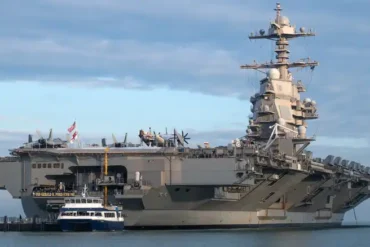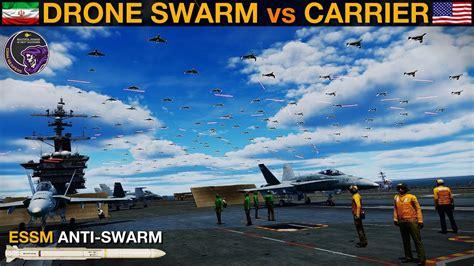
Modern naval power is being quietly rewritten by machines that fit in backpacks and launch from pickup trucks. Drone swarms—cheap, networked, semi-autonomous clouds of aerial, surface, and underwater vehicles—are eroding the assumptions that once made aircraft carriers the ultimate symbol of power projection. The carrier’s massive deck, once a floating assertion of dominance, has become a beacon for sensors, satellites, and algorithms that never blink. The threat is not one heroic drone slipping past defenses; it is a coordinated, adaptive mass that forces defenders to spend more to shoot than attackers spend to launch. That asymmetry gnaws at deterrence like rust on steel.
Carriers rose to dominance in the nuclear age because they compressed mobility, strike range, and logistics into a single, resilient system. Eleven U.S. carriers still anchor alliances across oceans, while China accelerates carrier construction to expand its own blue-water reach. Yet the strategic environment around these giants has shifted. Artificial intelligence now stitches reconnaissance to targeting in near real time, while robotics shrinks the cost of mass. What once required nation-state budgets can now be assembled by smaller militaries and non-state actors. The battlefield has widened into a sensor-saturated ocean where detection is constant and concealment is temporary.
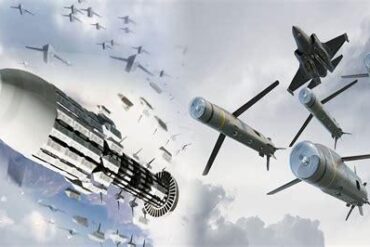
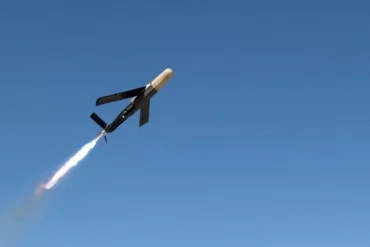
Drone swarms magnify this shift by changing how attacks are composed. A swarm is not merely many drones at once; it is a collective that distributes sensing, adapts routes, and reassigns targets when defenders respond. Some units probe defenses, others loiter to exhaust interceptors, and still others slip low over the waterline or emerge from below the surface. The result is a living pressure system that tests every seam in layered defenses, from radar coverage gaps to human reaction time. Even if “true” fully autonomous swarms remain an emerging capability, today’s coordinated salvos already impose brutal cognitive and economic strain on carrier strike groups.
Why Drone Swarms Are So Dangerous to Aircraft Carriers
The carrier’s size, once its theatrical advantage, now makes it easy to find and hard to hide. Satellites, maritime patrol aircraft, over-the-horizon radar, and commercial tracking data collapse the ocean’s anonymity. In contested chokepoints such as the Taiwan Strait, maneuver room is constrained, and speed differentials favor the attacker’s ability to cue follow-on strikes. A carrier group’s defenses are formidable, but they are finite. Missiles, close-in weapons, electronic warfare, and combat air patrols must be orchestrated perfectly under saturation conditions that degrade decision-making. The swarm thrives on this friction, forcing defenders to choose which threats to prioritize while new ones keep arriving.
The economic mismatch sharpens the blade. Interceptor missiles cost millions; many attack drones cost tens of thousands or less. When defenders expend high-value munitions on low-cost attackers, the exchange rate favors the offense. This is not just a budget problem; it is an operational tempo problem. Sustained defense drains magazines and maintenance cycles, while attackers can replenish from distributed manufacturing and improvised launch platforms. The swarm’s most potent weapon is not its warhead but its arithmetic.
Drone Swarm Warfare in Action: Lessons from Recent Conflicts
Contemporary conflicts have supplied a laboratory for this transformation. In the Black Sea, unmanned surface vehicles and aerial drones demonstrated how large ships can be harried, tracked, and struck by platforms far smaller and cheaper than traditional weapons. In Ukraine and the Middle East, drones have collapsed the distance between reconnaissance and strike, compressing kill chains into minutes. These theaters reveal the swarm logic: combine cheap platforms with persistent sensing, saturate defenses, and exploit the moments when humans and systems fall out of sync. Naval planners watch these lessons with unease because carriers, by design, concentrate value in one place.
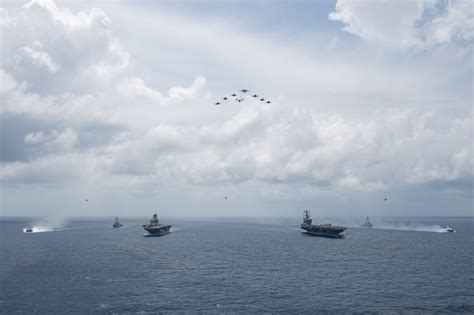
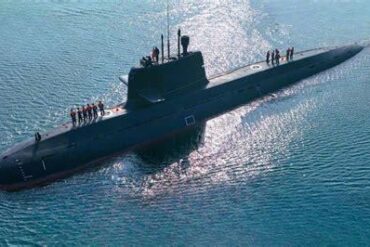
The danger compounds when swarms operate across domains. Aerial drones distract radar and interceptors, surface drones skim wave tops to threaten the hull, and underwater vehicles hunt propellers and sonar domes. Each domain stresses different defensive layers, but the coordination between them multiplies the strain. The carrier remains resilient, yet resilience now depends on systems that must work flawlessly under saturation, night, weather, and electronic attack. The ocean, long a buffer, has become a highway for low-cost autonomy.
Cost Asymmetry and the Economics of Saturation Attacks
Defense planners have always worried about magazine depth, but swarms turn magazine depth into destiny. When interceptors cost orders of magnitude more than attackers, even a tactically successful defense can be strategically losing. Attackers can afford to miss; defenders cannot afford to overspend. This asymmetry pressures navies to find defenses that flip the cost curve. Without that reversal, deterrence erodes because adversaries can impose attrition without committing equivalent resources.
Manufacturing trends deepen the problem. Additive manufacturing and modular electronics allow rapid production of expendable drones at scale. Distributed launch—from small boats, coastal vehicles, or even repurposed commercial craft—complicates attribution and preemption. The swarm’s logistics footprint is light; the carrier’s is heavy. That imbalance shapes the strategic calculus long before the first drone leaves a rail.
How Navies Are Defending Against Drone Swarms
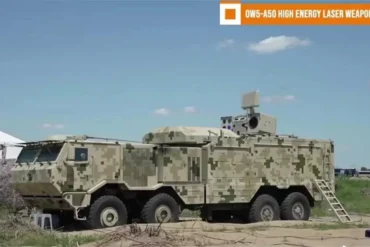
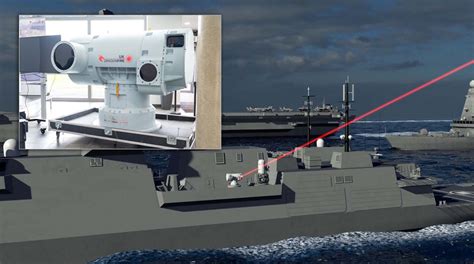
Navies are not passive in the face of this shift. Directed-energy weapons such as shipborne lasers promise near-zero marginal cost per shot once installed, limited primarily by power generation and cooling. High-energy lasers can engage drones at the speed of light, offering precision and deep magazines for prolonged encounters. Microwave systems extend the idea by attacking electronics directly, frying circuits or scrambling guidance without explosive intercepts. These tools aim to reverse the economics of defense, replacing million-dollar missiles with electricity and clever physics.
Electronic warfare adds another layer, disrupting navigation, communications, and coordination within swarms. Jamming and spoofing can fracture the collective intelligence of a swarm, turning a coordinated mass into confused individuals. Cyber techniques seek to hijack control links or poison data feeds. None of these methods is a silver bullet; each can be countered with hardened electronics, autonomy that degrades gracefully, or frequency agility. The defense becomes an evolving ecosystem rather than a single wall.
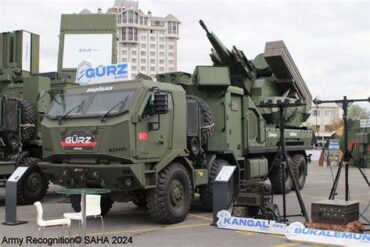
A provocative idea mirrors the threat: defensive swarms. Small interceptor drones can patrol the carrier’s perimeter, colliding with attackers or acting as mobile sensors to extend coverage into cluttered airspace. This shifts defense from static rings to dynamic clouds, matching the attacker’s flexibility with defender agility. The choreography between lasers, electronic warfare, kinetic interceptors, and defensive drones is the new art of carrier protection, demanding integration across sensors, command systems, and human operators.
The Future of Aircraft Carriers in the Age of Autonomous Swarms
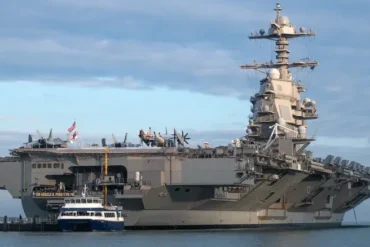
Carriers are not obsolete, but their role is mutating. Their survival will depend less on singular invulnerability and more on distributed resilience: wider sensor webs, deeper magazines that favor energy over explosives, and operational concepts that reduce predictability. Carriers may operate with greater standoff, leaning on long-range aircraft and networked partners, while escort ships evolve into energy-rich guardians designed for sustained defense. The carrier strike group becomes less a fortress and more a living system that adapts in real time to algorithmic opponents.
The deeper change is philosophical. Power projection once meant concentrating force to intimidate. In a world of swarms, concentration invites attention, and attention invites saturation. The future belongs to forces that can disperse value, regenerate cheaply, and coordinate across domains faster than an adversary can adapt. Aircraft carriers will remain potent symbols, but their endurance will be measured by how quickly navies can turn electricity, software, and autonomy into shields against clouds of clever machines.