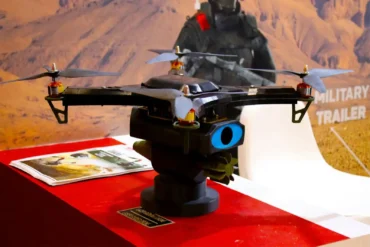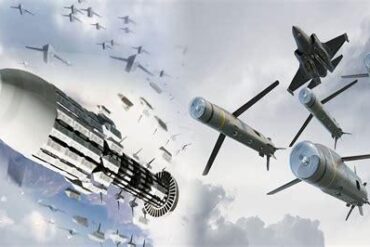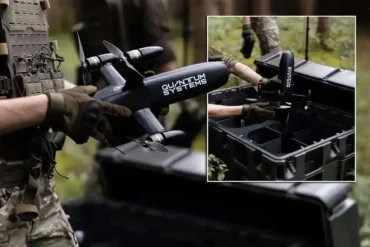
The rapid spread of low-cost unmanned aerial vehicles has reshaped modern air defense into a problem of arithmetic rather than elegance. Instead of rare, exquisite threats, militaries now face relentless waves of cheap autonomous drones designed to exhaust sensors, interceptors, and budgets. On January 8, 2026, Mach Industries announced Dart, a purpose-built counter-UAS system intended to restore balance by making sustained defense against mass drone swarms operationally and financially viable.
Recent conflicts have exposed a hard truth. Traditional missile-based air defenses remain lethal, but their magazines are finite and their interceptors expensive. When attackers can launch hundreds or thousands of small drones, defenders are forced into a losing exchange ratio. Dart is framed as a response to that mismatch, shifting the logic of air defense away from scarcity and toward endurance.
The system arrives as air defense planning increasingly assumes repetition rather than exception. Drone raids are no longer singular events; they are routine pressure tools. Dart is positioned to live in that reality, prioritizing throughput, scalability, and cost discipline over prestige performance metrics that matter less in swarm conditions.
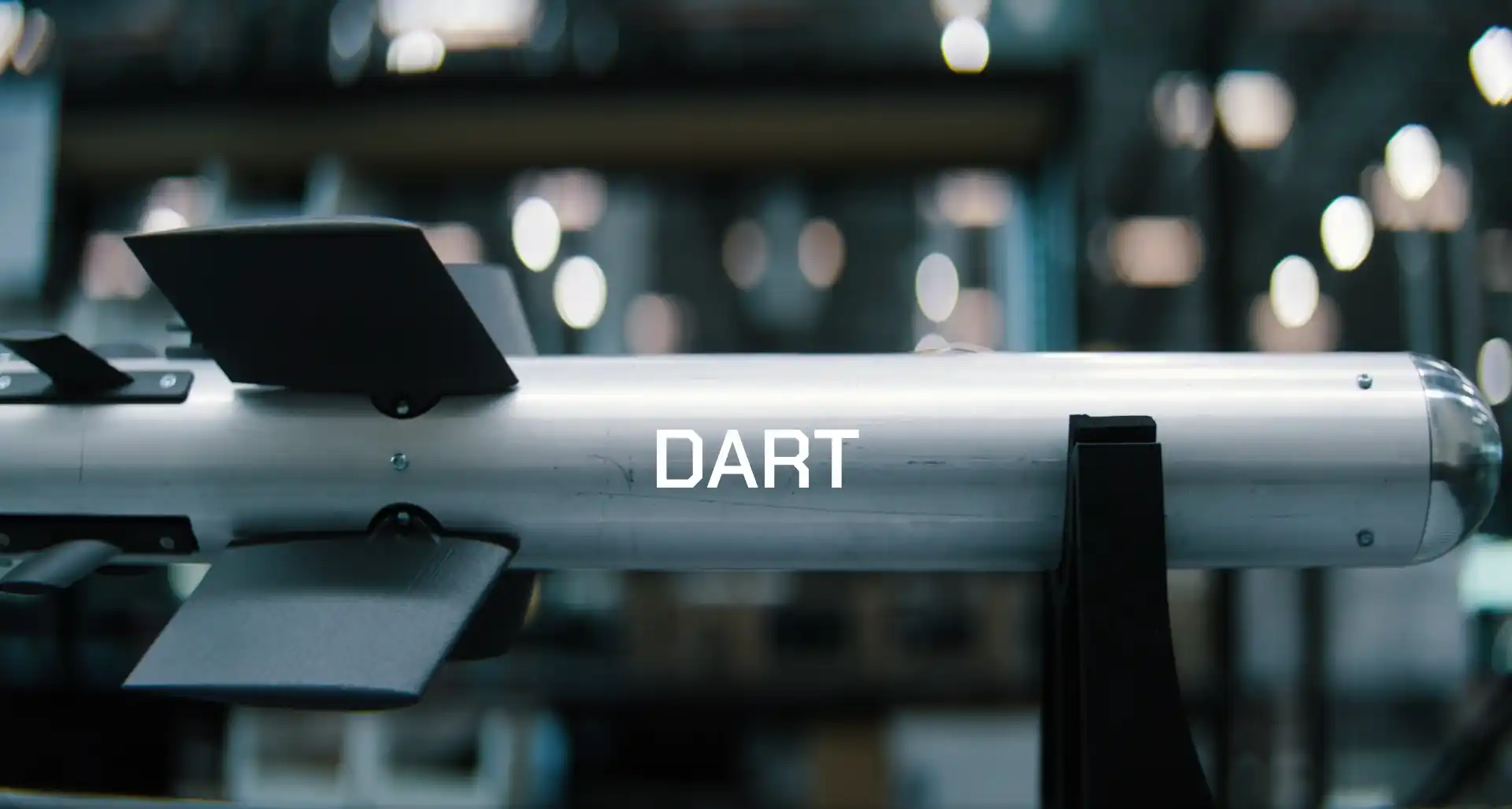
At its core, Dart is presented as a self-contained detect-to-engage package. It integrates detection and tracking, command-and-control, and an engagement layer built around an internally developed FMCW ground radar paired with low-cost kinetic interceptors. Mach emphasizes parallel engagements and high track capacity, allowing the system to prosecute many targets simultaneously rather than sequentially, a critical requirement when dozens of drones arrive nearly at once.
Unlike higher-tier systems designed to defend broad regions, Dart is conceived as a terminal interceptor, deployed directly at the asset being protected. This philosophy pushes defensive effects closer to airfields, ports, logistics hubs, command nodes, and critical infrastructure. Mach states that Dart can be mounted on vehicles, fixed structures, or launch stations, and scaled from single units to hundreds depending on threat density. Development reportedly began in mid-2024, the system is already flying, and in-theater intercept capability is targeted for 2026 through Mach’s vertically integrated Forge manufacturing ecosystem.
Dart’s most important differentiator is not novelty, but economics. In U.S. doctrine, Group 1–3 UAS categories cover the majority of small to tactical drones used for reconnaissance, harassment, and one-way attack missions. These systems sit in an uncomfortable gap. High-end surface-to-air missiles are effective but unsustainable for routine use, while guns and soft-kill options can be cheap yet constrained by geometry, weather, line-of-sight, and adversary countermeasures. Dart is pitched as a kinetic middle layer, affordable enough to fire repeatedly while retaining the reliability of physical interception.
Strategically, this positioning reflects a broader shift in how air defense is evaluated. The decisive metric is no longer whether a system can intercept a target, but whether it can keep intercepting tomorrow, next week, and next month without collapsing under cost or inventory pressure. Saturation attacks transform air defense into an endurance contest, where resilience matters as much as accuracy.
This logic aligns with emerging concepts of distributed basing and national resilience. Reporting on Europe’s eastern frontier has highlighted the danger of firing very expensive interceptors at very cheap drones, effectively allowing attackers to drain defensive stockpiles at will. A scalable terminal layer like Dart supports sustained operations under repeated raids, enabling higher-tier systems to focus on more complex threats while lower-tier defenses absorb the swarm.
Mach Industries’ approach also reflects industrial realities. By emphasizing manufacturability, modular deployment, and vertical integration, the company signals that counter-drone defense must be produced at scale, not artisanal volumes. In a conflict defined by consumption, production capacity becomes a combat multiplier. Dart is as much an industrial proposition as a tactical one.
Whether Dart ultimately reshapes the counter-UAS landscape will depend on operational performance under real swarm conditions. Claims of high throughput and affordability must translate into consistent intercept rates in cluttered, contested environments. Yet the direction is unmistakable. The market is demanding defenses that can match the attacker’s volume, not just their sophistication.
The message embedded in Dart’s debut is blunt and timely. When air threats can be bought by the thousand, defense systems must be designed to defend by the thousand as well.