The modern aircraft carrier is no longer just a floating airfield—it is a self-contained projection of national power, capable of shaping geopolitical outcomes without ever touching land. At the center of this capability lies a deceptively simple metric: how many aircraft a carrier can effectively deploy and sustain in combat. Not theoretical limits. Not brochure numbers. But real, operational capacity under pressure.
In 2026, the United States Navy operates two dominant carrier classes: the battle-proven Nimitz-class and the revolutionary Ford-class. Both displace over 100,000 tons, both carry dozens of aircraft, and both form the backbone of global U.S. naval strategy. Yet the real difference lies in how efficiently they transform aircraft capacity into continuous combat sorties.
This ranking cuts through raw numbers and focuses on what truly matters—active aircraft capacity, sortie generation, and operational efficiency. These are the carriers that don’t just carry aircraft—they fight with them at scale.
5. USS George H.W. Bush (CVN-77) — Transitional Powerhouse with Refined Deck Efficiency
The final ship of the Nimitz-class lineage, USS George H.W. Bush represents a fascinating hybrid—a bridge between legacy design and next-generation innovation. Commissioned in 2009, it carries the DNA of earlier carriers while quietly introducing features that would later define the Ford-class.
With a typical deployment of around 70 aircraft, and surge capacity exceeding 80, CVN-77 sits comfortably among the largest operational carriers by usable air wing size. But what sets it apart isn’t just numbers—it’s how intelligently those aircraft are managed.
The ship’s aft-shifted island structure is a subtle but powerful upgrade. By freeing up valuable deck space, it improves aircraft taxiing, reduces congestion, and increases launch efficiency. In high-tempo operations, these incremental improvements compound into a measurable increase in sortie rates.
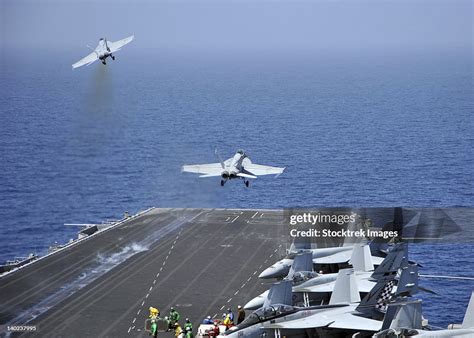
Operationally, the carrier has proven its worth in real combat environments, particularly in the Middle East. Its air wing typically includes:
- F/A-18E/F Super Hornets for strike and air superiority
- EA-18G Growlers for electronic warfare
- E-2D Hawkeyes for airborne early warning
- MH-60 Seahawks for multi-role support
The result is a balanced and lethal air package capable of sustained operations. While it doesn’t match Ford-class efficiency, CVN-77 demonstrates how smart design tweaks can extract more power from the same aircraft count.
4. USS Theodore Roosevelt (CVN-71) — Endurance King with Combat-Proven Capacity
Few carriers embody operational resilience like USS Theodore Roosevelt. Commissioned in 1986, this ship has repeatedly demonstrated that capacity is meaningless without endurance—and CVN-71 excels at both.
In real deployments, it carries 60 to 75 aircraft, though its theoretical maximum approaches 85. The gap between those numbers tells an important story: modern naval warfare prioritizes flexibility and sustainability over raw volume.
What elevates this carrier is its ability to stay in the fight longer than almost any platform afloat. During operations following the September 11 attacks, it remained at sea for 159 consecutive days, launching missions into Afghanistan without refueling or port calls.
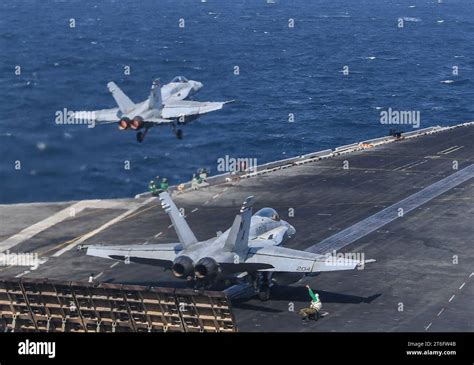
Its air wing composition mirrors modern naval doctrine:
- Strike fighters for offensive reach
- Electronic warfare aircraft to suppress defenses
- Airborne command-and-control platforms
- Helicopters for anti-submarine and logistics roles
Following its Refueling and Complex Overhaul (RCOH), the ship now supports the F-35C Lightning II, dramatically increasing the combat effectiveness per aircraft. This is where the equation shifts: fewer aircraft, but each one significantly more capable.
CVN-71 proves that true carrier power is measured in sustained output, not just deck parking space.
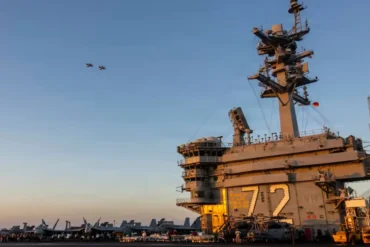
3. USS Abraham Lincoln (CVN-72) — Adaptive Strike Platform in Modern Conflict Zones
USS Abraham Lincoln represents the operational versatility that defines the Nimitz class at its peak. Commissioned in 1989, it maintains a standard deployment of around 70 aircraft, with the ability to scale upward when required.
What distinguishes CVN-72 is its adaptability under real-world pressure. From Iraq and Afghanistan to ongoing tensions in the Indo-Pacific and Middle East, this carrier has consistently demonstrated the ability to reconfigure its air wing based on mission demands.
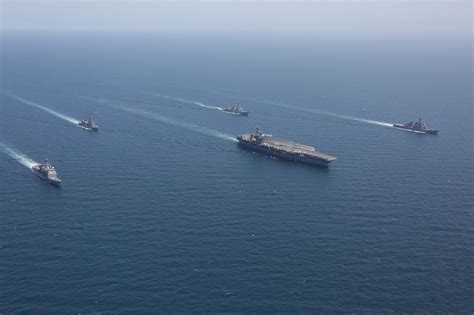
This flexibility reflects a deeper shift in naval aviation strategy. Rather than maximizing aircraft count, the focus has moved toward optimizing the mix:
- Stealth fighters like the F-35C for deep strike and ISR
- Super Hornets for multirole operations
- Growlers for electronic dominance
- Hawkeyes for battlefield coordination
The integration of fifth-generation aircraft means that even with a similar air wing size to older deployments, the overall combat output has increased significantly.
CVN-72 demonstrates that in modern warfare, capacity is not static—it evolves with technology, doctrine, and mission requirements.
2. USS John F. Kennedy (CVN-79) — Next-Generation Carrier with Maximum Air Wing Potential
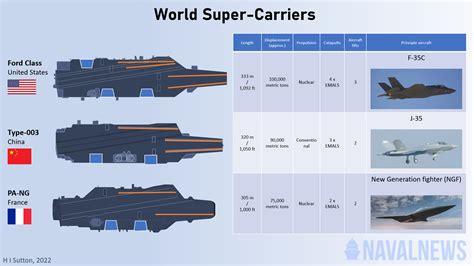
USS John F. Kennedy represents the future of naval aviation, even before full operational deployment. As the second Ford-class carrier, it is designed to carry up to 90 aircraft, matching the highest capacity in the U.S. fleet.
But the real story lies beneath the deck.
This carrier introduces transformative systems:
- Electromagnetic Aircraft Launch System (EMALS)
- Advanced Arresting Gear (AAG)
- Enhanced flight deck layout
- Increased electrical power generation
These technologies don’t just modernize the carrier—they fundamentally redefine how quickly and efficiently aircraft can be launched and recovered.
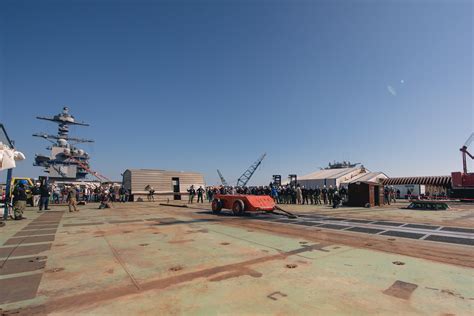
Compared to steam catapults, EMALS enables smoother acceleration, reduces wear on aircraft, and allows for faster launch cycles. Combined with improved deck flow, this translates into a dramatic increase in sortie generation potential.
While still undergoing testing as of 2026, CVN-79 is expected to become a cornerstone of future carrier strike groups. Its design anticipates:
- Integration of unmanned systems like the MQ-25 Stingray
- Increased reliance on stealth aircraft
- Higher operational tempo with reduced crew
The result is a carrier that doesn’t just carry more aircraft—it uses them more effectively than any predecessor.
1. USS Gerald R. Ford (CVN-78) — The Most Powerful Aircraft Carrier Ever Built
At the top of the list stands USS Gerald R. Ford, the most advanced and capable aircraft carrier in the world. Commissioned in 2017, it combines maximum aircraft capacity—up to 90—with unmatched operational efficiency.
This is where the definition of “largest” evolves.
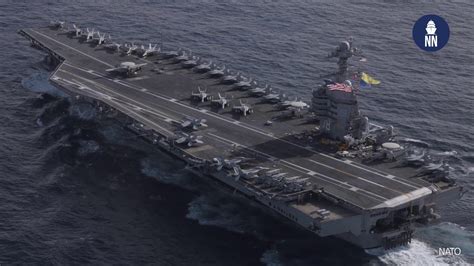
While its raw aircraft capacity slightly exceeds that of the Nimitz class, the real advantage lies in sortie generation:
- ~160 sorties per day under normal conditions
- Up to 270 sorties during surge operations
That’s a massive leap over the roughly 120 daily sorties typical of Nimitz-class carriers.
This performance is enabled by a combination of factors:
- Optimized flight deck layout
- Advanced launch and recovery systems
- Reduced crew workload through automation
- Greater onboard power for future technologies
Its air wing includes a multi-layered force structure:
- F-35C Lightning II for stealth strike
- F/A-18 Super Hornets for multirole missions
- EA-18G Growlers for electronic warfare
- E-2D Hawkeyes for command and control
- MH-60 Seahawks for support roles
Looking ahead, the integration of the MQ-25 Stingray will extend the range of carrier-based aircraft, effectively increasing the operational reach of the entire air wing.
What makes CVN-78 truly dominant is not just its capacity—but its ability to maximize every aircraft’s impact. It turns numbers into relentless, sustained combat power.
Why Aircraft Capacity Alone No Longer Defines Carrier Power
It’s tempting to rank carriers purely by how many aircraft they can carry. But modern naval warfare has outgrown that simplicity. Today, the real metric is effective capacity—a combination of:
- Aircraft count
- Sortie generation rate
- Maintenance efficiency
- Air wing composition
- Technological integration
The Ford-class carriers illustrate this shift perfectly. Even with only a modest increase in aircraft capacity, they deliver dramatically higher combat output.
Meanwhile, the Nimitz-class carriers continue to prove their value through reliability, endurance, and adaptability, even as they gradually approach retirement.
The Strategic Impact: Global Reach Without Borders
These supercarriers are more than engineering marvels—they are strategic instruments of global influence. Whether operating in the Indo-Pacific or the Middle East, they allow the United States to:
- Project airpower without relying on foreign bases
- Respond rapidly to emerging crises
- Maintain persistent presence in contested regions
In this context, aircraft capacity becomes a force multiplier, enabling sustained operations far from home.
Final Perspective: The Evolution of Naval Air Power
From the battle-tested decks of Nimitz-class carriers to the cutting-edge systems of the Ford-class, the evolution of U.S. supercarriers reflects a clear trajectory: more efficiency, more flexibility, and more combat power per aircraft.
The ranking of the top five largest carriers by active aircraft capacity reveals a deeper truth. The future of naval aviation isn’t just about carrying more—it’s about doing more with what you carry.
And right now, no platform embodies that philosophy better than the Ford-class supercarrier—a machine designed not just for dominance, but for decisive, sustained superiority in modern warfare.