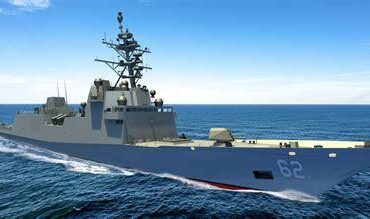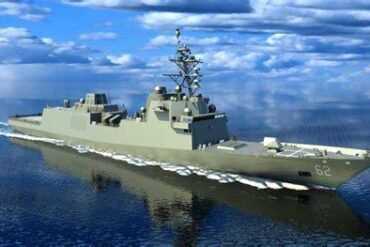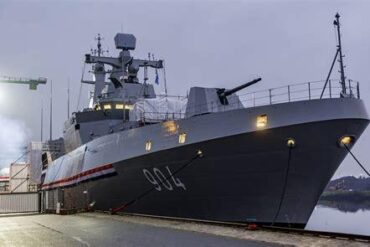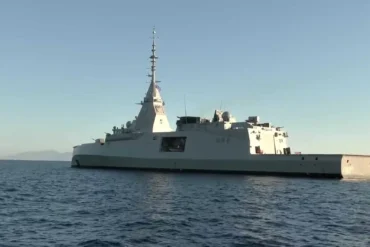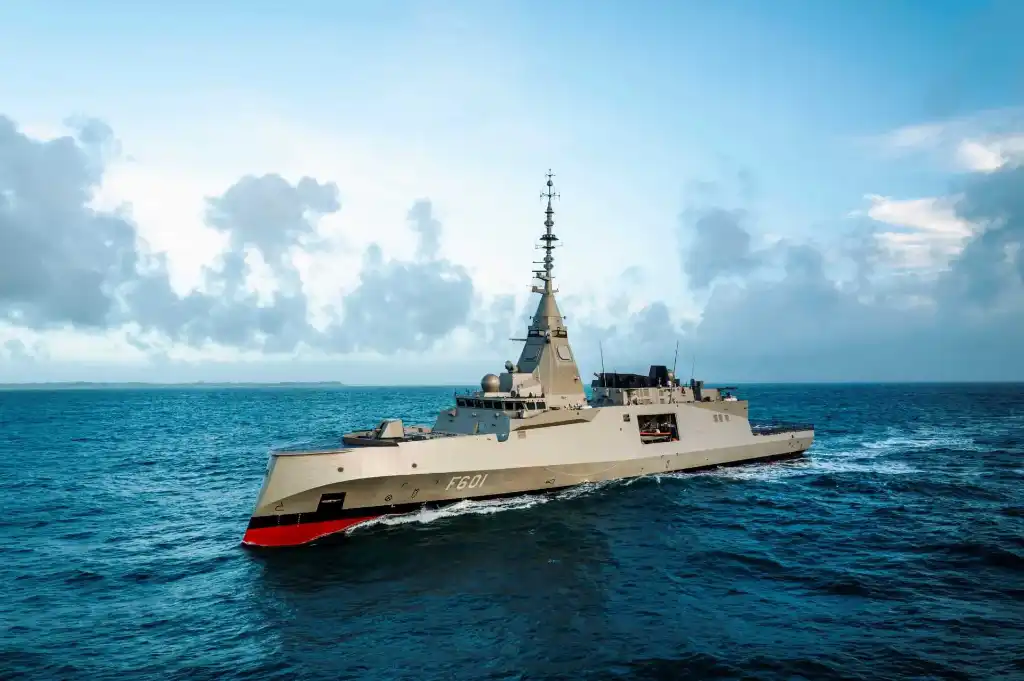
France has moved decisively to strengthen its strategic maritime partnership with Greece, proposing the construction of three additional Kimon-class frigates for the Hellenic Navy at a moment when Athens is reassessing its options following the effective collapse of the U.S. Navy’s Constellation-class frigate program. The offer is more than a shipbuilding proposal. It is a carefully structured industrial, political, and strategic package designed to lock in long-term naval interoperability, reinforce domestic shipbuilding capacity in Greece, and anchor French influence in the Eastern Mediterranean’s evolving security architecture.
The timing is not accidental. Greece has just inducted HS Kimon, its first newly built frigate in nearly three decades, into active service. At the same time, Washington’s troubled Constellation program has lost momentum amid cost overruns, design instability, and shifting U.S. Navy priorities. Into this gap steps Paris, offering not only hulls and systems, but continuity, homogeneity, and industrial sovereignty.
A Strategic Offer Rooted in Industrial Transfer, Not Just Hardware
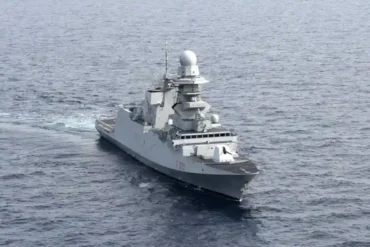
The French proposal centers on the local construction of three additional FDI HN (Frégate de Défense et d’Intervention – Hellenic Navy) frigates, known in Greek service as the Kimon class. Production would take place in Greek shipyards, with France committing to a substantial technology transfer and domestic industrial workshare. Industrial participation thresholds are framed above 30 percent, with some program estimates placing Greek involvement closer to 40 percent across construction, systems integration, and long-term support.
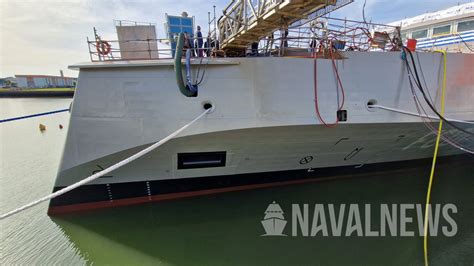
Unlike conventional export deals, this offer embeds Greek industry directly into the FDI supply chain. Salamis Shipyards and Skaramangas Shipyards are identified as preferred partners, building on work already underway since 2023, when Greek facilities began producing pre-outfitted hull blocks for both Greek and French frigates. These blocks have been delivered ahead of schedule, quietly strengthening Athens’ credibility as a reliable naval industrial partner.
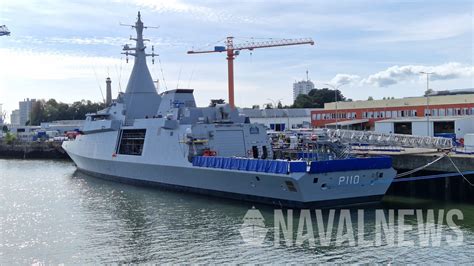
The question of prime contractor responsibility remains open, with discussions exploring whether Naval Group retains that role or whether a Greek shipyard could assume expanded leadership under French technical supervision. Capital investments, workforce expansion, and infrastructure upgrades form part of the ongoing negotiations, signaling that this is a long-term industrial alignment rather than a one-off procurement.
Why the Collapse of the U.S. Constellation Program Matters to Greece
Greece’s reassessment of its frigate options follows the unraveling of the U.S. Constellation-class program, which was initially viewed in Athens as a potential future pathway for fleet renewal. Persistent design changes, spiraling costs, and delayed timelines ultimately undermined confidence in the program’s export viability. For a navy seeking rapid modernization under intense regional pressure, uncertainty is a luxury it cannot afford.
The French proposal arrives with a crucial advantage: predictability. The Kimon-class is already under contract, already in production, and already entering service. Training pipelines are established, logistics chains are being built, and sustainment frameworks are contractually defined. Choosing additional FDI hulls avoids the operational friction that comes with introducing a fundamentally different combat system, propulsion architecture, and sensor suite into a relatively compact fleet.
From an operational economics perspective, homogeneity matters. Standardized platforms reduce crew training time, simplify certification, streamline spare parts inventories, and enable synchronized upgrades. For the Hellenic Navy, which must maintain readiness across the Aegean and Eastern Mediterranean simultaneously, these efficiencies translate directly into operational availability.
Industrial Continuity and the Logic of Fleet Homogeneity
Acceptance of the French offer would bring Greece’s inventory to seven or potentially eight Kimon-class frigates, forming the backbone of its surface combatant force well into the 2040s. This scale supports economies of learning, allowing Greek crews, engineers, and planners to master a single high-end combat system rather than juggling multiple design philosophies.
Industrial continuity also plays a decisive role. A six-year Follow-on-Support agreement signed in November 2024 already covers frigates operated by both the French and Greek navies. Expanding the fleet strengthens the business case for local maintenance, mid-life upgrades, and eventual capability insertions, keeping skilled labor employed and reducing dependence on foreign yards.
The proposal also aligns with broader French willingness to pursue additional naval programs in Greece, including Barracuda-class submarines, unmanned surface and subsurface systems, and advanced maritime surveillance platforms. High-level political engagement, including visits by Naval Group CEO Pierre Éric Pommellet and French Armed Forces Minister Catherine Vautrin, underscores the strategic weight Paris assigns to the relationship.
HS Kimon: A Symbolic and Operational Turning Point
The arrival of HS Kimon on January 15, 2026, marked more than the commissioning of a ship. It closed a 28-year gap in Greece’s acquisition of new frigates and signaled a generational shift in naval capability. The vessel’s delivery followed a naming ceremony in Lorient in December 2025, a transit to Brest for full weapons and sensor integration, and final acceptance at Salamis.
The induction was accompanied by a symbolic escort involving Greece’s political and military leadership, deliberately linking naval heritage with modern deterrence. It also dovetailed with Athens’ broader rearmament framework, which includes 24 Rafale fighters, a €25 billion defense modernization plan through 2036, and the emerging Achilles’s Shield integrated air and missile defense concept.
Technical Weight: Why the Kimon-Class Fits Greek Strategic Needs
The Kimon-class is not a lightly armed patrol frigate. With a displacement approaching 4,500 tonnes, a length of roughly 122 meters, and CODAD propulsion generating about 32 MW, it delivers a maximum speed of 27 knots, a range of 5,000 nautical miles at 15 knots, and endurance of up to 45 days. These characteristics are well matched to Greece’s dispersed maritime geography and extended surveillance requirements.
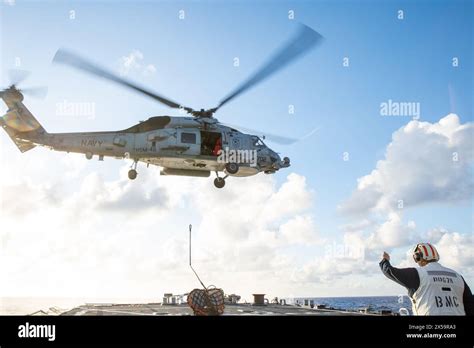
Aviation facilities support an MH-60R Seahawk helicopter and the Schiebel Camcopter S-100 unmanned air system, five of which are being procured to expand persistent ISR coverage. This manned-unmanned pairing significantly enhances anti-submarine and surface surveillance reach beyond the horizon.
The sensor suite is centered on the Sea Fire fixed-panel AESA radar, providing simultaneous air and surface tracking with high resilience against saturation attacks. Subsurface detection relies on the KingKlip hull-mounted sonar and the CAPTAS-4 towed array, a combination optimized for the complex acoustic conditions of the Eastern Mediterranean.
Weapons, Combat Systems, and the Standard II Evolution
Greek-configured Kimon-class frigates are more heavily armed than their initial French counterparts. The baseline configuration includes 32 Sylver A50 vertical launch cells for Aster 30 surface-to-air missiles, a 21-cell RAM Block 2B launcher, eight MM40 Block 3C Exocet anti-ship missiles, MU90 torpedoes, and a 76 mm Super Rapid gun supported by modern fire-control and electronic warfare systems.
The fourth ship, Themistoklis, will introduce a Standard II configuration, priced significantly below €1 billion for the hull excluding weapons. Planned upgrades include improved communications, enhanced electronic warfare, and expanded integration of smart munitions.
A phased Standard 2++ roadmap points even further ahead. Proposed enhancements include Sylver A70 cells for the long-range ELSA strategic missile, expanded ESM coverage, deeper integration of the S-100 UAV, AI-assisted threat detection, and tighter coupling between sensors, weapons, and command systems. Collectively, these upgrades transform the frigate from a point-defense asset into a force-level combat node.
A Broader Naval Modernization Context
The frigate proposal does not exist in isolation. Greece is simultaneously pursuing domestic construction of corvettes, life-extension of MEKO 200HN frigates to retain four hulls for at least 15 more years, replacement of aging fast attack craft, and refurbishment of patrol boats with modern sensors and weapons. Indigenous programs, such as the Agenor special operations craft, further emphasize a shift toward sovereign capability.
Against this backdrop, expanding the Kimon-class fleet offers coherence. It anchors modernization around a proven platform while leaving room for complementary capabilities to evolve alongside it.
France’s Calculated Bet on Long-Term Alignment
France’s proposal is ultimately a strategic bet. By offering ships, technology, and industrial partnership as a single package, Paris positions itself not merely as a supplier but as a long-term maritime ally. For Greece, the choice is about more than replacing hulls lost to age. It is about shaping a fleet that is interoperable, sustainable, and politically aligned with partners willing to share risk, knowledge, and commitment.
As the U.S. Constellation program falters, France’s Kimon-class offer stands out for its clarity and immediacy. In a region where naval power underwrites diplomacy, that clarity may prove decisive.