The Hellenic Navy is preparing for a significant leap in capability as Greece advances negotiations with Italy to acquire up to four FREMM Bergamini-class frigates, a deal expected to be finalized by April 2026. The proposed agreement follows a 2+2 acquisition framework, under which two ships would be transferred initially, with an option for two more vessels later in the decade. The move reflects Athens’ broader effort to modernize its maritime forces and reinforce its strategic posture in the Aegean Sea and Eastern Mediterranean.
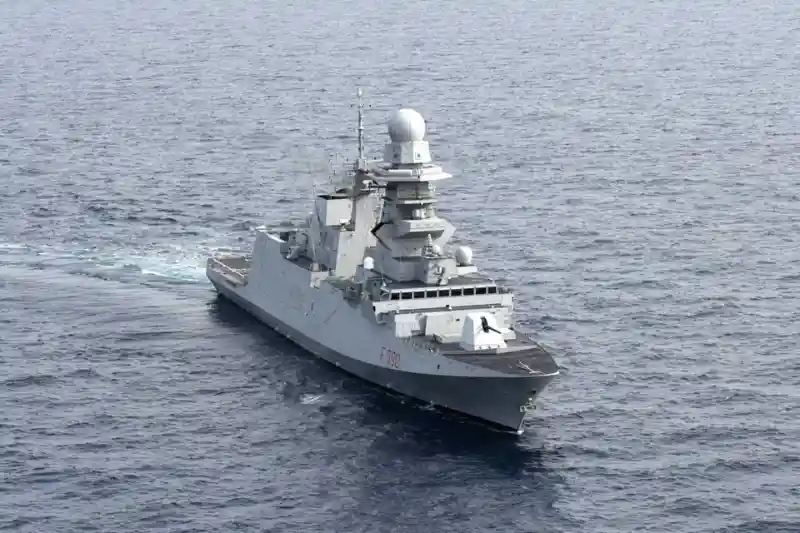
At the center of the negotiations are two Italian Navy ships, the ITS Carlo Bergamini and ITS Virginio Fasan, both advanced Anti-Submarine Warfare (ASW) variants of the FREMM class. These vessels, commissioned in the early 2010s, remain among the most capable multi-role frigates currently operating in European fleets. By integrating them into its naval inventory, Greece aims to rapidly enhance its operational capacity while avoiding the lengthy timelines associated with new shipbuilding programs.
The potential acquisition was confirmed by Greek Minister of National Defence Nikos Dendias, who indicated that discussions between Athens and Rome have progressed steadily since both countries signed a Memorandum of Cooperation on naval collaboration and a Declaration of Intent in September 2025. These agreements laid the diplomatic and industrial groundwork for the frigate transfer and framed the structure of the upcoming procurement contract.
Strategic Context Behind Greece’s Naval Expansion
The purchase of the Bergamini-class frigates forms a key component of Greece’s long-term defense roadmap known as Agenda 2030, a sweeping modernization initiative designed to overhaul multiple branches of the armed forces. The program includes investments in naval combatants, air defense systems, advanced aircraft, autonomous platforms, and command-and-control infrastructure, with an overall defense investment projected at roughly €28 billion between 2025 and 2036.
For the navy in particular, modernization has become urgent. Several of Greece’s existing warships, especially the Elli-class frigates, trace their origins to designs introduced during the late Cold War. While these vessels have undergone upgrades over the years, their aging systems and structural limitations make them increasingly difficult to sustain in a region where maritime competition is intensifying.
The FREMM acquisition offers Athens a practical bridge between aging ships and the next generation of naval assets currently under construction. Rather than waiting years for newly built platforms, Greece could integrate modern, combat-proven frigates within a much shorter timeframe.
Complementing the New Kimon-Class Fleet
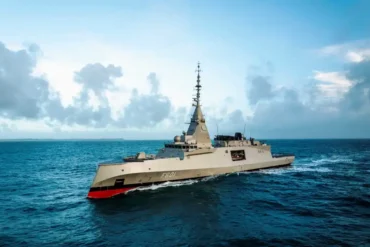
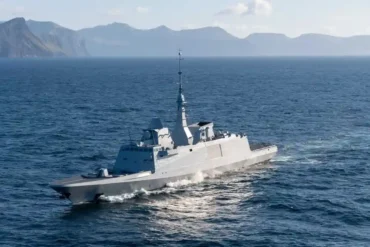
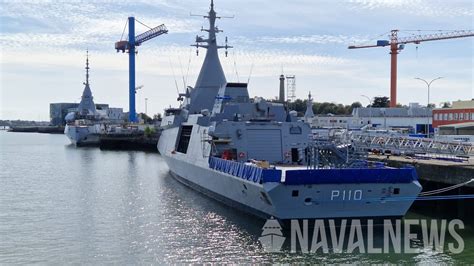
The Italian-built ships would not replace Greece’s newest frigate program but instead complement the upcoming Kimon-class vessels, which are currently being constructed in France. These ships, based on the FDI Belharra design, represent one of the most sophisticated naval platforms in Europe and are expected to provide advanced air defense capabilities for the Hellenic Navy.
Together, the Kimon-class, the modernized MEKO 200HN frigates, and the potential FREMM Bergamini additions would create a balanced fleet capable of conducting a wide range of missions.
The evolving Greek surface fleet would consist of:
- Four Kimon-class frigates under construction in France
- Four upgraded MEKO 200HN frigates undergoing modernization
- Two to four Italian FREMM Bergamini-class ships potentially entering service by the late 2020s
Such a structure would give Greece a modern fleet designed for network-centric warfare, allowing ships to share sensor data, coordinate missile engagements, and operate as part of integrated task groups.
Rapid Capability Gains Through Existing Warships
One of the most appealing aspects of the proposed deal is the immediate availability of the Italian vessels. Unlike new construction programs that can take many years from contract signing to commissioning, the two ships under consideration are already operational within the Italian Navy.
Greek naval delegations have conducted inspections in Italy, evaluating multiple units of the class including the ITS Carlo Margottini. These visits allowed Greek specialists to examine the ships’ combat systems, propulsion arrangements, and maintenance status before finalizing the acquisition decision.
Transferring ships already in service offers several advantages. Greece would gain:
- Rapid deployment capability, with ships entering service far sooner than new builds
- Proven operational reliability after years of Italian naval operations
- Immediate integration into NATO-compatible systems
In effect, the purchase acts as a strategic shortcut, enabling Greece to strengthen its naval presence during a period of heightened regional competition.
Technical Overview of the FREMM Bergamini-Class
The FREMM (Fregata Europea Multi-Missione) program was developed jointly by France and Italy as a new generation of multi-role warships designed for modern naval warfare. Italy’s Bergamini-class variant represents one of the most advanced interpretations of the design.
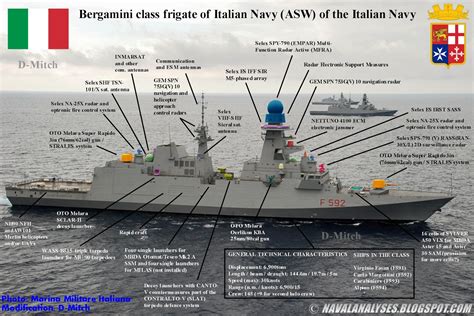
Each frigate measures approximately 144 meters in length and displaces around 6,500 tons at full load, placing it in the category of large multi-mission combatants. The ships are built to perform diverse missions ranging from air defense and anti-submarine warfare to surface strike and maritime security operations.
A defining characteristic of the design is its Combined Diesel-Electric and Gas (CODLAG) propulsion system. This arrangement pairs diesel-electric propulsion for quiet cruising with a gas turbine for high-speed maneuvers. The system offers two major benefits: reduced acoustic signatures during submarine hunting and the ability to reach speeds of approximately 27 knots when rapid response is required.
The ships also boast an operational range exceeding 6,000 nautical miles, enabling extended deployments across the Mediterranean and beyond without frequent refueling.
Advanced Sensors and Networked Combat Systems
Modern warships operate as floating sensor hubs, and the Bergamini-class is built around a sophisticated combat management architecture developed by Leonardo, one of Italy’s leading defense technology firms.
The sensor suite integrates an Active Electronically Scanned Array (AESA) multifunction radar, capable of detecting, tracking, and guiding weapons against multiple targets simultaneously. Unlike traditional rotating radars, AESA systems electronically steer their beams, enabling faster tracking and improved resistance to electronic interference.
Electronic warfare systems aboard the frigates provide threat detection, jamming, and countermeasure capabilities, allowing the ships to operate in environments saturated with radar signals and electronic surveillance.
Data-link connectivity allows the vessels to exchange real-time information with other naval ships, aircraft, and allied command networks, a capability that becomes particularly valuable during joint NATO operations.
Air Defense and Surface Strike Firepower
The air defense backbone of the FREMM frigates lies in their vertical launch systems capable of firing MBDA Aster surface-to-air missiles. These missiles form part of the SAAM ESD air defense architecture, a system designed to protect naval formations from aircraft and incoming anti-ship missiles.
Two missile types typically equip the ships:
- Aster 15, designed for short- to medium-range defense
- Aster 30, capable of intercepting threats at much greater distances
This layered missile capability enables a single frigate to provide protective air cover for surrounding vessels or critical maritime infrastructure.
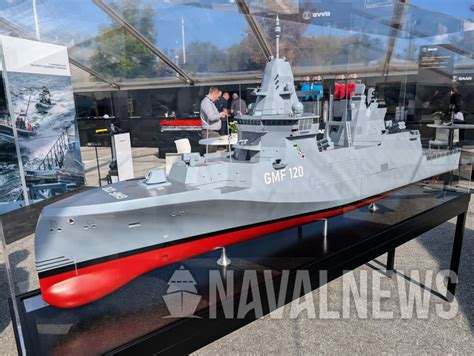
In addition to air defense, the frigates possess formidable surface strike capabilities. Eight Teseo anti-ship missiles allow the vessel to engage hostile ships at long range, while a 127-millimeter main naval gun provides precision strike potential using Vulcano guided ammunition, capable of hitting targets far beyond the range of conventional naval artillery.
A 76-millimeter Super Rapid gun equipped with Strales guided ammunition serves as a close-in defensive system, capable of intercepting incoming threats such as missiles or fast attack craft.
Anti-Submarine Warfare in the Mediterranean
The ASW variants being considered by Greece are optimized specifically for detecting and engaging submarines in complex underwater environments. The Mediterranean Sea presents challenging acoustic conditions due to its layered water temperatures and heavy maritime traffic, factors that can complicate sonar detection.
To address this, the ships combine hull-mounted sonar with a towed array sonar system, which trails behind the vessel and listens for distant submarine signatures. This configuration significantly increases detection range and accuracy.
Two triple torpedo launchers fire MU90 lightweight torpedoes, weapons designed to track and destroy modern submarines operating at varying depths and speeds.
The frigates also include a large flight deck and enclosed hangar capable of supporting helicopters such as the NH90 or EH101. These aircraft extend the ship’s surveillance radius dramatically by deploying sonobuoys, dipping sonar systems, and airborne torpedoes.
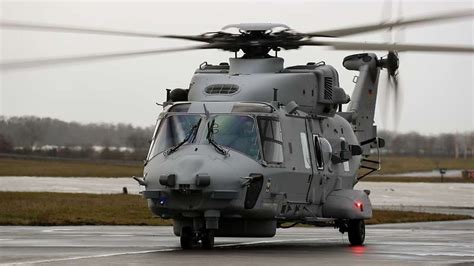
The combination of shipborne sensors and helicopter support effectively transforms the frigate into a mobile anti-submarine command platform, able to coordinate wider underwater defense operations.
Regional Security and Greece’s Expanding Military Role
The modernization of the Hellenic Navy unfolds amid increasing geopolitical activity across the Eastern Mediterranean. Greece has recently expanded its operational presence, participating in multiple international missions and strengthening security partnerships with NATO and the European Union.
Recent developments have demonstrated how Athens is positioning itself as a regional security contributor. Following a drone attack targeting Cyprus, Greece deployed four F-16 fighter jets and two naval vessels, including the frigate Kimon and the frigate Psara, which is equipped with the Kentauros counter-drone system.
Greek forces have also taken additional defensive measures such as deploying air defense batteries on the island of Karpathos and maintaining naval patrols in surrounding waters. In another demonstration of regional cooperation, Athens agreed to provide anti-ballistic missile coverage to Bulgaria after a request from Sofia.
A Fleet Designed for the Next Decade
If the FREMM deal proceeds as expected, Greece will enter the late 2020s with one of the most technologically advanced naval fleets in the Eastern Mediterranean. The combination of French-built Kimon-class frigates, modernized MEKO vessels, and Italian Bergamini-class ships would create a layered maritime force capable of defending sea lanes, projecting power, and participating in multinational operations.
Just as important, the procurement reflects a broader strategic philosophy. Greece is building a fleet designed not only for national defense but also for interoperability with NATO allies, ensuring that its ships can operate seamlessly within larger coalition task forces.
Naval power has always been central to Greece’s security outlook, given its geography of thousands of islands and its proximity to critical maritime routes. By adding the FREMM Bergamini-class frigates, Athens is effectively ensuring that its navy remains capable of navigating the increasingly complex strategic waters of the Mediterranean security environment in the decades ahead.