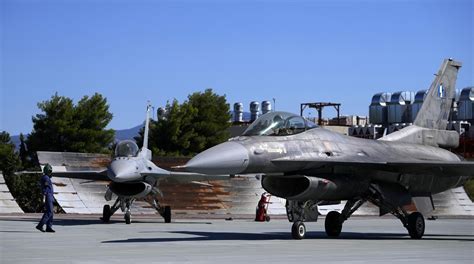
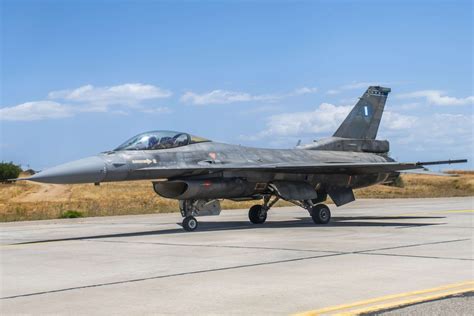
Greece has embarked on a comprehensive F-16 modernization program, aiming to enhance its air combat capabilities while integrating with NATO’s fourth and fifth-generation fighter fleets. With an investment of $1.5 billion, the program seeks to upgrade 83 F-16s to the advanced F-16V “Viper” standard. This initiative, launched in 2022, reflects Greece’s strategic commitment to regional defense, NATO interoperability, and future air fleet restructuring.
The F-16V Upgrade Program
Modernization Scope and Objectives
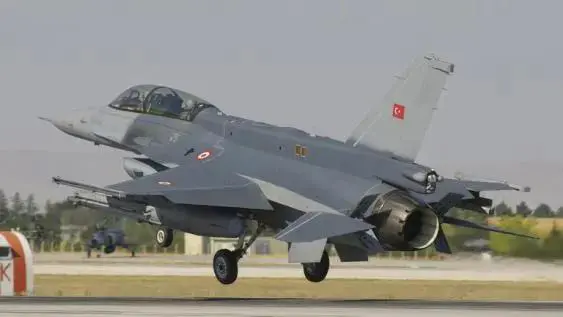
The Greek Air Force initiated the F-16 modernization plan to ensure operational parity with evolving threats in the Eastern Mediterranean. The upgraded F-16V “Viper” incorporates cutting-edge avionics, sensors, and weapons systems that significantly enhance its combat effectiveness.
Key upgrades include:
- Advanced Avionics Suite – The integration of state-of-the-art glass cockpit displays, new mission computers, and enhanced communication systems.
- AN/APG-83 AESA Radar – This active electronically scanned array (AESA) radar dramatically improves target detection, tracking, and engagement.
- Electronic Warfare Enhancements – Modern electronic countermeasures (ECM) increase survivability against modern air defense threats.
- Improved Weapons Compatibility – Expanded capability to deploy precision-guided munitions and beyond-visual-range (BVR) missiles.
As of February 2025, 30 of the 83 planned F-16V upgrades have been completed and delivered. The full modernization process is expected to span eight years, ensuring that Greece retains a formidable multi-role fighter fleet well into the 2030s.
Cost Considerations and Negotiations
The modernization plan initially included an additional upgrade for 38 F-16 Block 50 aircraft, with an estimated cost of $150 million. However, Greece is negotiating with Lockheed Martin and the U.S. government to reduce this cost to $90 million, seeking financial efficiency while maintaining operational effectiveness.
Transitioning Towards an F-35-Centric Air Fleet
F-35A Procurement and Strategic Shift
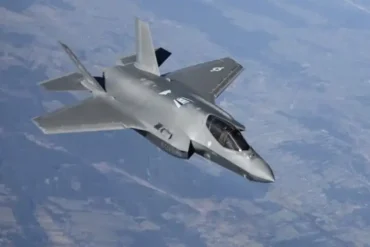
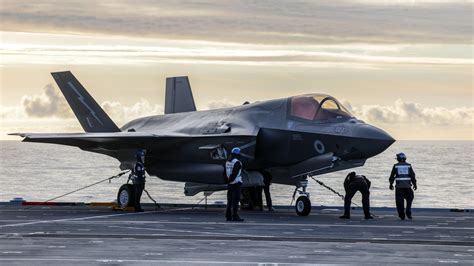
In tandem with its F-16V modernization, Greece is advancing its F-35 acquisition program. The country has committed to forming a multi-tier air combat fleet, centering on the stealth-capable F-35A Lightning II, supplemented by the F-16V and Rafale fighter jets.
- First Batch of F-35A (20 units) – Signed in 2024, valued at $3.76 billion, with delivery commencing in 2028.
- Second Batch of F-35A (20 units) – Expected procurement after 2030.
- Rafale Fighter Integration – Greece has already received 24 Dassault Rafale jets from France, further diversifying its air power capabilities.
This structured approach ensures a gradual phasing out of legacy aircraft while maintaining combat readiness.
F-16 Donations to Ukraine: Strategic and Political Implications
The Decision to Supply Ukraine
In February 2025, Greece committed to transferring 32 decommissioned F-16C/D Block 30 aircraft to Ukraine. These jets, originally procured in 1985, were retired due to their high maintenance costs (approximately €3.5 million per aircraft annually) and outdated radar capabilities (only one-third the range of modern systems).
Rationale Behind the Donation
- Strengthening NATO’s Unified Support for Ukraine – Aligns with the broader Western military aid framework.
- Optimizing Defense Resources – Redirecting operational funds towards F-35 acquisitions and newer fleet maintenance.
- Political Leverage in NATO – Reinforces Greece’s standing as a reliable NATO ally, particularly as public sentiment towards Russia has dropped to 30% approval, the lowest in history.
Geopolitical and Military Considerations
Greece-Turkey Tensions and Air Superiority Strategy
Greece’s military modernization is heavily influenced by its historic rivalry with Turkey, especially over the Aegean Sea territorial disputes. The F-16V upgrades and F-35 acquisitions aim to secure an aerial advantage over Turkey’s F-16 and future F-35 fleet.
- Historical Air Clashes – Declassified 1996 air combat records reveal a Greek Mirage 2000 downing a Turkish F-16D, underscoring persistent aerial tensions.
- Strategic Deterrence – The modernization effort seeks to prevent future escalations while maintaining air dominance.
- Regional Stability and NATO Cohesion – Enhancing Greek air capabilities contributes to NATO’s overall air defense posture.
Financial Strategy and Defense Budget Management
Increased Defense Spending
Greece has significantly increased its defense budget, reaching €6.1 billion ($6.35 billion) in 2025, doubling from 2019 levels. This expansion supports:
- F-16V modernization and F-35 procurement.
- Operational readiness and pilot training.
- Potential acquisitions to replace aging Mirage 2000-5 aircraft.
Cost Optimization Measures
- F-16 Upgrade Cost Reduction – Ongoing negotiations aim to reduce expenses without compromising combat capabilities.
- Sale of Mirage 2000-5 Fleet – Attempts to offload 24 Mirage jets to France or Ukraine have so far been unsuccessful.
Conclusion
Greece’s F-16 modernization program, coupled with F-35 acquisitions and strategic fleet restructuring, underscores its commitment to regional security and NATO integration. The phased transition to a stealth-dominant air force, supplemented by cutting-edge F-16V aircraft, ensures a robust air defense posture for the next decade. Simultaneously, its F-16 donations to Ukraine demonstrate a calculated approach to geopolitical positioning and defense optimization.
FAQ
1. What is the purpose of Greece’s F-16 modernization program?
Greece aims to upgrade 83 F-16s to the F-16V “Viper” standard to enhance combat effectiveness, NATO interoperability, and regional air superiority. The program includes advanced radar, avionics, and electronic warfare systems.
2. How does Greece’s F-35 acquisition impact its air force structure?
Greece plans to integrate the F-35A into its fleet, forming a multi-tiered air combat strategy with F-16Vs and Rafale jets, ensuring long-term air dominance and deterrence capabilities.
3. Why is Greece donating F-16s to Ukraine?
Greece is retiring 32 older F-16 Block 30 aircraft due to high maintenance costs and outdated technology. The donation aligns with NATO military aid efforts while allowing Greece to reallocate resources to newer fighter acquisitions.