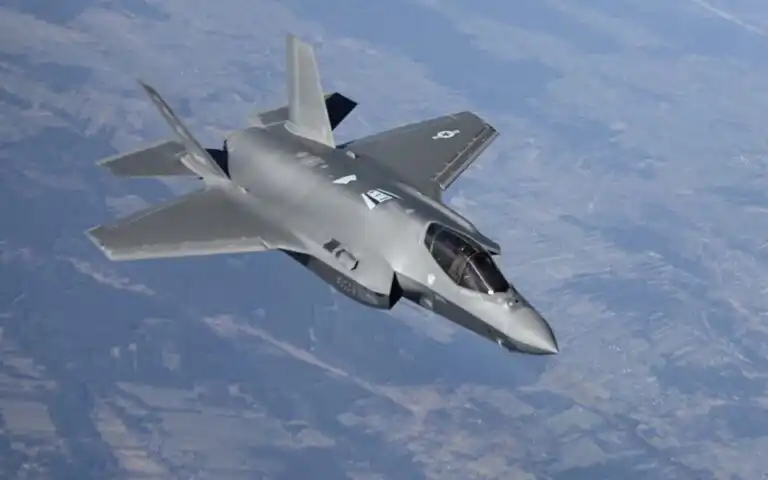
The Hellenic Republic’s acquisition of the F-35 Lightning II represents not merely a generational leap in air combat capability but a significant transformation in its defense doctrine, geopolitical alignment, and future military-industrial framework. This historic purchase—valued at up to $8.6 billion USD—places Greece firmly among the elite group of nations operating fifth-generation stealth fighters, and positions it strategically in the volatile Eastern Mediterranean theater.
The Deal Structure and Delivery Timeline
Under a U.S. Foreign Military Sales (FMS) agreement, Greece has committed to procuring 20 F-35A units, with an option for an additional 20 aircraft in subsequent phases. The formalization of the deal marks a pivotal moment in the country’s military modernization plan. According to official statements, the first deliveries are scheduled for 2028, allowing the Hellenic Air Force (HAF) adequate time to build infrastructure, training pipelines, and support systems compatible with the aircraft’s demanding requirements.
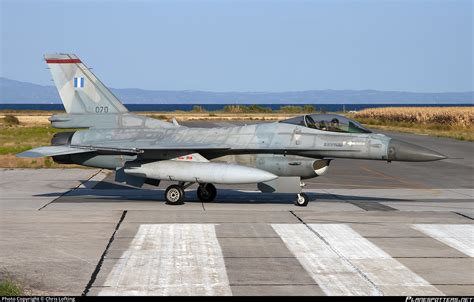
The procurement also reflects the evolution of HAF’s inventory, currently composed of F-16s, Mirage 2000s, and newly acquired Rafale fighters. The F-35A, optimized for conventional takeoff and landing, will become the most advanced operational platform in Greece’s arsenal upon entry into service.

Strategic Drivers Behind Greece’s F-35 Acquisition
Deterrence and Eastern Mediterranean Tensions
The acquisition is not a mere technological upgrade. It is a strategic maneuver rooted in the ongoing rivalry with Turkey, particularly regarding territorial disputes in the Aegean Sea and exclusive economic zones (EEZs) in the Eastern Mediterranean. As Ankara seeks to modernize its air force through F-16V upgrades, Greece is responding by leapfrogging the generational gap. The F-35’s low observability, multi-domain situational awareness, and sensor fusion capabilities dramatically tilt the air superiority balance in Greece’s favor.
Deepening U.S.-Greece Military Ties
Greece’s move aligns closely with U.S. strategic objectives in the region. The American defense establishment has increasingly relied on Greece as a stable partner amid shifting alliances. The F-35 sale signifies high-level trust and interoperability within NATO, with Washington seeing Athens as a pillar of deterrence against adversaries and unpredictable actors near Europe’s southeastern flank.
This decision reflects the geostrategic pivot of U.S. military logistics, visible in expanded basing agreements at Souda Bay, Alexandroupoli, and Larisa, enhancing rapid force projection in the Balkans and Eastern Mediterranean.
Operational and Logistical Dependencies
While the F-35A brings unparalleled combat capability, it also introduces new layers of dependency on the United States—especially in software architecture, maintenance, and mission planning. Greece’s fighters will be tightly integrated into ODIN (Operational Data Integrated Network), the successor to the much-criticized ALIS (Autonomic Logistics Information System).
These systems handle everything from predictive maintenance diagnostics to mission data file updates. Such deep integration enhances operational efficacy but simultaneously limits autonomy, making Greece’s air power potentially vulnerable to future political frictions with the U.S. No physical “kill switch” exists, but denial of software updates, supply chain access, or data cloud interfaces could cripple fleet readiness.
NATO Cohesion and the European Context
The Greek F-35 buy also fits into a continent-wide shift toward standardization around fifth-generation capabilities. By 2035, more than 600 F-35s will be operational across NATO Europe, serving in the air forces of the UK, Italy, Norway, Germany, Belgium, the Netherlands, and others. Greece’s inclusion strengthens the interoperability fabric that underpins collective defense, particularly in domains like air policing, electronic warfare, and precision strike coordination.
However, this consolidation also highlights a growing strategic paradox: Europe is becoming increasingly reliant on U.S. military technology at a time when some nations are calling for greater defense sovereignty. For Greece, participation in this ecosystem brings strength—but not without risk.
Industrial Impact and Domestic Military Modernization
Although Greece is not a tiered partner in the F-35 program, the acquisition will have implications for the domestic defense-industrial base. While Lockheed Martin will retain the majority of system integration and maintenance control, opportunities for local subcontracting, offset agreements, and base infrastructure development will inject investment and expertise into Greek firms.
More broadly, this procurement caps a decade-long effort by Greece to reinvigorate its armed forces after years of austerity. Alongside the F-35, recent moves include:
- Acquisition of Dassault Rafale fighters from France
- Upgrade of F-16s to Viper configuration
- Modernization of MEKO-class frigates
- Expansion of missile defense and radar systems
Together, these investments mark a renaissance in Greek military capability, aimed at sustaining long-term strategic deterrence and air-space control.
Future Capabilities and Block 4 Enhancements
The initial F-35 deliveries to Greece will include the baseline Block 3F software, but future upgrades to Block 4 are anticipated as part of the long-term fleet roadmap. These enhancements will significantly improve:
- Weapons integration with smart munitions and hypersonic assets
- Electronic warfare (EW) performance through improved jamming and countermeasures
- Sensor range and fusion through next-gen data links and processors
With these upgrades, the F-35 will not only serve as a penetrating strike fighter but also a multi-role battlefield command node, shaping entire theaters of operation in real-time.
Risks, Sovereignty, and Strategic Calculations
Despite the considerable advantages, Athens must now navigate sustainability and sovereignty challenges tied to operating such an expensive and foreign-controlled platform. Annual maintenance costs for the F-35 are among the highest of any fighter jet in existence, and any budgetary volatility could impair fleet readiness.
Moreover, in a geopolitical crisis where Greek and U.S. interests might diverge, control over mission data, supply chains, or combat operations could become leverage points—a risk that European operators, from Switzerland to Germany, have increasingly voiced concerns about.
Yet for the moment, Greece’s calculus is clear: The benefits of possessing a top-tier air combat system and bolstering ties with the U.S. outweigh the operational constraints. The F-35 has become the symbol of Greece’s return to the frontlines of military relevance in Southern Europe.
Frequently Asked Questions
Why did Greece choose the F-35 over additional Rafales or Eurofighter Typhoons?
Greece already operates Rafales and considered Eurofighter options, but the F-35 offers unmatched stealth, network-centric warfare capabilities, and NATO-standard interoperability. Its stealth profile, sensor suite, and electronic warfare systems place it a generation ahead of fourth-gen fighters.
How will Greece maintain its F-35 fleet if relations with the U.S. deteriorate?
Fleet sustainment depends on continued U.S. software updates, ODIN network access, and supply chain integration. While Greece can maintain basic systems independently, full operational capacity requires U.S. cooperation, making defense sovereignty a calculated risk.
Will Greece operate F-35s alongside Rafales and F-16Vs in joint missions?
Yes. The Hellenic Air Force will utilize multi-platform integration, where F-35s act as sensor nodes and strike leaders, with Rafales and F-16Vs providing support, escort, or conventional strike capabilities. Such composite formations enhance survivability, effectiveness, and mission diversity.