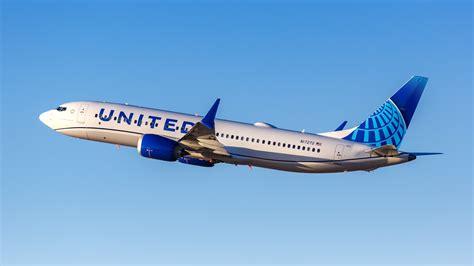
The decision by United Airlines to reduce its international deployment of the Boeing 737 MAX 8 by 16% in Q3 2026 marks a significant shift in network strategy, signaling deeper structural adjustments rather than a simple seasonal correction. In an era where fleet optimization defines profitability, this move reflects a deliberate recalibration of aircraft utilization, route demand, and regional performance.
At the heart of this decision lies a stark numerical contraction: scheduled one-way international departures from the United States using the MAX 8 are projected to fall from 5,090 in Q3 2025 to just 4,270 in Q3 2026. That decline is not incidental—it represents a targeted pullback from underperforming routes while simultaneously reallocating capacity to markets showing stronger yield potential.
This shift becomes even more intriguing when contrasted against United’s broader fleet dynamics. While the MAX 8 retreats, its larger sibling, the Boeing 737 MAX 9, is expanding its international footprint aggressively. The contrast reveals a layered strategy where aircraft type, route economics, and demand elasticity converge to shape network decisions.
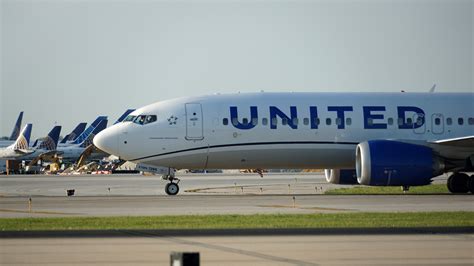
San Francisco and Houston: Ground Zero for Capacity Cuts
The most pronounced reductions are concentrated on routes originating from key hubs, particularly San Francisco International Airport (SFO) and Houston’s George Bush Intercontinental Airport (IAH). These hubs, traditionally strongholds for transborder traffic, are now witnessing notable capacity withdrawals.
From SFO, routes to Vancouver and Toronto are among the hardest hit. The San Francisco–Toronto corridor alone has seen a complete elimination of MAX 8 operations, effectively removing the aircraft type from the route entirely. Meanwhile, San Francisco–Vancouver faces a reduction of 140 flights, underscoring a sharp contraction in US-Canada travel demand.
Houston tells a similar story. The route to San Pedro Sula in Honduras has lost 121 scheduled departures, reflecting either weakened demand or a shift toward alternative aircraft types better suited to the route’s evolving economics.
What’s particularly telling is not just the scale of these cuts, but their concentration. These are not fringe routes—they are established international links. Their downsizing suggests that United is responding to macro-level demand softening, especially in North American cross-border markets where post-pandemic recovery appears to be plateauing.
Canada Routes Collapse as Demand Softens
The broader pattern across United’s network reveals a consistent theme: Canada-bound routes are under pressure. Multiple city pairs, including services from Chicago and Houston to Toronto, Vancouver, and Calgary, have either been reduced or completely stripped of MAX 8 operations.
This trend points to a significant cooling in US-Canada travel demand, a market that once thrived on business connectivity and tourism flows. Factors likely contributing to this decline include:
- Currency fluctuations impacting cross-border travel affordability
- Corporate travel reductions as hybrid work models persist
- Increased competition from alternative carriers and routing options
Rather than sustaining marginal routes with suboptimal load factors, United appears to be prioritizing yield over volume, a strategy increasingly common among legacy carriers seeking to protect margins in uncertain demand environments.
Guam Emerges as a Strategic Pivot Point
While North American routes face contraction, a fascinating countertrend is emerging in the Pacific. United is quietly expanding its use of the MAX 8 from Guam, positioning the aircraft as a flexible tool for regional connectivity across Asia.
This deployment is not merely about passenger traffic. The MAX 8’s configuration allows for medical evacuation (medevac) capabilities, with adaptable seating arrangements that can accommodate stretchers when required. This dual-purpose functionality enhances the aircraft’s value in remote and underserved regions.
Guam’s geographic position makes it an ideal launch point for short-to-medium-haul Asian routes, enabling United to maintain a presence in key markets without committing larger widebody aircraft. It’s a classic example of right-sizing capacity—matching aircraft capabilities precisely to route demand.
Europe Defies the Trend with Explosive Growth
In stark contrast to the broader decline, Europe is experiencing a dramatic surge in MAX 8 operations. United has more than doubled its transatlantic departures using the aircraft, increasing from 116 flights in Q3 2025 to 246 in Q3 2026—a staggering 112.1% increase.
This expansion is centered on Newark Liberty International Airport (EWR), where the MAX 8 is being deployed on thinner, secondary European routes. Destinations such as Funchal and Ponta Delgada remain in the network, but new additions like Santiago de Compostela and Glasgow signal a bold push into underserved markets.
The logic is compelling. Traditional widebody aircraft are often too large for these routes, leading to inefficient capacity utilization. The MAX 8, with its extended range and lower operating costs, enables United to unlock niche transatlantic markets that would otherwise be economically unviable.
Even Chicago joins the strategy, with flights to Reykjavík adding further depth to United’s European network. This is not just expansion—it’s precision growth, targeting routes where demand exists but has historically been underserved.
MAX 8 vs MAX 9: A Tale of Two Strategies
The divergence between the MAX 8 and MAX 9 fleets highlights a nuanced operational philosophy. While MAX 8 international flights decline, MAX 9 operations are increasing by 32%, rising from 2,775 to 3,633 departures.
This shift suggests that United is leveraging the MAX 9’s greater seating capacity on routes with stronger demand, while redeploying the MAX 8 to more specialized missions. The larger aircraft is better suited for high-density routes, allowing the airline to maximize revenue per flight.
However, the MAX 9 is not immune to cuts. Certain Canada and Costa Rica routes have seen the aircraft removed entirely, reinforcing the idea that United is constantly recalibrating its network based on real-time performance data.

Fleet Expansion Signals Long-Term Confidence
Despite the near-term reductions in MAX 8 usage, United’s long-term outlook remains firmly growth-oriented. The airline currently operates 123 MAX 8s and 146 MAX 9s, with orders for an additional 77 MAX 9 aircraft.
This planned expansion indicates confidence in the MAX platform as a whole. Rather than abandoning the MAX 8, United is refining its role within the fleet, ensuring each aircraft type is deployed where it delivers maximum strategic value.
The broader implication is clear: fleet planning is no longer about uniform growth. It’s about granular optimization, where every aircraft, route, and schedule is meticulously aligned with market realities.
A Calculated Retreat with Strategic Intent
United Airlines’ decision to slash Boeing 737 MAX 8 international flights by 16% is not a sign of weakness—it is a demonstration of strategic discipline. By withdrawing from underperforming markets, doubling down on high-potential routes, and aligning aircraft deployment with demand patterns, the airline is positioning itself for sustained profitability.
In a volatile aviation landscape, adaptability is everything. United’s latest moves reveal an airline that is not merely reacting to change, but actively shaping its network to stay ahead of it.