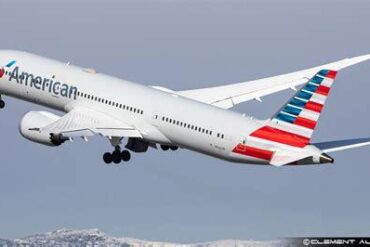
American Airlines has announced the suspension of six key transatlantic routes for the Winter 2025-26 travel season, citing a strategic shift in demand and seasonal adjustments rather than operational challenges. The temporary cuts, affecting flights between the United States and Europe, mark a significant yet calculated decision by the carrier to optimize aircraft utilization during low-demand months.
The airline, headquartered in Fort Worth, Texas, clarified that the move is not related to ongoing Boeing 787 delivery delays, a factor that previously disrupted long-haul schedules. Instead, the winter schedule realignment reflects a data-driven effort to redeploy capacity to more profitable markets—namely, South America, where U.S. demand remains strong through the Northern Hemisphere winter months.
Six High-Profile European Routes Temporarily Suspended
American Airlines will pause six European routes across four major U.S. gateways: New York (JFK), Dallas/Fort Worth (DFW), Philadelphia (PHL), and Charlotte (CLT). These flights, all originally scheduled as daily services, connect to some of the continent’s most prominent cities—underscoring the significance of their suspension.
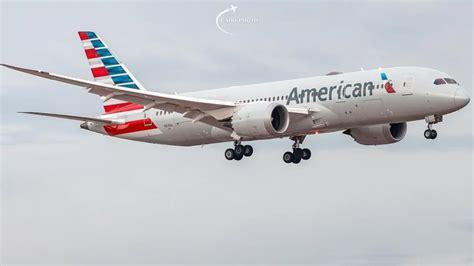
Among the affected routes, the JFK–Paris Charles de Gaulle (CDG) service will face the longest interruption, spanning nearly two full months. Operated by a Boeing 787-8, this route will be suspended from January 6 to March 4, 2025. The DFW–Frankfurt (FRA) service, also noteworthy, will be halted from January 5 to February 12—a longer gap than previously communicated.
Here’s a breakdown of all the suspended routes and durations:
- New York (JFK) – Paris (CDG): January 6 – March 4 (Boeing 787-8)
- Dallas/Fort Worth (DFW) – Frankfurt (FRA): January 5 – February 12 (Boeing 787-8)
- Philadelphia (PHL) – Zurich (ZRH): January 5 – January 29 (Boeing 787-8)
- New York (JFK) – Milan (MXP): January 5 – January 28 (Boeing 777-200ER)
- Charlotte (CLT) – Munich (MUC): January 25 – February 11 (Boeing 777-200ER)
- New York (JFK) – Madrid (MAD): January 27 – February 11 (Boeing 777-200ER)
These routes represent a critical part of American’s transatlantic portfolio, and their temporary withdrawal reflects a careful balancing act between cost management and maintaining a competitive international footprint.
Pivoting to South America: A Strategic Seasonal Realignment
American Airlines’ decision to shift capacity southward for the winter season is neither unprecedented nor surprising. During the colder months in North America, destinations across South America—especially Brazil, Argentina, Chile, and Colombia—see a notable surge in travel demand, both for leisure and VFR (visiting friends and relatives) purposes.
By reallocating widebody aircraft that would otherwise operate in thinly booked transatlantic markets, American is able to maximize aircraft profitability and reduce idle fleet time. This aligns with the airline’s historical strategy of seasonal recalibration, where schedules are dynamically altered to follow traffic flows.
More importantly, this maneuver provides flexibility in resource planning while preserving overall global network integrity. The airline has not announced specific additions or increases in South America routes yet, but expectations are high for enhanced frequencies to cities like São Paulo (GRU), Buenos Aires (EZE), Santiago (SCL), and Bogotá (BOG).
Not Linked to Boeing 787 Delays
In past seasons, American Airlines’ international route adjustments were frequently attributed to the slow and unpredictable delivery of new Boeing 787 Dreamliners, affecting long-haul capacity planning. However, for Winter 2025-26, the airline was quick to disassociate the current changes from manufacturing delays.
According to fleet data from ch-aviation, American Airlines is still awaiting 27 Boeing 787-9 aircraft, but these delivery timelines are not influencing the present route changes. This indicates a more stable fleet management outlook and a proactive, rather than reactive, scheduling model.
Such clarity not only helps the airline streamline operations but also reinforces investor and customer confidence. The absence of aircraft availability constraints means the carrier retains flexibility to react to market shifts without risking sudden service gaps or operational bottlenecks.

European Winter Demand Slump: A Recurrent Trend
The U.S.–Europe market typically experiences a sharp decline in demand post-holiday season, with January through March often being the softest months for transatlantic travel. Business travel dwindles, leisure travelers remain dormant, and only a small segment of the market remains active—mainly those taking advantage of off-peak fares.
Historically, this period has been marked by airline load factor challenges and lower yields, forcing carriers to either operate at a loss or recalibrate service. American’s decision aligns with broader industry behavior, as other U.S. airlines like Delta and United have also implemented seasonal route thinning strategies in similar timeframes.
What’s different now is the transparency with which American is communicating these changes, framing them not as cutbacks but as tactical redeployments in line with global demand patterns.
Impact on American Airlines’ European Strategy
Despite these temporary suspensions, American Airlines has emphasized that the changes will not diminish its long-term European ambitions. The carrier remains committed to maintaining a robust presence in key continental markets, particularly during peak seasons like summer and major holidays.
In fact, it’s expected that all suspended routes will return for the Summer 2026 season, if not sooner, depending on booking trends and macroeconomic factors. The strategic message is clear: these are not route terminations but seasonal pauses designed to maximize profitability.
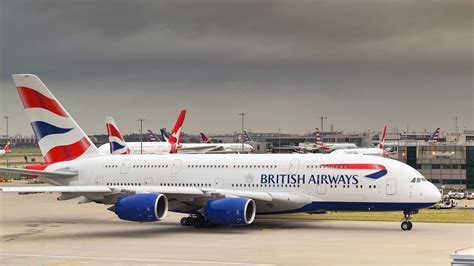
Moreover, American’s transatlantic joint venture with British Airways, Iberia, Finnair, and Aer Lingus provides the flexibility to maintain network coverage through partner airlines, even when direct AA service is temporarily halted. This alliance-backed structure ensures connectivity is preserved, albeit sometimes via code-share arrangements.
Broader Implications for Global Airline Scheduling
American Airlines’ approach underscores a broader shift in the airline industry toward nimble and demand-responsive scheduling. Rather than adhering to legacy route maps or frequency commitments, carriers are increasingly adopting a modular operating philosophy, where fleet and route decisions are made with real-time demand data.
In the case of American, the Winter 2025-26 route cuts represent an evolution of seasonal strategy, combining traditional traffic flow assumptions with modern analytics. It’s a move away from static planning and toward data-driven agility, which is especially crucial as geopolitical uncertainties, fuel prices, and consumer behavior continue to fluctuate.
By reinforcing this approach, American Airlines positions itself to stay competitive and responsive in an increasingly volatile market environment. The ability to scale operations based on seasonal realities is no longer optional—it’s a necessity for sustainable profitability.
Conclusion: Smart Seasonal Thinking, Not Retrenchment
The temporary suspension of six European routes by American Airlines should not be viewed as a retreat but as a strategic and seasonal realignment. With a firm grasp of shifting demand dynamics and a clear plan for aircraft redeployment, American demonstrates operational maturity and market foresight.
As the airline strengthens its South American footprint for Winter 2025-26 and prepares for a full return to Europe in the spring, passengers and partners can expect a more optimized, profitable, and flexible route network—one that responds in real-time to global travel trends without compromising long-term vision.
For travelers, the key takeaway is not lost access but adjusted timelines. For analysts, it’s a case study in how legacy carriers can modernize route planning without jeopardizing network integrity. And for competitors, it’s a reminder that strategic pauses can often pave the way for stronger comebacks.