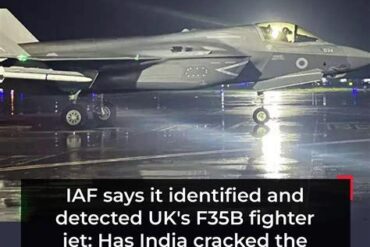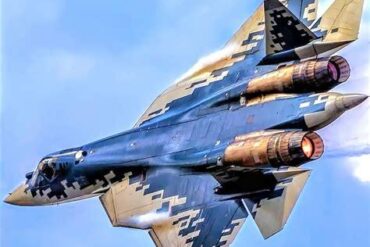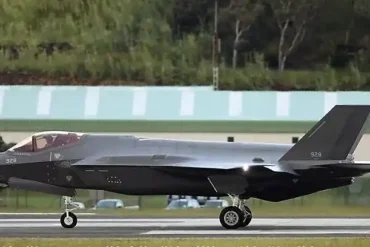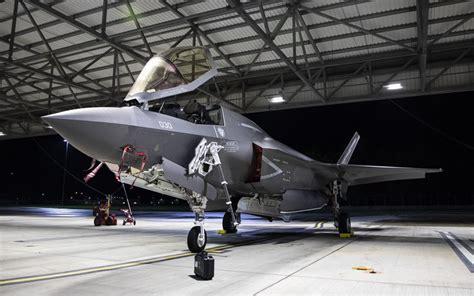
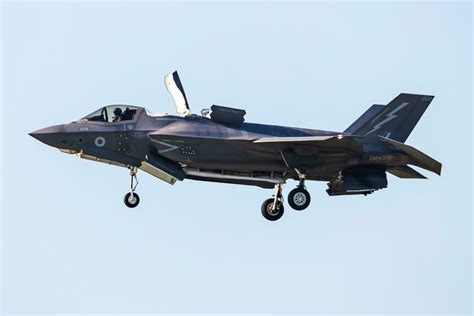
On the night of June 14, 2025, a Royal Navy F-35B Lightning II stealth fighter jet made an emergency landing at Thiruvananthapuram International Airport, marking a rare instance of coordinated military aviation protocol between the United Kingdom and India. The Indian Air Force (IAF) confirmed the incident and swiftly provided logistical and operational support, reflecting the growing interoperability and trust between the two defense forces.
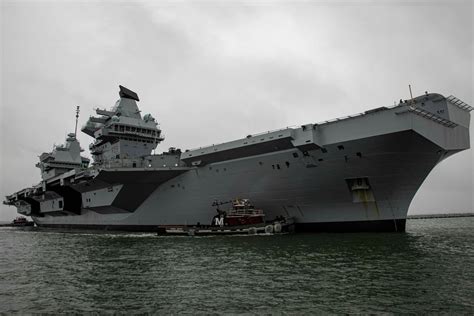
The fifth-generation fighter was operating from the HMS Prince of Wales, one of the UK’s flagship aircraft carriers, as part of routine naval air operations. The sortie was conducted outside India’s Air Defence Identification Zone (ADIZ), and the situation was managed through the IAF’s Integrated Air Command and Control System (IACCS), which tracked, identified, and authorized the landing in real time.
Emergency Declared Mid-Mission: How the Situation Unfolded
The emergency was declared while the jet was on a standard operational sortie, although the exact technical reasons for the diversion remain undisclosed. Once the pilot reported the issue, IACCS immediately detected the aircraft, evaluated its flight profile, and cleared it for emergency recovery at the nearest designated airstrip — Thiruvananthapuram International Airport, which had been pre-identified as a contingency recovery location for foreign military aircraft.
According to the IAF’s official communication shared via its X (formerly Twitter) handle, the coordination followed established protocols. “A Royal Navy F-35B fighter recovered off an emergency landing at Thiruvananthapuram International Airport… On having declared a diversion off an emergency, the F-35B was detected and identified by the IAF’s IACCS network and cleared for recovery.”
The Indian Air Force also confirmed it is extending full support to the Royal Navy and UK Defense Attaché team for technical rectification of the fighter jet and its eventual return to active duty. No injuries or collateral damage have been reported.
HMS Prince of Wales in the Region: Strategic Context
This emergency landing follows closely after a major joint naval exercise conducted between the Indian Navy and the UK Carrier Strike Group (CSG25) in the western Arabian Sea. The drill involved key assets such as HMS Prince of Wales, the Type 23 frigate HMS Richmond, and INS Tabar, an Indian Navy Talwar-class stealth frigate.
The presence of the F-35B in the Indian airspace — albeit briefly — highlights the extent of regional maritime cooperation. Although not directly part of the joint drill, the F-35B’s proximity to India and the seamless handling of the emergency underscores the mutual preparedness to support each other’s high-tech defense operations.
What Makes the F-35B Unique and Vulnerable in Such Scenarios?
The F-35B variant is unique among its F-35 counterparts due to its Short Takeoff and Vertical Landing (STOVL) capability. Designed for aircraft carrier operations, the F-35B can land vertically like a helicopter and operate from shorter decks — an engineering marvel, but also one that requires extremely high maintenance and precise flight conditions.
Key technical features of the F-35B:
- Thrust vectoring nozzle enabling vertical landing
- Lift fan system for enhanced STOVL performance
- Advanced sensor fusion with Active Electronically Scanned Array (AESA) radar
- Integrated logistics and maintenance diagnostics system (ALIS)
Such intricate systems also make it vulnerable to sudden failures, particularly in unfamiliar or prolonged maritime conditions. An emergency landing could be triggered by a hydraulic system alert, engine anomaly, avionics malfunction, or even environmental factors like extreme humidity or saltwater corrosion — conditions that are common during sea-based operations.
IAF’s IACCS: India’s Digital Shield in the Skies
The successful detection and handling of the F-35B by India’s IACCS network underscores the strength of the country’s airspace surveillance infrastructure. IACCS is a highly digitized, automated command and control system that integrates data from ground-based radars, satellite feeds, and airborne sensors to give real-time tracking of aerial threats and aircraft.
This network allowed for:
- Rapid recognition of the non-hostile F-35B flight signature
- Clearance coordination with Thiruvananthapuram ATC and military command
- Seamless ground support activation, including technical and security contingents
This event is a testament to India’s ability to handle international airspace contingencies with professionalism, speed, and sovereign coordination.
Diplomatic and Strategic Implications of the Emergency Landing
Although not a combat mission, this incident offers a rare glimpse into operational diplomacy between major military powers. For India, offering a safe haven for a stealth-capable, top-tier NATO aircraft signals strategic maturity and geopolitical trustworthiness.
It also suggests several broader implications:
- Strengthening Indo-UK military ties beyond scheduled drills
- Trust in Indian operational infrastructure by NATO allies
- Potential future joint interoperability programs, especially in fifth-gen aircraft domains
Such incidents often lead to backdoor dialogues, formal assessments, and technical knowledge-sharing agreements, enhancing long-term defense alignment.
Operational Recovery and What Comes Next
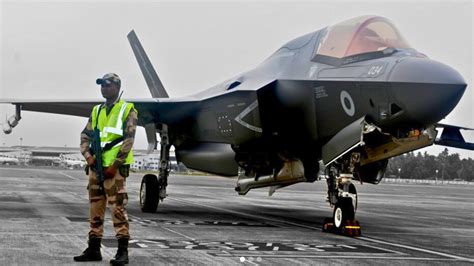
The F-35B remains under technical assessment at Thiruvananthapuram airport. British Royal Navy personnel, along with support from the UK’s Defense Attaché office in India, are expected to oversee repairs or arrange secure transport of the aircraft back to HMS Prince of Wales or a designated UK airbase in the region.
India’s role will involve:
- Tarmac security and aircraft perimeter management
- On-site logistics, including spares, diagnostics, and lift support
- Airspace management for subsequent test flights or relocation sorties
Given the classified nature of the F-35B’s systems, much of this support will occur under strict security protocols and likely with limited access to Indian personnel, although technical coordination will remain ongoing.
Thiruvananthapuram Airport: From Civilian Hub to Military Utility
While primarily a civil aviation node, Thiruvananthapuram International Airport has increasingly played host to military operations, especially as India has expanded its southern strategic posture. Its proximity to the Indian Ocean’s central maritime trade corridors, and infrastructure readiness, make it a prime choice for contingency landings.
Its selection as a designated emergency field is not incidental. The airport has been assessed for:
- Runway length compatible with fighter operations
- Night landing capabilities
- Secure apron access and technical equipment availability
The successful F-35B recovery solidifies its role as a multi-mission capable airport, capable of supporting strategic air missions from both domestic and allied forces.
Public and Media Reaction: A Moment of Silent Efficiency
Unlike previous high-profile emergency landings involving military aircraft, this incident was handled with remarkable discretion. No civilian disruption was reported at the airport, and both Indian and British authorities maintained professional decorum and transparency without triggering alarm or speculation.
Public reactions on platforms like X and Reddit reflected curiosity rather than panic, with many users appreciating the silent efficiency of Indian defense operations. The incident has even sparked discussion among defense enthusiasts about India’s preparedness for operating fifth-generation jets, either as partners or future operators.
Conclusion: A Strategic Win Beyond the Emergency
What began as a technical emergency ended as a diplomatic and operational success. The IAF’s adept management of the situation not only ensured the safety of a high-value NATO asset but also cemented India’s emerging stature as a reliable defense partner. For the UK, this event reaffirms the importance of regional cooperation as its carrier groups continue operating far from home bases.
In an era of rapidly evolving aerial warfare, where stealth jets, cyber defenses, and automated surveillance systems dominate the skies, this event serves as a real-world test case for multinational readiness. India passed that test — not with noise, but with quiet precision.