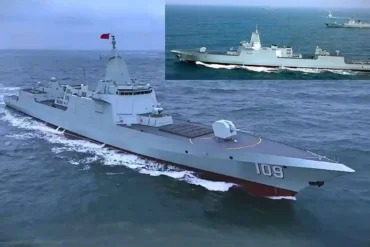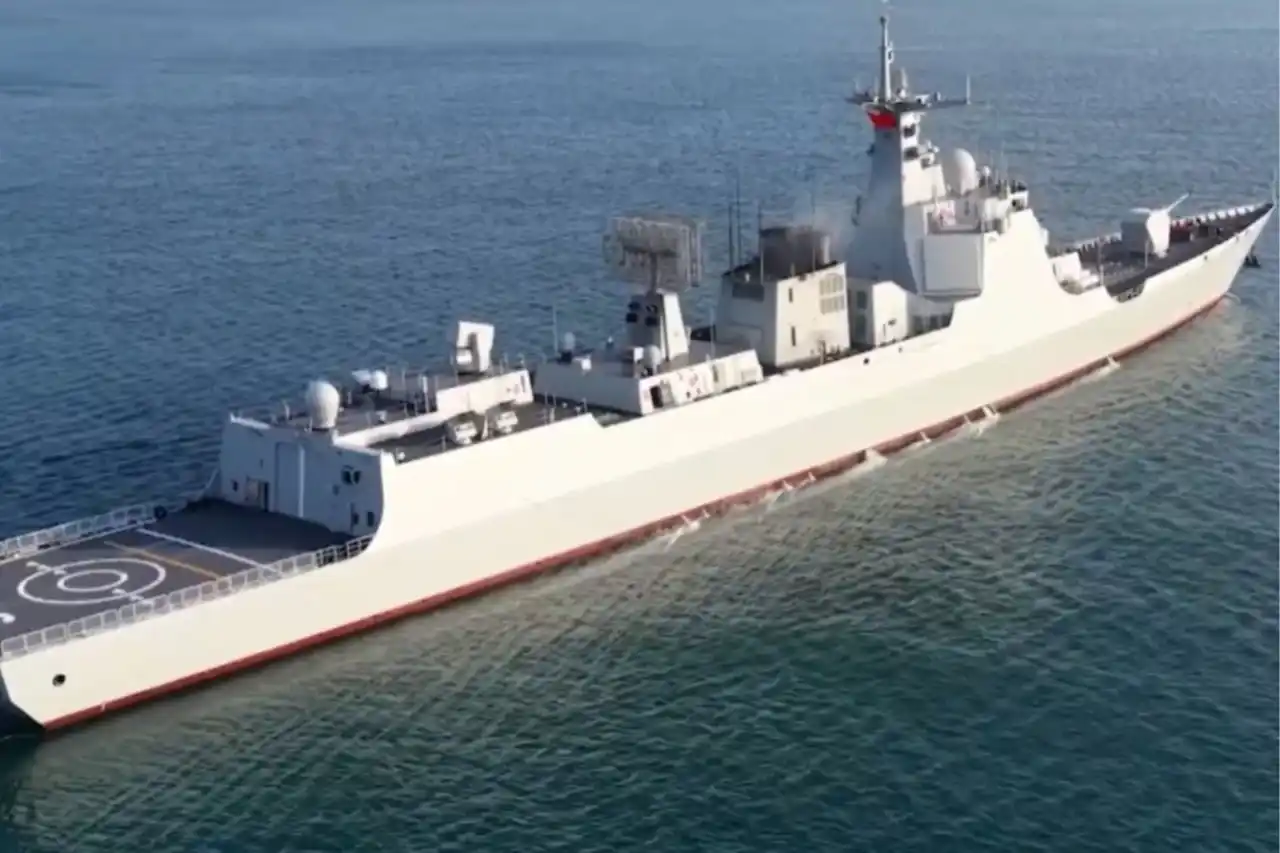
On January 1, 2026, the People’s Liberation Army Navy (PLAN) took a pivotal step forward in expanding its maritime capabilities by commissioning the latest Type 052D guided missile destroyer, Loudi (Hull 176). This development was formally announced by China Central Television (CCTV), signifying the continued acceleration of China’s naval modernization efforts in the face of intensifying strategic competition across the Indo-Pacific.
Loudi and the Type 052D: Backbone of the PLAN’s Surface Fleet
The Type 052D class, referred to by NATO as Luyang III, has firmly established itself as the principal surface combatant in China’s rapidly growing navy. With over 30 vessels already in service or under construction, this class represents not just a tactical asset, but a strategic symbol of China’s industrial might and defense ambitions. The Loudi, like its predecessors, is a 7,500-ton displacement destroyer engineered for blue-water operations and high-speed maneuvering, with a propulsion system delivering speeds over 30 knots.
The design evolution of the Type 052D has followed a philosophy of incremental refinement over radical redesign, enabling continuous technological upgrades while preserving production momentum. This strategy has proven critical in allowing Chinese shipyards to maintain high output rates—two to three ships annually—outpacing many Western counterparts.
Redesigned Superstructure and Enhanced Radar Suite
Among the most visible upgrades on the Loudi is its redesigned mast and advanced radar array, setting it apart from earlier iterations of the class. According to Chinese military analyst Fu Qianshao, the vessel features a dual-face rotating Active Electronically Scanned Array (AESA) radar. This cutting-edge radar configuration enhances:
- Wider and faster target tracking
- Improved performance in electronic countermeasure-rich environments
- Greater saturation attack defense, particularly against fast-moving cruise missiles and stealthy aircraft
These radar improvements underscore the PLAN’s emphasis on maintaining airspace dominance, even in electromagnetically contested environments—a crucial capability for joint operations and carrier escort missions.
Combat Systems Integration and Network-Centric Warfare Capabilities
Beyond its physical upgrades, the Loudi brings significant advancements in command-and-control systems. As described by crew member Zhang Shengwei during the CCTV broadcast, the destroyer is optimized for a triad of missions:
- Fleet air defense
- Sea surface strike
- Task force command and coordination
The integration of a next-generation combat system architecture enables superior sensor fusion, real-time data sharing, and cooperative targeting. This positions Loudi not just as a missile platform but also as a command node capable of orchestrating multi-domain operations across a task force—an increasingly valuable asset as China leans into networked warfare.
Vertical Launch Powerhouse: The 64-Cell Universal VLS
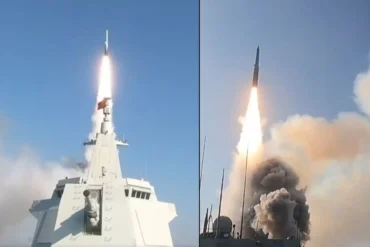
At the heart of the Loudi’s offensive and defensive punch lies a 64-cell Universal Vertical Launch System (VLS). Split between the forward and aft decks, this system grants the destroyer an impressive and flexible payload capacity. Munitions compatible with the VLS reportedly include:
- HHQ-9B long-range SAMs for fleet-wide air defense
- YJ-18 anti-ship cruise missiles for maritime strike
- CJ-10 land-attack cruise missiles for precision ground targets
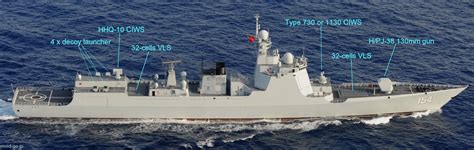
This diversity of firepower transforms the destroyer into a multi-mission threat, capable of engaging targets across air, sea, and land domains. The inclusion of long-range strike options supports China’s growing interest in anti-access/area denial (A2/AD) strategies in regional hotspots such as the South China Sea and Taiwan Strait.
Conventional Armaments and Helicopter Support
While missiles are the showpiece, the Loudi is also outfitted with conventional weaponry that complements its broader combat role. This includes:
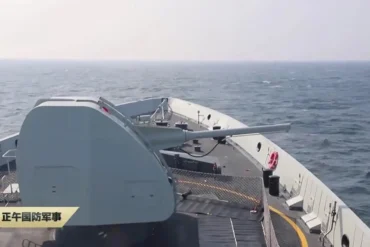
- A 130 mm naval gun for surface and shore bombardment
- Close-In Weapon Systems (CIWS) for missile interception
- Decoy launchers and EW systems for electronic defense
- A hangar and flight deck to support shipborne helicopters, likely the Z-9C or Z-20F, enhancing anti-submarine and ISR (intelligence, surveillance, reconnaissance) capabilities
These features contribute to the vessel’s multi-dimensional lethality and make it adaptable to independent patrols or task group integration.
Industrial Scale and Strategic Implications
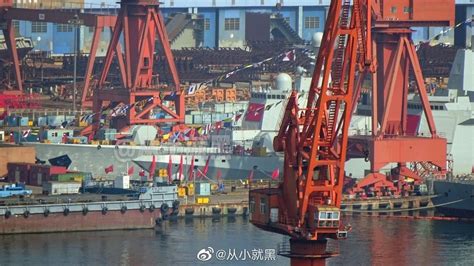
The commissioning of Loudi is emblematic not just of technological sophistication but of industrial momentum. With over 30 ships of this class already active or in production, the Type 052D has become the most numerically significant class of modern destroyers globally. China’s ability to maintain this pace—unparalleled in terms of output for a single class of destroyers—highlights several key strategic outcomes:
- Operational redundancy and force depth, allowing the PLAN to project power beyond its traditional littoral zones.
- Logistical standardization, reducing maintenance costs and increasing fleet interoperability.
- Global signaling, demonstrating China’s capability to sustain long-term naval expansion, rivaling the cumulative pace of U.S. and allied shipbuilding programs.
This mass production, combined with each hull’s increasing sophistication, indicates a strategic shift from near-seas defense to far-seas control. For Western naval planners, this convergence of quantity with quality is altering the naval balance of power in real-time.
Geopolitical Context and Indo-Pacific Impact
The induction of the Loudi occurs against the backdrop of an intensifying geopolitical contest in the Indo-Pacific. With the United States, Japan, Australia, and India increasing maritime cooperation through frameworks like the Quad, China’s naval modernization is both a response to and a catalyst for strategic recalibrations.
By enhancing its long-range strike, air defense, and command capabilities, the Loudi and its sister ships serve as key instruments in:
- Deterrence operations against rival naval groupings
- Power projection into disputed regions
- Strategic signaling to regional neighbors and global adversaries
Furthermore, these developments are occurring in tandem with the expansion of China’s aircraft carrier fleet, unmanned maritime programs, and overseas base infrastructure, such as the Djibouti base.
Conclusion: Loudi as a Harbinger of Naval Modernity
The commissioning of the Type 052D destroyer Loudi reflects a mature synthesis of advanced maritime technology, command infrastructure, and industrial agility. More than just another warship, Loudi embodies China’s trajectory toward a networked, blue-water navy capable of confronting peer adversaries and defending expanding geopolitical interests.
As the Indo-Pacific remains the flashpoint of 21st-century maritime strategy, vessels like the Loudi—bristling with sensors, missiles, and command capabilities—signal a new era of sustained Chinese naval presence, one built not only on technological excellence but also on the ability to scale warfighting capability with astonishing speed.