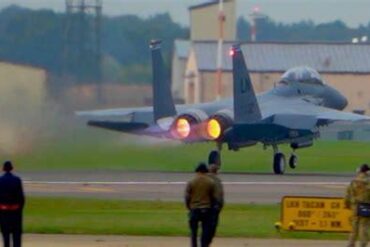
The F-15E Strike Eagle stationed at RAF Lakenheath plays a critical role in the United States Air Force’s European operations, providing an unmatched blend of versatility, firepower, and technological advancement. As one of the premier assets of the 48th Fighter Wing, the F-15E’s strategic significance cannot be overstated. The ongoing advancements in electronic warfare, the aircraft’s participation in real-world operations, and its future deployment plans highlight its pivotal role in modern aerial combat and global defense. This article dives deep into the current deployment of the F-15E at RAF Lakenheath, its capabilities, challenges, and future outlook.
Current Deployment and Technological Advancements
EPAWSS System Deployment: A Game-Changer for the F-15E
In January 2025, a significant upgrade to the F-15E fleet at RAF Lakenheath took place with the deployment of the AN/ALQ-250 EPAWSS (Eagle Passive/Active Warning and Survivability System). This next-generation electronic warfare suite, developed by BAE Systems, is designed to replace the older AN/ALQ-135 Tactical Electronic Warfare System. The EPAWSS is an advanced countermeasure system that enhances the aircraft’s survivability by improving its ability to detect, jam, and deceive threats from modern high-end air defense systems, such as the Russian S-500.
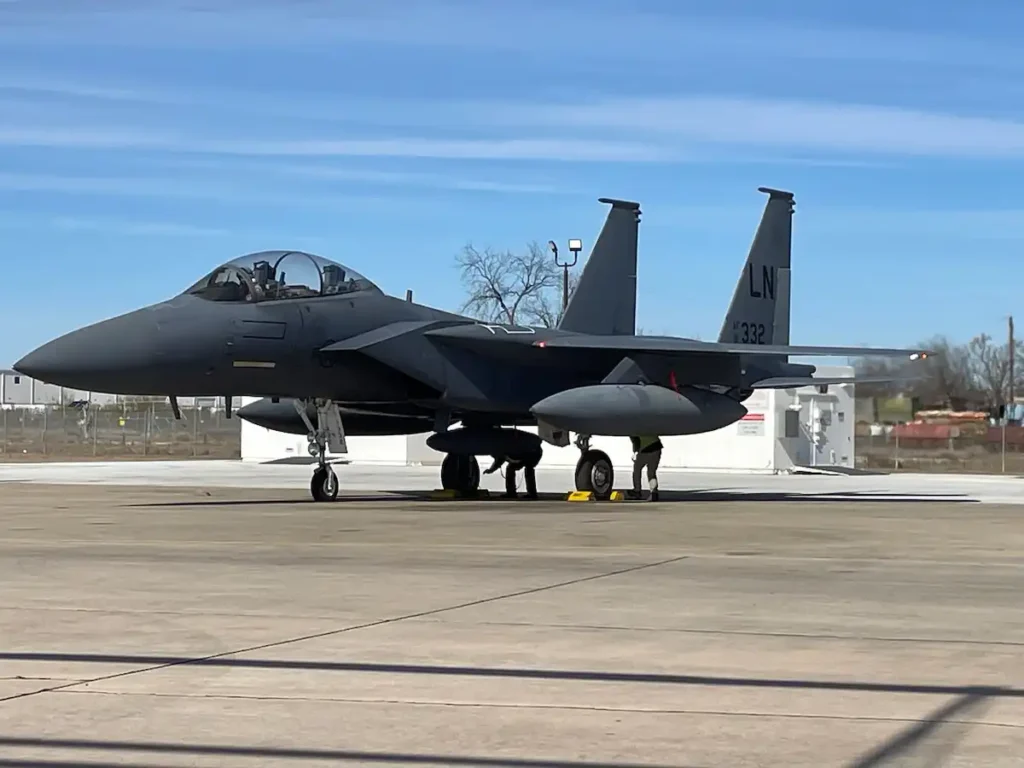
The EPAWSS is a crucial component for the F-15E’s ability to operate in contested environments, particularly in high-threat regions. With its electronic warfare capabilities, it not only improves threat detection but also enhances the aircraft’s ability to deceive and disrupt enemy radar systems, making it an invaluable asset in the modern battlefield. This upgrade allows the F-15E to maintain operational relevance well into the next decade, even as newer platforms like the F-35 are deployed.
Composition of the 48th Fighter Wing
The 48th Fighter Wing, stationed at RAF Lakenheath, is a critical unit in the United States Air Force’s European deployment strategy. The wing operates several F-15E units, each with specialized roles:
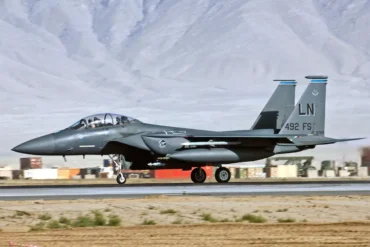
- 492nd Fighter Squadron: Equipped with the F-15E, this squadron has a notable combat record, having participated in the 2011 Libya operation, where it conducted precision strikes against Libyan government forces. One of its aircraft, designated Bolar 34, tragically crashed due to mechanical failure, but its crew successfully ejected and was rescued by local resistance forces.
- 494th Fighter Squadron (“Panthers”): Also equipped with the F-15E, this squadron specializes in precision strike missions, close air support, and interdiction operations, ensuring the Air Force can respond rapidly to any regional crisis.
- 495th Fighter Squadron: This squadron is slated to be equipped with the F-35A Lightning II, offering a blend of stealth, air superiority, and precision strike capabilities, complementing the more traditional but powerful F-15E.
Mission Flexibility and Real-World Engagement
The F-15E is renowned for its versatility in air-to-ground and air-to-air combat. At RAF Lakenheath, the aircraft’s missions range from tactical nuclear deterrence and close air support to interdiction and electronic warfare. These missions are carried out in cooperation with NATO allies, ensuring that the U.S. maintains its strategic edge in Europe.
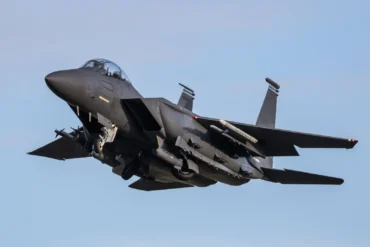
The aircraft’s formidable weapon loadout—including GBU-39 Small Diameter Bombs (SDBs), AGM-65 Maverick missiles, and precision-guided munitions—ensures that it can take on a variety of mission sets, from precision strikes on high-value targets to complex battlefield interdiction operations. The F-15E is equipped to carry up to 20 SDBs at once, significantly enhancing its strike capabilities.
Combat and Operational History
Libya Operation (2011)
The 2011 Libya intervention was one of the defining moments for the F-15E at RAF Lakenheath. In support of Operation Odyssey Dawn, F-15E aircraft from the 492nd Squadron conducted precision strikes against Libyan government forces. During this campaign, the F-15E proved its value by striking critical infrastructure, military vehicles, and command-and-control facilities.
However, not all operations were without incident. During the campaign, an F-15E, Bolar 34, suffered a mechanical failure that caused a crash. Fortunately, the crew was able to eject safely and was subsequently rescued by Libyan rebel forces, showcasing both the durability of the aircraft and the professionalism of its crew.
European Theater Operations
As part of the U.S. Air Forces in Europe (USAFE), the F-15E regularly engages in theater security cooperation, deterrence operations, and rapid response missions. Whether flying over the Baltic States or conducting exercises near the Black Sea, the F-15E remains a cornerstone of America’s aerial deterrence capability in Europe.
The aircraft’s multi-role flexibility ensures that it can be tasked with a wide variety of missions, including air-to-air combat (if necessary), close air support for ground troops, and deep strike missions to neutralize enemy infrastructure or high-value targets.
Maintenance Challenges and Operational Readiness
Engine Malfunctions and Structural Concerns
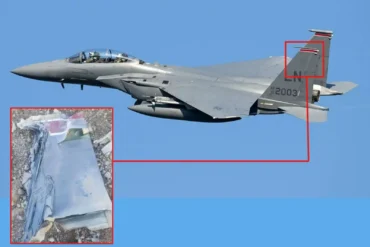
Despite its advanced capabilities, the F-15E is not without challenges. In 2021, one of the aircraft from the 492nd Squadron experienced a significant engine failure during a mission. The aircraft, which had sustained damage to its right engine’s nozzle blades, managed to remain airborne for nearly two hours while its crew took measures to return to base. The incident highlighted the structural integrity of the F-15E but also underscored the maintenance challenges faced by the aging fleet.
The F-15E, much like its predecessors, has been in service for decades, and while its capabilities have been continually upgraded, the aircraft is beginning to show signs of age. Corrosion, worn-out parts, and other maintenance issues have become increasingly common, leading to higher costs and downtime. These issues have been exacerbated by the continued reliance on legacy platforms while the U.S. Air Force awaits newer models like the F-15EX Eagle II.
Future Transition to the F-15EX
In the coming years, RAF Lakenheath will likely see a transition to the F-15EX “Eagle II.” The F-15EX is a new variant that incorporates advanced avionics, the EPAWSS electronic warfare suite, and enhanced multi-role capabilities. The F-15EX is poised to serve as a complement to the F-35, filling a critical role in air superiority and strike operations.
The F-15EX’s digital cockpit, greater payload capacity, and improved reliability make it an ideal replacement for the aging F-15E fleet, even as the older aircraft continue to serve until their replacement is fully realized. The transition to the F-15EX will help maintain the effectiveness of the 48th Fighter Wing’s mission capabilities in Europe.
Strategic Importance and Future Outlook
The F-15E at RAF Lakenheath is not just a tactical asset but a strategic one as well. Its ability to rapidly deploy and engage in distributed combat operations makes it a key player in the U.S. Air Force’s Agile Combat Employment (ACE) strategy. This strategy involves the rapid deployment of forces from austere locations, enabling the F-15E to operate from temporary bases with limited infrastructure. This is critical for countering potential threats in regions where access to established bases may be restricted.
As part of the ACE initiative, the F-15E can resupply and provide firepower to stealth platforms such as the F-35, thereby ensuring a flexible and adaptive response to any regional conflict. Its large payload—including up to 15 JDAMs (Joint Direct Attack Munitions)—further bolsters its capability to deliver precision strikes in a variety of combat scenarios.
The future of the F-15E at RAF Lakenheath is tied to the ongoing evolution of electronic warfare systems, combat tactics, and force structure. As the U.S. Air Force shifts towards incorporating more stealth and precision-focused platforms, the F-15E will continue to evolve to meet emerging threats. Despite its age, its flexibility and reliability ensure that it remains a crucial component of the U.S. military’s arsenal in Europe for the foreseeable future.
Conclusion
The F-15E Strike Eagle at RAF Lakenheath remains one of the most formidable assets in the U.S. Air Force’s European arsenal. With its upgraded EPAWSS system, continued participation in critical combat operations, and versatility in a wide range of missions, the F-15E proves that even as new technologies emerge, legacy platforms can continue to adapt and provide unmatched capabilities. While challenges such as aging components and maintenance issues persist, the F-15E’s continued modernization and the eventual integration of the F-15EX ensure that it will maintain its strategic relevance for years to come.
Through its impressive performance and unwavering reliability, the F-15E Strike Eagle stationed at RAF Lakenheath will remain a cornerstone of U.S. and NATO defense in Europe, providing global reach, combat readiness, and force projection in the face of evolving security threats.