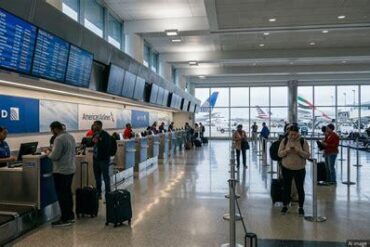
Tensions are flaring at Chicago’s busiest aviation crossroads as American Airlines openly accuses United Airlines of deliberately overscheduling flights at Chicago O’Hare International Airport in a bid to dominate market share. At the center of the dispute is the Federal Aviation Administration’s proposed 10% reduction in summer flight operations, a move designed to prevent the airport from exceeding its safe operational limits.
Chicago O’Hare, long known by its airport code ORD, is not merely another major hub. It is the busiest airport in the United States by total aircraft movements, serving as a critical artery in the national air transport network. This summer, the FAA estimates that daily takeoffs and landings could exceed 3,000 if current schedules proceed unchecked. Much of that increase stems from United’s aggressive 34% year-on-year capacity expansion.
American Airlines Calls Out United’s O’Hare Expansion Strategy
In an internal memo circulated to employees, American Airlines leadership did not mince words. Chief Operating Officer David Seymour and Chief Commercial Officer Nat Pieper warned that United’s surge risks pushing ORD “well beyond what it can operationally handle.” The message underscored fears of longer delays, strained ground resources, and the specter of airport-wide operational disruptions during peak summer demand.
United has added roughly 130 additional daily departures compared to last year. According to American, that growth alone could cause United to exceed the FAA’s maximum hourly departure rate multiple times each day. Crucially, that assessment does not even factor in the operations of other carriers. When layered atop existing schedules, the cumulative effect could overwhelm air traffic control capacity, gate availability, and ramp operations.
American characterizes United’s maneuver as a calculated tactic rather than organic growth. In its memo, American argued that the expansion amounts to a “ploy to overschedule the airport,” alleging it exploits provisions intended to foster competition.
The FAA’s 10% Cut Proposal and Capacity Constraints at ORD
The Federal Aviation Administration has stepped into the dispute with a proposal to trim approximately 10% of scheduled flights during the upcoming IATA Summer 2026 season, which runs from late March through October. The regulator signaled that airlines have collectively “overstretched” operational resources at O’Hare.
FAA projections show the airport could see around 3,080 daily aircraft movements under current schedules. The agency is instead pushing for a cap closer to 2,800 daily movements, equating to just over 100 combined departures and arrivals per hour. For an airport operating on intersecting runways in frequently volatile Midwest weather, such limits are not cosmetic; they are fundamental to maintaining safety margins.
Airlines are set to meet with the FAA to negotiate adjustments. While regulators aim to preserve safety and efficiency, the airlines must balance compliance with competitive positioning in one of the most strategically valuable hubs in the country.
A Dual-Hub Battlefield: American vs United at Chicago O’Hare
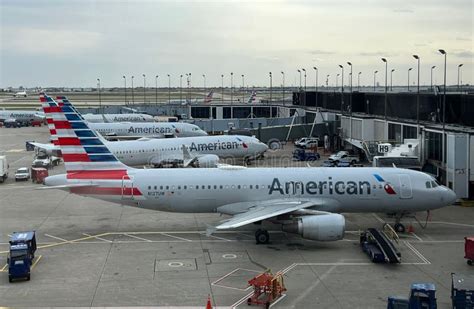
Chicago O’Hare is unusual among major US airports because it functions as a primary hub for two of the nation’s largest carriers: American Airlines and United Airlines. That dual-hub status has long fueled rivalry, but post-pandemic recovery has intensified the stakes.
American controls more than 20% of ORD’s traffic and has been rebuilding aggressively after losing capacity during the COVID downturn. United, meanwhile, remains the dominant carrier at the airport and has made clear its intent to defend that position. In prior public remarks, United executives pledged to “draw a line in the sand,” signaling a determination to protect its turf.
The fight is not limited to scheduling. It extends to gate control under the 2018 Airline Use and Lease Agreement. O’Hare operates a hybrid system of Preferential Use and Common Use gates. Preferential gates are allocated annually based on utilization metrics and favor long-term signatory airlines. In October, United secured five additional gates under this framework, prompting a lawsuit from American that ultimately concluded in United’s favor.
Gate access directly influences schedule flexibility and long-term growth potential. By ramping up flights, an airline can strengthen its claim to additional preferential gates in subsequent allocation cycles. American contends that United’s rapid capacity surge is designed precisely to shape those future calculations.
Operational Risks and the Broader Industry Impact
Beyond corporate rivalry lies a practical concern: passenger experience and system resilience. O’Hare already operates near its limits during peak summer months. When schedules exceed realistic runway throughput or gate turn times, delays cascade. A single weather event can ripple across the national network, affecting connecting passengers from coast to coast.
If the FAA enforces a 10% reduction, both airlines may need to trim marginal routes or reduce frequencies on competitive corridors. That could stabilize operations but also alter fare dynamics and connectivity options. For business travelers and international passengers relying on seamless transfers through Chicago, the outcome carries real consequences.
The unfolding dispute highlights a structural tension in US aviation policy. Slot-constrained airports must balance competition, efficiency, and safety. Incentives embedded in gate allocation systems can encourage airlines to maximize utilization, sometimes at the edge of operational feasibility. Regulators, in turn, must calibrate intervention carefully to avoid distorting market forces while safeguarding the system.
Chicago O’Hare stands at the center of this balancing act. As American and United prepare to meet with the FAA, the outcome will shape not only summer schedules but also the long-term equilibrium of a rare dual-hub battleground. The confrontation underscores how, in modern aviation, control of runway minutes and gate assignments can be as strategically decisive as fleet size or route maps.