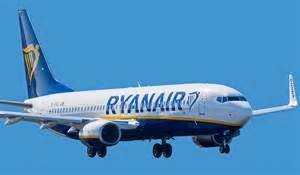
The aviation industry thrives on contradictions, but few examples are as striking as the case of Ryanair. On one hand, it is frequently criticized, mocked, and even openly disliked by many travelers who associate it with discomfort, strict rules, and an aggressively no-frills experience. On the other hand, it continues to post record passenger numbers, expand its network, and dominate European skies. This tension creates a paradox that is difficult to ignore: how does an airline so widely complained about remain one of the most consistently chosen carriers in the world? The answer lies not in sentiment, but in behavior, where price, convenience, and expectation quietly override reputation.
Ryanair’s scale alone already tells a different story from its reputation. The airline carried over 20 million passengers in a single month, while maintaining load factors close to 95%, meaning its aircraft are almost full on nearly every flight. Over a rolling year, its traffic exceeds 200 million passengers, placing it firmly at the top of European aviation. These figures are not the hallmark of an unpopular company; they signal one of the most in-demand transport services on the continent. Even as passengers voice frustration about fees or service style, they continue to return in enormous numbers, reinforcing the idea that dissatisfaction and purchasing behavior can coexist without contradiction.
Perception data, however, complicates the picture. Brand tracking studies consistently show Ryanair scoring below industry averages in public sentiment, with negative impressions outweighing positive ones across several categories such as reputation and perceived quality. Yet this same data reveals something more revealing: willingness to consider booking remains surprisingly strong. A significant portion of surveyed travelers still indicate they would choose Ryanair when price becomes a deciding factor. In other words, emotional judgment of the brand is often negative, but practical decision-making shifts dramatically when real-world budgets enter the equation.
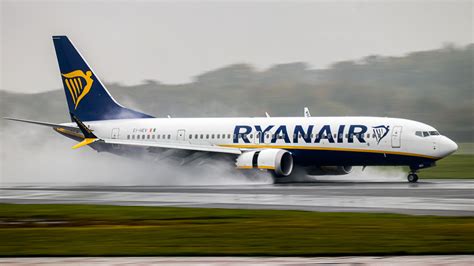
What emerges is a split between “what people say” and “what people do.” Many travelers express dissatisfaction with aspects of the experience, but those opinions rarely translate into avoidance. Instead, they reflect an adjusted expectation framework. Ryanair has successfully positioned itself in a mental category where service polish is not assumed, and where the primary promise is simple: get you from point A to point B at the lowest possible price. Once that expectation is set, judgment criteria shift away from comfort and toward efficiency, schedule availability, and cost savings.
At the center of this paradox is pricing psychology. Ryanair’s fares are often significantly lower than legacy competitors, especially on short-haul European routes. For many travelers, the difference is not marginal but decisive. A fare that costs half or even a third of an alternative carrier changes the entire value equation. Even when additional fees are introduced for baggage or seat selection, the total price frequently remains below competitors. This creates a strong cognitive anchor: passengers may dislike certain charges, but they still recognize the overall deal as financially advantageous.
The airline’s commercial model reinforces this perception through carefully structured ancillary revenue. The advertised fare represents only the base product, while optional extras generate a substantial portion of total income. Services such as priority boarding, reserved seating, and checked luggage are unbundled, allowing passengers to customize their experience. This system can create frustration, but it also enables flexibility. Travelers who prioritize cost can strip their journey down to the essentials, while those seeking comfort can selectively upgrade. The key point is that control is transferred to the customer, even if the structure feels transactional.
Behind this pricing strategy sits a tightly managed cost base. Fleet standardization around a single aircraft type reduces maintenance complexity and training costs. High aircraft utilization ensures maximum productivity per plane, with quick turnaround times keeping jets in constant rotation. Operational decisions are designed with efficiency rather than comfort in mind, and this discipline allows the airline to sustain low fares even during periods of economic pressure. It is a model that prioritizes volume over luxury, and it works precisely because demand remains highly price-sensitive.
Fuel hedging also plays a critical role in stabilizing fares. By locking in a large proportion of fuel costs in advance, the airline reduces exposure to volatile oil markets. This financial buffer allows it to maintain aggressive pricing strategies even when external costs fluctuate. At the same time, competitors with less hedged exposure may be forced to raise fares more quickly, widening the perceived price gap. In such conditions, Ryanair’s value proposition becomes even more compelling, reinforcing customer behavior that contradicts brand sentiment.
Ancillary revenue further strengthens the model. Revenue generated per passenger from optional extras has grown steadily, demonstrating that customers are willing to pay for customization even when they resist the base experience. This hybrid structure creates a dual reality: a low-cost entry point paired with a menu of upgrades. It also subtly reframes dissatisfaction, as passengers often separate “ticket price satisfaction” from “experience satisfaction,” allowing them to mentally compartmentalize criticism while still considering future bookings.
The paradox becomes clearer when viewed through behavioral economics. Human decision-making is not purely emotional or purely rational; it is context-dependent. When searching for flights, travelers often begin with constraints rather than preferences: budget limits, travel dates, and availability. Within those constraints, the cheapest viable option frequently wins, even if it does not rank highest in perceived quality. Ryanair benefits directly from this environment, where affordability acts as a gatekeeper before brand perception even enters the equation.
Competition also plays an important role in reinforcing Ryanair’s position. Legacy carriers may offer more comfort or service features, but they often struggle to match ultra-low fare structures on short routes. Meanwhile, other low-cost airlines operate in similar territory but rarely undercut Ryanair consistently at scale. This creates a competitive “floor” where Ryanair frequently sets the benchmark price. Once that benchmark is established, competitors must justify higher fares through added value, which many price-sensitive travelers are unwilling to pay for.
Jetstar in the Asia-Pacific region demonstrates a similar dynamic, showing that this is not a uniquely European phenomenon. Despite negative perceptions in certain consumer discussions, it continues to grow passenger numbers and revenue. The pattern suggests a structural truth about low-cost aviation: high volume operations tend to attract criticism precisely because they serve such large and diverse populations, many of whom are engaging with air travel under tight financial constraints.
Expectation management ultimately explains much of the Ryanair effect. When travelers book a ticket at a very low price, they implicitly accept a different service contract. Delays, limited legroom, or strict baggage enforcement are often perceived less as surprises and more as trade-offs. Over time, these expectations become normalized, and the emotional intensity of dissatisfaction diminishes. What remains is a functional memory: the flight got them there affordably.
Looking ahead, the sustainability of this paradox depends on whether price sensitivity continues to outweigh service expectations. As long as economic pressures persist and travel demand remains elastic, low fares will retain their gravitational pull. Even modest fare differences can dominate decision-making across millions of bookings. However, if market conditions shift significantly, or if customer expectations evolve toward higher baseline comfort, the balance could gradually change.
Ryanair’s future expansion plans suggest confidence in the durability of its model. Fleet growth, route expansion, and increasing passenger targets all indicate that demand remains robust. The airline is not attempting to resolve its reputation problem because, in practical terms, it does not need to. Instead, it continues refining the economic engine that converts price sensitivity into consistent volume. In this sense, the paradox is not a problem to be solved but a structure to be maintained.
Ultimately, the Ryanair story reveals something broader about modern travel behavior. Consumers do not always choose what they like most; they choose what fits their constraints best. In that gap between preference and practicality, low-cost airlines thrive. Ryanair may remain unpopular in conversation, but in booking engines and departure lounges across Europe, it remains one of the most selected choices in aviation. That tension is not an anomaly—it is the system working exactly as designed.