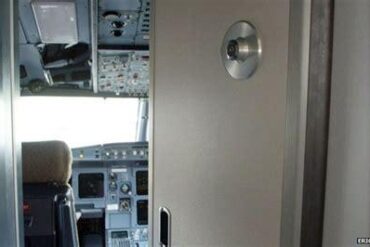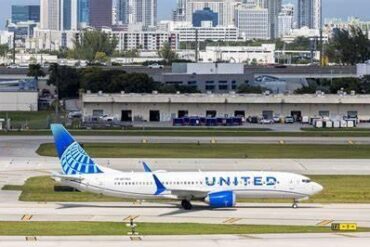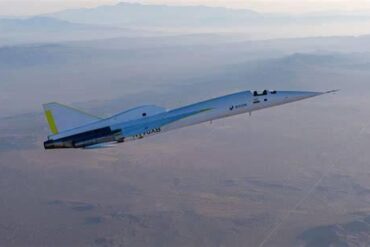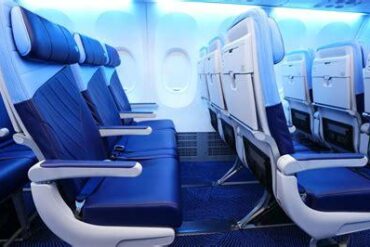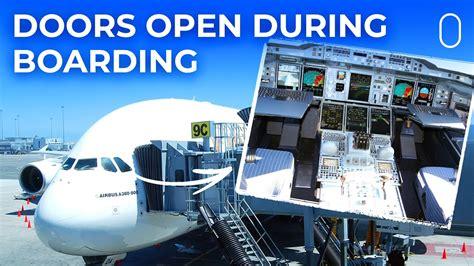
Modern commercial aviation operates with precision, discipline, and an uncompromising commitment to safety. Yet, one detail often catches the eyes of observant passengers: the cockpit door remains open as travelers board and settle into their seats. For those accustomed to tight aviation security post-9/11, this sight may seem counterintuitive. However, this practice is not a lapse in security—it is a critical operational necessity rooted in efficiency, communication, and regulation.
The Importance of Open Cockpit Doors Before Departure
Before every takeoff, the cockpit is a hub of intense coordination. While the flight deck might appear serene to passengers, it is in fact an environment of rapid information exchange, last-minute system checks, and regulatory confirmations.
Leaving the cockpit door open allows uninterrupted communication between pilots, flight attendants, maintenance teams, and ground control personnel. This ensures that every operational detail—from fuel loading status to passenger count confirmation—is verified accurately and promptly.
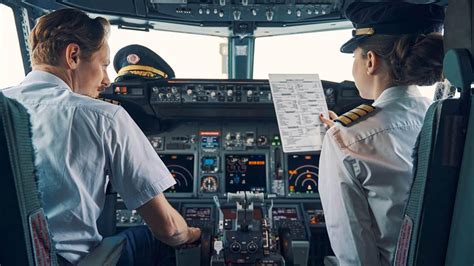
When aircraft are at the gate, a flurry of logistical activities unfold simultaneously. Flight attendants coordinate with pilots on boarding progress, catering issues, and special passenger needs, while ground engineers and technicians often deliver updated documentation or technical readouts. Many of these interactions require face-to-face communication, as subtle details and physical handoffs—like signed fuel slips or weather updates—cannot always be relayed efficiently through radio or electronic messages.
Efficient Ground Operations and Crew Coordination
An open cockpit door significantly enhances ground efficiency. The pre-departure window, typically spanning 30–45 minutes, involves countless small exchanges that depend on quick physical access to the flight deck. For example:
- The first officer may temporarily leave the cockpit to perform an external pre-flight inspection, confirming the aircraft’s physical condition and verifying that maintenance and fueling have been completed correctly.
- The captain must often receive in-person updates from gate agents regarding late passengers, cargo weight adjustments, or connecting flight delays.
- Cabin crew rely on constant back-and-forth communication with the flight deck to confirm security checks, seating changes, or passenger assistance needs.
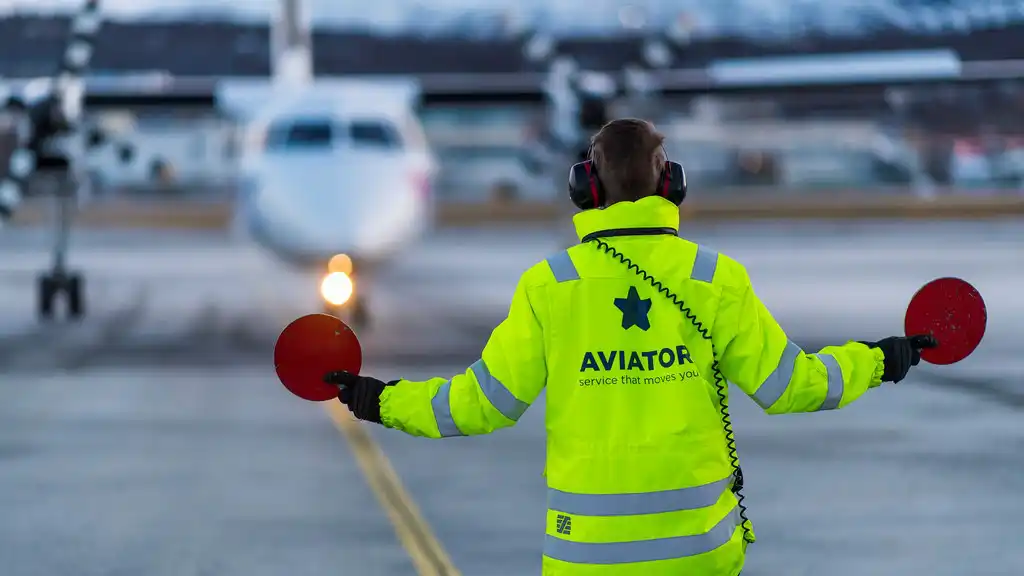
When all these processes converge, an open cockpit door serves as a simple yet powerful mechanism to maintain situational awareness. It ensures that the pilots remain in touch with every aspect of the aircraft’s readiness before they commit to departure.
Safety Oversight: Open Doors, Controlled Access
While hardened cockpit doors were introduced after the 9/11 attacks to prevent unauthorized access, keeping them open on the ground does not compromise safety. Airlines have developed strict protocols and layered access controls to manage who may approach or enter the cockpit during ground operations.
Cabin crew usually act as the first layer of control, positioning themselves near the front galley to monitor passenger movement. Only authorized personnel, including flight attendants, maintenance staff, and gate agents, are permitted beyond this zone.
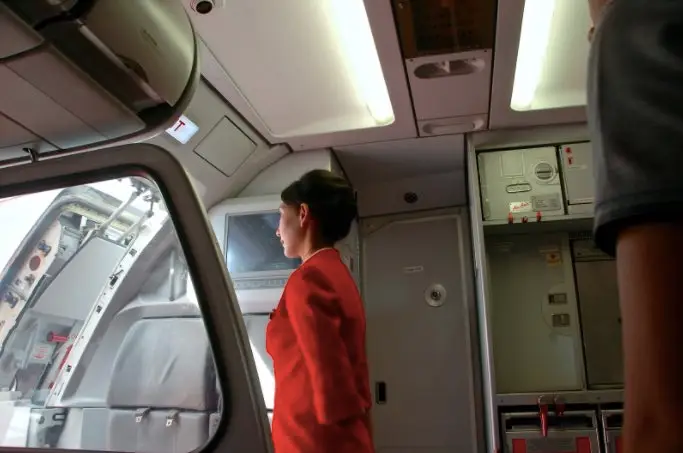
From a security standpoint, the risk window is extremely small—the door remains open only until all necessary coordination is complete. Once the aircraft doors are closed and pushback clearance is received, federal law mandates that the cockpit door be locked.
Legal Framework: FAA and Federal Requirements
In the United States, cockpit door operations are explicitly governed by Title 14 of the Code of Federal Regulations, Section 121.587. The regulation states that:
“The pilot in command shall ensure that the door separating the flight crew compartment from the passenger compartment is closed and locked at all times when the aircraft is being operated, except when necessary to permit access or egress by authorized persons.”
This means that while the aircraft is on the ground, the cockpit door may remain open for operational purposes, provided that access is restricted to authorized individuals. However, once the aircraft begins taxiing or leaves the gate area, the door must be securely closed and locked until arrival.
| Regulation | Requirement | Applies To | Effective Phase |
|---|---|---|---|
| 14 CFR §121.587 | Cockpit door must be closed and locked during flight | All U.S. commercial aircraft | Taxi, takeoff, landing, cruise |
| 14 CFR §121.547 | Access limited to authorized personnel | Pilots, crew, maintenance, inspectors | All flight phases |
| FAA Advisory Circular 121-88 | Use of hardened flight deck doors | Part 121 operators | Post-9/11 aircraft fleet |
Face-to-Face Communication: Still Indispensable
Despite the abundance of digital communication systems—ACARS, interphone systems, and two-way radios—face-to-face interaction remains irreplaceable in aviation. Human nuance, tone, and gesture can often clarify instructions far better than written or electronic communication.
Fueling supervisors, catering managers, or loadmasters may need to hand signed manifests or updated data sheets directly to the captain. Pilots may ask immediate clarifying questions that would otherwise cause costly delays if relayed through multiple channels. The open cockpit door provides the fastest line of collaboration between every department ensuring the aircraft’s readiness.
Operational Necessity and Crew Biometric Needs
Keeping the cockpit door open also serves a practical human function. Before departure, pilots may need to leave briefly for restrooms, document verification, or physical walkarounds. Allowing this controlled movement prevents unnecessary lock/unlock cycles and ensures smooth workflow while maintaining overall security integrity.
Once in flight, cockpit access becomes far more restricted. Some aircraft are equipped with secondary barriers—retractable metal gates positioned in front of the cockpit door. These barriers enable limited access for authorized personnel while preventing passengers from approaching the flight deck.
The Air Line Pilots Association (ALPA) has strongly advocated for mandating these secondary barriers across all aircraft types to improve safety during moments when the cockpit door must be temporarily opened mid-flight.
Differences Between Commercial and Private Jets
Private and corporate aviation often follows different cockpit configurations. Many light business jets, such as the Cessna Citation or Embraer Phenom, have no physical door separating pilots from passengers. The open design enhances communication and is considered acceptable due to smaller passenger numbers and lower security risks.
Conversely, large VIP aircraft—converted from commercial airliners like the Boeing 737 BBJ or Airbus A319CJ—retain their hardened cockpit doors, often with reinforced ballistic protection capable of withstanding 1,500 pounds of force. In these jets, cockpit door policies mirror those of commercial flights, particularly when transporting heads of state or government officials.
These differences underscore that cockpit door management is context-driven. Operational scale, passenger profile, and jurisdiction all dictate how cockpit access is controlled and when doors may remain open.
The Human Factor: Awareness and Safety
Beyond regulation and efficiency, an open cockpit door before boarding fosters an important intangible benefit: situational awareness. Pilots gain a broader sense of cabin activity—boarding progress, passenger movement, or potential disruptions—before takeoff.
When the door is closed too early, pilots lose visibility and auditory cues that can signal issues, such as unruly passenger behavior, baggage mishandling, or unexpected maintenance concerns. Therefore, keeping the cockpit door open until boarding is complete contributes directly to proactive safety management.
When the Door Must Close
Once the last passenger is seated, boarding doors are secured, and the pushback clearance is issued, the open phase ends abruptly. At that point, the cockpit becomes a sealed operational zone. The door locks automatically, access codes are disabled, and intercom communication is the only link between cabin and cockpit.
This transition marks a psychological shift—from collaborative ground operations to controlled flight execution. It symbolizes the boundary between coordination and command.
Evolution of Cockpit Door Design and Security
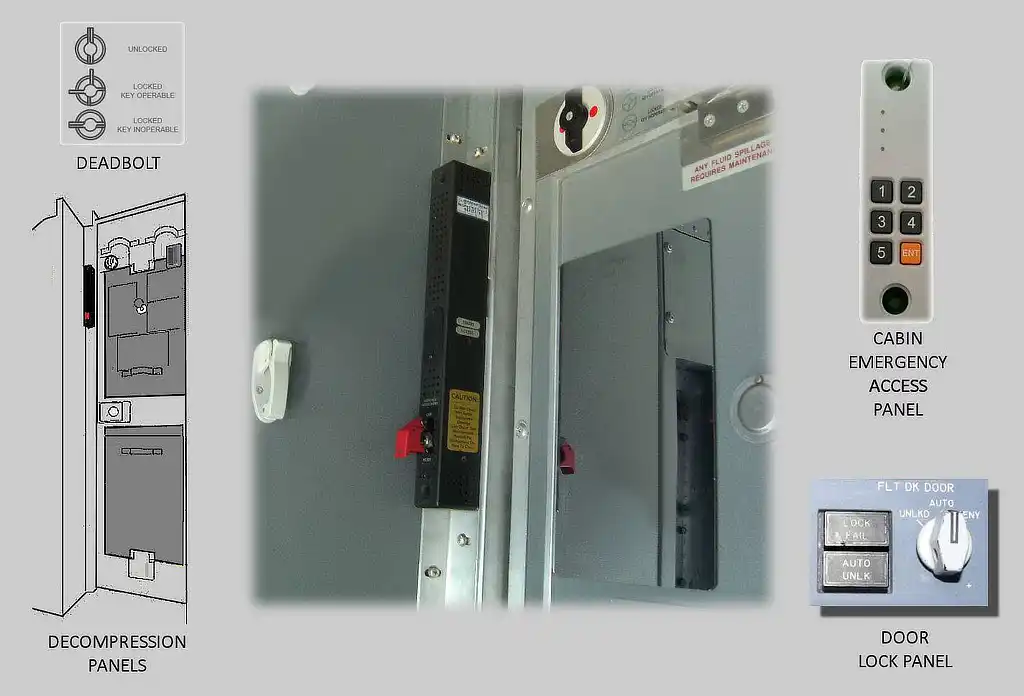
Following 2001, cockpit doors underwent a revolution in engineering. Airlines installed hardened doors capable of withstanding gunfire, explosives, and forced entry attempts. These doors, typically made from composite metal alloys and Kevlar reinforcement, can sustain immense pressure without compromising integrity.
Modern aircraft—such as the Boeing 787 Dreamliner or Airbus A350—feature advanced locking systems integrated into the aircraft’s electrical control units. These systems can isolate cockpit access instantly in the event of a security threat.
Moreover, biometric authentication systems are being tested in next-generation aircraft to restrict cockpit access to verified flight crew only, further minimizing human error.
Global Differences in Regulations
While the U.S. Federal Aviation Administration (FAA) enforces specific cockpit door procedures, international variations exist.
- European Union Aviation Safety Agency (EASA): Requires cockpit doors to remain closed from taxi to parking but allows flexibility during boarding with strict crew oversight.
- Civil Aviation Administration of China (CAAC): Implements similar standards, with reinforced cockpit doors on all transport-category aircraft since 2003.
- Transport Canada: Allows temporary door openings under controlled conditions for operational efficiency, mirroring U.S. regulations.
These regional variations highlight a shared principle: operational necessity balanced by controlled security.
Conclusion
In essence, keeping the cockpit door open during boarding is not an oversight but a deliberate operational choice. It ensures seamless coordination between cockpit, cabin, and ground teams—enabling timely departures, accurate safety checks, and enhanced situational awareness. The door that will soon serve as a hardened shield in the sky must first function as a gateway of communication and trust on the ground.
Frequently Asked Questions
Is it safe for pilots to keep the cockpit door open during boarding?
Yes. Airlines follow strict access control procedures. Only authorized personnel may approach or enter the cockpit. Flight attendants maintain presence near the forward galley to prevent unauthorized entry, ensuring safety is never compromised.
When is the cockpit door required to be locked by law?
Under FAA regulation 14 CFR §121.587, the cockpit door must be closed and locked as soon as the aircraft leaves the gate or begins taxiing, and it must remain locked throughout the flight until arrival at the gate.
Why can’t communication be done entirely through radio or electronic systems?
While modern aircraft use advanced communication tools, in-person exchanges remain faster and clearer, especially for handling last-minute paperwork, verbal clarifications, and coordination between multiple ground departments.