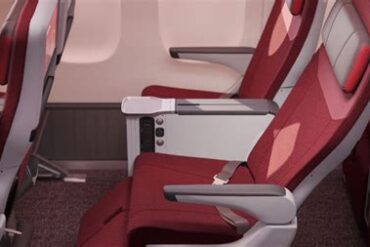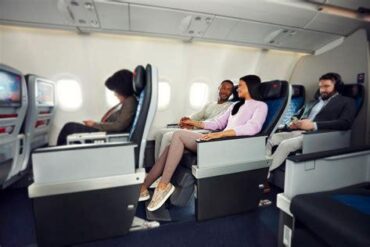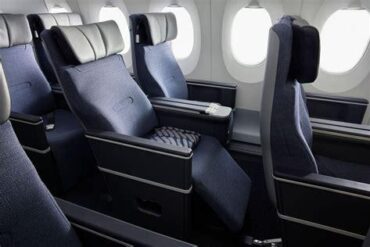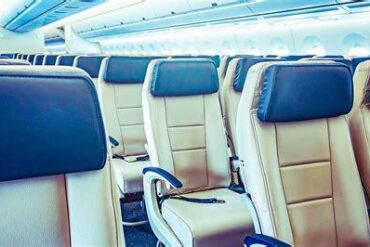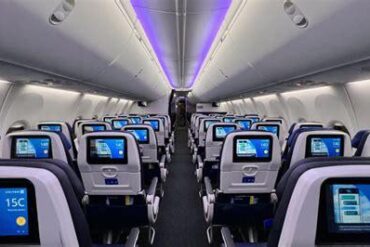
Flying economy in 2026 is still a game of inches. A few extra inches of legroom can make a long journey noticeably easier, but seat recline can be just as important, particularly when a flight crosses an ocean and passengers spend several hours trying to sleep, work, or simply relax.
Airlines have increasingly focused on slimmer seats, higher-density cabins, and carefully optimized layouts. That makes meaningful recline surprisingly valuable. While a difference of one or two inches may sound insignificant on paper, the angle of the seatback can determine whether a passenger can comfortably rest during an overnight flight or spends the entire journey sitting almost upright.
The importance of recline becomes even clearer on long-haul routes. A two-hour regional flight may end before an economy passenger has seriously considered sleeping, but a 12- or 15-hour journey requires a different standard of comfort. This is where airlines with six or seven inches of economy-class recline have a meaningful advantage.
Asian and Middle Eastern airlines dominate this particular category, reflecting their strong emphasis on long-haul service and premium cabin standards. However, the amount of recline varies considerably even within the same airline, because carriers frequently operate multiple aircraft types and cabin configurations. A passenger booking an economy ticket therefore needs to consider not only the airline but also the specific aircraft and seat configuration.
5. Singapore Airlines Airbus A350-900: Six Inches of Economy Recline
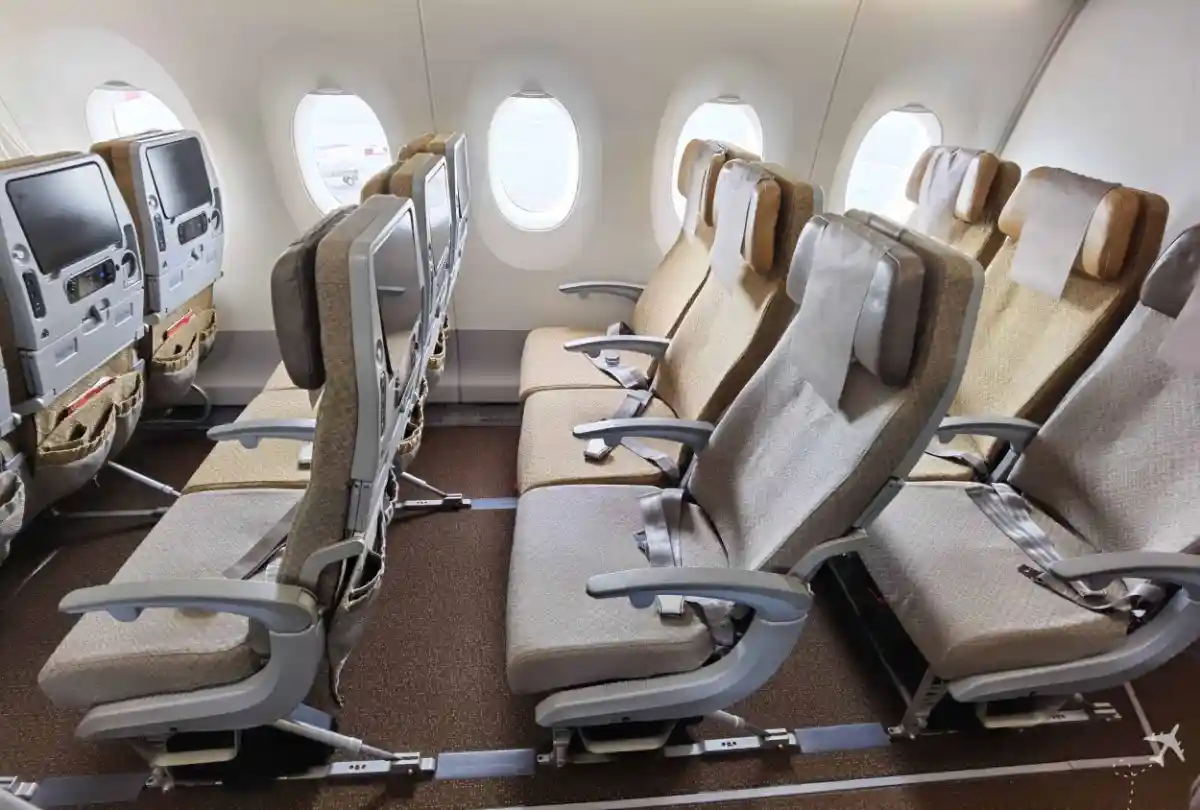
Singapore Airlines has long been associated with premium service, and its long-haul economy cabin demonstrates why the airline remains highly regarded. Its Airbus A350-900 long-haul configuration provides six inches of seat recline, or approximately 15.24 centimeters.
That figure places Singapore Airlines among the airlines offering the most generous economy recline in 2026. More importantly, the recline is paired with a cabin designed around long-distance flying. The long-haul A350-900 uses Safran Z300 economy seats in a nine-abreast configuration and provides approximately 32 inches of seat pitch.
Singapore Airlines operates a substantial fleet of A350-900s, but travelers should pay attention to the distinction between its different A350 configurations. The airline uses the aircraft for regional services, long-haul routes, and ultra-long-haul flights, and the interior specifications are not identical across every version.
The long-haul A350-900s are particularly important because they form a major part of the carrier’s international network. With their combination of range and capacity, these aircraft can serve destinations where a larger Airbus A380 or Boeing 777 would not necessarily be the most efficient choice. They also operate some exceptionally long routes from Singapore to destinations in the United States.
There is an important qualification, however. Six inches is not the standard economy recline across Singapore Airlines’ entire fleet. Much of the carrier’s fleet provides around five inches of recline. Consequently, passengers specifically searching for the airline’s best economy experience need to verify the aircraft assigned to their flight.
This aircraft-specific difference explains why Singapore Airlines ranks fifth on this list despite offering the same headline recline figure as several higher-ranked airlines. Only a portion of its passenger aircraft feature the six-inch configuration, whereas some competitors offer that amount more extensively across their widebody fleets.
Nevertheless, the A350-900 remains an attractive economy proposition. A relatively wide seat, approximately 32 inches of pitch, modern cabin design, and six inches of recline combine to create an economy product that feels considerably more thoughtful than the bare minimum.
4. Etihad Airways Airbus A380 and Boeing 787: Six Inches With a Privacy Wing
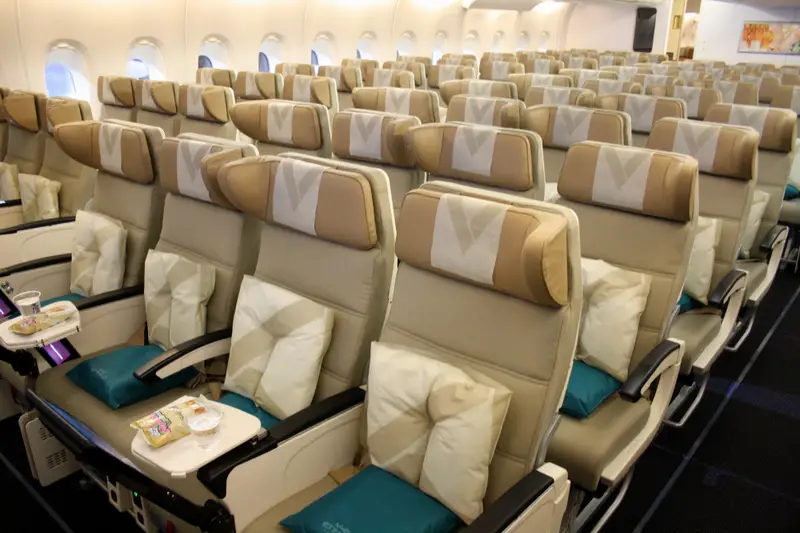
Etihad Airways takes a distinctive approach to economy seating. The airline’s Airbus A380 is famous for its extraordinary premium cabins, including First Apartments and The Residence, but passengers sitting much farther back in the aircraft also receive an unusually strong feature: six inches of economy seat recline.
The A380 economy seats are based on the Safran 5751, formerly associated with Weber, and feature an unusual privacy wing on one side of the seat. That is a particularly interesting detail because economy passengers rarely receive physical features designed to create additional personal separation.
The A380’s enormous lower-deck fuselage also provides room for relatively broad economy seats. Etihad’s configuration gives these seats a width of close to 19 inches, making them especially appealing for passengers who value personal space as much as reclining ability.
The same general seat standard also appears on parts of Etihad’s Boeing 787 fleet. Most of the airline’s 787-9 aircraft and all of its 787-10s equipped with the relevant interior feature the Safran 5751 seat. However, the Dreamliner cannot match the A380’s cabin width, so the physical experience is somewhat different.
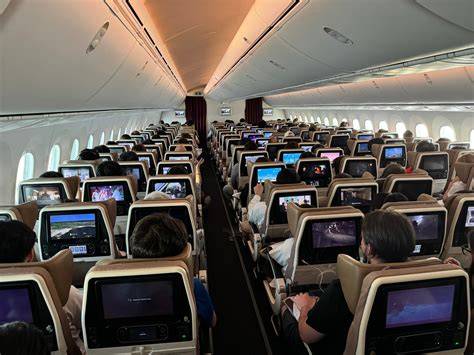
The airline’s widebody economy cabins generally provide around 31 inches of pitch, which is respectable but not exceptional. This is an important reminder that recline alone does not determine comfort. A seat can recline deeply while still feeling cramped if pitch, width, cushioning, and personal space are limited.
Etihad’s newer aircraft also demonstrate how rapidly seat standards can change. Its Airbus A350-1000s use Recaro CL3710 economy seats, which retain the privacy wing but reduce recline to five inches. Several newer Boeing 787-9s also use this seat, suggesting that the airline’s fleet is gradually moving toward different interior specifications.
That makes the aircraft assignment especially important for travelers who prioritize recline. An Etihad economy ticket can represent substantially different seating experiences depending on whether the aircraft is an A380, a suitably configured 787, or a newer aircraft equipped with the updated five-inch-recline seat.
3. Cathay Pacific Long-Haul Widebodies: Six Inches Across Multiple Aircraft Types
Cathay Pacific is another major Asian carrier that puts six inches of economy recline into several long-haul widebody configurations. What makes Cathay Pacific particularly interesting is the breadth of aircraft carrying this specification.
The airline’s long-haul Airbus A330s, Airbus A350s, and Boeing 777-300ERs all provide six inches of economy recline. This includes a diverse collection of seat models, meaning passengers receive essentially the same headline recline figure even though the physical seats themselves differ.
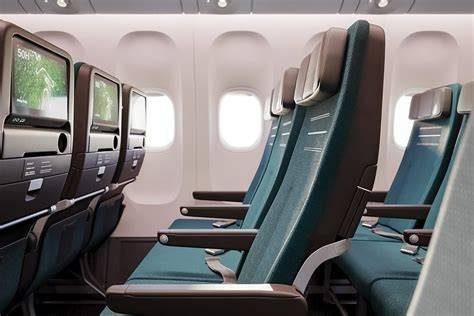
The Airbus A330-300 uses the Safran 5751, while the Airbus A350-900 uses the Collins Aerospace Pinnacle. Cathay Pacific’s A350-1000 employs the HAECO Vector, and its Boeing 777-300ER aircraft use the Recaro CL3710.
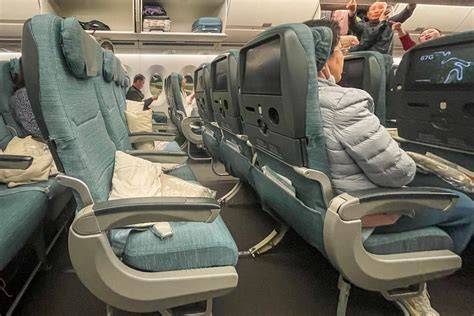
That variety matters because seat recline is only one part of the equation. Cathay Pacific generally provides around 32 inches of pitch on its widebody aircraft, although its recently refurbished 777-300ER aircraft featuring the new Aria Suite configuration reduce economy pitch to around 31 inches.
Seat width also differs according to aircraft. Cathay Pacific’s Airbus widebodies provide seats around 18 inches wide, while the airline’s densely configured Boeing 777-300ER economy cabin has narrower seats of approximately 17.3 inches.
Despite these differences, the airline’s consistent six-inch recline across its major long-haul fleet makes it one of the most dependable options for travelers who care about sleeping or resting in economy.
Another advantage is the presence of seatback entertainment screens across Cathay Pacific’s aircraft, giving passengers a modern long-haul entertainment experience alongside the deeper reclining position.
Cathay Pacific’s fleet structure also illustrates a broader trend in international aviation. Airlines increasingly maintain separate regional and long-haul cabin configurations, even when the aircraft type is identical. A passenger cannot always assume that every A330, 777, or A350 operated by an airline has the same interior.
For travelers booking Cathay Pacific, checking the aircraft and configuration can therefore be just as important as selecting the airline itself.
2. Emirates Airbus A350 and Boeing 777: Six Inches of Recline
Emirates is perhaps best known for its Airbus A380, but the carrier’s A350 and Boeing 777 economy seats offer more recline than its flagship superjumbo.
That may come as a surprise. Emirates’ A380 is packed with famous premium-cabin features, including onboard showers and the iconic premium-class bar. Yet economy passengers on the A380 receive approximately four inches of recline, according to the seat configuration information referenced in the source material.
The newer A350 reverses that hierarchy. Its economy seats offer six inches of recline, combined with around 32 inches of pitch and approximately 18 inches of seat width. Emirates installs the Safran Z400 seat, which also features a 13.3-inch seatback entertainment screen.
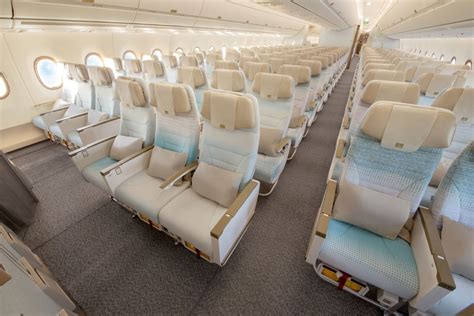
For a long-haul economy passenger, that combination is compelling. Six inches of recline provides a substantially deeper resting position than the A380’s four inches, while the 32-inch pitch helps preserve usable space between rows.
Emirates currently operates multiple A350 configurations, so travelers should still check their specific aircraft. Differences can include galley arrangements and the size of the premium economy cabin, although the basic economy seat characteristics remain highly competitive.
The Boeing 777 fleet is even more complicated. Emirates operates a large fleet consisting primarily of 777-300ER aircraft, alongside 777-200LRs. Some aircraft are being refurbished with newer interiors, including Safran Z400 economy seats and redesigned premium cabins.
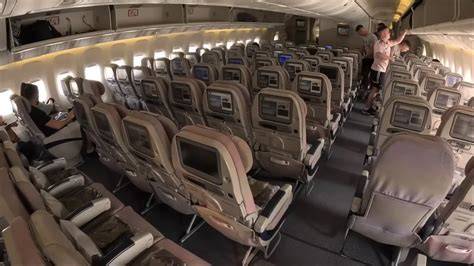
Despite the differences in seat models and cabin refurbishment status, the airline’s Boeing 777 aircraft provide six inches of economy recline, making the type a strong choice for passengers who put resting comfort ahead of other onboard features.
The result is an unusual situation in which an Emirates passenger may actually prefer an A350 or 777 economy cabin to the airline’s legendary A380 economy product if seat recline is the deciding factor. It is a useful reminder that the aircraft carrying the famous airline logo can matter as much as the airline itself.
1. Qatar Airways Airbus A380: Seven Inches of Recline
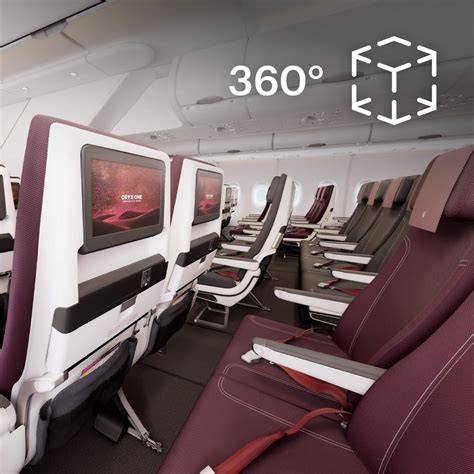
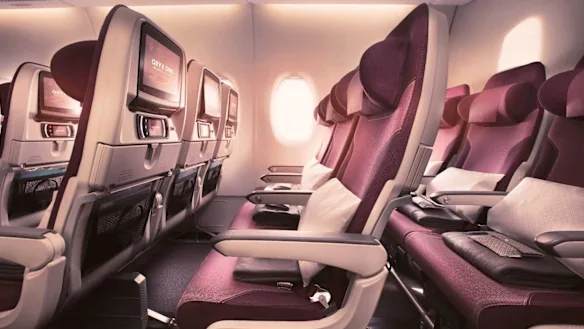
Qatar Airways takes the top position because its Airbus A380 economy cabin provides seven inches of seat recline, equivalent to approximately 17.78 centimeters.
That extra inch gives Qatar Airways the strongest headline recline figure among the five airlines examined here. Although one inch may not sound dramatic, it is meaningful when a passenger is attempting to sleep in an economy seat during a long overnight flight.
The A380 economy seats are based on the Recaro CL3710 and measure approximately 18 inches wide. Passengers also receive a 10.6-inch touchscreen entertainment display, while seat pitch is around 31 inches.
Interestingly, Qatar Airways’ seven-inch specification is exclusive to its A380. Other aircraft in the fleet generally provide slightly less recline, with several widebody types offering approximately six inches.
This includes many of the airline’s Airbus A330s, older Airbus A350-900s, and most Boeing 787 aircraft. Some Boeing 777-300ER aircraft inherited from other operators also retain interiors that provide around six inches of economy recline.
The difference becomes much more dramatic when Qatar Airways’ widebody aircraft are compared with its narrowbodies. Economy seats on its narrowbody fleet offer only around three inches of recline, demonstrating how dramatically cabin configuration can influence the passenger experience.
Qatar Airways’ position at number one therefore comes with an important caveat: booking the airline does not automatically mean receiving seven inches of recline. The traveler needs to be on the right aircraft.
Still, when the Airbus A380 is scheduled, the economy cabin offers one of the strongest reclining positions available in mainstream long-haul economy travel in 2026. Combined with an 18-inch seat, a seatback entertainment system, and Qatar Airways’ established long-haul service model, it creates an unusually capable economy product.
Why Economy Seat Recline Matters on Long-Haul Flights
The rankings reveal an important truth about modern airline seating: the airline name alone does not tell the entire story. Singapore Airlines, Etihad Airways, Cathay Pacific, Emirates, and Qatar Airways all appear among the leaders, but the best recline is usually tied to particular aircraft and cabin configurations.
The difference between three, four, five, six, and seven inches becomes increasingly important as flight duration rises. On a short flight, passengers may barely notice the difference. On a 12-hour overnight service, however, the ability to move the seatback farther rearward can affect sleep quality, posture, and the overall feeling of fatigue after landing.
There is also an important distinction between recline and seat pitch. Recline describes how far the seatback moves backward, while pitch measures the distance between corresponding points on successive rows. A generous recline does not necessarily mean generous legroom.
This is why the best economy seats combine several characteristics rather than relying on one specification. Qatar Airways’ A380, for example, pairs seven inches of recline with an 18-inch-wide seat. Singapore Airlines’ long-haul A350 combines six inches of recline with approximately 32 inches of pitch. Emirates’ A350 similarly combines six inches of recline with a 32-inch pitch.
Passengers should also remember that recline can affect the person seated behind them. A deeper reclining seatback reduces the usable space of the passenger in the following row, particularly around the tray table and personal workspace. Modern economy seating is therefore an exercise in balancing individual comfort against cabin density.
The Best Economy Recline Depends on the Aircraft
The five airlines demonstrate why aircraft-specific seat research is essential in 2026. Qatar Airways offers seven inches on its A380 but only around three inches on its narrowbodies. Emirates provides six inches on its A350 and 777 while its A380 economy seats offer around four inches. Singapore Airlines reaches six inches on its long-haul A350-900s but uses five-inch-recline seats elsewhere.
That variation means passengers should look beyond the airline’s overall reputation when choosing a flight. The aircraft type, cabin configuration, seat model, pitch, width, and even refurbishment status can all influence the experience.
For travelers planning an overnight journey, these details can be more important than they initially appear. A well-designed economy seat does not need to transform into a premium product to make a difference. Sometimes, an additional inch of recline, a little more pitch, and a wider seat are enough to turn an exhausting flight into a considerably more manageable one.
In 2026, Qatar Airways’ Airbus A380 leads this group with seven inches of recline, while Etihad Airways, Cathay Pacific, Emirates, and Singapore Airlines each offer six-inch options on selected widebody aircraft. The common thread is clear: when the aircraft and configuration are right, economy passengers can still find surprisingly comfortable seats for long-haul travel.