Understanding Why Planes Rarely Fly Over the Pacific Ocean
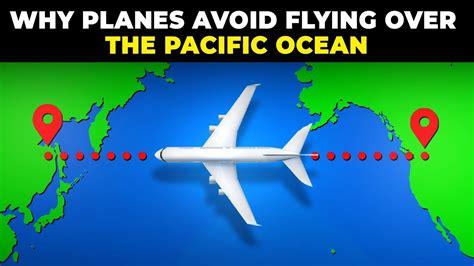
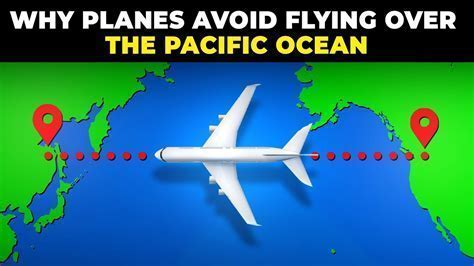
Despite the Pacific Ocean being a critical geographical feature covering more than 155 million square kilometers, commercial aircraft largely avoid routes that span directly across it. This isn’t due to mystery or myth, but to a highly calculated balance of safety, efficiency, logistics, and atmospheric dynamics. In this article, we explore the real-world, fact-based reasons why aviation routes tend to circumvent the vast expanse of the Pacific Ocean, favoring curved paths that may seem counterintuitive on flat maps but make perfect sense in the sky.
The Size and Depth of the Pacific: A Technical Challenge
The Pacific Ocean is not only the largest but also the deepest body of water on Earth, with an average depth of over 13,000 feet. This immense expanse provides no viable options for mid-ocean landings, which creates serious safety limitations for commercial aircraft. Airliners are subject to international regulations such as ETOPS (Extended-range Twin-engine Operational Performance Standards), which restrict how far a plane can fly from the nearest suitable airport. These rules exist precisely because aircraft may need to divert quickly due to emergencies like engine failure, cabin decompression, or medical issues.
Fuel Efficiency and Great Circle Navigation
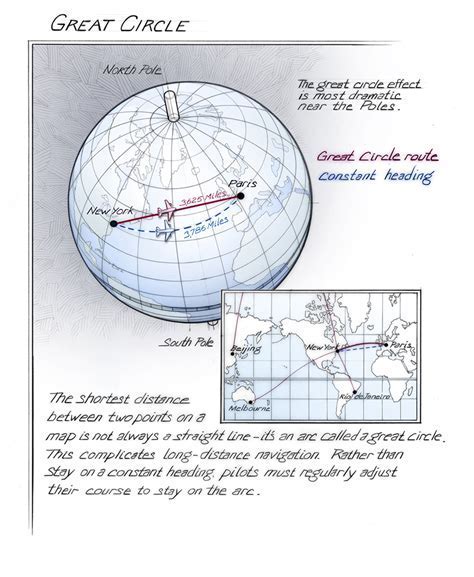
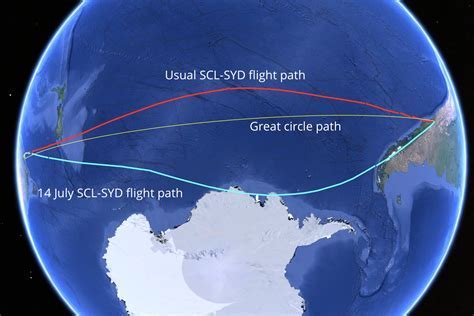
Although a direct line across the Pacific Ocean might appear to be the shortest route, the reality of spherical geometry tells a different story. Aircraft fly along what are known as Great Circle Routes—the shortest path between two points on a globe. These routes often curve over polar regions or landmasses, bypassing large bodies of water. In practice, these curved paths reduce fuel consumption, travel time, and overall operational costs.
Flying over land also presents more opportunities for fuel-efficient descent and ascent planning, especially when aircraft must reroute or hold for landing. Given fuel’s massive impact on operating costs, airlines meticulously calculate flight paths to optimize for distance, fuel efficiency, and contingency options.
Unpredictable and Severe Weather Over the Pacific
The Pacific Ocean is infamous for its volatile weather systems, including intense jet streams, tropical storms, typhoons, and clear-air turbulence. These meteorological challenges not only affect passenger comfort but also significantly increase flight planning complexity. Aircraft must navigate through or around pressure systems and wind corridors, which are more difficult to predict and circumvent over such a vast expanse of open water.
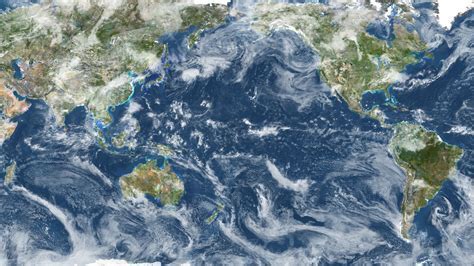
In contrast, land-based routes offer more reliable weather data and more controlled airspace, making it easier for pilots and air traffic controllers to reroute flights if necessary. The North Pacific, especially in winter, is particularly notorious for strong headwinds, which can cause significant fuel burn increases and schedule delays.
Emergency Diversion Limitations
Commercial aviation is governed by the principle of redundancy and preparedness. Pilots must be able to reach an alternate airport within a defined time window. This requirement becomes a serious constraint over the Pacific. For example, if a flight is halfway across the Pacific and experiences a medical emergency or mechanical issue, the nearest diversion airport could be thousands of kilometers away.
While there are mid-Pacific islands such as Hawaii and Guam, these are exceptions, not rules. Many trans-Pacific routes are deliberately plotted to stay within reach of such outposts. Aircraft flying routes that deviate too far from land would need to carry extra fuel, accommodate emergency provisions, and deal with heavier regulatory oversight.
Geopolitical and Regulatory Airspace Restrictions
Beyond physical geography, air traffic must also comply with airspace regulations, which can vary drastically by region. Many parts of the Pacific are uncontrolled or lightly managed airspace, which limits communication and navigation precision. Modern airliners depend heavily on radar coverage and satellite navigation systems, which, although advanced, are not flawless in remote oceanic zones.
Moreover, certain airspace regions are designated for military exercises or have air traffic capacity constraints, further reducing the viability of direct Pacific routes. Airlines must factor in these limitations and seek paths with robust air traffic management infrastructure.
Passenger Safety and Psychological Factors
From a human factors perspective, passengers often feel safer flying over land, even if subconsciously. While aviation safety statistics don’t differ based on geography, airlines are sensitive to customer perception. Flying over vast ocean with no visible terrain for hours can be unsettling to some, and airlines consider these psychological dimensions in route planning.
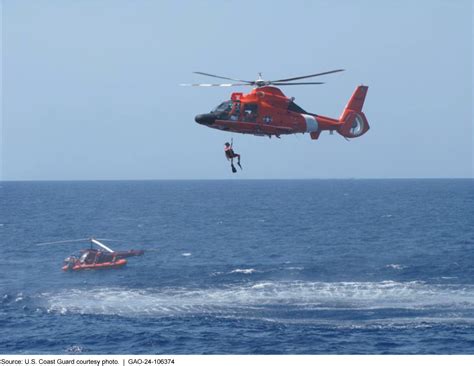
In the rare event of a crash, search and rescue over land is considerably faster and more efficient than over ocean. This isn’t just theoretical—post-crash recovery in oceans is notoriously difficult, as seen in incidents like Malaysia Airlines Flight MH370.
Historical Precedents and Industry Trends
Historically, airlines have evolved their flight routes based on a combination of technological advancement, regulatory development, and strategic economics. In the mid-20th century, aircraft lacked the range to even consider Pacific crossings without multiple fuel stops. With the rise of long-range twin-engine jets, direct flights became more plausible, but only within tight operational margins.
Today, ultra-long-haul aircraft like the Boeing 787 Dreamliner and Airbus A350 are changing the equation, but even these are planned with strict ETOPS rules in mind. Routes from Los Angeles to Tokyo, for example, may skirt the edges of the Pacific or fly via Alaska and the Aleutian Islands to maintain proximity to diversion airports.
As these aircraft gain more endurance and satellite coverage improves, we may eventually see more direct crossings, but economics and safety will continue to dictate airline decisions well into the future.
FAQ
Is it dangerous to fly over the Pacific Ocean?
Flying over the Pacific is not inherently dangerous, but it introduces more operational complexity. The lack of emergency landing sites, combined with severe weather risks, makes it less desirable compared to land-based alternatives. Airlines choose the safest and most efficient routes, which often means avoiding the Pacific.
Why do some flights still cross the Pacific Ocean?
Flights such as those between North America and East Asia or Oceania occasionally cross portions of the Pacific when ETOPS-compliant aircraft and proper weather conditions align. These routes are carefully designed to maintain access to diversion airports and minimize fuel penalties.
Will future technology allow more direct Pacific crossings?
Yes. As engine reliability, satellite navigation, and airspace communication improve, and as new aircraft with extended range and better fuel efficiency enter service, the feasibility of direct Pacific crossings will increase. However, such changes will still require compliance with stringent international aviation standards.